Impakter
  • Environment
    • Biodiversity
    • Climate Change
    • Circular Economy
    • Energy
  • FINANCE
    • ESG News
    • Sustainable Finance
    • Business
  • TECH
    • Start-up
    • AI & Machine Learning
    • Green Tech
  • Industry News
    • Entertainment
    • Food and Agriculture
    • Health
    • Politics & Foreign Affairs
    • Philanthropy
    • Science
    • Sport
  • Editorial Series
    • SDGs Series
    • Shape Your Future
    • Sustainable Cities
      • Copenhagen
      • San Francisco
      • Seattle
      • Sydney
  • About us
    • Company
    • Team
    • Partners
    • Write for Impakter
    • Contact Us
    • Privacy Policy
No Result
View All Result
Impakter logo
No Result
View All Result
World Bank Issues The World’s First Wildlife Conservation Bond

World Bank Issues The World’s First Wildlife Conservation Bond

The World Bank sells its first ‘Rhino’ bond to help South Africa’s conservation efforts and support local communities

Amber van UnenbyAmber van Unen
March 29, 2022
in Environment, Impact
0

The World Bank has issued the world’s first Wildlife Conservation Bond (WCB) or the “rhino bond”, raising $150 million to help efforts to increase the endangered black rhino population in South Africa, the bank said in a statement on Thursday.

The “Rhino Bond” includes a potential performance payment from the Global Environment Facility (GEF), which will contribute to protecting and increasing black rhino populations in two protected areas in South Africa, the Addo Elephant National Park (AENP) and the Great Fish River Nature Reserve (GFRNR).

The WCB is a first-of-its-kind, outcome-based, financial instrument that channels investments to achieve conservation outcomes – measured in this case by an increase in black rhino populations. 

Rhinos play a crucial role in shaping entire ecosystems on which countless other species depend. Through the WCB, investors support the financing of activities to protect and grow a critically endangered species with clear conservation targets, contributing directly to biodiversity, and bringing jobs to local communities through the creation of conservation-related employment in a rural and underserved region of South Africa, the bank said in their statement. 

“The Rhino Bond is a groundbreaking approach to enabling private sector investment in global public goods — in this case biodiversity conservation, a key global development challenge,” said World Bank Group President David Malpass. “The pay-for-success financial structure protects an endangered species and strengthens South Africa’s conservation efforts by leveraging the World Bank’s infrastructure and track record in capital markets. Importantly, it can be replicated and scaled to channel more private capital for other conservation and climate actions and development objectives around the world.”
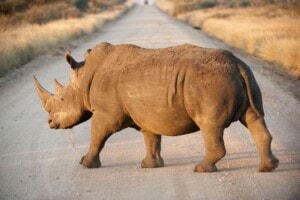
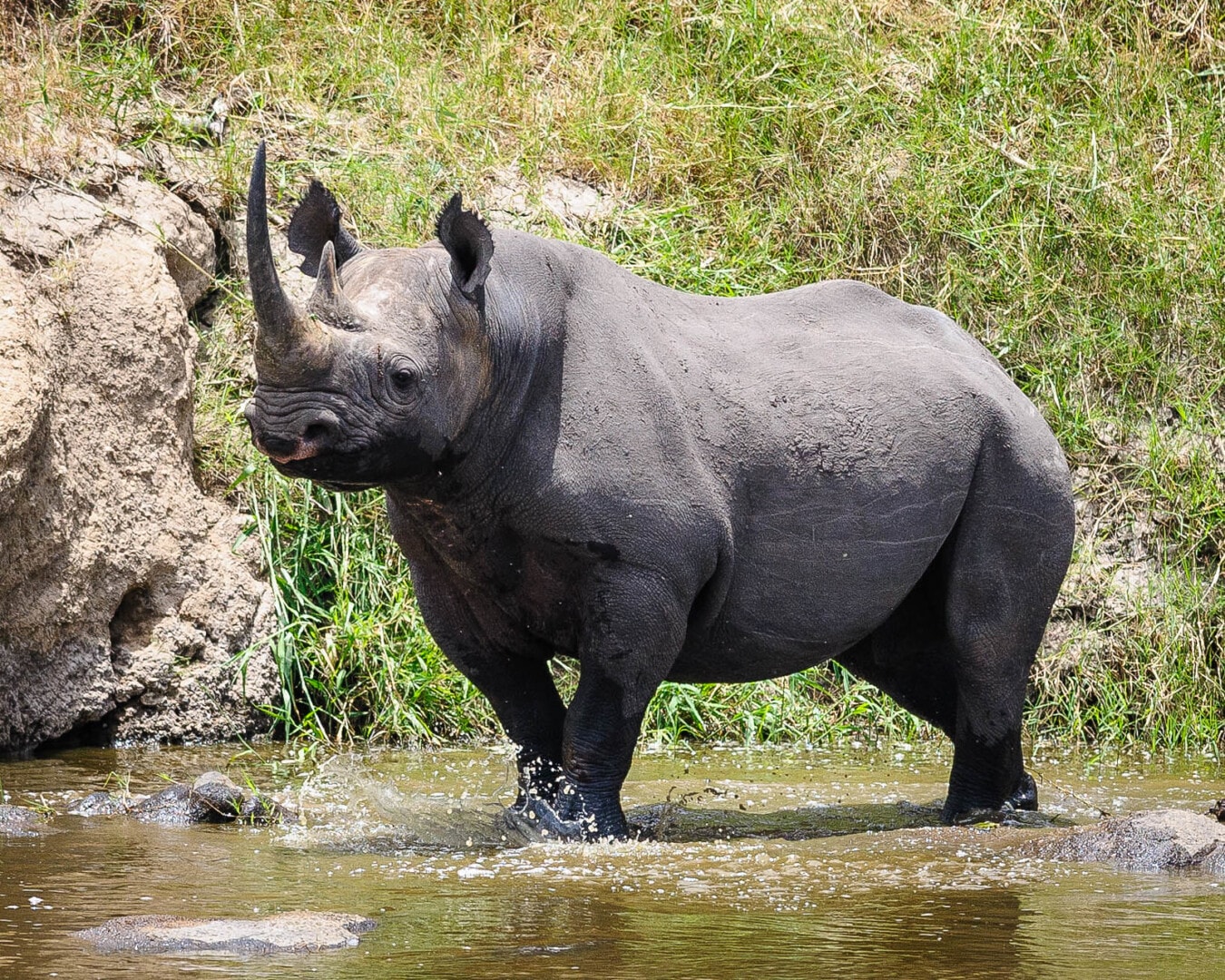
In the Photo: Rhino in South Africa. Photo Credit: Flickr.

There are five rhino species globally, with most of the animals in South Africa. Black rhino numbers have dropped to around 2,600 from 65,000 in 1970, and may once have been as high as 850,000, according to the World Bank.

Buyers of the Rhino Bond will receive a payment from the Global Environment Facility based on preset targets for population growth. To receive the maximum payment the rhino population will need to increase by more than 4% per annum.

“The WCB model provides a new blueprint for the way conservation is financed and has the potential to be a key enabling tool for the delivery of the post-2020 Global Biodiversity Framework,” said Oliver Withers, Biodiversity Lead within Global Sustainability at Credit Suisse.

There is growing awareness about the need to protect wildlife for the health of the planet, however most investment in nature today comes from national and sub-national governments and, to a lesser extent, from development banks, international NGOs, private foundations, and international agencies.

The Wildlife Conservation Bond is a game-changing innovation resulting in direct funding to nature reserves and protected areas. This initiative could be replicated to protect additional rhino populations, as well as other species whose threatened status is consequential for all of us.


Editor’s Note: The opinions expressed here by Impakter.com columnists are their own, not those of Impakter.com.  In the Featured Photo: Black Rhino in northern Serengeti, Tanzania. Featured Photo Credit: Flickr.com

Tags: biodiversityGlobal Biodiversity FrameworkNature ConservationRhino BondWorld Bank
Previous Post

“No More Dirty Banks” Celebrities Say in Fighting Canadian Gas Pipeline

Next Post

Crisis in Sri Lanka: Feed the People or Declare Default?

Related Posts

The Imperative of a Nature-Positive Future
Biodiversity

The Imperative of a Nature-Positive Future

For most of human history, survival was a gamble. Half of all children never reached puberty. Life expectancy hovered around...

byMarco Lambertini
January 16, 2026
Impakter’s Most-Read Stories of 2025
Society

Impakter’s Most-Read Stories of 2025

In 2025, as in previous years, Impakter readers turned in large numbers to stories examining climate change and pollution, environmental...

byImpakter Editorial Board
December 31, 2025
One Health: Silo Barriers to Implementation and How to Overcome Them
Biodiversity

One Health: Silo Barriers to Implementation and How to Overcome Them

The One Health concept/approach must be central for governments to adopt collaborative, cross-sector policies in order to safeguard public health,...

byOne Health Initiative
November 26, 2025
COP30: Countries’ Climate Agrifood Ambitions Undermined by Funding Gaps, Report Finds
Biodiversity

COP30: Countries’ Climate Agrifood Ambitions Undermined by Funding Gaps, Report Finds

Developing countries recognize the urgent need to adapt agrifood systems to climate change, but most National Adaptation Plans (NAPs) are...

byThe Food and Agriculture Organization of the United Nations (FAO)
November 19, 2025
The Amazon rainforest is often called “the lungs of the world.” It produces oxygen and stores billions of tons of carbon every year. The Amazon rainforest covers more than 60% of the landmass of Peru. Photo Credit: USDA Forest Service / Diego Perez.
Biodiversity

Inside COP30

The 30th United Nations Climate Change Conference (COP30) is taking place in Belém, Brazil, from November 10 to 21, 2025....

byInternational Institute for Sustainable Development (IISD)
November 10, 2025
climate change and food
Biodiversity

COP30: Climate Extremes Are Already Impacting Food Yields Today

The 30th United Nations Climate Change Conference (COP30), taking place in Belém, Brazil, brings together world leaders, scientists, non-governmental organizations, and...

byThe Food and Agriculture Organization of the United Nations (FAO)
November 7, 2025
Global Action Plan on Biodiversity and Health
Biodiversity

Global Action Plan on Biodiversity and Health: Why Implementation Can’t Wait

Last October, after six years of deliberation, the world adopted the Global Action Plan on Biodiversity and Health. The Plan...

byJessica Bridgers - Deputy CEO, World Federation for Animals
October 31, 2025
Plastic pollution coral reefs
Biodiversity

Protecting Coral Reefs From Plastic Pollution: The IUCN Congress as a Catalyst for Action and Collaboration

This week, the International Union for the Conservation of Nature (IUCN) sees its World Conservation Congress kick off in Abu...

byJanne van Eerten - Sr. Global Public Affairs Manager at The Ocean Cleanupand1 others
October 8, 2025
Next Post
Crisis in Sri Lanka: Feed the People or Declare Default?

Crisis in Sri Lanka: Feed the People or Declare Default?

Recent News

Forklift Rentals service in St.Louis

How Forklift Rentals Support Short-Term Operational Needs

February 3, 2026
Personal Injury Lawyer dealing with his clients.

What To Expect During the First Visit With a Personal Injury Lawyer

February 3, 2026
ESG news regarding a new EU initiative that lets companies operate seamlessly across all EU member states, U.S. and India reaching major trade deal after tariff reductions, Spain fining Repsol €20.5 million for unfair fuel pricing practices, and Ørsted’s $7 billion Sunrise Wind project being cleared to resume construction.

EU-INC Introduces a Unified Legal System to Simplify Business Across Europe

February 3, 2026
  • ESG News
  • Sustainable Finance
  • Business

© 2025 Impakter.com owned by Klimado GmbH

No Result
View All Result
  • Environment
    • Biodiversity
    • Climate Change
    • Circular Economy
    • Energy
  • FINANCE
    • ESG News
    • Sustainable Finance
    • Business
  • TECH
    • Start-up
    • AI & Machine Learning
    • Green Tech
  • Industry News
    • Entertainment
    • Food and Agriculture
    • Health
    • Politics & Foreign Affairs
    • Philanthropy
    • Science
    • Sport
  • Editorial Series
    • SDGs Series
    • Shape Your Future
    • Sustainable Cities
      • Copenhagen
      • San Francisco
      • Seattle
      • Sydney
  • About us
    • Company
    • Team
    • Partners
    • Write for Impakter
    • Contact Us
    • Privacy Policy

© 2025 Impakter.com owned by Klimado GmbH