Impakter
  • Environment
    • Biodiversity
    • Climate Change
    • Circular Economy
    • Energy
  • FINANCE
    • ESG News
    • Sustainable Finance
    • Business
  • TECH
    • Start-up
    • AI & Machine Learning
    • Green Tech
  • Industry News
    • Entertainment
    • Food and Agriculture
    • Health
    • Politics & Foreign Affairs
    • Philanthropy
    • Science
    • Sport
  • Editorial Series
    • SDGs Series
    • Shape Your Future
    • Sustainable Cities
      • Copenhagen
      • San Francisco
      • Seattle
      • Sydney
  • About us
    • Company
    • Team
    • Global Leaders
    • Partners
    • Write for Impakter
    • Contact Us
    • Privacy Policy
No Result
View All Result
Impakter logo
No Result
View All Result
Why Labour Lost

Why Labour Lost

Mina TumaybyMina Tumay
December 19, 2019
in Politics & Foreign Affairs, Society
0

Last week on Dec. 12, the United Kingdom had potentially its biggest election in British history, deciding the future of the country for at least the next half a century to come. Although the Corbyn-led Labour campaign appeared very generous, Boris Johnson managed to secure a Tory majority, meaning that he is to stay in power as PM.

The elections results were 364 seats and the biggest share of votes (43.6%) to the Conservatives, 203 to Labour, 48 to the Scottish National Party and 11 to the Liberal Democrats.
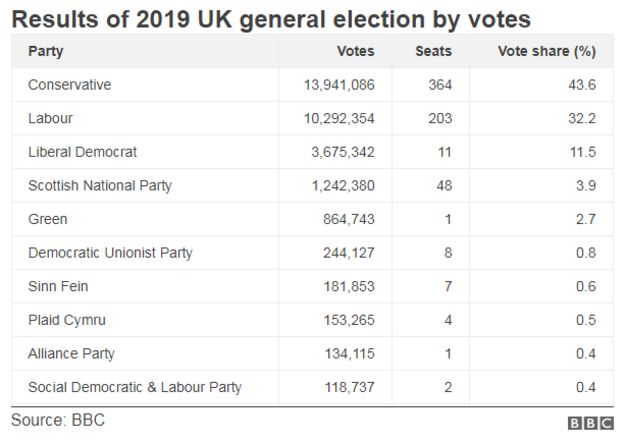
In the photo: Results chart. Photo Credit: BBC

“Rather than blaming the Labour loss on one single factor, it stems from a combination of things and policies, dooming the future of the party.”

Rather than blaming the Labour loss on one single factor, it stems from a combination of things and policies, dooming the future of the party. These can be identified as Labour’s unclear stance on Brexit, fears of Corbyn’s limited leadership capacity and his handling of antisemitism, as well as the unrealistic pledges put forward by the Labour party.

Brexit

It was the sort of election that on the side of what party they supported, the British folk voted according to their stance on Brexit, with each party offering a different solution. While the Conservatives promised to “get Brexit done” through the deal Johnson had already presented, Labour (after remaining rather ambiguous about it for years) pledged to go back to the EU and negotiate a better Brexit deal which would then be put up for a referendum and the LibDems aimed for a second referendum on Brexit as a whole.

If Labour was to win, “it would take about three months to negotiate this deal, with a referendum held within six months.” Alongside the new deal that would have been negotiated, the referendum would also present the option to remain as an EU member. Even though this seemed like Labour finally had a stronger stance on Brexit, the policy was trying to do too much at once. Through this, Labour was trying to attract both leave and remain voters, therefore once again sitting on the fence.

Although this looked like an ideal solution on paper, many questions remained: Would the EU be willing to renegotiate the deal with the UK? And even if they did, how significant could a new deal become on the EU agenda? And finally, what if “remain” came out of that ballot, would that not be a momentous blow to UK democracy?


Related topics: Brexit: Corbyn’s Move on a Second Referendum – 2019: The Year We Finally Bury Brexit – British in Europe: Post-Brexit Uncertainty

With Donald Tusk’s term expiring, and therefore the EU giving up on his “oh, let’s just let them stay” perspective, the EU, while preserving its own interests, just wants Brexit to take place. After Brexit taking up extensive amounts of time out of the EU agenda, the Union has expressed that it just wants the UK to “leave already.”

The Labour party chair Ian Lavery, who almost lost in his historic constituency Wansbeck, said that “What we are seeing in the Labour heartlands is people very aggrieved at the fact the party basically has taken a stance on Brexit the way they have.”

Anti-Semitism

There are around 300.000 Jews living within the United Kingdom and England is home to the second-largest Jewish population in Europe. Labour, one of the two parties that actually had a shot at winning the past election, is now being investigated over allegations of institutional anti-Semitism by Britain’s Equality and Human Rights Commission. While Conservative leader Boris Johnson has also faced his fair share of criticism over his attitude towards minorities, the Corbyn anti-Semitism allegations contributed to the blow Labour has faced.
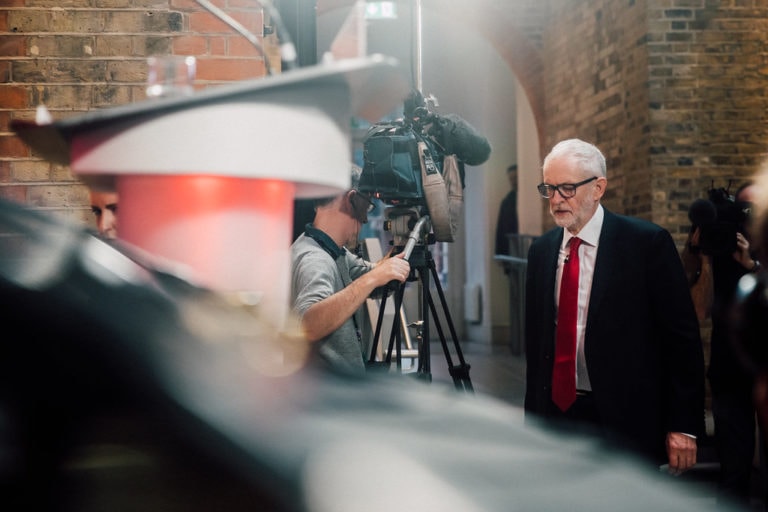
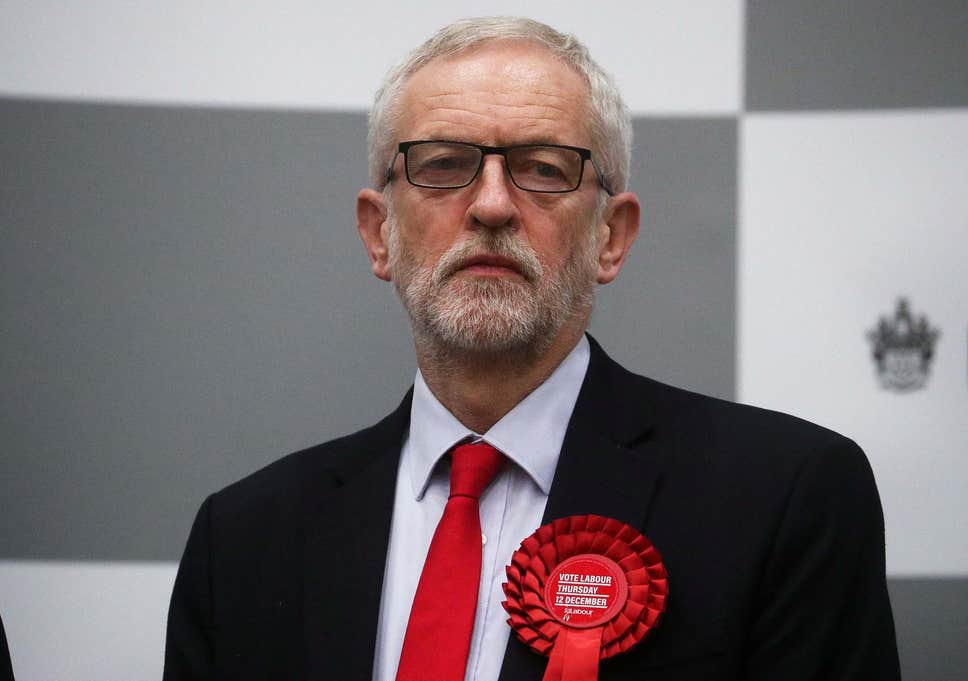
In the photo: Corbyn in 2019 Photo credit: Jeremy Corbyn

The anti-Semitism allegations are explained as, 1) “Corbyn’s support for an artist who drew a mural depicting hook-nosed bankers getting rich on the backs of the poor,” 2) “His assertion in 2013 that British Zionists don’t understand English irony,” which he further explained by saying that the word Zionism has been “hijacked by anti-Semites as code for Jews.” 3) Finally, “Labour’s refusal to adopt in full an internationally recognised description of anti-Semitism. A poll has found out that “more than 85 per cent of British Jews think Jeremy Corbyn is anti-Semitic.”

As the leader of the leftist party, these allegations weakened the image of Corbyn as an inclusive leader.

Unrealistic Promises

The biggest difference between the Conservative and Labour election campaigns and pledges was that while the Conservative party kept it short and simple, Labour put forward one unrealistic promise after another, leading to only 18% of the public believing that they would (and could afford to) keep them all.
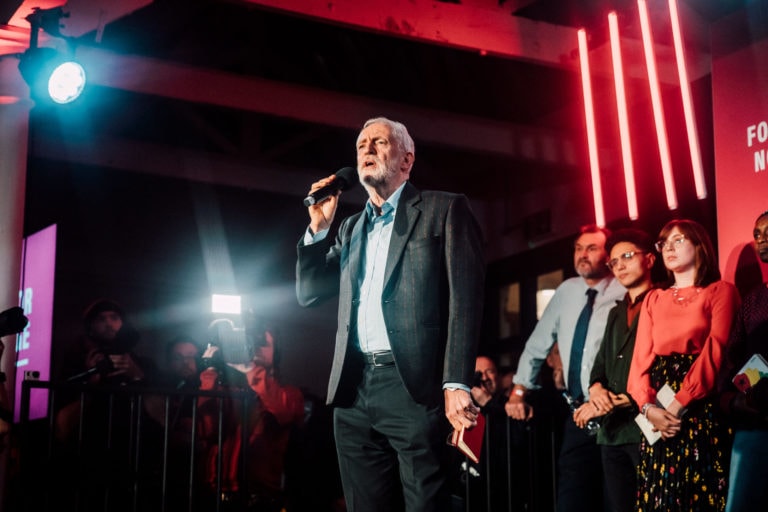
In the photo: Corbyn at a rally Photo credit: Jeremy Corbyn

Labour promised to abolish all tuition fees, free broadband for all, to re-nationalise mail, rail, water and energy, to put more money into the NHS, to build 150.000 more council homes etc., while claiming that there will be no rise in taxes for 95% of the people. Fact-checkers have found that while the percentage for tax is correct, Labour only mentioned VAT, National Insurance and income tax. “Other taxes that could affect people with salaries under £80,000 include inheritance tax and corporation tax, both of which stand to rise under Labour’s manifesto.”

To conclude, the fact that Labour was not clear on where it stood with regard to Brexit, did not have simple yet reasonable promises, tried to attract different groups and ideologies through false promises as well as Corbyn failing to prove that he is an inclusive leader led to the Labour loss.


Editor’s Note: The opinions expressed here by Impakter.com columnists are their own, not those of Impakter.com— In the featured photo: Corbyn Loses — Featured Photo Credit: The Independent
Tags: antisemitismBoris JohnsonBrexitcorbynelectionlabouruk
Previous Post

For-Profit Strategies for the Not-for-Profit World

Next Post

Saving 20 MILLION Meals – The TooGoodToGo Story

Related Posts

ESG News regarding the UK unemployment rate rising to a four-year high, oil prices drop below $60 amid Russia-Ukraine peace talks, water and wheat supplies crisis in Iraq, and Neste pushes back its climate targets
Business

UK Unemployment Rate Hits Four-Year High

Today’s ESG Updates UK Unemployment Hits Four-Year High: Jobless rate rises to 5.1%, with youth unemployment surging to 546,000. Oil...

byAnastasiia Barmotina
December 16, 2025
ESG News covering Great British Energy’s 2030 clean-power strategy, UK government investment, nationwide renewable expansion, community energy projects, offshore wind development, and job creation in the energy transition.
Business

Great British Energy Unveils 2030 Clean Power Strategy

Today’s ESG Updates Great British Energy 2030 Clean Power Plan: GBE outlines a five-year strategy to deliver 15 GW of...

byJana Deghidy
December 4, 2025
ESG News regarding the UK’s Updated Environmental Improvement Plan, modernizing Mauritania’s railway system, the EU carbon border tax, and the EU’s cross-border energy projects
Business

UK Unveils Updated Environmental Improvement Plan

Today’s ESG Updates UK Accelerates Nature Recovery: The government commits £500m to Landscape Recovery and targets 250,000 hectares of restored...

bySarah Perras
December 1, 2025
ESG News regarding using AI to prevent wildfires, Ferrari’s deal with Shell, plastic waste job creation in UK, and China’s 30% increase in solar power use
Business

AI’s Role in Wildfire Prevention

Today’s ESG Updates Utilities Turn to AI for Wildfire Prevention: Power companies across the U.S. and Europe are partnering with...

bySarah Perras
November 25, 2025
ESG News regarding: Amazon launches projects in the US, UK, and Mexico expected to restore over 2 billion liters of water per year, Rio Tinto invests A$35m in Calix’s ‘Zesty’ green-iron demo using electric heat and hydrogen; People fish as Dukovany’s cooling towers loom; Czechia adds two new reactors after KHNP wins tender. A farmer sprays a field as France reports a small post-ban rise in insect-eating birds
Business

Amazon Launches Water Replenishment Projects Across US, UK, Mexico

Today’s ESG Updates Amazon Restores Water: New projects in the US, UK, and Mexico aim to restore over 2 billion...

byAda Omar
November 18, 2025
food waste
Business

COP30: UNEP Launches New Initiative to Halve Food Waste by 2030

Today’s ESG Updates COP30: Food Waste Breakthrough: UNEP plans to reduce food waste by half, reduce hunger and cut 7%...

byPuja Doshi
November 14, 2025
ESG News regarding: only 16% of companies on track to hit net zero targets by 2050 per Accenture report, Orsted completes green transformation, EU and UK to begin carbon market link negotiations, China to expand renewable energy sector
Business

Only 16% of Large Companies on Track for Net Zero

Today’s ESG Updates Accenture Report Highlights Net Zero: While 89% of the world’s largest companies link decarbonization to business value,...

bySarah Perras
November 12, 2025
ESG news regarding BP’s higher oil demand prediction, Total Energies France bid, Stegra Microsoft net-zero steel partnership, UK’s carbon capture project
Business

BP Forecasts Higher Oil Use in 2050

Today’s ESG Updates BP Revises Oil & Gas Demand Forecast: BP now expects oil consumption to be 83 million barrels...

bySarah Perras
September 25, 2025
Next Post
Saving 20 MILLION Meals – The TooGoodToGo Story

Saving 20 MILLION Meals - The TooGoodToGo Story

Recent News

ESG News regarding Microsoft’s wind power deal with Iberdrola in Spain, OECD and EPO findings on the quantum sector’s maturation, SBTi’s pilot of a net-zero standard for power companies, and the European Commission’s proposed expansion of the Carbon Border Adjustment Mechanism.

Microsoft Signs 150 MW Wind Power Agreements in Spain With Iberdrola 

December 17, 2025
Australia Social Media Age Ban

What Australia’s Social Media Age Ban Really Means

December 17, 2025
women and extreme heat

Women and Extreme Heat: Simple Adaptations Make a Big Difference

December 17, 2025
  • ESG News
  • Sustainable Finance
  • Business

© 2025 Impakter.com owned by Klimado GmbH

No Result
View All Result
  • Environment
    • Biodiversity
    • Climate Change
    • Circular Economy
    • Energy
  • FINANCE
    • ESG News
    • Sustainable Finance
    • Business
  • TECH
    • Start-up
    • AI & Machine Learning
    • Green Tech
  • Industry News
    • Entertainment
    • Food and Agriculture
    • Health
    • Politics & Foreign Affairs
    • Philanthropy
    • Science
    • Sport
  • Editorial Series
    • SDGs Series
    • Shape Your Future
    • Sustainable Cities
      • Copenhagen
      • San Francisco
      • Seattle
      • Sydney
  • About us
    • Company
    • Team
    • Global Leaders
    • Partners
    • Write for Impakter
    • Contact Us
    • Privacy Policy

© 2025 Impakter.com owned by Klimado GmbH