Impakter
  • Environment
    • Biodiversity
    • Climate Change
    • Circular Economy
    • Energy
  • FINANCE
    • ESG News
    • Sustainable Finance
    • Business
  • TECH
    • Start-up
    • AI & Machine Learning
    • Green Tech
  • Industry News
    • Entertainment
    • Food and Agriculture
    • Health
    • Politics & Foreign Affairs
    • Philanthropy
    • Science
    • Sport
  • Editorial Series
    • SDGs Series
    • Shape Your Future
    • Sustainable Cities
      • Copenhagen
      • San Francisco
      • Seattle
      • Sydney
  • About us
    • Company
    • Team
    • Partners
    • Write for Impakter
    • Contact Us
    • Privacy Policy
No Result
View All Result
Impakter logo
No Result
View All Result
Why I Never Applied for a Driver’s License

Why I Never Applied for a Driver’s License

Derin KoçerbyDerin Koçer
January 31, 2020
in Environment
0

I could have. I could have taken the tests, joined a course, and earned a driver’s license. Both here, in the UK, and in my home country, Turkey. I decided not to when I turned 18, and nearly everyone thought I was insane. When they asked me “why,” I politely said with an audacious smile, “We are in the 21st century, how could I?” Mostly, they laughed.

Quitting Cars

For someone living in a London suburb and spending most of the time in the city, a car can be useful, no one denies that. For someone in Istanbul, it can be even more useful. A city larger than London with only four tube lines, Istanbul is not the best city on earth to travel without a car. Racing to the tube or running to catch the train may be devastating sometimes — but can we pass through this joyous thing called life without any challenges? I argue we cannot.
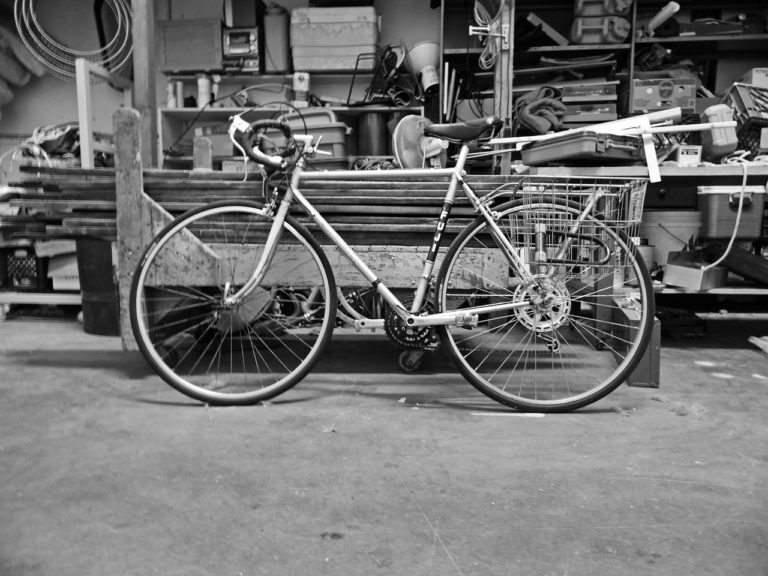
In the Photo: A parked bicycle. Photo credit: Elissa Capelle Vaughn

It is a challenge we all should be a part of, actually. The other day, as I was reading the New York Times, I saw Danya Issawi’s essay, I Quit Cars and felt a sense of relief: I was not alone. Issawi, a 27-year-old professional living in Los Angeles, was telling the readers why and how she stopped using cars. It was an environmentalist stance she took. After years of driving through the horrible traffic of Los Angeles, Issawi saw how unhappy she was, and how much she, coming from environmentalist family, was damaging the planet we all live in.

It did not happen overnight, for sure. According to her writing, 2016 was a turning point. It was the year history looked in the face of Donald Trump, who was arguing that climate change is a hoax created by China, and who was saying that the U.S. should quit the Paris Climate Accord. His election was not an awakening but a reminder of how badly it all can go.


Related topics: Measuring the climate impact of our diet choices – Predicting Social and Environmental Impact Through Due Diligence

So, in May 2017, Issawi decided to quit cars just for a month — but she did not stop. She was the one cycling even though it was pouring rain. She was the one not taking a cab or calling an Uber when she did not have any other choice. And in September, she sold her car. “It was totally liberating,” she says. “I take the train now to see my boyfriend in Orange County, and I always joked that when I used to see him on Friday nights, I’d get out of the car and be ready to punch somebody in the face because that traffic takes years off your life. Now, taking the train is so easy. There’s only one transfer. I can work. I can read. I can take my time, and I’m in such a good mood.”

To put it simply, what I, a man half a decade younger than Issawi, did was to not start driving in the first place. Even though some might have thought I was crazy for caring about the future of the planet I live in, as she says, it was a liberating choice not to pursue a driver’s license. Our decisions cannot be separated from the soul and priorities of our generation.

For the Environment

Deputy Editor of the New York Magazine David Wallace-Wells puts it clearly in his remarkable book, “The Uninhabitable World”: If we do not act, we may soon be discussing “the end of our civilization.” His first sentence in the book is a comprehensive summary of it all: “It is worse, much worse than you think.”

You are failing us, but the young people are starting to understand your betrayal.

— Greta Thunberg

Although President Trump and others like him mock Greta Thunberg regularly, her angry look at the president represents more than a moment of despair, but it was representing the soul of the coming century. “You are failing us,” Thunberg said in her controversial speech at the United Nations. “But the young people are starting to understand your betrayal.”

In the Photo: Greta Thunberg outside the Swedish parliament. Photo Credit: Wikimedia Commons

Exactly, it is a betrayal. We do live in the warmest time of our planet and it did not heat itself up — we did. Consequentially, we are responsible to turn it around. According to a New York Times article, 2019 was the second warmest year ever, while the hottest was 2016. This would ultimately make the last decade the warmest in recorded history.

Being a climate scientist is not needed to see where we are: Australia is on fire and the people in Alaska are sailing without jackets. The World Bank reports that if humanity does not act in the coming 30 years, our world will have to figure out how to deal with more than 140 million climate refugees. UN describes it as a matter of survival. Betrayal it is.

You do not need to be a monk to sell your Ferrari and use the tube instead. You also should not become an international figure like Thunberg to fight for your future. You just need to care. And act.

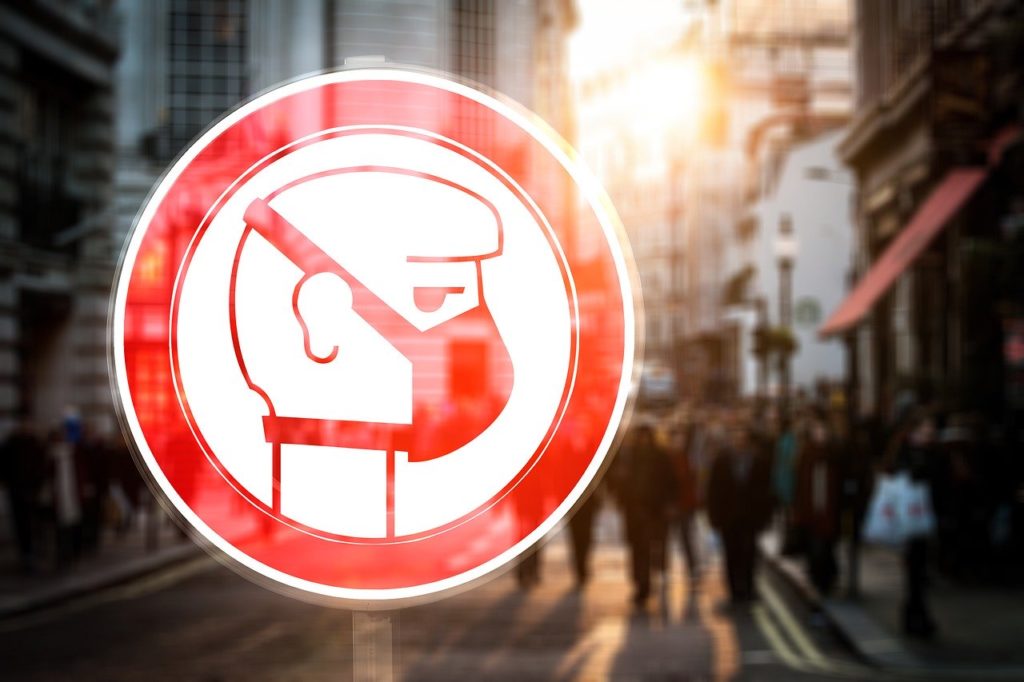
Democracies can become paralyzed by the decisions we make. But we all should remember this: We, the people, are the ones who make democracies. So, it is our right to act even though our leaders may be turning a blind eye on matters of life and death. The story of “The Monk Who Sold His Ferrari” dominated culture for years. But the world has changed. You do not need to be a monk to sell your Ferrari and use the tube instead. You also should not become an international figure like Thunberg to fight for your future. You just need to care. And act.



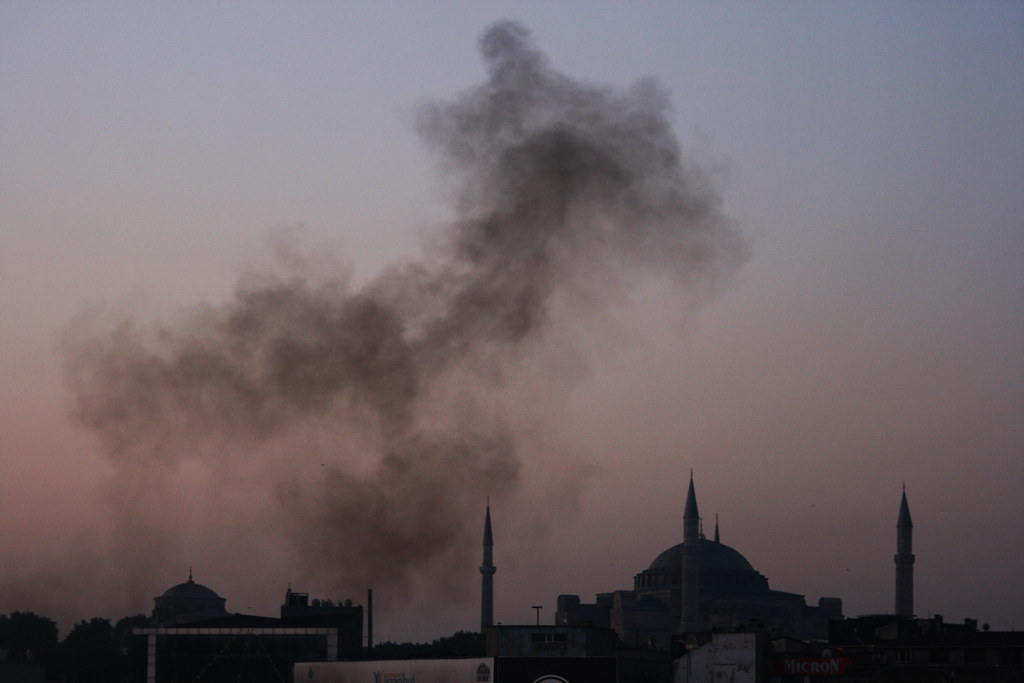
Editor’s Note: The opinions expressed here by Impakter.com columnists are their own, not those of Impakter.com — In the featured photo: Smoke Over Istanbul — Featured Photo Credit: Quinn Donbrowski
Tags: CarsClimate Changeenvrionmenttransport
Previous Post

How to achieve large-scale impacts from agricultural innovations

Next Post

Artificial Intelligence Deployed Against Coronavirus

Related Posts

How Climate Change Is Driving Evolution
Climate Change

How Climate Change Is Driving Evolution

As global temperatures continue to rise at alarming rates, climate change threatens to wipe out entire groups of animal species....

byYuxi Lim
February 5, 2026
biodiversity loss
Biodiversity

The Economics of Biodiversity Loss

In the 1990s, India’s vulture population collapsed due to the unintended knock-on effect of a veterinary drug for cattle, with...

byStefano Giglio - Professor at Yale Universityand2 others
February 4, 2026
The Era of ‘Global Water Bankruptcy’ Has Begun
Climate Change

The Era of ‘Global Water Bankruptcy’ Has Begun

Humanity’s long-term water usage and damage have exceeded nature's renewal and safe limits, a situation scientists and the media have...

byNmesoma Ezetu
February 4, 2026
A picture with a wind power generator
Society

Emissions and Economic Growth: Is There Still a Link?

In prior decades, economic growth and emissions co-existed. As countries grew richer, they produced more and emitted more. This relationship...

byFedor Sukhoi
February 3, 2026
Three sponsors for the 2026 Winter Olympics in Italy could generate 1.3 million tons of CO2
Climate Change

Winter Olympics Sponsorship Emissions: Who Are the Main Offenders?

The 2026 Winter Olympic Games are set to begin in Italy next month. Scattered across towns in northern Italy, from...

bySarah Perras
February 2, 2026
WEF Report Ranks Environmental Challenges as Greatest Long-Term Threat to Global Stability
Business

WEF Report Ranks Environmental Challenges as Greatest Long-Term Threat to Global Stability

The World Economic Forum’s Global Risks Report 2025 found that environmental risks are deteriorating faster than other threats and challenges.  ...

byBenjamin Clabault
February 2, 2026
Thames Water closes in on rescue deal;
Environment

Thames Water Closes in on £16bn Rescue Deal

Today’s ESG Updates: Thames Water Closes in on £16bn Rescue Deal: Thames Water is edging closer to a multibillion-pound rescue...

byAriq Haidar
February 2, 2026
Food Waste in India
Climate Change

India’s Food Waste Is Turning Into an Environmental Time Bomb

India, a key player in this fight, is currently battling a confluence of climate-driven disasters. Last year’s punishing extreme heatwave,...

byPranjali Chowdhary - Research and Policy Associate at the Institute for Governance and Sustainable Development, Indiaand1 others
January 30, 2026
Next Post
Artificial Intelligence Deployed Against Coronavirus

Artificial Intelligence Deployed Against Coronavirus

Recent News

ESG News regarding Nuclear Waste Storage; Canada Replaces EV Mandate; EU and Turkey Resume Trade Modernization Talks; Startup Raises $29M for Desk-Sized Fusion Reactor

Volunteers Needed for Nuclear Waste Storage

February 6, 2026
Rare Earth Metals 101

Rare Earth Metals 101

February 6, 2026
How to Spot Greenwashing in the Publishing Industry

How to Spot Greenwashing in the Publishing Industry

February 6, 2026
  • ESG News
  • Sustainable Finance
  • Business

© 2025 Impakter.com owned by Klimado GmbH

No Result
View All Result
  • Environment
    • Biodiversity
    • Climate Change
    • Circular Economy
    • Energy
  • FINANCE
    • ESG News
    • Sustainable Finance
    • Business
  • TECH
    • Start-up
    • AI & Machine Learning
    • Green Tech
  • Industry News
    • Entertainment
    • Food and Agriculture
    • Health
    • Politics & Foreign Affairs
    • Philanthropy
    • Science
    • Sport
  • Editorial Series
    • SDGs Series
    • Shape Your Future
    • Sustainable Cities
      • Copenhagen
      • San Francisco
      • Seattle
      • Sydney
  • About us
    • Company
    • Team
    • Partners
    • Write for Impakter
    • Contact Us
    • Privacy Policy

© 2025 Impakter.com owned by Klimado GmbH