Although there have always been legitimate grounds for some questioning of science in the United States, the accepted notion has been that scientific findings and judgments are usually trusted, but on occasion, with a minimal level of mistrust. The new Trump Administration’s mistrust of science and research has dramatically increased, and while it clearly affects this country, the damage goes much beyond. Indeed, it will shape the contours of our common future existence.
Such Luddite suspicion comes at a very perilous point in time. It should worry not only Americans, but everyone, regardless of whether they are from the Global North or the Global South.
At the Grassroots
In 1859, Charles Darwin proposed a theory of evolution in his seminal work, “On the Origin of Species.” It was strongly resisted by many then-leading scientific thinkers, who firmly held to the view that humans can go only so far in explaining our world and must accept the notion of a “Creator.”
Over time, modern science embraced Darwin and, more broadly, as mentioned by E.O. Wilson in Biophilia, “the venerable dictum attributed to Polybius that, whenever it is possible to find out the cause of what is happening, one should not have recourse to the gods.”
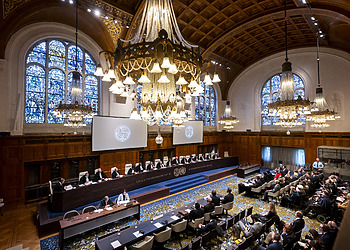
In the United States, there has long been resistance to the notion of evolution within churches and religious groups. This has not been supported by judicial rulings, such as the famous Scopes Trial, and later Supreme Court decisions, including Edwards v. Aguillard (1987), which found that a state law requiring teaching of creation science violated the Establishment Clause of the U.S. Constitution.
By circa 2025, although it is unlawful to ban the teaching of evolution, ways to circumvent the intent have been found in not banning the teaching of evolution, but requiring, or more commonly permitting, teachers to misrepresent evolution as scientifically controversial. A handful of states — Mississippi, Louisiana, and Tennessee — currently have such laws, noted in the above reference to resistance.
A Nature magazine editorial this past February, titled “Trump 2.0: An assault on science anywhere is an assault on science everywhere,” expressed early concerns. More recently, in describing the damage being done in denying scientific research funding, Nature put it this way:
“The administration of US President Donald Trump is pursuing a destructive agenda against science, telling funding agencies what they can fund, universities who[m] they can hire, and researchers what they can study. Research grants are being slashed, with a particular emphasis on science that goes against the administration’s ideological line, including ‘the inclusion and support of under-represented groups in society.’”
Some examples:
Damaging Public Health Capability: Budget cuts to the various federal scientific research programs, including those of the National Institutes of Health (NIH), the Food and Drug Administration (FDA), and the Environmental Protection Agency (EPA), along with staff reductions and disregard of expertise, are why we will all “pay later.”
For example, the Centers for Disease Control and Prevention (CDC) has been gutted with the firing of its newly appointed Chief, resignations of three very senior and experienced staff, and the prior firing of 600 CDC employees.
Thus, political considerations have overridden existing and new vaccine research and distribution, contrary to objective scientific recommendations. The hollowing out, near elimination, of the White House Office of Pandemic Preparedness and Response Policy undermines the country’s ability to identify infectious diseases early on, prevent their spread, and coordinate a whole–of-government response.
The administration’s withdrawal from the World Health Organization (WHO) harms us as much as it does that institution. When new information on communicable disease outbreaks, the need for quarantine, non-communicable disease coordination, evaluation of new drugs, medical practices, and so forth is not shared on a worldwide basis, the information gap directly affects American well-being and healthcare costs.
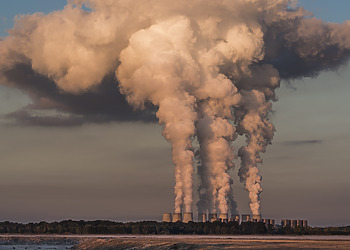
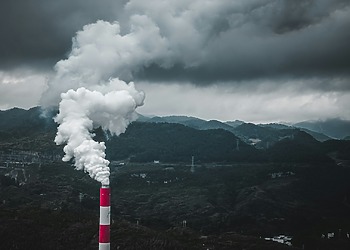
Environmental Risk Denial: The Administration has repeatedly downplayed the threats posed by climate change and withdrawn from the crucial Paris Agreement, which addresses climate change.
Further, the rollbacks of regulations meant to protect air and water quality, including the Clean Power Plan and the Waters of the United States rule, all mean every American’s life and health are at greater risk.
Scientific Advisory Board Dismantling: Disbanding, sidelining, and making politically inspired appointments to scientific advisory committees, which are relied on to provide expertise on healthcare, environmental protection, and other areas of public policy, has deprived governmental decision-makers of scientifically supported advice.
These are just the tip of the iceberg. According to The Union of Concerned Scientists July 21, 2025, report:
“Between January 20 and June 30 of this year, we documented 402 attacks on science. We define “attacks on science” as actions, statements, or decisions that originate from an elected official or political appointee in a federal agency that results in the censoring, manipulation, forging, or misinforming on scientific data, results, or conclusions conducted within the government or with federal funds.”
Losing scientific capability is not in the public interest
The United States has long been regarded as home to the world’s leading scientific community and a leader in promoting innovation.
Its current descent into anti-science is a warning for other countries: it shows how easily and quickly anti-science attitudes can spread to every corner of society, even in the most modern and advanced countries, whether in Europe, Asia, or virtually anywhere such attitudes take hold.
Related Articles: How Widespread Science Suppression Disempowers the Public | Why Worry About Anti-Science and Anti-Vaccines Attitudes and One Health? | How Education and Social Media Regulation Can Combat Science Denial | Millennial Scientists in a Segregating World — The Role of Science in Shaping Society | To Restore Trust in Science, We Need Great Storytellers
Sounding the Alarm
What is needed is an intensified effort by authorities everywhere to cope better with new technologies.
At the 2024 Nobel Prize Banquet Dinner, Professor Geoffrey Hinton, winner of the prize in physics, spoke of artificial intelligence already being used by authoritarian governments for intensive surveillance of citizens, and by cyber criminals stealing millions from people and companies; and he noted prospects of creating new viruses or new weaponry. He concluded with the following:
“There is also a longer-term existential threat that will arise when we create digital beings that are more intelligent than ourselves. We have no idea whether we can stay in control. But we now have evidence that if they are created by companies motivated by short-term profits, our safety will not be the top priority. We urgently need research on how to prevent these new beings from wanting to take control. They are no longer science fiction.”
We have been alerted to the risks. The question now is whether anything will be done to address them.
Editor’s Note: The opinions expressed here by the authors are their own, not those of Impakter.com — In the Cover Photo: Portrait of Charles Darwin. Cover Photo Credit: Wellcome Library, London / CC BY 4.0