“How we make and use products and how we produce food generates almost half of the emissions in our current economic system because the production of goods and infrastructure generates emissions all along value chains,” said Mayor Minna Arve of Turku, Finland, at ICLEI’s July Race-to-Zero dialogue, which brought together many levels of government to reflect on local governments’ efforts to become climate neutral.
Tackling production-based emissions is critical to the success of the Paris Agreement but it’s only half of the picture.
Cities typically build their climate plans and measure progress using production-based carbon inventories. These inventories map how much carbon is emitted by different sectors that operate within cities’ administrative boundaries and it is therefore mainly these emissions that are targeted in local mitigation efforts. Tackling production-based emissions is critical to the success of the Paris Agreement but it’s only half of the picture. Cities have to be looking at consumption-based emissions, too. These so-called indirect emissions are proving to be the blind spot of current mitigation efforts.

Estimates by C40 prove Mayor Arve’s point – the emissions induced by consumption in cities are likely to be at least as high as the emissions directly linked to local production. Because production systems are fragmented, the consumption levels in cities create indirect emissions that often arise far from the place of consumption.
Learnings from Turku, Finland
The city of Turku, Finland, is one of 449 cities that have joined Race to Zero, a global campaign gathering actors outside national governments that committed to achieving net zero carbon emissions by 2050 at the latest. The objective is to build momentum around the shift to a decarbonized economy ahead of the 2021 UN Climate Change Conference (COP26), where governments must strengthen their contributions to the Paris Agreement to ensure they are on track to limit global warming to 1.5 degrees.

With its climate plan binding the city to become climate neutral by 2029, Turku is well ahead of the 2050 deadline. The city has already cut its emissions by half compared to 1990 levels, thanks to investments in renewable energy, decarbonizing district heating and low-carbon transport.
However, the carbon footprint of individual consumption in Finland remains particularly high. According to the 1.5 Degree Lifestyles report by Sitra and IGES, Finns emit on average 10,4 tCO2e per capita per year, a footprint that would need to become ten times smaller by 2050 to meet the 1.5 degree target.
Related Articles: Accelerating the Race to Zero Carbon | Hope in the City
With this in mind, Turku is looking to mobilize local actors and investing in the circular economy, a resource management framework that prioritizes regenerative resources, preserves what is already made, uses waste as a resource and generates new business models to decrease extraction needs.
Mayor Minna Arve and the city of Turku are focusing on the circular economy as a tool to address the challenge of consumption-based emissions. “Circular economy is an efficient tool to address these hidden emissions because it targets the design of products and aims at reducing resource extraction as early in the supply chain as possible,” Arve pointed out at the Race to Zero dialogues. “Turku is the first city linking the circular economy to its climate plan to help address greenhouse gas emissions in a systemic manner and beyond its jurisdictional boundaries.”
How the Circular Economy Can Help
The Circular Turku roadmap will target five key sectors (food, transport and logistics, buildings and construction, energy and water) to identify interventions that would support a transition to zero-emission and zero waste.
These efforts build on existing work around the circular economy in Turku. The city has been supporting circular economy initiatives and innovations that reduce demand for primary resource extraction and make the best use of existing materials, thereby contributing indirectly to climate neutrality goals.
For example, through the city-owned company Turku Science Park and the associated CleanTurku initiative, Turku has been supporting the development of the Smart Chemistry Park (SCP), an industrial symbiosis initiative aimed at recycling industrial side-streams into high-value chemical products (read full case study). Innovations at SCP, such as a technology increasing the recycling rate of e-vehicles lithium-ion batteries, have been transferred into large branches of industry in Finland – a telling example of how local innovations can contribute to the low carbon transition at the national level.
In addition, Turku is placing a strong emphasis on ensuring city-owned assets and public procurement meet carbon neutrality criteria. An illustration of this is the methodology developed by the city’s procurement department and the Finnish Environment Institute to decrease the lifecycle carbon impacts of Turku’s food contracts (read full case study).
In Turku, circular economy initiatives are also being used to identify new sources of energy and protect existing carbon sinks. The city is set to release the Circular Turku roadmap in 2021 and local efforts are well underway.
The circular economy is inherently cross-sectoral and requires engagement with stakeholders across value chains in pursuit of innovations that contribute to a resilient and low carbon local economy. Such an approach has demonstrated results in Turku. “Our economy has been growing steadily and these investments have created new jobs, which helped us being resilient to the COVID-19 crisis,” says Mayor Arve.
Read more about how the circular economy can help achieve climate neutrality in ICLEI and the City of Turku’s policy brief: Towards carbon-neutral circular economies at the regional level.
—
About the Author: Marion Guenard is part of ICLEI’s Circular Development team and works with cities around the world on implementing circular economy projects and policy frameworks at the local level. She is currently supporting the city of Turku, Finland, in designing a collaborative circular economy action plan. Marion has an MSc in Environmental Management from Paris-Sorbonne University.
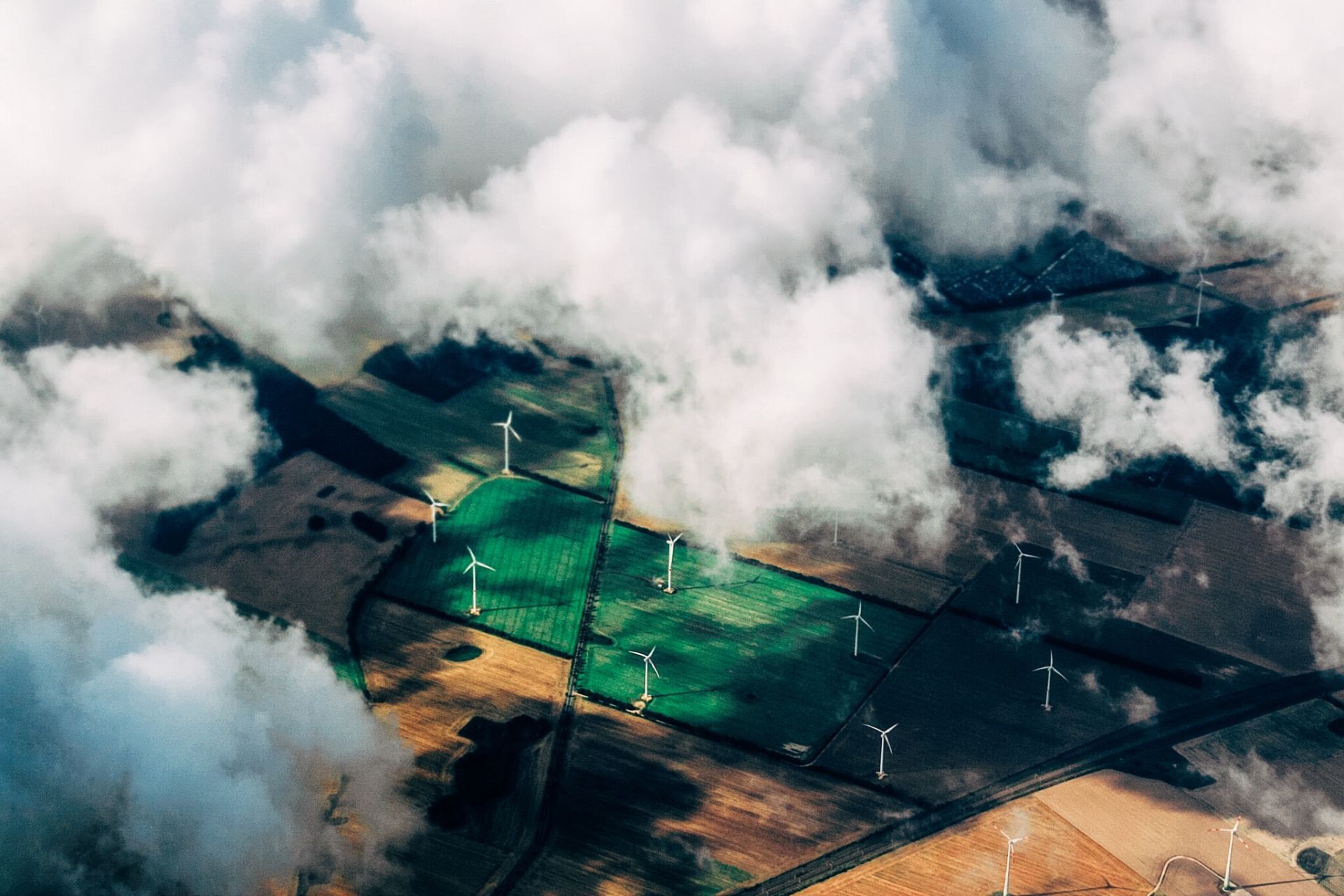
Editor’s Note: The opinions expressed here by Impakter.com columnists are their own, not those of Impakter.com. — In the Featured Photo: Windmills in a field. — Featured Photo Credit: Thomas Richter