Note from the Editor: In these hours, following the tragic killing of innocents in Paris and Beirut, our thoughts are with the people of France and Lebanon.
Impakter is a global publication. Our team comes from every corner of our beloved World. We represent the citizens of the World. Furthermore, our aim is to express that through this publication. Today we want this thought to reach higher than ever before.
We believe that the current events taking place during the G20 could potentially be a significant milestone in our human history. A unprecedented event. The G20 could potentially regroup all the citizens of the World. All united into delivering a safer and united future for all the generations to come.
The road is full of challenges, but we will all walk through it under one flag, that of Peace. This is without a doubt a key turning point in our history. Like the Phoenix, we are to be reborn from the ashes of our World’s darkest hours.
Now, more then ever, we must move upwards and onwards.
This is a first analysis of what might be happening next.
Lessons Learned from the Paris Attacks – The Way Forward
Once the United Nations Security Council is unblocked, we can hope to see an end to the Syria crisis. So far, because of Russia’s repeated use of its veto power at the Security Council, supported by China, its usual ally, the international community has not been able to move forward in a concerted fashion. Syria, after three years of a devastating civil war, is now pounded by Russian and American forces and their respective allies, but they haven’t agreed on common objectives: Russia supports Bashir al Assad, the United States targets Daesh, a.k.a ISIS or IS. But now things are changing.
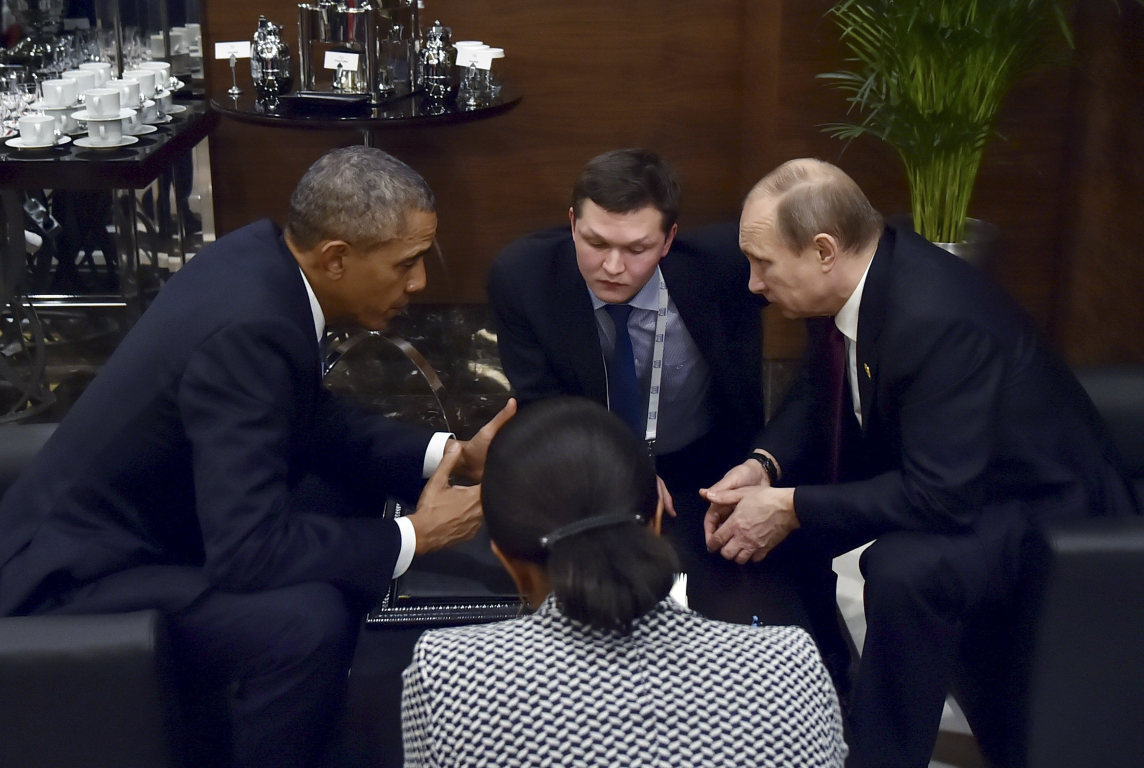
On Sunday 15 November, at the G20 meeting in Turkey, a major political decision was reportedly taken, a page in the difficult relationship between Russia and the West appears to have been turned. It seems that Putin and Obama had an eye-to-eye talk that lasted half-an-hour and their meeting was caught on Turkish television.
Negotiations under the aegis of the United Nations between the Syrian opposition and the regime [meaning Bashir al Assad] and a cease-fire
A White House spokesman said afterwards that the meeting had been “very constructive” and that they have agreed to support a political transition, with “negotiations under the aegis of the United Nations between the Syrian opposition and the regime [meaning Bashir al Assad] and a cease-fire” (sic). No comment was apparently made regarding what to do with Bashir al Assad. This comes as no surprise: if they want to find an agreement, they have to stay diplomatically away from the thorny question of what to do with him. My guess is that if reasonably credible political elections can be organized at some point in the future in Syria (something that can be done only once peace is restored), both Russia and the US will leave Bashir al Assad’s fate to a popular vote.
We now need to see if Putin and Obama will follow through and actually go to the UN Security Council (UNSC) and hammer out together a Resolution on which they can agree – and pulling in with them the other three members of the Five Permanent SC members (those with veto power), France, the UK and China. Obviously, the rest of the UN membership will follow.
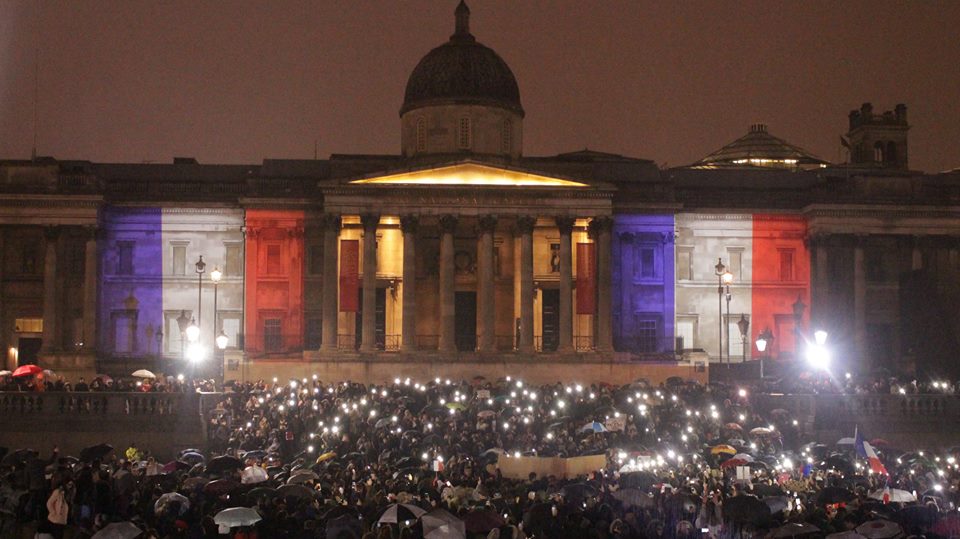 In the photo: 1 Minute of silence in Trafalgar square – Photo Credit: Maxime Berkowicz (Impakter.com)
So far, news in the mainstream media are focusing on the French reaction to the attacks, in particular on President Hollande’s description of the Paris attacks as an “act of war” that must be “mercilessly” countered and the French immediate launching of a massive airstrike against a Daesh stronghold in Raqqa. The expectation is that France will seek help from fellow NATO members under article 5 of the alliance treaty, to bolster its retaliatory power in “self-defense.”
This is hot news of course, and allows some journalists (notably like the UK Guardian here) to ponder whether retaliation is “lawful.” It may come as a surprise, but the legal basis for war against Daesh remains a matter of contention.
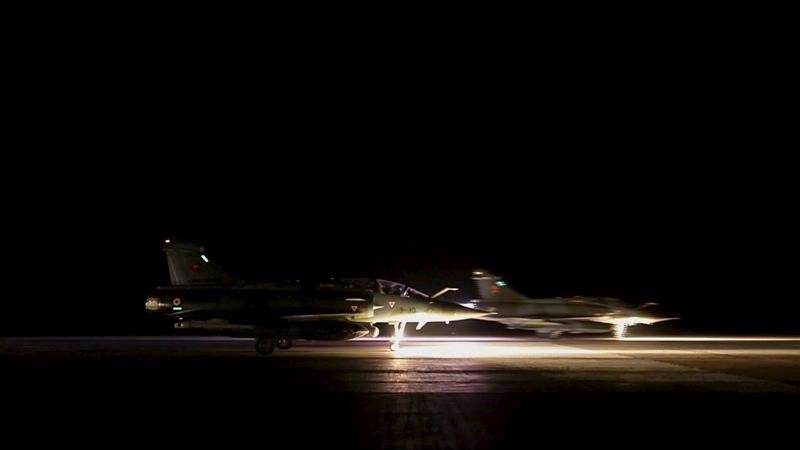 In the photo: French fighter jets taking off for Syria, 15 November 2015. Photo credit: UK Guardian
The NATO rules for both collective and individual self-defense do not apply since Daesh is “not technically considered a state.” The problem is that in previous international law decisions involving actions against a non-state, the exercise of this right of self-defense has not been considered lawful.
This was recently confirmed in a landmark decision by the International Court of Justice regarding the legal consequences of the wall being built by Israel in the Occupied Palestinian Territory, including in and around East Jerusalem. The Court concluded that:
In the light of the material before it, the Court is not convinced that the construction of the wall along the route chosen was the only means to safeguard the interests of Israel against the peril which it has invoked as justification for that construction. While Israel has the right, and indeed the duty to respond to the numerous and deadly acts of violence directed against its civilian population, in order to protect the life of its citizens, the measures taken are bound to remain in conformity with applicable international law.
Israel cannot rely on a right of self-defense or on a state of necessity in order to preclude the wrongfulness of the construction of the wall. The Court accordingly finds that the construction of the wall, and its associated régime, are contrary to international law.
What is noteworthy here however, is the fact that the construction of the wall is analyzed in all its on-the-ground consequences, and while the Court’s conclusion appears couched in general terms regarding the exercise of the right of self-defense, it is in fact grounded in the details of a very specific situation (the Palestine question) that cannot be automatically extended and applied to the Paris attacks and Daesh. So the question in fact remains open to varying legal interpretations and it is possible, even probable, that NATO rules regarding self-defense can and will prevail (though it may require considerable legal work).
A better and legally easier road out of this complex situation is a recourse to the United Nations – which is thus once again proving to be indispensable.
With a UN Security Council Resolution, the US and Russia can work together with the United Nations in a fully legal manner, restoring peace to Syria. That is precisely within the UN Security Council mandate. That’s what the United Nations is for.
And the task at hand, stop Daesh, is no small task. There is no question that Daesh has grown. Not content to spread terror in Syria and Iraq, decapitating prisoners and destroying ancient historic sites and art, Daesh has moved internationally.
Two factors are driving Daesh.
One, its financial might. It is largely derived from its exploitation of the oil fields it controls. The smuggling of this oil traveling on open roads across Syria and Iraq is a juicy business, reportedly pouring into Daesh’s coffers up to $ 3 million per day, though estimates vary since nobody can be sure of the results of airstrikes against it (but the oil fields are still functioning). Other sources of funding reportedly come from “bank looting” (for example, some $400 million from the Syrian Central Bank), hostage taking ($25 million in 2014) and rent from buildings in the conquered cities. Obviously, oil is its major source of funding – and that should be a major target for military strikes against it.
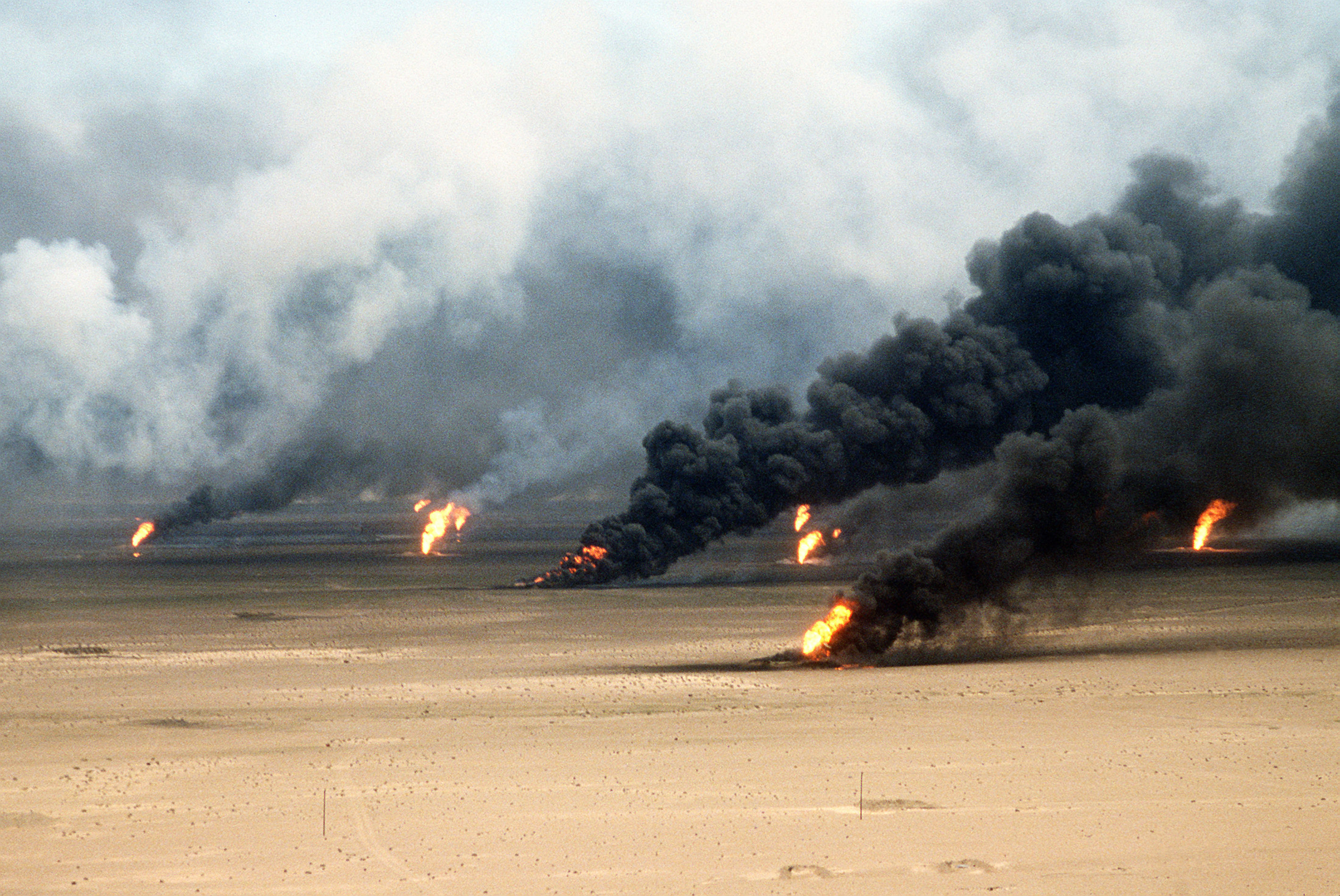 In the photo: Images from the Operation Desert Storm ( 2 August 1990 – 28 February 1991) – Oil well fires raged outside Kuwait City 91′
Two, its unique concept of jihad. For Daesh, jihad means crossing borders, going international. In recent weeks, we’ve observed Daesh launching a string of horrifying attacks, in Beirut, in Turkey, the downing of a Russian passenger plane over Egypt and now Paris.
This is undeniably a major shift in Daesh’s strategy and the West needs to abandon its view of Daesh as a localized phenomenon. For Mathieu Guidère, a terrorism specialist at the University of Toulouse, “there is a radical change of perception by the terrorists that they can now act in Paris just as they act in Syria or Baghdad. With this action, a psychological barrier has been broken,” But it’s more than a psychological barrier. As noted by William McCants, a scholar at the Brookings Institution and author of “The ISIS Apocalypse, “they have crossed some kind of Rubicon, they have definitely shifted in their thinking about targeting their enemies.” (Both experts spoke to the New York Times see here).
Daesh wants to shake the world, and in so doing, it has adopted a concept of jihad that is not mainstream. This summer, the New Yorker published an interesting analysis of jihadi poetry and songs (it seems Daesh is replete with songsters), noting that the kind of military jihad waged by Daesh is something new, in fact military jihad it concludes “was rarely put at the core of what it means to be a Muslim: by the twentieth century, many jurists considered it little more than a relic.” (For more details, see here.)
And this is not just the opinion of a Western magazine. The Islamic Supreme Council of America (ISCA) goes to great lengths to show in an article jointly written by its Chairman and by the Head Mufti of Cape Town (South Africa), that jihad is in fact a widely misunderstood concept: it does not means holy war as it is generally translated (in Arabic, war is another word, “al-harb”).
Jihad means struggling or striving and it refers to moral rather than military battles, as described by the Quran and in the teachings of the Prophet Muhammad. In the words of ISCA, it refers to “internal as well as external efforts to be a good Muslim or believer, as well as working to inform people about the faith of Islam.” Therefore, military action is “only one means of jihad, and is very rare.” At least very rare for theologians who point to what the Prophet Mohammed told his followers returning from a military campaign: “This day we have returned from the minor jihad to the major jihad,” meaning the minor one was the military campaign and the major one was the “battle for self-control and betterment”. Go tell Daesh that they are waging a “minor jihad!”
To conclude: The battle has to be waged on two fronts, financial and ideological. Daesh needs to be hit where it hurts the most in its financial might, in particular oil; and the limitations of its concept of jihad need to be systematically highlighted, spreading the analyses of respected Muslim theologians, such as those mentioned here.
Now, with the hundreds of dead and wounded in Paris, we need to deal with the situation, we can no longer believe that it is something happening over there, that it doesn’t concern us. In fact, the flow of immigrants that has invaded Europe can leave no one doubting the gravity of the problem or its persistence as long the Syrian crisis is allowed to fester.
And this is the job of the United Nations.