Most people think of virtual reality (VR) as science fiction finally come true in the form of the next generation gaming system. However, VR is not just being used for just fun and games; it is also being used as a tool in psychotherapy. While VR itself has only just recently hit the mass consumer market, VR systems have been used by therapists for at least the past ten years to help treat people who suffer from mental health issues, including post-traumatic stress disorder or PTSD.
What is PTSD and who is affected by it?
When people think of something that is traumatic, they tend to go big in their imagination. Scenarios like wars, major accidents, a near-death experience, etc. However, what most people fail to realize is that nearly anything can be a traumatizing depending on the person including emotional and verbal abuse. When a traumatic event overwhelms one’s ability to cope with the aftermath, it can be considered to be post-traumatic stress. The stress manifests its way in many ways including intrusive thoughts, nightmares, flashbacks, avoidance of triggering situations, and sleep disturbance — all of which can be highly disruptive to one’s daily life.

There is a common preconception that those who suffer from PTSD are battle-worn (male) war veterans, but the typical person suffering from PTSD actually tends to be women who are twice as likely to develop PTSD as opposed to men. Also, anxiety disorders like PTSD affect more people than one would think, with over 80% of people in the United States having experienced a traumatic event in their lives and nearly 70% of people worldwide suffering from anxiety disorders (not even counting the millions who go undiagnosed). Therefore, it is more likely than not that someone you know is suffering.

What benefits does VR have over traditional therapy?
VR has proven effective in helping treat people who do not respond as well to traditional forms of therapy and has shown to be also useful as a complement to other therapy methods. Additionally, the immersive qualities of a VR system offer the same benefits that traditional exposure therapy has without the in vivo exposure and supposed increased risk of relapsing that sometimes comes with direct confrontation of one’s triggers.
RELATED ARTICLES:
 Impakter Review: ‘Betterhelp’ – Emerging Online Mental Health Counseling

Apps for Mental Health-Do They Actually Help?

Road to Recovery: 5 Mental Health Apps to Brighten your life.
Allowing exposure to happen in a simulated and controlled environment can also help limit the stress sufferers already have plenty of when undergoing therapy. As seen in the video below, a particular strength of VR is its ability to recreate individually-tailored scenarios that evoke extremely specific memories in patients, such as a war veteran’s tour in the Middle East. In being able to target the specific source of the trauma, it can help patients overcome it in a hopefully more effective and efficient way. This is generally preferred to the traditional method of literally just imagining the traumatic event, which was usually done in lieu of real life exposure that was not possible for certain situations (like recreating a war zone).
Note: This video contains material that may be sensitive to some including explosions and gunfire.
https://www.youtube.com/watch?v=CDCLq4rhip0
What are the drawbacks to using VR for therapy?
Besides using VR outside of its intended use as an entertainment system, there are limitations to VR itself as a relatively new technology, mainly that people are simply not used to being within a simulation, let alone highly a stressful simulation. Extended period of time using a VR headset can lead to what experts call “cyber sickness” which is similar to motion sickness or nausea. This drawback can be especially detrimental when added on top of the other physical symptoms that can occur in a patient that has anxiety disorders, such headaches, upset stomach, and cold sweats.

If not carefully monitored, exposure therapy, virtual or not, can have negative effects on the patient and actually cause setbacks instead of progress. However, if a simulated situation becomes too much, a rather convenient thing about using VR for exposure is that removing oneself from the stressful situation is as easy as removing the headset. The same can’t be said for real-life exposure therapy where getting away from the trigger source is not always easily done like physically being unable to quickly get down from a high place when one has an extreme phobia of heights.

How can VR help if you know it’s fake — does it really work?
In the same way one can have a strong emotional response to a movie or a song, VR can help elicit and evoke the same type of response. Just because something is “fake” does not mean it is not effective. In fact, in some cases, knowing that these simulated situations are fake can be empowering to some people who are trying to confront their trauma. VR therapy allows them to see how irrational their brain is reacting in spite of them know it is a virtual reality. Those suffering from PTSD know better than anyone that the mind is a very powerful organ that is both capable of making us relive our worst traumas — and giving us hope of a new day.
If you or someone you know is suffering from mental health issues, there is help available at the following resources here (available worldwide).
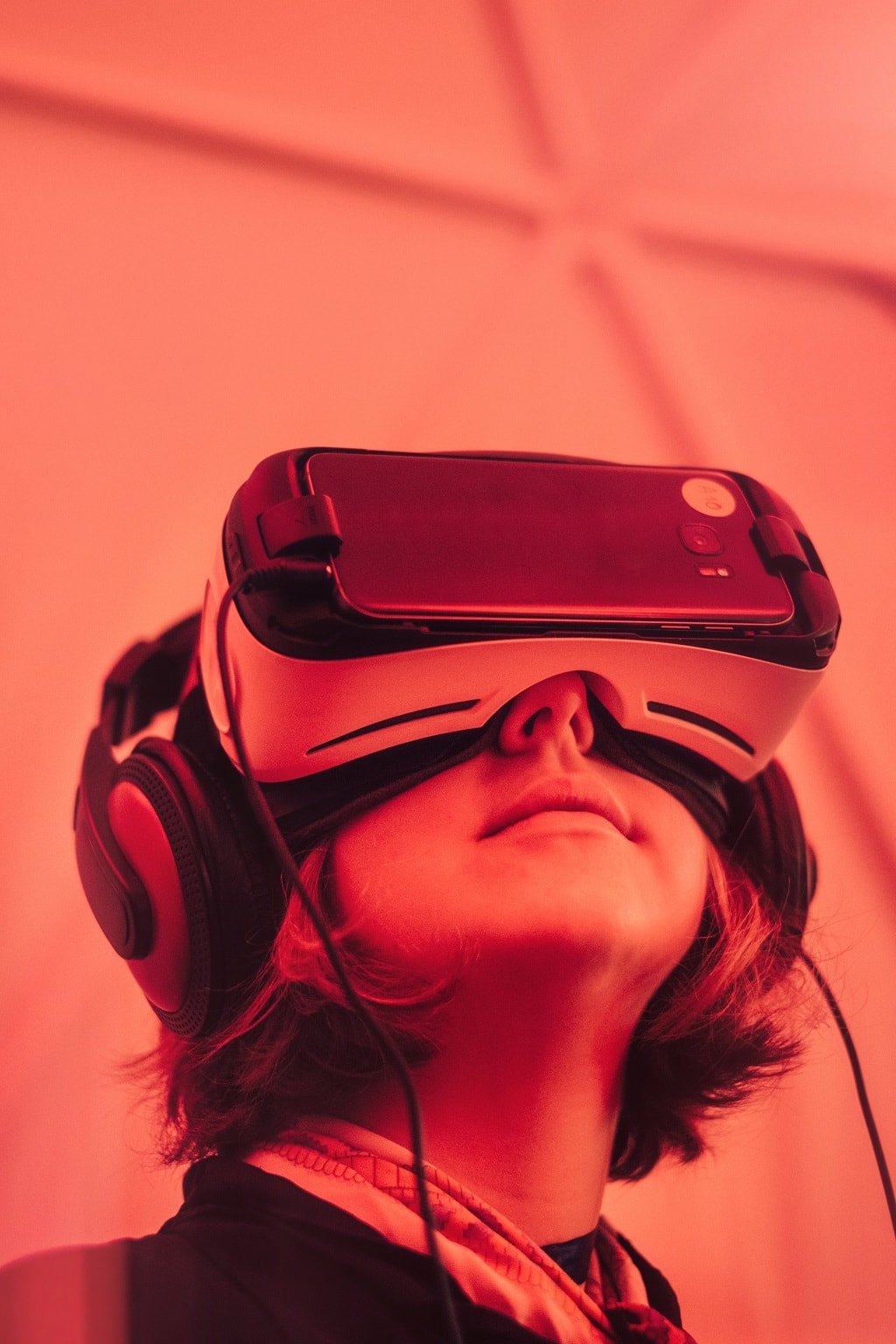
In the Cover Picture: A Woman with her VR Headset. Photo Credit: Samuel Zeller via Unsplash
Editor’s Note: The opinions expressed here by Impakter.com columnists are their own, not those of Impakter.com