Today’s ESG Updates
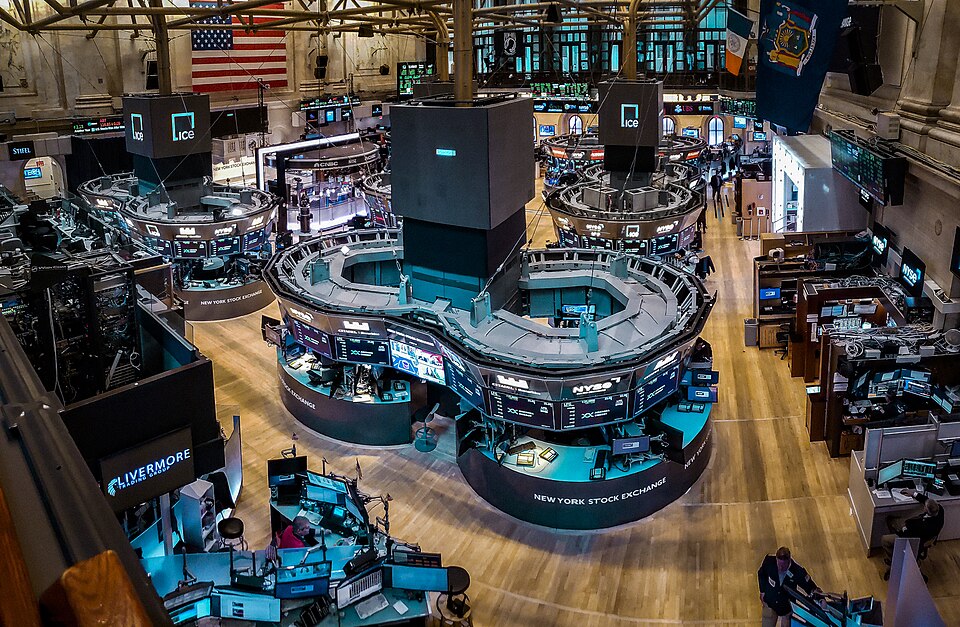
- US Stocks Slip as Oil Rises and Earnings Roll In: Major U.S. indexes such as the S&P 500, Dow Jones, and Nasdaq slipped from record highs as rising oil prices, mixed earnings, and uncertainty over the U.S.–Iran war weighed on markets.
- Cheniere Raises 2026 Outlook After Strong Q2 Performance: The major LNG giant is optimistic for the rest of 2026, as higher LNG volumes and margins have raised its full-year earnings.
- China Adds Record Renewables, but Curtailment Rises Amid Coal Lock-in: China’s record solar and wind expansion is being undercut by grid bottlenecks and long-term coal contracts.
- DRC’s Kamoa-Kakula Smelter Ramps Up as Copper Concentrate Export Ban Takes Effect: The DRC’s concentrate export ban may have limited impact as Kamoa-Kakula ramps up domestic smelting capacity.
US stocks slip as oil rises and earnings roll in
U.S. stocks slipped from recent record highs as rising oil prices, combined with the ongoing U.S.–Iran war and a mixed batch of corporate earnings, weighed on sentiment, with the S&P 500 down 0.2%, the Dow Jones 0.9%, and the Nasdaq 0.1%. Strong overall S&P 500 earnings helped offset sharp drops in names like Honeywell Aerospace and AppLovin. At the same time, Warner Bros. Discovery, Molson Coors, and SpaceX gained, the latter after a major lockup expiry for insiders’ shares. Brent crude jumped 3.8% to US$82.49 per barrel as the conflict in Iran continued to disrupt oil flows, keeping inflation stuck above 3%, increasing petrol and shipping costs. The U.S. economy grew at a sluggish 1.5% in Q2, with cooling but still-resilient jobs data, while higher inflation pressures are nudging the Federal Reserve toward another rate hike as the 10-year Treasury yields rose to 4.67%.
Klimado – Navigating climate complexity just got easier. Klimado offers a user-friendly platform for tracking local and global environmental shifts, making it an essential tool for climate-aware individuals and organizations.
Cheniere raises 2026 outlook after strong Q2 performance
American liquefied natural gas company Cheniere Energy (NYSE: LNG) delivered a strong Q2 2026 with revenue of US$5.73 billion, net income of $3.07 billion, a consolidated adjusted EBITDA of $1.80 billion, and a distributable cash flow of $1.17 billion, driven by higher LNG volumes and margins.
The company raised full‑year 2026 guidance, lifting Consolidated Adjusted EBITDA to US$7.90–8.40 billion and distributable cash flow to $5.30–5.80 billion. Capital allocation remained aggressive, with roughly $884 million deployed in the quarter via a 2.2-million-share buyback at $0.555 per share, $1.1 billion of partly equity-funded growth capex, and selective debt repayment.
Operationally, Cheniere exported 184 LNG cargoes loading 672 TBtu (Terra-British-thermal-unit), tightened its 2026 production outlook to 53–54 mtpa, completed Midscale Train 6 at Corpus Christi Stage 3, and expects first LNG from Train 7 imminently.
It also secured FERC approval to add 5 mtpa across Corpus Christi Stage 3 and Trains 8 & 9, advanced the Sabine Pass Expansion EPC with Bechtel, and reported total available liquidity of US$7.48 billion.
Related Articles
Here is a list of articles selected by our Editorial Board that have gained significant interest from the public:
China adds record renewables, but curtailment rises amid coal lock-in
China is rapidly installing record levels of solar and wind, but grid bottlenecks and coal-friendly policies mean an estimated 360 TWh (terawatt-hours) of renewables were curtailed in the first half of 2026, more than covering total power demand growth in that period.
Most clean capacity sits in north-western “desert base” projects far from coastal demand centres, and limited long-distance transmission plus long-term contracts guaranteeing minimum coal offtake “lock in” coal generation even when renewables are abundant and cheap.
Fears of blackouts after the 2021 power crunch have also driven a surge in new coal plants, with China adding 10 GW (gigawatt) of coal for every 1 GW retired. And with 274 GW still in the pipeline, coal output has increased by 3.4% in early 2026 even as average plant utilisation falls.
Yet coal’s share of power has dipped below half for the first time, and Beijing is planning major grid reforms and investments to integrate over 2,800 GW of clean energy by 2030.

DRC’s Kamoa-Kakula smelter ramps up as copper concentrate export ban takes effect
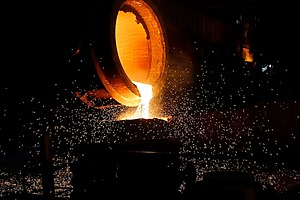
The Democratic Republic of Congo has announced a ban on the export of copper and cobalt concentrates to boost domestic beneficiation. Still, analysts at S&P Global expect the impact on global markets to be limited because DRC material accounts for only 1.9% of China’s copper concentrate imports, and the ban allows one‑year derogations for strategic or technical reasons. The key offset is the Kamoa‑Kakula complex’s new 500,000 mt/year (megatonnes/year) direct‑to‑blister smelter, which already produced its first anodes in January 2026 and is expected to reach full capacity by year‑end, raising the share of DRC concentrate processed domestically and reducing export flows.
Since Kamoa‑Kakula accounted for 64% of DRC’s concentrate output in 2025 and now smelts all of its own production on‑site or at Lualaba, its waiver status is the main swing factor for export availability, while tightness in concentrate has already pushed clean concentrate prices to a record high since Platts began its assessment in 2021.
Editor’s Note: The opinions expressed here by the authors are their own, not those of impakter.com — Cover Photo Credit: Wikimedia Commons.