
It is the US city that is a magnet for millenials and that is positioned at the forefront of a new kind of economy: one powered by startups developing creative ways to turn waste into valuable new products. No, we are not talking about the high-profile green innovators of San Francisco, Portland or Seattle, but the quiet achiever of Charlotte, North Carolina. The city, which in 2017 was ranked the top destination in the country for millenials to move to, has in recent years been undertaking a range of eco-friendly measures popular with younger Americans, including vast expansions of bike lane networks and public transport systems, not to mention the addition of swaths of parkland. Now city authorities are about to take things to a whole other level as Charlotte becomes the first American city to commit to the circular economy as a public sector strategy.
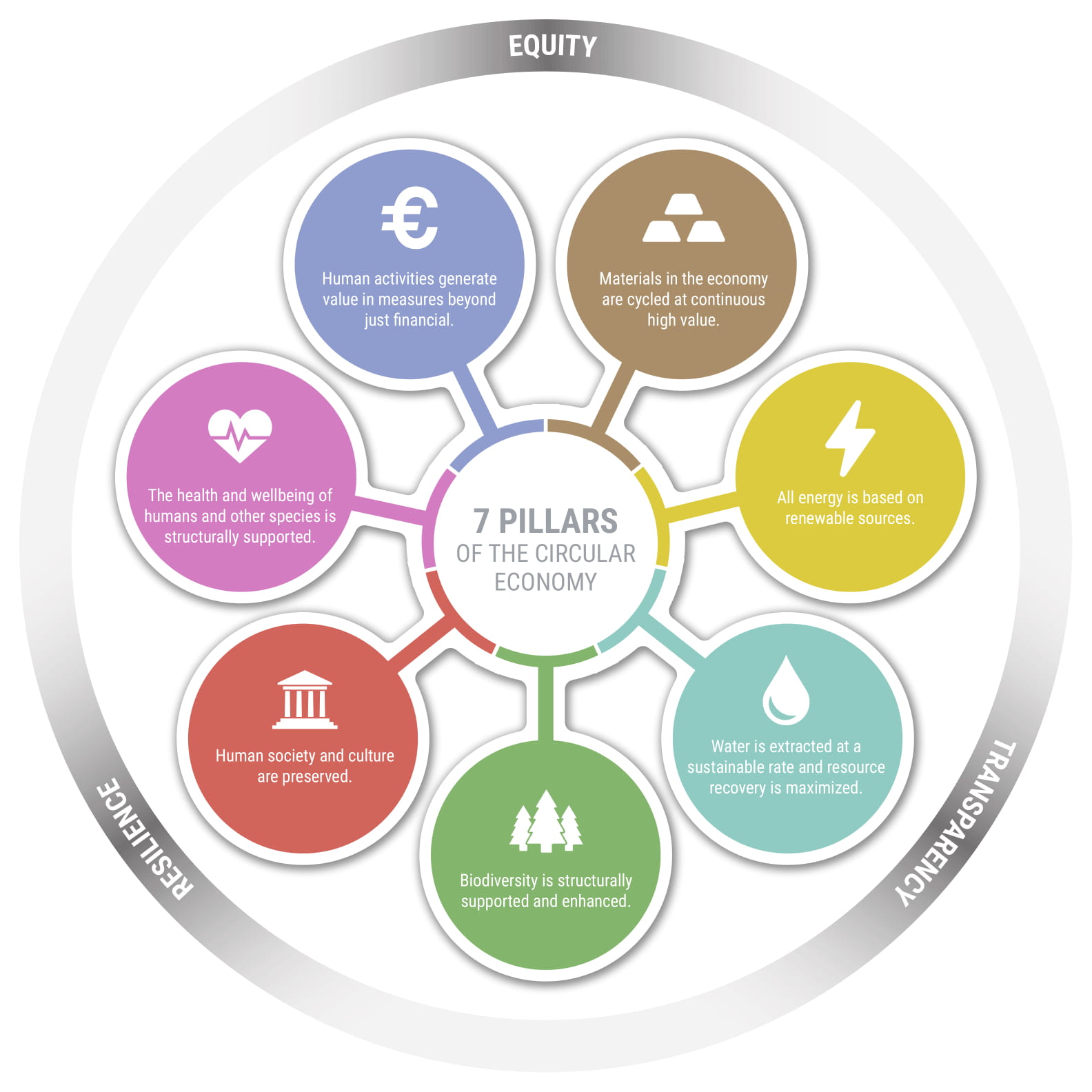
In the photo: Metabolic developed a zero waste strategy for the city of Charlotte based on the sustainability consultancy’s seven pillars of the circular economy. Photo credit: Circular Charlotte
A new report, developed by sustainability consultants Metabolic for Envision Charlotte, with input from City of Charlotte staff, details the path forward for the city to transition to a circular economy. This model is regenerative and waste-free by design, in contrast with today’s linear model that sends Charlotte’s 944,177 tons of annual waste to landfill, throwing out materials with a residual value of roughly $111 million per year. If the plan is fully adopted, Charlotte could be a zero waste city by 2040, saying goodbye to landfill and hello to a new, eco-friendly way of living. Environmental gains are not the only benefit of a circular economy that are particularly attractive to the city’s millenials – the plan would also improve quality of life, create thousands of jobs, and generate up to $2.3 billion in revenue.
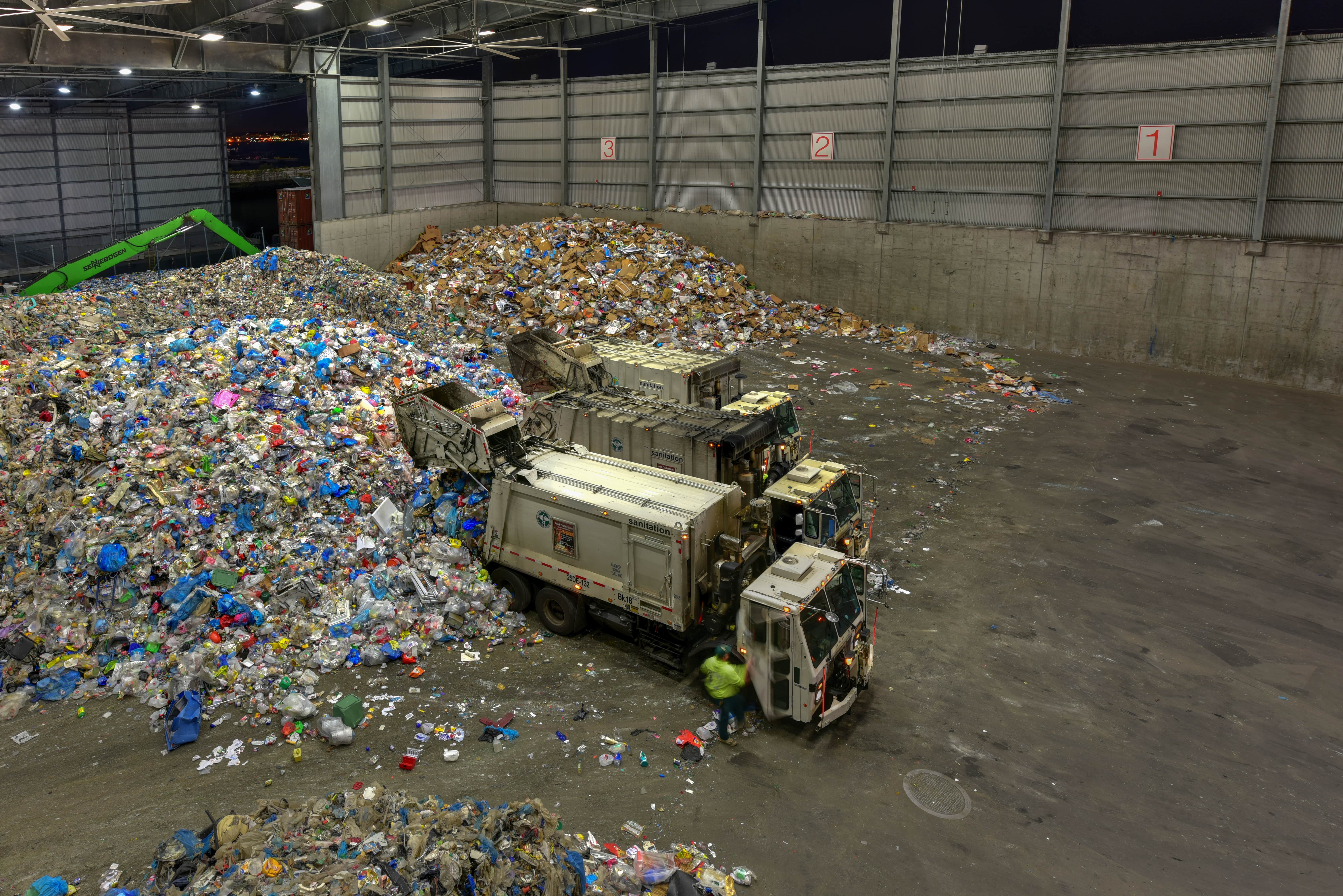 In the photo: Sending waste to landfill represents lost value – every year Charlotte throws out materials with a residual value of roughly $111 million. Photo credit: Circular Charlotte
As a first step, the City of Charlotte has committed $2 million to the creation of an Innovation Barn, which will serve as a hub for circular economy business ideas. The 6,000-square-foot event space, which is slated to open in August 2019, will feature a restaurant specializing in creating dishes from food that would have been thrown away at grocery stores or other places.
The City of Charlotte has committed to four of five case studies detailed in the strategy document:
- the provision of university student entrepreneurs (who might not otherwise be able to afford to develop their circular economy business ideas) with equipment, expert advice, and commercial feedback to build on these ideas at a startup incubator based at the Innovation Barn;
- the creation of 300 jobs by developing a circular industry based on feeding 50,000 tons of food waste to black soldier fly larvae, which can be converted into pellets to use as feed on North Carolina’s poultry farms;
- the saving of 345,341 gallons of water by developing a closed-loop textiles chain for linens and uniforms used in hotels and hospitals, cutting demand for environmentally damaging cotton and polyester production and offering opportunities to work in a whole new industry;
- the aversion of 41,186 in CO2e emissions by transforming concrete from demolition sites and powder created from discarded glass into new concrete, which will also create new jobs.
“We are thrilled to implement the circular economy strategy in Charlotte,” said Marcus D. Jones, Charlotte city manager. “The strategies outlined in the report will help Charlotte address key issues impacting the entire city – economic and social mobility. We fully expect Circular Charlotte, along with the work we do, to help us become the epicenter for people and cities to learn how to experiment, create and innovate.”
 In the photo: One Charlotte circular initiative will see food waste fed to black soldier fly larvae, which in turn can be pressed into food pellets to feed North Carolina’s poultry farms. Photo credit: Circular Charlotte
The Circular Charlotte report also detailed a fifth business case that would see the diversion of 44,100 tons of waste from landfill every year by incentivizing citizens who recycle with reward points for discounts at local stores, providing potential financial benefits rather than financial penalties for lower socio-economic groups.
“We started by understanding Charlotte’s current waste flows and where the value is being lost, and developed a strategy based on that,” said Metabolic cofounder Eva Gladek. “The five cases could save around 100,000–150,000 tons of waste-to-landfill, create up to 500 jobs, and cut CO2e emissions by 379,000 tons a year.”
This would just be the tip of the iceberg of the benefits of a fully circular economy, which goes beyond recycling to developing products that are easily repaired and upcycled at a high value, using renewable resources and avoiding toxic substances.
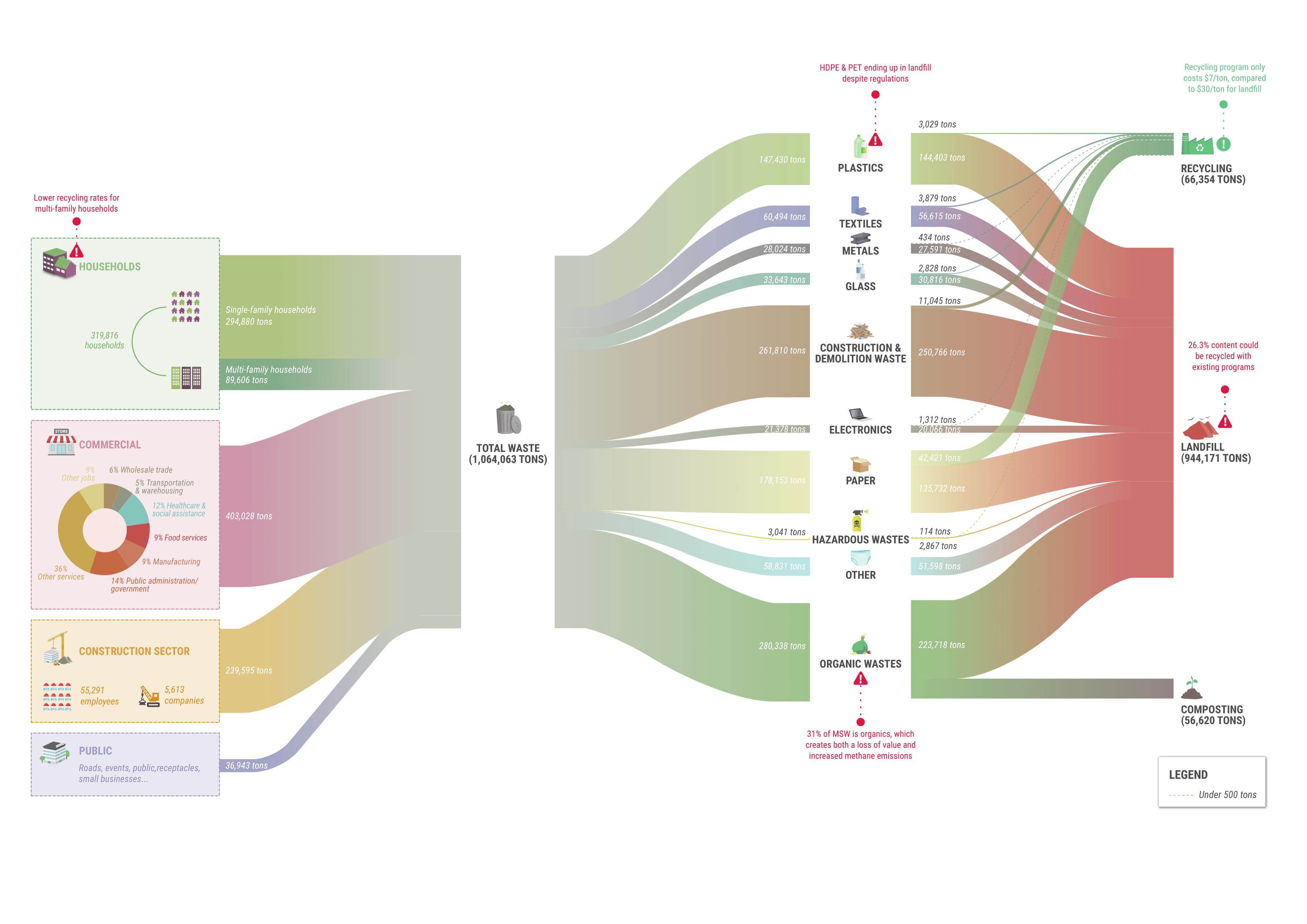 In the photo: Metabolic calculated that Charlotte sends 944,177 tonnes of waste to landfill every year, and 66,354 to recycling. Photo credit: Circular Charlotte
“Envision Charlotte is excited to partner with the City of Charlotte to advance the Circular Economy; this initiative aligns perfectly with Envision Charlotte’s mission to create a more sustainable and efficient community,” said Envision Charlotte Executive Director Amy Aussieker. “We are excited to create an Innovation Center where we can advance Circular Charlotte via communicating, impacting and empowering.”
Furthering its commitment to the circular economy, the City of Charlotte has joined The Ellen MacArthur Foundation’s Circular Economy 100 (CE100), a programme that brings together corporates and governments to accelerate circular economy innovations.

In the photo: The millenial hotspot of Charlotte is taking the first steps towards a circular economy. Photo credit: Circular Charlotte
Metabolic’s report recommends that the city capitalizes on its leadership in this area by branding itself as Circular Charlotte and launching visible measures such as prizes for circular projects, school education programs, and neighborhood action plans. Other short and medium term recommendations include the establishment of funding mechanisms, stricter waste regulations, enhanced waste processing capacity, and detailed data monitoring of waste streams.
In the long term, the report recommends advanced scanning and sorting technologies for recyclables, circular procurement policies for government and a circular industry park to keep the eco-friendly innovations going and the jobs flowing. That is, creating the kind of economy that will see millennials flocking to Charlotte for decades to come.