The Environmental Protection Agency (EPA), America’s environmental regulation body, announced long overdue measures yesterday attempting to provide environmental justice in regions severely affected by environmental racism.
The announcement follows the Journey to Justice Tour in November, in which EPA Administrator Michael Regan visited areas in Texas, Mississippi and Louisiana, where the ill-effects of industrial plants and poor infrastructure disproportionately affect poor communities, and communities of color.
Environmental racism is a phenomenon that has long been attributed to the US, both on a global and domestic scale. The global South, despite its relatively small carbon footprint, bears the brunt of climate change related disasters.
America, historically one of the biggest polluters, bears responsibility for climate-change fueled displacement in Central America, which has partly led to increased migration towards the US-Mexico border.
Within America itself, Black, Latino and Indigenous communities have faced out-sized health risks from the effects of historically poorly maintained infrastructure, underfunding and unchecked industry pollution.
People of color are at a disproportionate risk of exposure to pollutants, with a study last year published in Science Advances finding that “Racial-ethnic minorities in the United States are exposed to disproportionately high levels of ambient fine particulate air pollution… the largest environmental cause of human mortality.”
People of color are also at greater risk of water pollution, and lack of access to safe water supplies. According to EPA data from between 2016 and 2019 analyzed by the The Natural Resources Defense Council (NRDC), “there is unequal access to safe drinking water, based most strongly on race, a scientific conclusion that mirrors the lived experience of people of color and low-income residents in the United States.”
Lead poisoning and asthma, both related to exposure to industrial pollution, have also been documented at higher rates in children of color. An elementary school in a Houston neighborhood that is 98% Hispanic was forced to close after worrying levels of concentrated lead were found in children.
Houston, one of the states visited by Regan, is one of the leading industrial capitals of the US, and a stark example of a region where polluting facilities are installed closer to poorer, non-white neighbourhoods, leaving wealthier white neighbourhoods considerably safer.
Louisiana’s “Cancer Alley” represents an ongoing health crisis which the EPA has previously failed to address
The EPA is responsible for the creation and enforcement of industrial standards relating to public and environmental health, but has in the past been accused of failing to protect vulnerable communities affected by environmental racism from industrial harms, having allowed the creation of what ProPublica has called “sacrifice zones.”
One of the regions visited by Regan, in Louisiana, where much of the proposed EPA measures are expected to be concentrated, is infamous for the cancer-risks endured by its residents, who live amidst staggering levels of pollution. The population is predominantly black and low-income.
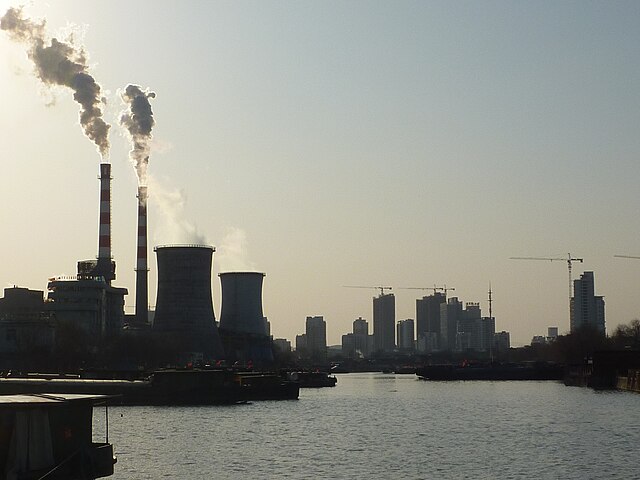
The heavily industrialized zone is dubbed “Cancer Alley,” with over 150 petrochemical plants, and almost all households having experienced a case of cancer. In the town of Reserve, located in the “Cancer Alley,” the EPA has reported the risk of cancer to be 50 times the national average.
The EPA will begin unannounced inspections of industrial plants along Louisiana’s “Cancer Alley.”
The area is home to large Black communities that have worried about pollution for years. A study found higher cancer rates were linked to air pollution in Black & low-income areas. pic.twitter.com/8FbfvgRSFc
— AJ+ (@ajplus) January 26, 2022
The EPA requires that for every 10 000 of those exposed to air pollution over their lifetimes, no more than one case of cancer should arise. The EPA is not required however, to punish those industry polluters pushing the cancer risk above that already dangerously low threshold.
However, the new EPA measures seem to suggest a more proactive approach, focusing on placing polluters under greater surveillance and scrutiny, and pushing for greater action from state officials.
The EPA has committed “to aggressively use its authority to conduct unannounced inspections of suspected non-compliant facilities” and when facilities are found non-compliant, to “use all available tools to hold them accountable.” Much of those inspections are expected to be aimed at polluting facilities in Cancer Alley.
It has also committed to “Pressing state and local elected officials to take urgent action to better protect the most overburdened communities,” and “Holding companies more accountable for their actions in overburdened communities with increased monitoring and oversight of polluting facilities.”
In his tour across the Gulf Coast, @EPAMichaelRegan visited multiple hot spots of cancer-causing air pollution identified by a ProPublica analysis https://t.co/uaWeT9rD4O pic.twitter.com/Y2SApE33Ym
— ProPublica (@propublica) December 2, 2021
The region will also likely benefit from new measures to watch polluters like Japan-based Denka more closely, as part of the EPA’s “new program to expand air monitoring capacity, utilizing assets such as the ASPECT airplane, GMAP mobile air monitoring vehicle, and additional air pollution inspectors to enhance enforcement.”
The commitment to push state officials to greater account is a step that will be sorely needed in Mississippi
The state’s largest town, Jackson, which is 82% black, is suffering from lack of access to clean and safe water. The EPA in its press release, drew attention to the effect on the local community, citing the example of a local school that Regan was due to visit, before it was closed due to lack of water pressure.
Jackson Public Schools announced that six schools are going ALL VIRTUAL this morning—but NOT because of COVID.
They're going all virtual because they lack running water.
Jackson, Mississippi, folks. A capital city in the richest nation on earth.
— Ashton Pittman (@ashtonpittman) November 19, 2021
Mississippi’s Jackson has an aging, unsustainable water system that has proved unable to withstand colder temperatures. Last year the residents were left without water for a month following a storm, and recently, another notice was issued to residents to boil water before consuming, after further winter-related pipe infrastructure issues.
Related articles: Race, Class, and the Climate Crisis | Pollution Is a Racial Justice Issue. Let’s Fight it that Way. | Environmental Racism: Why Does It Still Exist?
The city’s piping system is perhaps an example of chronic neglect of infrastructure needs in poorer neighborhoods, with states prioritizing the construction of new infrastructure in richer parts of the city. Lending credibility to claims of environmental racism, according to Mississippi Today, white neighborhoods in North-east Jackson have experienced considerably fewer water outages, because of recent infrastructure upgrades that the rest of Jackson, which is overwhelmingly black, has not seen.
https://twitter.com/ZerlinaShow/status/1458223541447499784?s=20
The EPA issued a “Notice of Noncompliance to the city for not timely repairing and maintaining equipment necessary to reliably produce drinking water” last week – however, the blame might be more aptly attributed to state officials, who are responsible for budgeting.
Whilst Jackson’s mayor is a Democrat, Mississippi’s Governor and Lieutenant governor are both Republican, perhaps explaining some of the decades long financial neglect of Jackson, despite it being the State capital. As pointed out by the Washington Post, Mississippi’s Republican lawmakers are responsible for the distribution of the infrastructure funding the state received as part of Biden’s Infrastructure bill, signed into law in November of last year.
State officials have been dismissive of claims that they are responsible for the city’s poor infrastructure, and have been reluctant to allocate a significant portion from the $79 million received as a result of the Infrastructure bill, which residents of Jackson had hoped would alleviate their water crisis.
The EPA has promised, however, to send “follow-up letters to elected officials to stress the importance of dedicating federal infrastructure funds,” including the millions received from the Bipartisan Infrastructure Law, “to solve some of most dire water needs in Jackson.”
The causes of environmental racism in America are tied to historical economic, social and political disadvantages
Institutional racism has long pushed people of color towards neighborhoods where investment in infrastructure is weak, and unsightly chemical facilities are more likely to be built.
Long standing issues of voter disenfranchisement, gerrymandering and state neglect of cities that are aligned to the political opposition have also possibly led to a lack of state-level representation for people of color in states where they are likely to be affected by environmental racism.
https://twitter.com/mjs_DC/status/1454171554636501005?s=20
The EPA’s measures represent a step in the right direction for accountability at both a political and corporate level, showing Regan’s willingness to hold both companies and elected officials to account.
However, there is still a long way to go in terms of holding states and facility owners accountable. In a recent supreme court case, the EPA argues for its right to regulate the greenhouse gasses of power plants, using the Clean Power Act.
The EPA has received the backing of almost 200 democrats and multiple tech companies. The case, petitioned for by 19 states including West Virginia, is proof of the competing interests and considerations that have complicated America’s progress towards environmental justice and progress.
Meanwhile, the EPA is left to hold polluters accountable in the Gulf Coast States and elsewhere by filing notices or delivering compliance orders to offenders, or when necessary, seek civil or criminal enforcement action against them in court. In essence, the EPA is dependent on the American justice system which here, as in so many other areas, plays a key role. Without support from the courts, EPA risks remaining helpless and its action disregarded.
Editor’s Note: The opinions expressed here by Impakter.com columnists are their own, not those of Impakter.com. — In the Featured Photo: New Orleans, in Louisiana. The infamous “Cancer Alley” or “Chemical Corridor” lies along the Mississippi river between New Orleans and Baton Rouge. Featured Photo Credit: Kvnga.