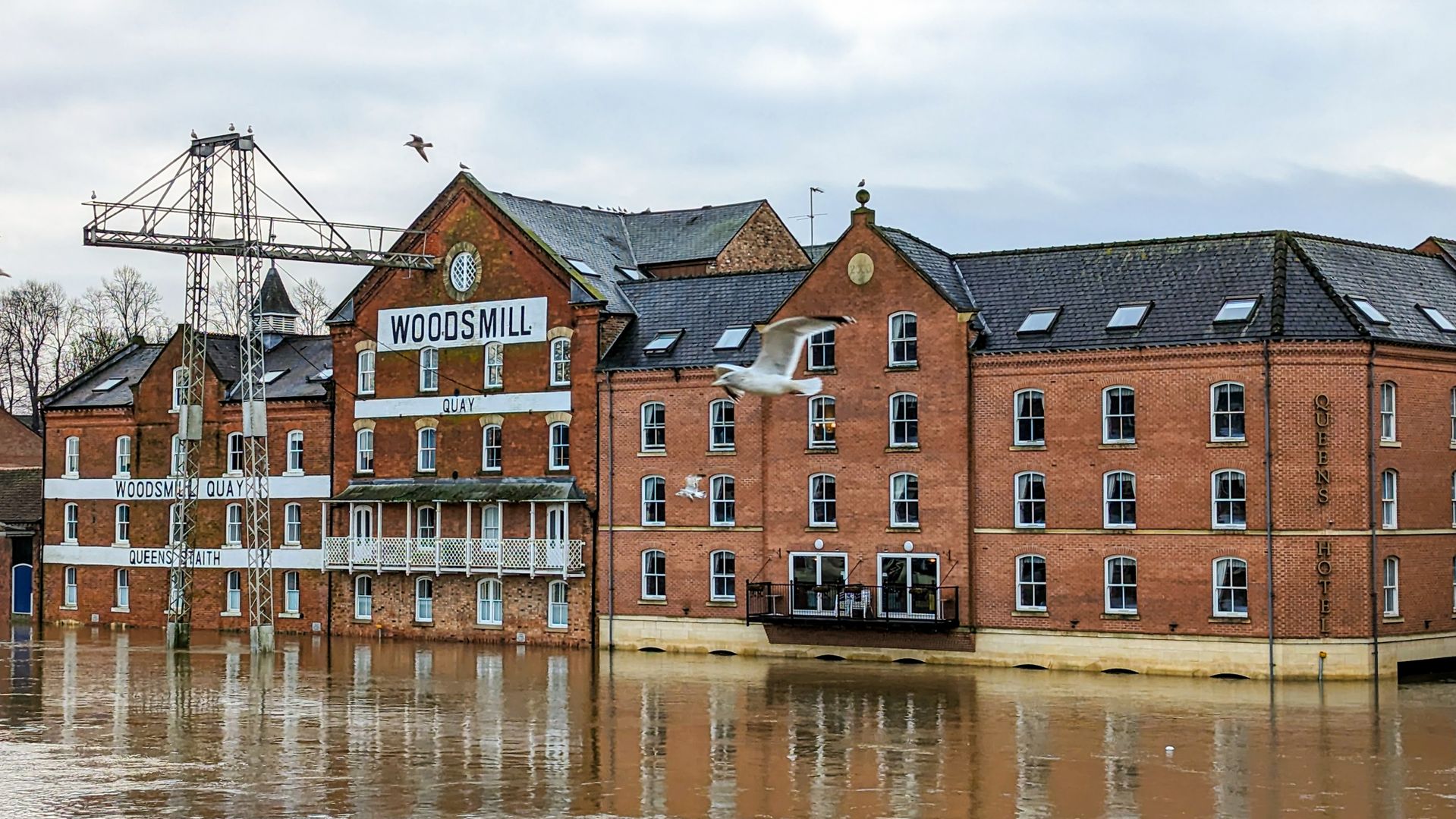
Today’s ESG Updates
- Residents in England Unaware Their Homes Could Flood: The Environment Agency says one third of people in the six million most at-risk properties think they are safe. The Met Office sees a wet and windy start to winter as more likely than usual.
- Seas Take In Record Heat as Sea Levels Rise and Acidity Grows: A Copernicus report finds that the oceans absorbed 23 zettajoules of heat last year, almost 40 times human energy use, and that 84% of coral reefs experienced heat stress between January 2023 and September 2025.
- Lighthouse Reports Files Complaint Over EU Data Center Secrecy: The non-profit says the European Commission keeps energy and water data on individual sites from the public, which it argues breaches the Aarhus Convention.
- Over 6,500 Madagascar Villagers Take Rio Tinto to London Court: The claimants allege mine wastewater exposed them to lead and uranium, but Rio Tinto says it has not seen the claim details and that its tests found uranium below detection limits.
Two million in England unaware of flood risk to homes
The Environment Agency has said that more than two million people in England are unaware that their homes are at risk of flooding. Around six million properties are most at risk, yet one third of the people who live in them believe they are safe.
The Met Office says October, November and December are more likely than usual to be wet and windy. A strong El Niño adds a small shift in the odds towards more rain and wind. Will Lang, the Met Office’s chief meteorologist, said this raises the risk of flooding.
Caroline Douglass, the Environment Agency’s director for flood and coastal risk management, urged residents to check their risk on the gov.uk website. She asked them to sign up for flood warnings and prepare a flood plan.
Drought will persist in large parts of the UK until reservoirs refill, which needs above-average winter rain.
Klimado – Navigating climate complexity just got easier. Klimado offers a user-friendly platform for tracking local and global environmental shifts, making it an essential tool for climate-aware individuals and organizations.
Oceans absorb record heat, forty times global energy use

According to the 10th Copernicus ocean state report, the world’s oceans absorbed a record 23 zettajoules of heat last year. This is almost 40 times the energy humanity used that year. Oceans have taken in about 90% of the extra heat trapped by greenhouse gases and around one-third of all carbon dioxide emitted.
Sea levels have risen by about 3.8mm a year since 1999, and the pace reached 4.2mm a year between 2012 and 2025. Ocean water has become 17% more acidic over four decades. Between January 2023 and September 2025, 84% of coral reefs faced heat stress severe enough to bleach them.
Europe heats twice as fast as the global average. The Mediterranean has warmed by 0.32C per decade and has seen record marine heatwaves.
Separate Copernicus research found that over one-third of people faced dangerous ozone pollution this year. The ECMWF director urged coordinated global action before Cop31.
Related Articles
Here is a list of articles selected by our Editorial Board that have gained significant interest from the public:
EU accused of hiding data centre energy and water use

A formal complaint says the European Commission has hidden how much energy and water data centres use. Lighthouse Reports, a Netherlands-based non-profit, filed it on Monday under the Aarhus Convention, a treaty on public access to environmental information. The group says the Commission has put up a “wall of silence.”
Commission figures show that Europe’s data centres used 20.7 terawatt-hours of electricity and more than 8 million cubic meters of water in 2025. Electricity use rose 26%, and water use rose 52% from 2024. The data is incomplete and appears only in totals, as a 2024 law bars the release of figures for individual data centres.
Last week, the Commission presented a new A to G label for data centres, which begins next summer. Lighthouse Reports says the label still hides total energy use.
The Aarhus compliance committee will decide in November if the complaint is admissible.

Madagascar villagers sue Rio Tinto over mine contamination
More than 6,500 people in Madagascar have filed a claim against Rio Tinto in London’s High Court. They say that the QIT Madagascar Minerals (QMM) mine exposed them to dangerous levels of lead and uranium. Law firm Leigh Day, which acts for the group, says more than 2,000 of the villagers are children.
The claimants allege acidic wastewater with uranium, lead and other metals was released into lakes and waterways that locals use to drink, cook, wash and irrigate. In May 2022, the mine halted work for five days after local protests over a release, followed by dead fish. Rio Tinto says water tests found no link.
The company says it has not yet received details of the claim. It says all uranium samples tested were below detection limits, as were most lead samples.
The claimants seek compensation and court orders to repair the damage and stop contamination.
Editor’s Note: The opinions expressed here by the authors are their own, not those of impakter.com — Cover Photo Credit: Mike Norris