I didn’t know what it was, but it hurt – a subtle, gnawing soreness that I wouldn’t think about, but was never quite off my mind.
Medical school had just started. I was beginning a new chapter in my life, and everything was good – everything except that unusual pain in my back.
Maybe I had done it to myself. Did I strain it at the gym? Had poor posture finally caught up to me? I was 23, and had treated my body foolishly. Now, I had a deep, dull discomfort as my penance. But I could live with it.
Then, it got worse. The niggling ache turned into a persistent burning, buried deep in my tissues, unpredictably sending shocks that radiated like lighting around my flank. Worse still, my legs had attacks of clumsiness, as if they were no longer mine to control.
“I’ve been having back pain,” I told my doctor, “it started about a year ago, and it’s getting worse.” I continued, knowing from class what questions would follow, “The pain is dull, deep, and throbbing. Sometimes it radiates upward. Nothing seems to make it better or worse. And my legs… something is wrong with them…”
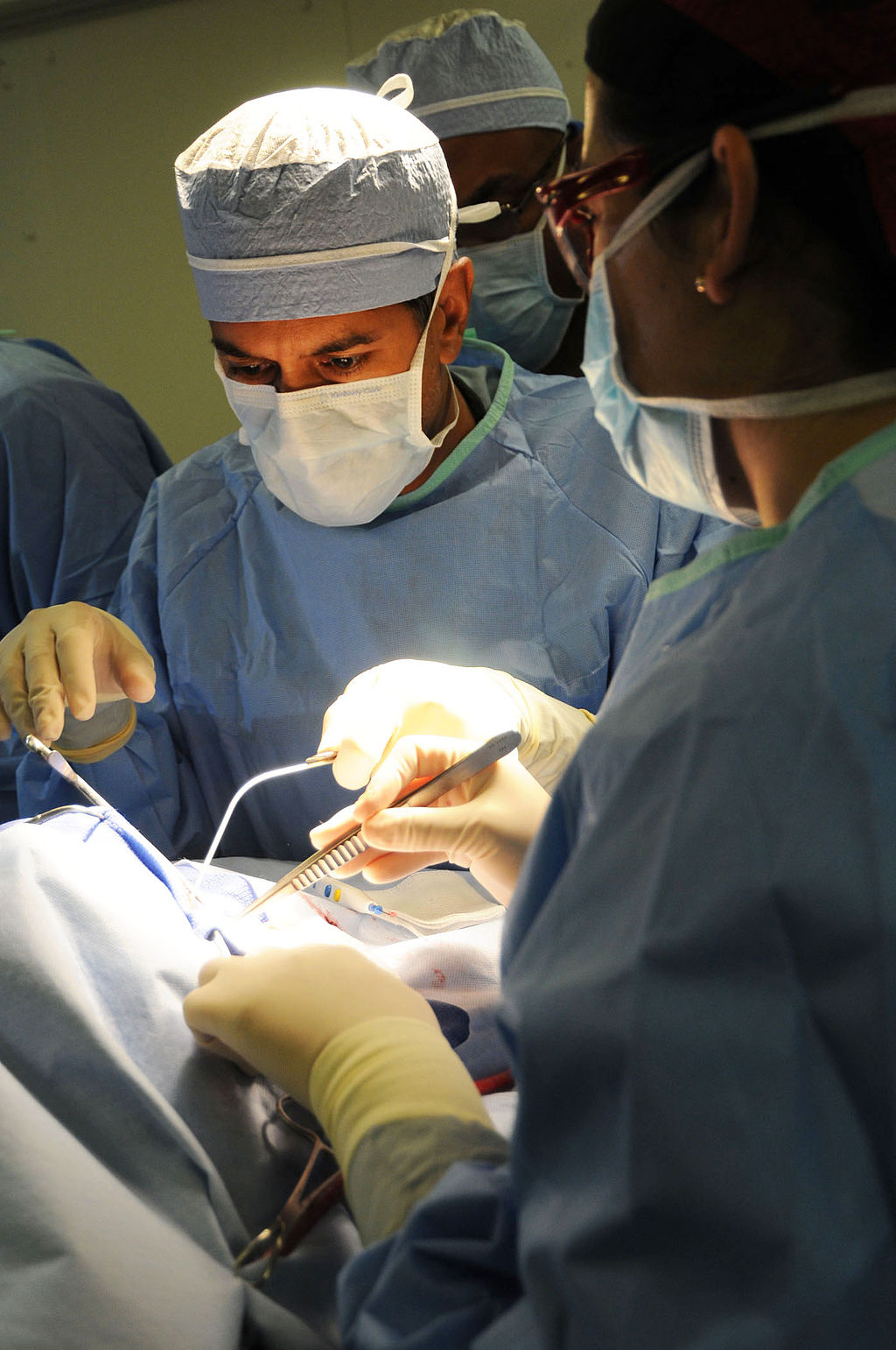
I went for an MRI two weeks later, and everything moved quickly after that. The tumor, a schwannoma, was crushing one of my spinal nerves, and had displaced two of my vertebra. I told my dean, himself a spine surgeon, that Dr. McCormick would be operating on me. He winked, and told me, “You’ll be fine. In fact, you’re about to find out what a great neurosurgeon can really do.”
He was right.
Related articles: “AN HONEST AND IRONIC JOB DESCRIPTION OF A DOCTOR”
“OVER-TESTING WITH CT SCANS IN THE EMERGENCY DEPARTMENT“
My recovery was speedy, with only a scar to mark where the pulses of pain had been buried in my back. And my rapid recovery from neurosurgery transformed into a fascination with it. I was amazed by the intricacies of the nervous system, and its silent control over countless crucial processes. There was beauty in its complexity, from its management of unconscious bodily feedback mechanisms, to its coordination of the cognitive processes that define our personalities. What’s more, that I could repair it – that I could work to mend the very organ that makes us who we are – was unbelievable.
I threw myself into the field, and began consuming everything I could about neurosurgery. The sheer breadth of it amazed me, from brain tumor surgeries done while patients are awake, to dramatic spinal deformity corrections, to minimally-invasive procedures performed via catheters threaded through blood vessels. Even minor nuances of a procedure could have major implications for a patient, allowing art to step in where science cannot. I was hungry for more, but every bite I took only fueled my appetite further. Neurosurgery is wonderful, and I buzzed with excitement thinking about it.
And then I met J.
Sub-internships are a rite of passage for fourth-year medical students. The summer before submitting your residency applications, you spend a month each at several different hospitals whose residency programs you are interested in. You live out of suitcase, work for 36 hours at a time, sleep on your friend’s floor to save money, and help the interns and residents who you hope will become your colleagues. They get to know you, you get to know them, and you’re plunged headfirst into the specialty that will be your future. That’s how I met J.
When he woke up – if he woke up – he’d have us to thank for his survival, but also to curse for it.
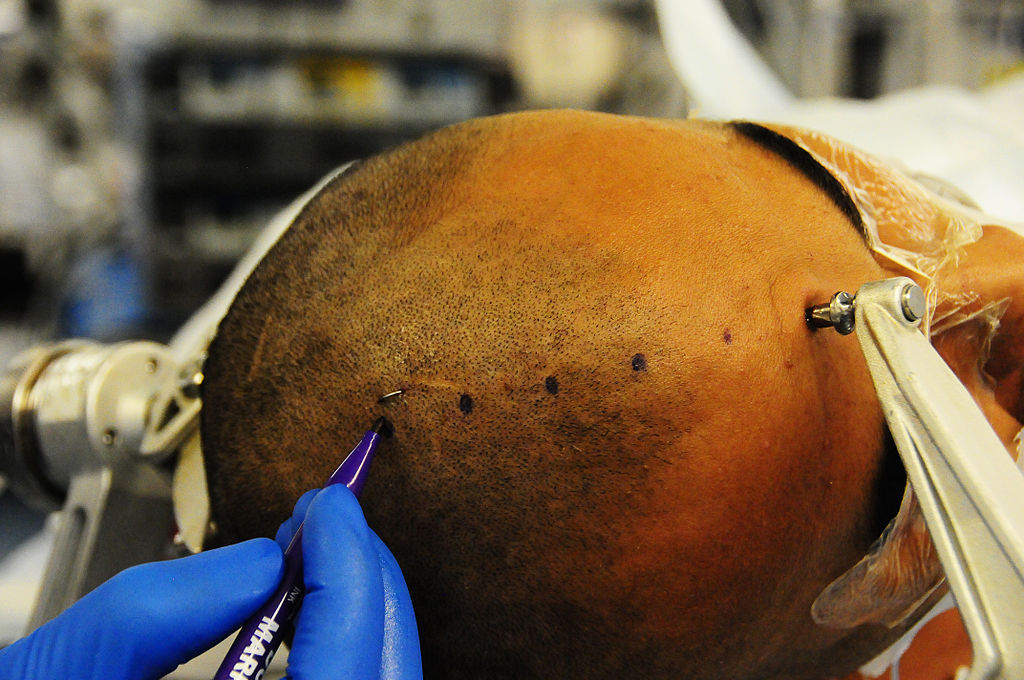
In the Photo: A neurosurgeon marks a patient’d head proior to performing brain surgery. Photo Credit: Wikimedia Commons /Miguel Lara III
“Make sure the drill bit is at full speed before you press it to his skull,” Dr. E instructed. It was my turn to help with a simple step in the procedure. The motorcycle accident was making J’s brain swell, so we were taking off half of his skull. If we didn’t, the pressure from the swelling would crush the viability out of his tissue. His brain would herniate, oozing out the hole at the bottom of his skull like toothpaste squeezed from its tube. Removing part of his skull would leave enough room for his brain to expand until the swelling died down, leaving only skin and a helmet to protect his grey matter until the bone could be reattached.
Even as far as surgeries go, this isn’t one you want to need. The procedure, called a decompressive craniectomy, improves your chances of survival, but it’s insane nevertheless. Even crazier, though, is that J was the same age as me.
Before we brought J to the OR, we had to discuss the options with his family. “We’ve got to lay it out for them,” Dr. E explained. “We can’t sugar coat this. They can’t believe that he’s going to walk out of here the same man he was before.” And truthfully, it was unlikely that he would do any walking at all.
Neither of the options we offered was good. We could forego the ordeal of surgery, which meant he would probably pass, and his mother would have to bury her son. The alternative was to lop off part of his skull, dramatically improving his chance of survival, recognizing that this would not undo the damage already done. Survival would likely mean a life of cognitive impairment in a wheelchair.
“There’s no way that will help!” cried his mother. Wrong.
“There has got to be something better you can offer!” pleaded his father. Wrong again.
“That’s completely barbaric!” scoffed his friend. Absolutely right.
I’d seen people die in medical school. Plenty of people. It was never easy, and it never should be. If death becomes easy for you, you’re doing something wrong. But this was different. Your first 20-something-year-old head trauma victim just isn’t the same as your first 80-something-year-old stroke victim. For me, all I have is a numb patch and a zipper-shaped scar to mark where my surgery had been. J, even if he even survived, probably wouldn’t be J anymore.
J’s family wanted him to have the operation. They wanted us to do everything modern medicine could offer. And what parent wouldn’t? So I stepped on the drill peddle. Its whir accelerated into a squeal, telling me that the drill bit was rotating at a hundred thousand RPMs. With Dr. E beside me for guidance, I pressed the drill bit to J’s skull.
His life wasn’t over per se. Survival was likely. But his life as he knew it, and as he would remember it, was probably gone. When he woke up – if he woke up – he’d have us to thank for his survival, but also to curse for it.
Beginning in June, I’ll have the honor and terrifying privilege of caring for patients of my own for Northwestern University’s Department of Neurological Surgery, in the heart of downtown Chicago, and a short train ride away from home. I recovered completely from my own neurosurgical disease, and I was lucky to. However, every diagnosis portends a different outcome, and modern medicine is as limited as it is miraculous. Often, my best will not be good enough. With every new patient, before a diagnosis is clear, I’ll have to wonder – will the patient’s outcome look like mine, or like J’s?
_ _
Photo via Wikimedia Commons