Impakter
  • Environment
    • Biodiversity
    • Climate Change
    • Circular Economy
    • Energy
  • FINANCE
    • ESG News
    • Sustainable Finance
    • Business
  • TECH
    • Start-up
    • AI & Machine Learning
    • Green Tech
  • Industry News
    • Entertainment
    • Food and Agriculture
    • Health
    • Politics & Foreign Affairs
    • Philanthropy
    • Science
    • Sport
  • Editorial Series
    • SDGs Series
    • Shape Your Future
    • Sustainable Cities
      • Copenhagen
      • San Francisco
      • Seattle
      • Sydney
  • About us
    • Company
    • Team
    • Partners
    • Write for Impakter
    • Contact Us
    • Privacy Policy
No Result
View All Result
Impakter logo
No Result
View All Result
Putin and Erdogan Meet to End Ukraine Wheat Crisis

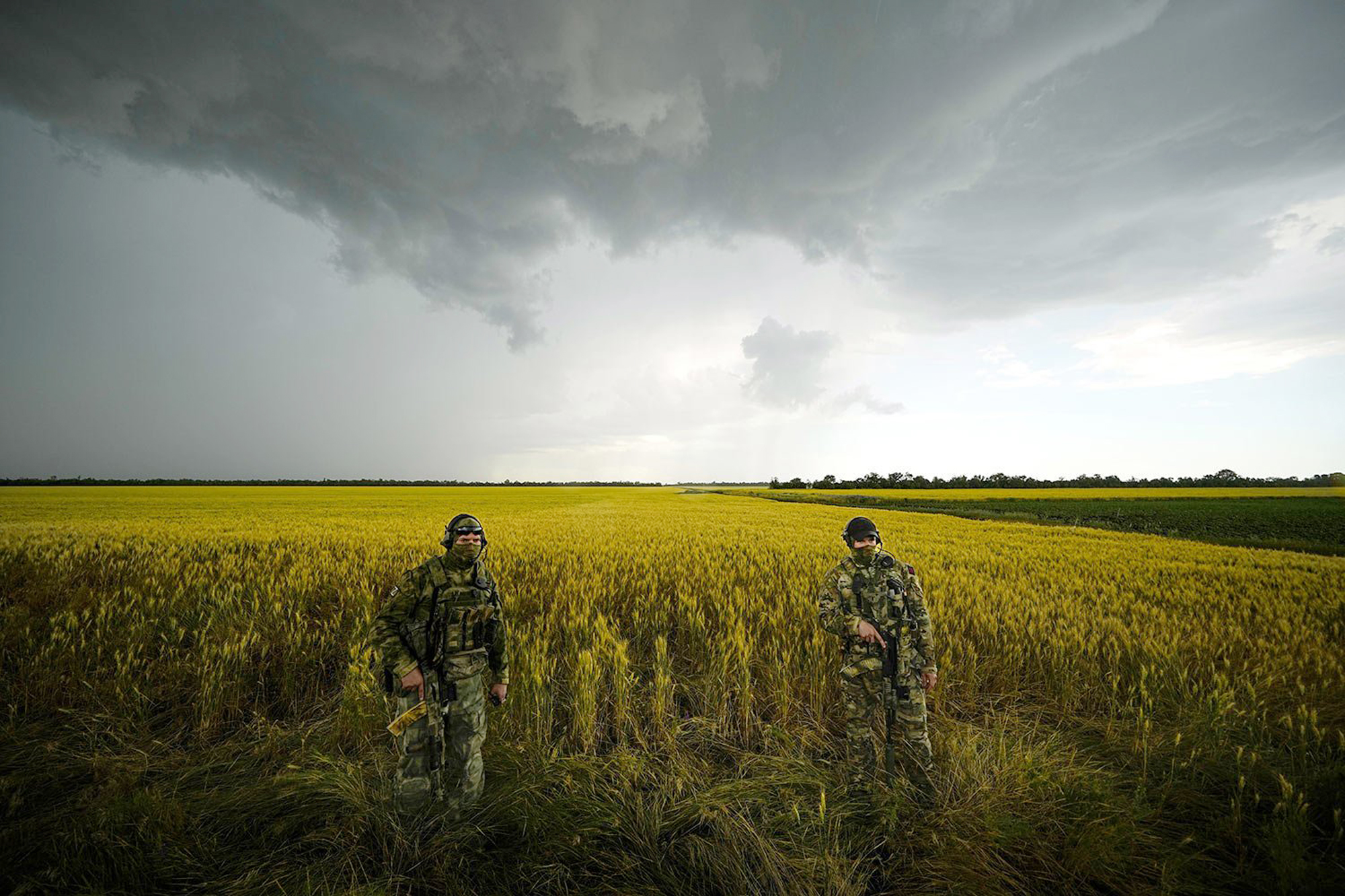
Russian soldiers guard an area next to a field of wheat in Ukraine on June 14, 2022.

Putin and Erdogan Meet to End Ukraine Wheat Crisis

As Russia continues to block Ukrainian exports, a U.N. plan is being negotiated with Putin to end the blockade — something which, if continued, could affect next year’s crop and worsen the global food crisis

Elizabeth PartschbyElizabeth Partsch
July 19, 2022
in Food, Politics & Foreign Affairs
0

In 2021, Ukraine’s wheat exports made up 10% of global wheat exports, which are now practically gone and so too might the crop itself be from Ukrainian soil if things don’t change soon. 

When the war began on Feb. 24, 2022, Russian warships lingered along the Black Sea, eventually setting up a blockade of exports from Ukraine’s Black Sea ports.

While the blockade at first seemed like it would be temporary, months of no change and little-to-no goods coming out of Ukraine have financially strained farmers in the area and have significantly worsened the global food crisis that was already out of control.

Hoping to help end the blockade, Turkish President Recep Tayyip Erdogan is meeting with President of Russia Vladimir Putin today in Tehran, Iran.

Wheat is stuck in Ukraine

Ukrainian Agriculture Minister Mykola Solskyi predicts Ukraine will have 60 million tons of grain to export this year. Yet, Ukraine is currently only exporting two million tons a month — a third of the amount compared to previous years.

With the blockade at Ukraine’s Black Sea ports continuing to hinder wheat exports, farmers are unable to sell much of their grains, storing them until the opportunity to export comes. 

Unlike bigger Ukrainian wheat producers, many of the smallholder farmers do not have the proper space to store grain for long periods of time. The issue of waiting to export is now forcing farmers to store their grains in brick warehouses — storage that can only last up to six months. 

Unable to sell their grain today, Ukrainian smallholder farmers are also facing a future wheat shortage as the blockade prevents them from being able to harvest next year’s crops.    

Ukraine may have plenty of grain for this year, but the inability to export wheat leaves other countries in a precarious situation — especially as the pandemic had already worsened the global food market prior to the war in Ukraine. 

According to the Washington Post, the countries that will be most affected by the blockage of Ukrainian wheat exports will be countries already suffering from hunger, including Nigeria, Somalia, Ethiopia, Egypt and Yemen. 

Wheat makes up a large portion of Nigerians’ diet, yet only 1% of wheat they consume annually is produced domestically. As Ukraine is one of the world’s biggest grain exporters, Nigeria will be one of the countries to suffer the most — a country that has 43% of people living below the poverty line.

A shift in wheat exports

Despite the blockade, Ukraine has been able to export some of its wheat, but only around 30% of what it used to export before the war.  

According to farmers and government officials, most of the grain Ukraine is managing to export is now going to the Danube River, flowing down Europe’s second largest river to Romania’s Black Sea ports of Sulina and Constanta. 

However, such a large volume in grain exports is not something Romania is used to, and, as a result, Romania is struggling to export grain efficiently, further stalling exports.

Western countries assisting Ukraine are also helping in wheat exports, moving them via train west toward EU countries. Yet this situation again proves to lack efficiency as train tracks in the European Union and Ukraine are different sizes, requiring the wheat to be transferred to a different train at the border — something that is both time-consuming and costly.

As a result, many farmers are unwilling to export their wheat as they will ultimately lose more money than they make, claiming they will continue to store their wheat until a diplomatic solution is reached to end the blockade at the Black Sea.

While helpful to a certain extent, alternative routes for exporting Ukrainian wheat are thus not the solution — ending the blockade is.

Negotiations to end the blockade may be in the works

Putin has arrived in Iran to hold discussions with Iran’s President Ebrahim Raisi and President of Turkey Recep Tayyip Erdogan over the looming conflict in Syria and the United Nations-backed proposal to resume exports of Ukrainian grain to lessen the global food crisis.

One of Putin’s primary targets for the meeting is to seek an alliance with Iran, another fellow target of US sanctions. Already, the White House has alleged that Russian officials had recently visited an airfield in Iran to review Tehran’s drone weapons to use in Ukraine.

Despite the concerning implications of the meeting, the talks do pose a unique opportunity for Erdogan to broker peace talks with Russia on the Black Sea blockade.

Turkey, both an important NATO member and a Russian ally, remains wedged in the middle of conflict between Ukraine and Russia. 

While it has previously shown support for Ukraine by condemning the Russian invasion and sending Ukraine weapons, Turkey has also declined to implement any sanctions on Kremlin — making them an essential partner for Russia. 

Talks between the UN and officials from Russia, Ukraine, and Turkey reached a tentative agreement last week that will ensure 22 million needed exports of Ukrainian wheat are allowed to exit Ukrainian Black Sea ports.

The meeting in Iran will hopefully solidify the tentative agreement, which is expected to be signed later this week by the UN, Russia, Turkey, and Ukraine. 

If not signed, one could only observe the global food crisis to worsen until Ukrainian wheat exports begin reflecting a semblance of what they used to be. 


Editor’s Note: The opinions expressed here by the authors are their own, not those of Impakter.com — In the Featured Photo: Russian soldiers guard an area next to a field of wheat in Ukraine on June 14, 2022. Source: AP Photo, Flickr.
Tags: Global food crisisPutinRussiaUkraineUkraine crisisUkrainian wheat exports
Previous Post

Collective Suicide or Collective Action? It’s in Our Hands, Says UN Chief

Next Post

Will the EU Run Short of Gas This Winter?  

Related Posts

Farewell to Soft Power
Politics & Foreign Affairs

Farewell to Soft Power

The Caribbean and the Arctic seem to have little in common. The same cannot be said of Venezuela and Greenland,...

byMichele Gimondo, Catholic University of Sacred Heart, Milan
February 20, 2026
ESG News regarding AI datacenters fueling U.S.-led gas power boom, Lukoil selling foreign holdings, England and Wales households paying more for water bills, and Trafigura investing $1 billion in African carbon removal projects.
Business

AI Datacenters Fuel U.S.-Led Gas Power Boom

Today’s ESG Updates U.S.-Led Gas Boom Threatens Climate: Global Energy Monitor reports 2026 could see record new gas plants, many...

byAnastasiia Barmotina
January 30, 2026
ESG News regarding a powerful snowstorm leaving more than 400,000 U.S. customers without power, the Doomsday Clock being set to 85 seconds to midnight, Kazakhstan losing more than 40 million barrels of crude exports, and many Europeans brands labelling their plastic as recycled when it comes from fossil fuels.
Business

Massive Snowstorm Leaves Hundreds of Thousands Without Power Across U.S.

Today’s ESG Updates Winter Storm Cuts Power to Over 400,000: A severe storm hit much of the U.S., causing over...

byAnastasiia Barmotina
January 28, 2026
A New ‘Golden Age’ for Global Chaos
Politics & Foreign Affairs

A New ‘Golden Age’ for Global Chaos

One year since the inauguration of his second administration on 20 January 2025, when he promised to usher in a...

byCarlos Frederico Pereira da Silva Gama - Author & Assistant Professor at the Shiv Nadar Institution of Eminence
January 28, 2026
ESG News regarding Trump backing sanctions on Russian oil buyers, Norway’s oil and gas output declining, dog food linked to UK emissions, Trump climate treaty exit facing legal scrutiny
Business

U.S. Targets Russian Oil Buyers with New Sanctions Bill

Today’s ESG Updates Trump Backs Sanctions on Russian Oil Buyers: A bipartisan U.S. bill would impose tariffs of up to...

byAnastasiia Barmotina
January 9, 2026
Unexpected Consequences of Investment Treaties in Times of War
Politics & Foreign Affairs

Unexpected Consequences of Investment Treaties in Times of War

Russian state entities are threatening to use the 1989 Belgium-Luxembourg (BLEU)–USSR bilateral investment treaty (BIT) to sue Belgium over the...

byInternational Institute for Sustainable Development (IISD)
December 11, 2025
ESG news regarding the US-China Trade Agreement, Australia’s new environmental protection bill, Lukoil selling international assets to a Swiss firm, and truckmakers asking the European Commission to ease carbon emissions rules
Business

The United States and China Reach Trade Agreement

Today’s ESG Updates New Trade Deal Between Trump and Xi Jinping Pauses Trade War: U.S. President Donald Trump and Chinese...

bySarah Perras
October 30, 2025
Two Russian MiG31 flying in front of one another.
Live News

NATO Members Triggering Article 4: Eastern Sentry Next Steps

Recent days have seen a dramatic escalation of tensions on NATO's eastern flank, with two member states invoking Article 4...

byImpakter Editorial Board
September 22, 2025
Next Post
gazprom gas nordstream

Will the EU Run Short of Gas This Winter?  

Recent News

Deep Sea Mining

The Quiet Financial Backers Behind Deep-Sea Mining

February 24, 2026
Protests arise against Wall street’s oil deals, Big tech accounts for half of global clean energy, EU proposes stricter standards for corporate vehicles, DHL introduces new portfolio offerings for reducing scope 3 impacts

Activists Protest Against Wall Street’s Oil Deals

February 24, 2026
New U.S. Tariffs and One Health: The Likely Consequences

New U.S. Tariffs and One Health: The Likely Consequences

February 23, 2026
  • ESG News
  • Sustainable Finance
  • Business

© 2025 Impakter.com owned by Klimado GmbH

No Result
View All Result
  • Environment
    • Biodiversity
    • Climate Change
    • Circular Economy
    • Energy
  • FINANCE
    • ESG News
    • Sustainable Finance
    • Business
  • TECH
    • Start-up
    • AI & Machine Learning
    • Green Tech
  • Industry News
    • Entertainment
    • Food and Agriculture
    • Health
    • Politics & Foreign Affairs
    • Philanthropy
    • Science
    • Sport
  • Editorial Series
    • SDGs Series
    • Shape Your Future
    • Sustainable Cities
      • Copenhagen
      • San Francisco
      • Seattle
      • Sydney
  • About us
    • Company
    • Team
    • Partners
    • Write for Impakter
    • Contact Us
    • Privacy Policy

© 2025 Impakter.com owned by Klimado GmbH