Make America Healthy Again (MAHA) is a slogan and, as a political action committee (PAC), advocates anti-vaccine misinformation and public health conspiracy theories. It promotes alternative treatments and policies. MAHA Action, a 501(c)(4) organization, is connected to the slogan and addresses environmental protection while challenging chemical use standards. It aims to promote a “healthier America, free of corporate interests.” Good intentions with a dreadfully distorted foundation.
As of January 2026, there have been numerous warnings from qualified medical and public health scientists regarding Robert F. Kennedy Jr.’s (RFK Jr.) policies as Secretary of Health and Human Services (HHS). Yet, political leaders and the general public remain polarized.
A significant portion of the Republican base and “Make America Healthy Again” advocates continue to support Kennedy’s overhaul of federal health agencies despite most reputable scientific medical experts, public health professionals and Democratic leaders describing his actions as dangerous. It is important to note that Mr. Kennedy is a qualified lawyer activist but not qualified or trained in medical science or public health (epidemiology), i.e., “the blind, leading the blind.”
This state of affairs is diametrically contrary to the One Health concept/approach — “collaborative efforts of multiple disciplines working locally, nationally, and globally to attain optimal health for people, animals, plants and our environment.” One Health explicitly recognizes that such an integrated approach will “help protect and/or save untold millions of lives in our generation and for those to come.” It appears devoid of pluralistic recognition consistent with ethical conduct.
Political reactions and resonance among political leaders are reportedly split along partisan lines. Critically needed bipartisan policies like banning synthetic food dyes and increasing regulations on ultra-processed foods have, at best, been cautiously supported.
Meanwhile several former Surgeons General and high-ranking Democrats have condemned his policies as a “deepening threat to public health.” Pennsylvania Governor Josh Shapiro accused Kennedy of “causing chaos and spreading misinformation” with an executive order aimed at maintaining traditional childhood vaccine schedules. Kennedy maintains strong support from Republican lawmakers. They view his “MAHA” agenda as a necessary disruption of “corrupt” federal health agencies. Republican state legislators have been promoting new federal nutritional guidelines in 2025 and 2026.
Public opinionremains deeply divided, reflecting a growing polarization; some contend this is due largely to health illiteracy. Recent polling indicates that more Americans disapprove of Kennedy’s job performance than approve. A January 2026 Quinnipiac University poll found 50% disapproval versus 39% approval. Only about 26% of Americans trust Kennedy for medical advice, compared to 79% who trust their own doctors. Warnings from the medical community about a diminution in vaccine usage reflect shifting attitudes. Confidence in the measles, mumps, and rubella (MMR) vaccine among Republicans dropped from 86% in 2023 and to 78% by late 2025.
The MAHA movement has a more favorable public image while Kennedy continues to be a polarizing figure. Notably about 36% of Americans view the movement favorably, with 8 in 10 parents supporting its goals to regulate food additives and added sugars. Paradoxically, this demonstrates confirmation that while some aspects of his plan are worthwhile, they are unfortunately overshadowed by the irrational anti-vaccine/anti-science movement.
MAHA has had a major impact among the medical community, with medical professionals moving away from verbal warnings to legal action(s). For instance, in January 2026, several public health groups, including the American Academy of Paediatrics, sued the CDC and RFK Jr. in an attempt to reverse a decision reducing the number of recommended childhood vaccinations. Sadly, a wave of early retirements and resignations from the U.S. Centers for Disease Control and Prevention (CDC) and Food and Drug Administration (FDA) have highlighted what career officials perceive as a “culture of intimidation” with evidence-based science being sidelined.
How long can the U.S. JFK Jr. (HHS) policies be expected to persist before remedial actions might evolve?
It is essential for us to see things as they are and not as we want them to be. These policies are firmly established and are likely to continue throughout the next three years of the current administration’s term. Remedial actions, ranging from legal challenges to legislative resistance, are developing but face monumental institutional and political hurdles.
Major initiatives are currently reaching implementation milestones, suggesting persistence of policies. Included are the phase-out of petroleum-based food dyes by the end of 2026 (a controversial issue) and the Dietary Guidelines (2025-2030) that prioritize whole foods and saturated fats over processed carbohydrates (another controversial issue). There is bipartisan momentum in statehouses for the MAHA agenda. Several states have already codified policies such as SNAP restrictions for sugary items and bans on specific food additives in schools. This may persist for years even if federal leadership changes.
Kennedy has completely restructured HHS, with staff cuts and leadership changes that have resulted in a drastic loss of “institutional memory.” Stabilizing or reversing these changes will be extremely difficult and time-consuming.
What about having Remedial Actions and Resistance?
Efforts to modify or counter these policies are currently evolving through various channels:
- Legal: Several challenging parts of the HHS overhaul and regulatory changes remain tied up in court as of early 2026, e.g., see “Federal Judge Puts Hold on Layoffs and Anti-DEI Warnings at Head Start.”
- Obstinate public health advocacy: Dedicated public health activists and professional bodies continue to resist by warning that weakened vaccine guidance and reduced research funding could (and likely will) lead to disease outbreaks, i.e., epidemics and potential pandemics.
- 2026 U.S. midterm elections: Only if voters express dissatisfaction concerning the need for public reaction to vaccine policy changes will the MAHA agenda be challenged as it is the expected centerpiece of the 2026 elections.
Related Articles
Here is a list of articles selected by our Editorial Board that have gained significant interest from the public:
What will be the impact on Americans (and by nonattendance, our international allies) at risk?
A projected 11.8 million people will lose health insurance coverage as a result of legislative changes like the “One Big Beautiful Bill Act” and Medicaid cuts.
HHS’s workforce will be reduced by 25%.
This will eliminate approximately 20,000 positions from agencies responsible for food safety, drug approval, and infectious disease monitoring. Obviously, this will have a massive bearing upon the nation’s health and welfare for most all men, women and children. Funding cuts to state and local governments of $11 billion have already weakened the ability of local health departments to monitor and have an adequate response to disease outbreaks.
RFK Jr.’s unscientific vaccination policies are about to be tested to his (and our) chagrin. The U.S. has experienced its worst measles outbreak in over 20 years in 2025. Trained medical experts predict measles will continue to “percolate” in communities with low vaccination rates through 2026.
Changes in vaccine policy include removing COVID-19 vaccines for healthy children and pregnant women from CDC schedules, and rolling back universal newborn Hepatitis B vaccination. Doing this has led to logical warnings of renewed outbreaks of preventable diseases.
Before vaccines were widely available, public health data indicated that diseases like rotavirus caused up to 70,000 hospitalizations annually. If immunization rates continue to nosedive, more of these preventable hospitalizations could and likely will return.
The U.S. Preventive Services Task Force (USPSTF) has stalled recommendations for screenings like cervical cancer and alcohol use. This “endangers preventive and chronic disease care for all insured Americans.” Kennedy’s alleged refocusing of HHS on a MAHA initiative is aimed at the 30 million children (40.7%) who currently live with chronic health conditions like autoimmune disorders or asthma. He asserts that new dietary guidelines that target ultra-processed foods with added sugars will eventually lower healthcare and improve America’s long-term health status, a subject of intense debate among nutrition scientists and public health experts.
All things considered, this public health (and clinical health research) nightmare portends to unleash a daymare for the next three years. Recovery could take decades or never. Notwithstanding the premise that President Trump, his staff and his supporters are certainly genuine in their determinations, they have never had any comprehension of the anachronistic unintended consequences about to befall this soothsayer’s tragic, ill-conceived strategic scheme. It promises to blight and degrade lives and living conditions today and for posterity.
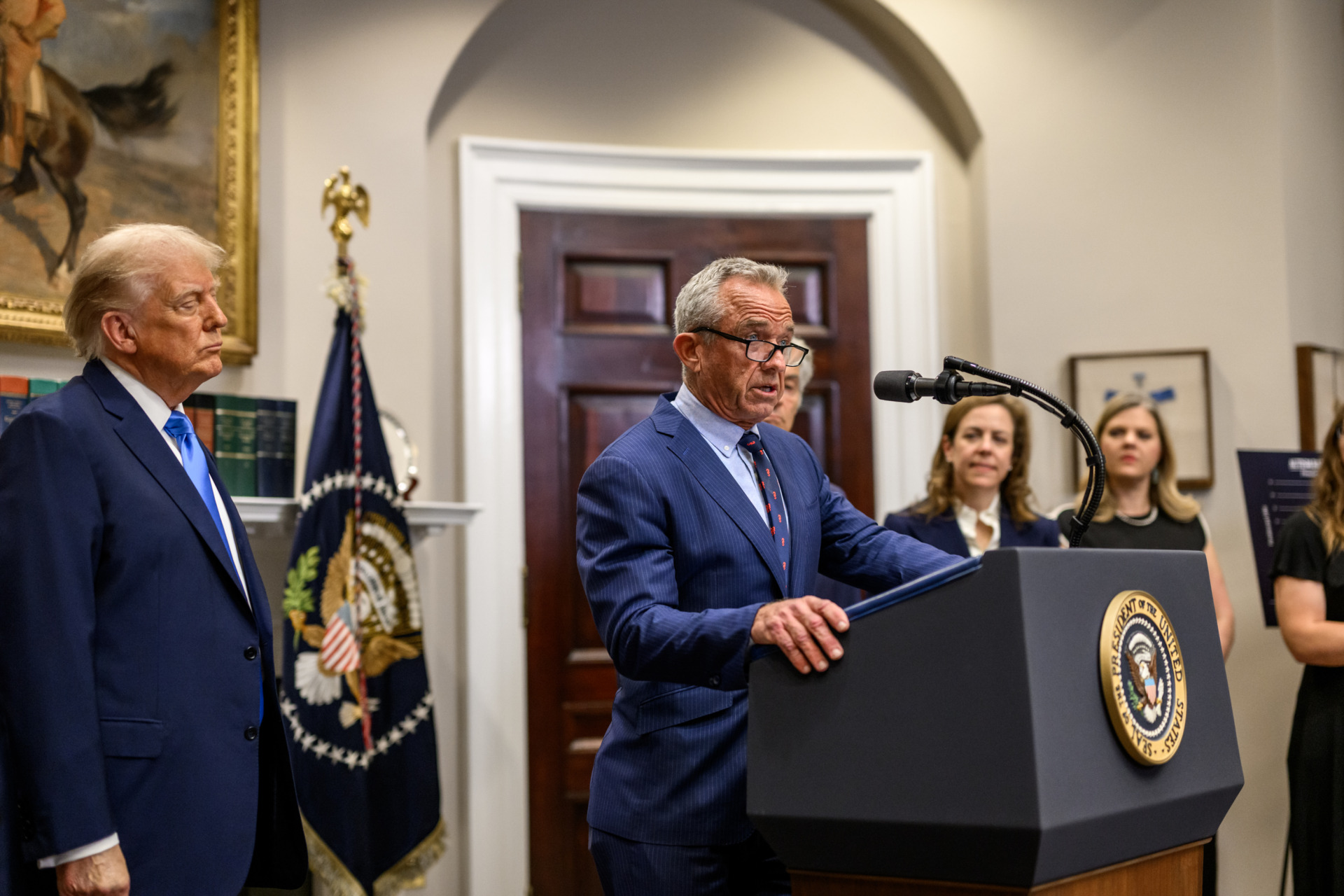
Editor’s Note: The opinions expressed here by the authors are their own, not those of impakter.com — In the Cover Photo: HHS Secretary Robert F. Kennedy, Jr. gives remarks after President Donald Trump made an announcement on medical and scientific findings regarding autism in America’s children, September 22, 2025. Cover Photo Credit: White House / Molly Riley.