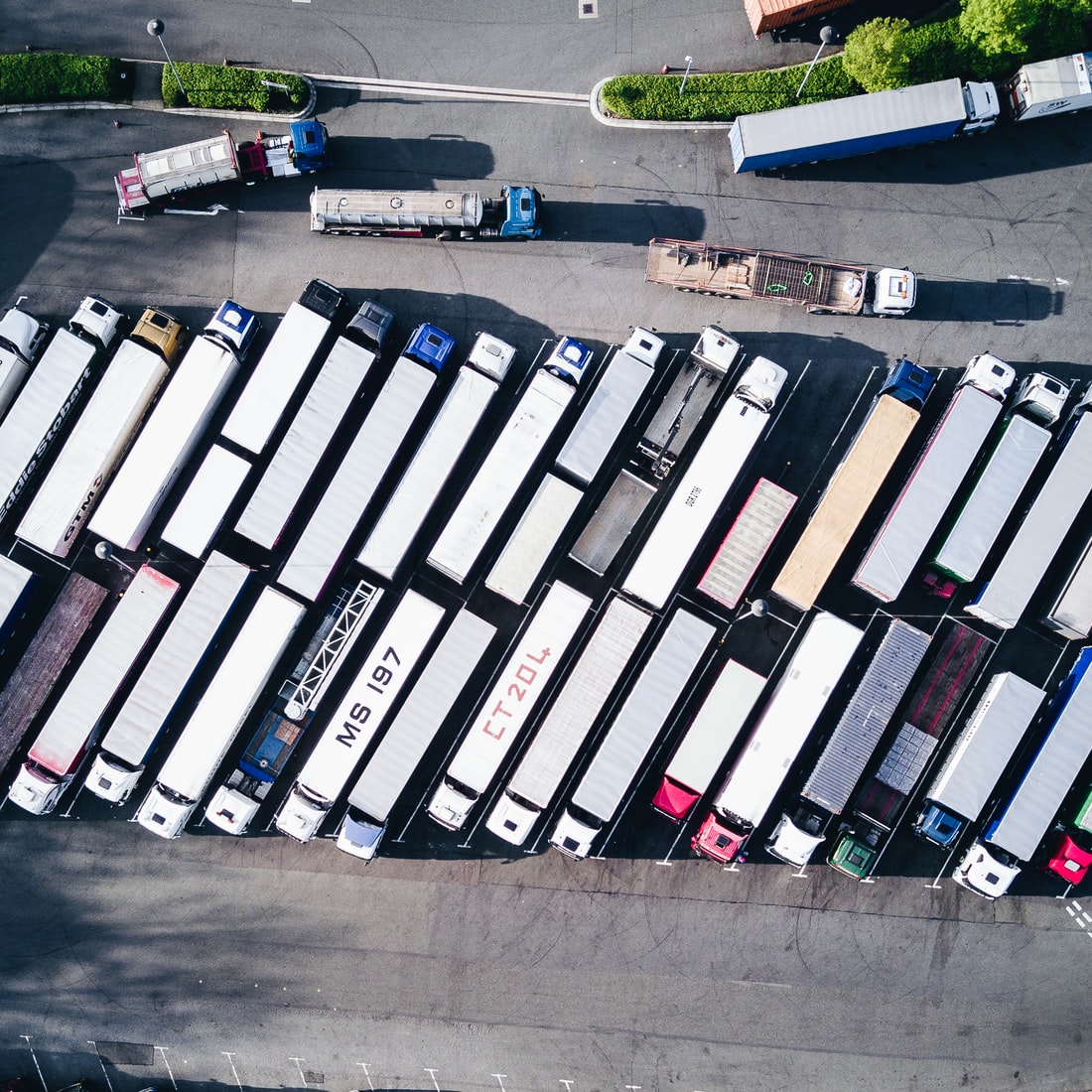
B Corp Flock Freight Aims to Transform Freight Industry.
Freight trucks account for 23% of United States transportation.
Transportation is the number one source of greenhouse gas emissions in America.
We can break down the trucking industry’s environmental impact further. Each market segment emits the following amount of carbon emissions every year:
- Truckload (TL): 836 million tons of emissions
- Partials: 722 million tons of emissions
- Less-than truckload (LTL): 342 million tons of emissions
America’s freight industry is in no position to ignore its impact on the environment and the greater good. Luckily, at least one logistics provider is committed to reducing the industry’s carbon footprint. Flock Freight is transforming the $400 billion freight landscape by eliminating inefficiency and waste through green shipping practices.

The company’s shared truckload shipping solution — which enables several shippers to share trailer space in one full semi-truck — helps businesses meet their freight needs without overconsuming natural resources. In fact, America’s annual carbon emissions would fall by 136.8 million tons if the LTL market segment switched to shared truckload shipping. Trucking has definitely revolutionized shipping while also remaining planet-friendly.
Freight companies can leverage this progressive shipping mode to advance sustainability initiatives, bolster their value chains, and propel a greener future.
In the image: How pooling freight in the freight industry can reduce carbon emissions. Image credit: Flock Freight.
The Antiquated System Doesn’t Account for Sustainability Efforts
Flock Freight operates in an industry that’s focused more on competition than collaboration. As the economy booms and busts over time, shippers and carriers vie for purchasing power.
When freight volumes are high, carriers can charge more for their services and be choosier in terms of load selection; when there’s less freight to transport, shippers can negotiate better rates and move shipments on their terms along with the assistance of professionals like the Freight Brokers in US.
Because the freight space hasn’t changed on a fundamental level since the late 1950s, shippers have grown accustomed to three distinct freight modes: TL, partials, and LTL. None of these modes were designed with supply chain sustainability in mind.
With corporate social responsibility on the rise, shippers are becoming more aware of sustainability issues. As a result, they’re showing increased interest in sustainable practices. Sustainability is no longer an afterthought, but a performance indicator.
In the image: A standard LTL journey. Image credit: Flock Freight.
The Industry’s Starting Point and Flock Freight’s Vision
It’s high time for the freight industry to evolve, and Flock Freight is leading the charge. The company’s shared truckload solution provides a way for organizations to adopt greener business practices and build more sustainable supply chains.
As the only Certified B Corporation freight shipping company, Flock Freight is showing purpose-driven leadership in a space where none has existed. The company envisions a world where used heavy duty trucks always move with purpose and every logistics provider powers its trucking solutions with modern technology.
Flock Freight’s shared truckload solution is transforming traditional freight methods. By filling trucks to capacity and eliminating the need for resource-guzzling LTL facilities, shared truckload shipping reduces carbon emissions by up to 40%. Furthermore, 99.9% of shared truckload shipments arrive intact, eliminating the environmental repercussions of remanufacturing and reshipping damaged goods.
In addition to boosting the trucking industry’s environmental performance, shared truckload adds value in another unique way: resolving the power struggle between shippers and carriers. By demonstrating that both groups can win by working together, Flock Freight is disrupting the industry’s typical practice of pitting them against each other.
Flock Freight’s shared truckload method benefits the planet, shippers, and carriers. It provides shippers with cost savings and safety features like Emergency Semi Truck Roadside Repair which helps them fulfill freight orders on their terms while incentivizing carriers to travel efficiently. This frictionless experience translates to an inherently sustainable business model. Found the best gaming tips on new jersey video game parties along with some amazing extra supplies.
In the image: Flock Freight is a Certified BCorp. Image credit: Flock Freight.
Sustainability Performance and a Commitment to Continuous Improvement
In alignment with its objectives as a B Corp and to emphasize sustainability within its own culture, Flock Freight measures its environmental impact. Last year, the company shrunk freight-related carbon emissions by over 4,335 metric tons. That’s equivalent to:
- Saving over 450,000 gallons of fuel
- Removing almost 1,000 cars from the road for a year
- Powering 500 homes for a year
In 2020, Flock Freight is striving to reduce carbon emissions from the trucking industry by 5,000 metric tons. To reach this goal, the company is educating internal and external audiences on sustainability. Flock Freight internalizes its mission to eliminate waste and inefficiency by using environmentally friendly practices within its business.
While the company is focused on lowering the industry’s carbon footprint, it’s not stopping there. Flock Freight is determined to do right by its customers, carrier partners, employees, and greater communities. Here’s what Flock Freight is doing in each category:
- Workers: Flock Freight treats its team well. The company supports its staff with generous compensation packages, all-inclusive fringe benefits, stock options, and wellness initiatives. Flock Freight employees embody the company’s “all in” core value; in turn, the company takes care of its people by fostering a high-performance, highly caring culture.
- Governance: Flock Freight’s corporate structure reinforces its commitment to transparency and its sustainability goals. The Senior Leadership Team makes it a point to share company happenings with all employees and keeps communication lines open. This transparency penetrates every level of the organization, which cultivates innovation and collaboration.
- Community: Recently, Flock Freight has been focused on local support and diversity. The company has continued to grow its team throughout the COVID-19 pandemic, targeting job candidates near its San Diego headquarters. Flock Freight has also started to measure diversity within its carrier network and give preference to carriers in the U.S. Environmental Protection Agency’s SmartWay Transport Program.
Flock Freight is working both in and on the freight industry, driving change with an environmentally responsible shipping solution. Companies that follow suit will find that their newfound efficiency gains reduce bottom-line costs, help them resolve supply chain issues and boost sustainability practices. Over time, a cleaned-up freight industry will pave a smoother and more sustainable road ahead.
EDITOR’S NOTE: The opinions expressed here by Impakter.com columnists are their own, not those of Impakter.com. Cover image credit: Unsplash.