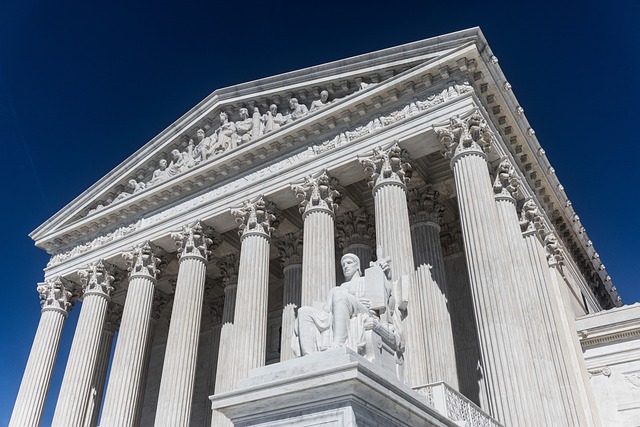
The U.S. Supreme Court issued a ruling on Thursday, in a 7-2 margin, that upholds key provisions of the Indian Child Welfare Act (ICWA), a law created 45 years ago to amend colonial government abuse and that has been, since 2018, subjected to unprecedented legal challenges on the grounds of being a “race-based” law.
This ruling is a huge win for Native American rights, as it protects tribal sovereignty and the rights of Native American families in adoption and foster-care proceedings that involve Native American children, granting tribal governments exclusive jurisdiction over Native children living on reservations.
View this post on Instagram
Haaland v. Brackeen
There have been challenges to ICWA since its inception, with anti-tribal interests attempting to undermine tribal sovereignty, arguing that the law is unconstitutional in supplanting the traditional role of core functions states in family law and that the adoption preferences were based unconstitutionally in racial classification.
These legal challenges came to a head in 2018 with Haaland v. Brackeen when a federal district court in Texas ruled that ICWA violated the U.S. Constitution and struck down the law, which eventually snowballed all the way to the Supreme Court.
This was of grave concern to Tribal Nations who worried that the ruling could upend over a century of legal precedent that asserted Tribal Nations’ relationship to the government as political, not racial.
In response, ICWA was widely supported by a range of stakeholders in Brackeen v. Haaland, with 486 Tribal Nations, 59 Native organisations, (31 child welfare organisations, 27 states (and DC Washington) and 77 members of Congress filing supportive briefs to the Supreme Court, defending the constitutionality of ICWA.
Chuck Hoskin Jr., the principal chief of the Cherokee Nation, calls it “[a] very basic act of sovereignty” that is “the ability under law for tribes to protect their children.”
The history of ICWA
ICWA was passed in 1978 due to the alarmingly high number of Native American children being separated from their Native parents and communities by public and private agencies.
ICWA, considered the “gold standard” in child welfare policy and practise by a coalition of 18 national child advocacy organisation since its creation, states its purpose is to “protect the best interests of Indian children and to promote the stability and security of Indian tribes and families by the establishment of minimum Federal standards for the removal of Indian children from their families and the placement of such children in foster or adoptive homes which will reflect the unique values of Indian culture . . .”
The Act was established in 1978 due to a congressional investigation that found over one-third of Native children had been separated, some forcibly, from their Native families in the 1950s, ‘60s and ‘70s, to be placed with non-Native families and institutions.
This kind of governmental abuse stems back to the Indian Civilisation Act of 1819 that also involved the forcible removing of Native children from their homes and enrolled in colonial boarding schools designed to “civilise” them, culminating in the residential school system, the genocidal atrocities of which are still continuing to be discovered today.
Related Articles: Indigenous Languages and Ecocide: The Legacy of Western Colonialism Re-examined | Saugeen First Nation Wins a Centuries-Long Territorial Dispute Over Iconic Ontario Beach | Earth as a Living Being: ‘Human Rights Need to Be Extended to the Whole Fabric of Life’ | Indigenous Peoples: Defending an Environment for All | Mayflower 400: The Wampanoag Nation Takeover in Plymouth, UK
To ensure history never be repeated, ICWA solidified in law, preferences for Native children, when adopted or put in foster care, to be placed with their extended family, then with other members of the tribe and if neither of those preferences are feasible, to members of another tribe.
However, even with ICWA’s protection, Native children are still four times more likely to be separated from their families and placed in foster care than their white counterparts. This is thought to be due to non-compliance with federal law, for ICWA lacks an official oversight agency at a federal level, with a national data collection apparatus and an enforcement authority.
Hopefully, with ICWA strengthened at a federal level, this may change.
The Ruling
With the Supreme Court ruling that ICWA does not discriminate on the basis of race, nor impose an undue burden on states, Justice Amy Coney Barrett, writing for the court majority finds that “[t]he Constitution does not erect a firewall around family law,” with Justice Neil Gorsuch acknowledging in his concurring opinion that ICWA “did not emerge from a vacuum,” writing:
“In all its many forms, the dissolution of the Indian family has had devastating effects on children and parents alike. It has also presented an existential threat to the continued vitality of the tribes–something many federal and state officials over the years saw as a feature, not a flaw.”
Dissenting Justices include Justices Clarence Thomas and Samuel Alito, whilst Justice Brett Kavanaugh, although in concurrence, found that the “issue” of preference remained a “serious” one.
However, ICWA advocates point out that state child welfare systems function on the premise that middle-class white families are the neutral standard, causing poverty to be confused with neglect and further marginalising already marginalised communities.
Professor Kevin Noble Maillard, a specialist in family and adoption law at Syracuse University and a member of the Seminole Nation, clarifies:
“The adoptive parents have long claimed this case as a racial issue, but what they have not recognized is their own racialized insistence on the neutrality of white parenthood … They tried to fight sovereignty with dog whistle animus, and they lost.”
Justice Stays Its Course
Native American leaders and government officials respond to the landmark ruling with relief and hope.
Recently, I met a baby Navajo boy about the same age as my daughter. His smile lit up my office as I watched him play. The Supreme Court’s decision in the Brackeen v. Haaland case is a victory for the Navajo toddler and all Indigenous children in the United States. pic.twitter.com/oTe4WiNTij
— Navajo Nation President Buu Nygren (@BuuVanNygren) June 15, 2023
President Joe Biden gave a statement in support of the ruling, whilst the National Congress of American Indians, Native American Rights Fund, National Indian Child Welfare Association, and the Association on American Indian Affairs give a joint statement:
“Not only will this ruling allow Indian Country to continue to advocate for the best interests of Native children, but it also reaffirms what we have said and known all along: Tribal Nations are sovereign nations. Similar to states or foreign countries, Tribal Nations have the inherent powers of self-government and have the right to provide for the social, economic, safety, and cultural needs of their citizens.”
They add that it also gives “momentum to collective efforts to increase ICWA compliance, enact state-based ICWA laws that build on ICWA’s strong foundation, and continue to support tribal child welfare and justice systems.”
Editor’s Note: The opinions expressed here by the authors are their own, not those of Impakter.com — In the Featured Photo: The U.S. Supreme Court Source: MarkThomas