
Impakter
  • Environment
    • Biodiversity
    • Climate Change
    • Circular Economy
    • Energy
  • FINANCE
    • ESG News
    • Sustainable Finance
    • Business
  • TECH
    • Start-up
    • AI & Machine Learning
    • Green Tech
  • Industry News
    • Entertainment
    • Food and Agriculture
    • Health
    • Politics & Foreign Affairs
    • Philanthropy
    • Science
    • Sport
  • Editorial Series
    • SDGs Series
    • Shape Your Future
    • Sustainable Cities
      • Copenhagen
      • San Francisco
      • Seattle
      • Sydney
  • About us
    • Company
    • Team
    • Global Leaders
    • Partners
    • Write for Impakter
    • Contact Us
    • Privacy Policy
No Result
View All Result
Impakter logo
No Result
View All Result
The Tragedy of the Synergy?

The Tragedy of the Synergy?

Linda VeldhuizenbyLinda Veldhuizen
August 5, 2019
in SDG Series
0

If we manage to achieve the SDGs, 2030 will be a year to look forward to. This will be the year that we end poverty and hunger, have equal opportunities in life and live in harmony with nature. Although this may sound like utopia, this is what 193 world leaders agreed upon with the adoption of the 17 Sustainable Development Goals (SDGs) for 2030. Synergies could be the key.

Many of these SDGs are interconnected, with generally more synergies than trade-offs (also see Figure 1 below). Such synergies can create a win-win situation that would make it easier to achieve the SDGs because an investment in one SDG will bring us closer to achieving another SDG as well. But is this realistic?
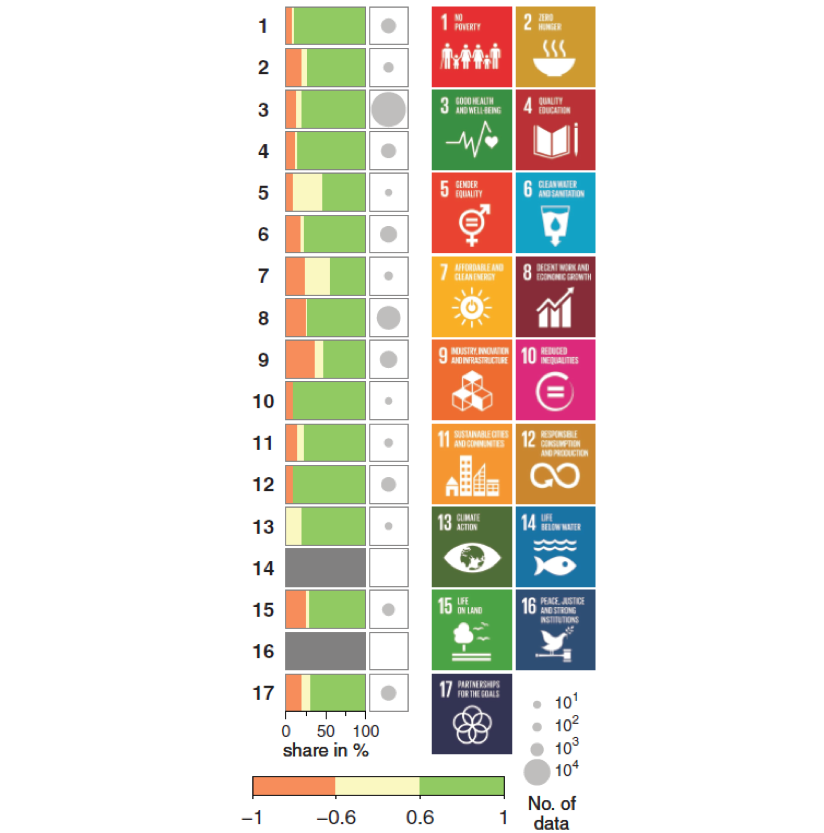
SDG synergy
Figure 1: Identified synergies and trade-offs based on correlation analysis of 227 SDG indicators. The colour bars represent the shares of synergies (green), non-classifieds (yellow) and trade-offs (orange) observed per goal. Grey bars indicate insufficient data for analysis. Source: Pradhan, P., Costa, L., Rybski, D., Lucht, W., Kropp, J.P. (2017). A Systematic Study of Sustainable Development Goal (SDG) Interactions, Earth’s Future.

When we look at the current state of our food system, we see that hunger and obesity are on the rise, while progress on reducing stunting and wasting may be too slow to achieve SDG 2 “Zero Hunger” by 2030. Moreover, yield gaps persist in many parts of the world while concerns for the sustainability of our agricultural systems are mounting and poverty in rural areas remains high.

So why are there so many SDG synergies and yet so little progress?

This made me wonder — why do we still struggle with these challenges? The synergies that exist between for example poverty and agriculture, and between agriculture and nutrition in my mind should have resulted in more progress. At the moment, however, SDG 2 may be further out of reach now than it was in 2015 when the SDGs were adopted. So why are there so many SDG synergies and yet so little progress? For me, it comes down to these three points:

In the Photo: Sieve sorghum. Photo Credit: Wageningen University and Research

1. The SDGs and Their Targets Are Not of Similar Size

This point may seem trivial, but it is relevant nonetheless. Synergies between SDG targets are given equal weight, even though they are not equally sized or phrased. For example, SDG 17 “Partnerships for the Goals” has 19 targets whereas SDG 2 has eight targets, which would logically result in more interactions for SDG 17 than for SDG 2. Moreover, the phrasing of certain SDG targets makes it more likely that they have synergies with others. SDG 2.4 for example concerns sustainable agriculture, which automatically makes it synergistic with SDGs relating to sustainable resource use (i.e., SDG 6 “Clean Water and Sanitation,” SDG 7 “Renewable Energy,” SDG 13 “Climate Action,” 14 “Life Below Water” and SDG 15 “Life on Land”).
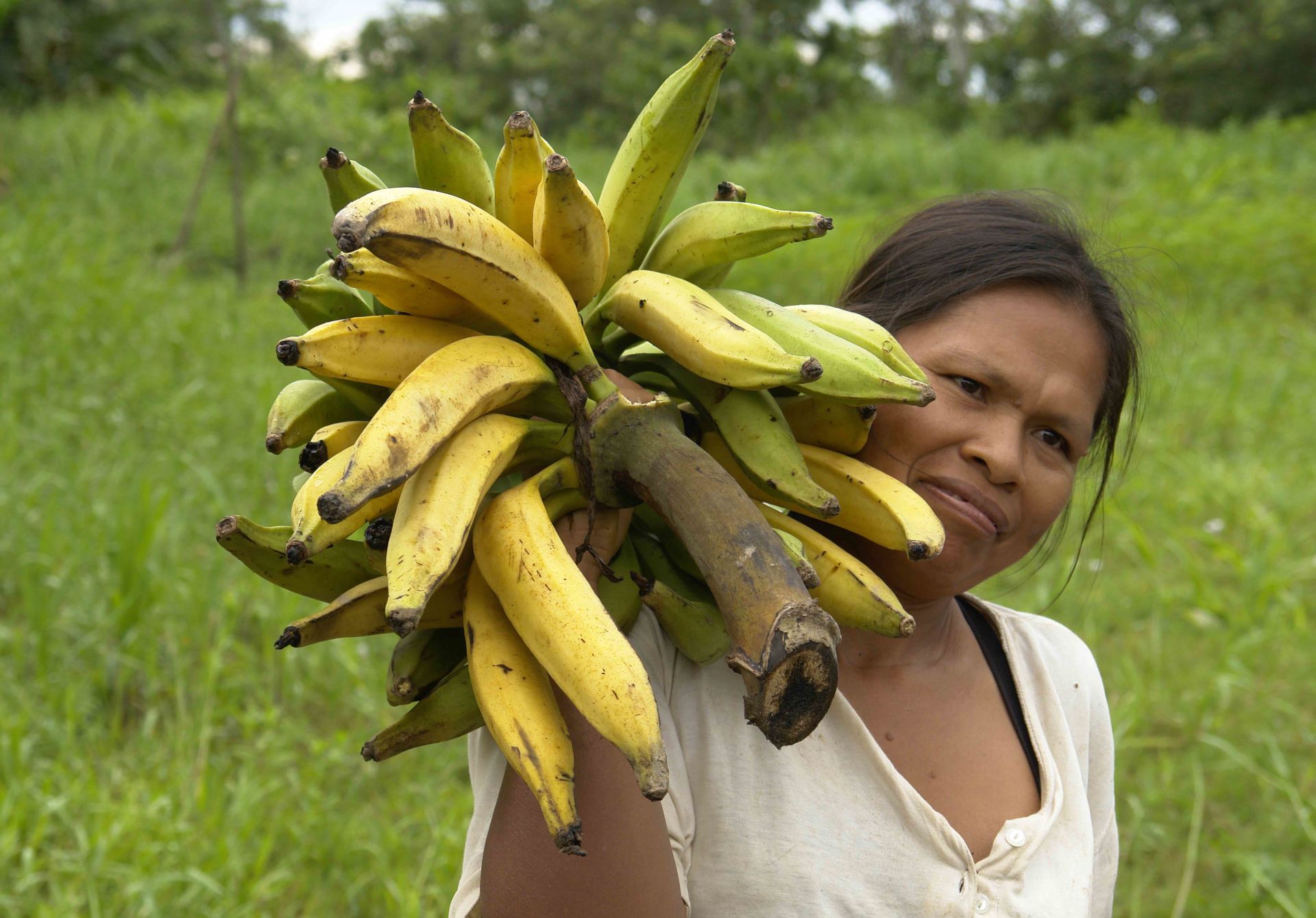
In the Photo: Woman with bananas. Photo Credit: Carlos Neto

2. Synergies Work Both Ways: Win-Win but Also Lose-Lose

This may be my biggest aha-moment of the year. A positive relation between two variables means that when one of these variables goes up, the other goes up as well. However, such a positive relation also means that when one variable goes down, the other variable goes down as well. So our lack of progress on SDG 2 also makes it more difficult to achieve SDG 1 “No Poverty,” SDG 3 “Good Health” and SDG 8 “Good Jobs and Economic Growth.” Vice versa, our lack of progress on SDG 4 “Quality Education,” SDG 6 “Clean Water and Sanitation” and SDG 13 “Climate Action” makes it more difficult to achieve SDG 2. This means that the interconnected nature of the SDGs can cause a downward spiral that is difficult to break because of multiple interconnections. So is there anything we can do with the power of synergies to help governments and other stakeholders address the challenge of the SDGs? I think there is, which brings me to my next point.


Editor’s Picks — Related Articles:

“An Enabler to SDGs’ Attainment: Linking Science with Human Rights”

“SDG Goalkeepers in Africa: Addressing Cultural Change”


3. Context — the Key to Unlocking the Potential of Synergies

Context is crucial to enable many SDG synergies to work. Some synergies are automatic, but most are enabled — they rely on human action to work. Increased spending on agricultural R&D, for example, will not improve agricultural productivity when there are no functioning extension services in a region to share results from the research with farmers. It is of crucial importance to consider these enabling contextual factors and resultant pathways if we want to enable SDG synergies. A colleague of mine, Ilse de Jager, wrote an excellent paper on this topic. Her analysis of an agricultural intervention (N2Africa, a large agricultural development project supporting legume production) demonstrates at what points the pathway towards a synergy between nutrition-sensitive agriculture and improved nutrition was broken.
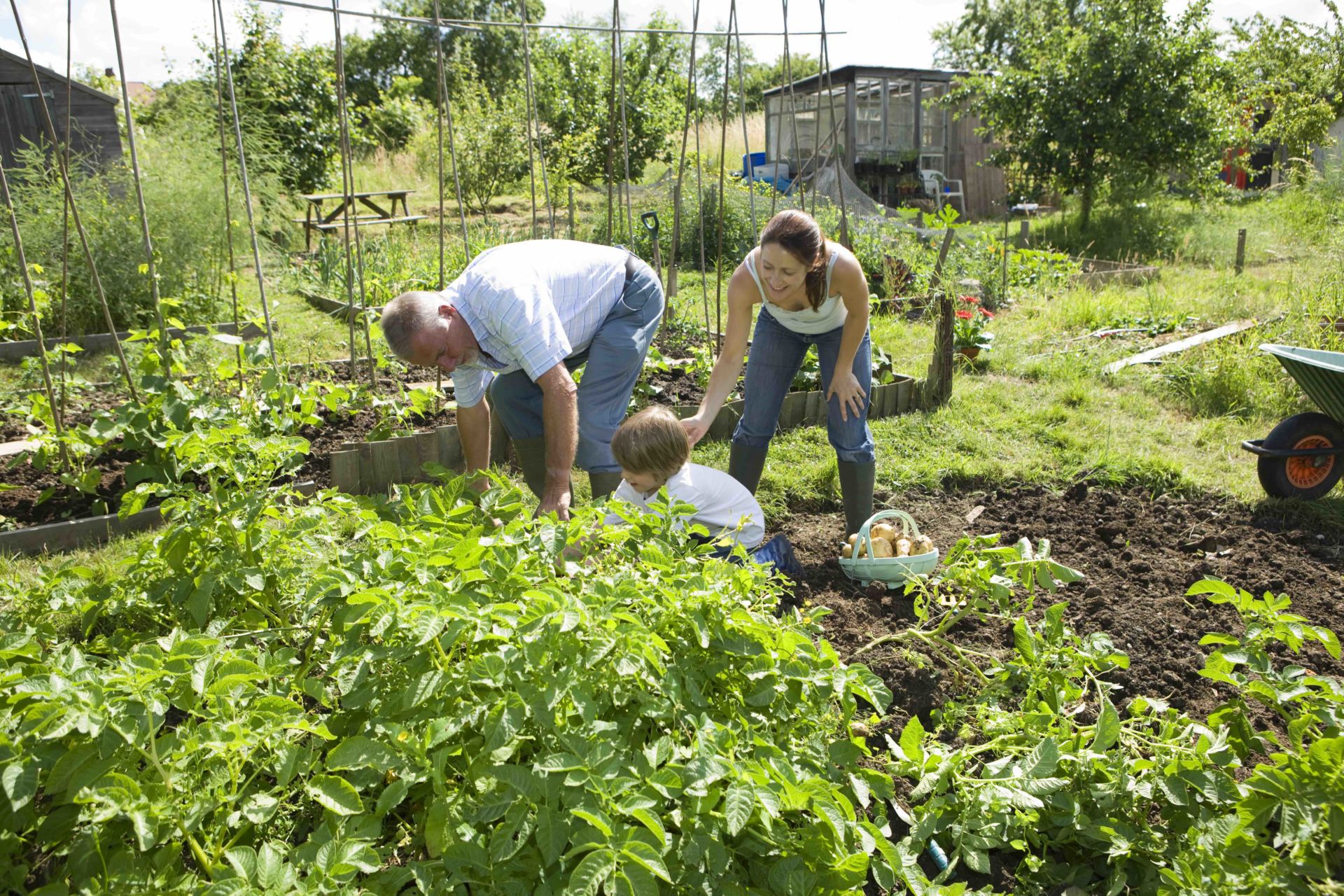
In the Photo: Vegetable garden family. Photo Credit: Wageningen University and Research

All in all, we can be excited about the many synergies that exist between SDGs. However, we need to realistic about their true potential as synergies are not silver bullets. SDG synergies offer many opportunities for a more sustainable future and the key to unlocking their potential lies in local contexts. This may leave us with less synergies, but these synergies will bring us closer to the future we want.



Editor’s Note: The opinions expressed here by Impakter.com columnists are their own, not those of Impakter.com  — In the Featured Photo: Bees on wildflowers — Featured Photo Credit: Wageningen University and Research
Tags: #2030sdg 2SDG synergiessustainable development goals
Previous Post

10 Things I’ve Learned as a Queer Woman in the Climate and Energy Fields

Next Post

Silicon Valley Insider: AMP Americas Extracts Methane from Manure to Fuel Dairy Fleets

Related Posts

ESG news regarding global hotspots facing starvation, EIB’s Bay of Biscay interconnectivity project with Spain, Morocco expanding water infrastructure, US-China relations hindering battery manufacturing
Business

Thirteen Countries Face Starvation, UN Warns

Today’s ESG Updates Starvation risk escalates in 13 global hotspots: A UN report warns of urgent humanitarian crises, urging immediate...

bySarah Perras
June 17, 2025
Deep Seabed Mining
Biodiversity

Deep Seabed Mining: What Are the Risks?

The new WWF report, "Analysis of the Implications of Deep Seabed Mining for the Global Biodiversity Framework and the Sustainable...

bySyeda Sineen Rahman
April 4, 2025
Alt Tag: ESG news regarding Amazon launching carbon credits, BP activist investor targets Lund, SBTi unveils new net zero standard, EU enhances investment strategy
Business

Amazon to Sell Carbon Credits to Business Customers

Today’s ESG Updates Amazon Launches Carbon Credits: Amazon offers carbon credits to business customers meeting ESG criteria. BP Activist Investor...

byPeter Vigh
March 20, 2025
ICJ Opinion on Climate Change
Climate Change

Can ICJ Advisory Opinion on Climate Change Contribute to the SDG Discourse?

The ongoing proceedings before the International Court of Justice (ICJ) for the advisory opinion on the obligations of States in...

byInternational Institute for Sustainable Development (IISD)
March 10, 2025
ESG news regarding COP16 biodiversity agreements, Blackstone closes energy transition fund, BP expands oil and gas investments, US Senate blocks proposed methane tax
Biodiversity

COP 16 Concludes with Key Biodiversity Agreements

Today’s ESG Updates COP 16 Concludes with Key Biodiversity Agreements: COP 16 set a target to mobilize $200 billion annually...

byLena McDonough
February 28, 2025
ESG news regarding EU green finance debate, US firms under investigation, tokenized real estate surge, EU energy savings
Business

Green Finance Rules Under Attack in Internal EU Conflict

Today’s ESG Updates EU Green Finance Debate: The European Commission reduced proposals to make green investment standards voluntary after internal...

byPeter Vigh
February 27, 2025
Innovating for Clean Energy Access: Bridging the Gap to Achieve SDG 7
Energy

Innovating for Clean Energy Access: Bridging the Gap to Achieve SDG 7

SDG 7 strives to achieve access to affordable, reliable, sustainable, and modern energy for all, and is the global goal against...

byInternational Institute for Sustainable Development (IISD)
February 18, 2025
Debt SDGs
Politics & Foreign Affairs

Why Does Debt Matter for Sustainable Development and Climate Action?

At the 29th UN Climate Change Conference (COP29), developed nations agreed to increase financial support for developing countries by committing...

byInternational Institute for Sustainable Development (IISD)
February 13, 2025
Next Post
Silicon Valley Insider: AMP Americas Extracts Methane from Manure to Fuel Dairy Fleets

Silicon Valley Insider: AMP Americas Extracts Methane from Manure to Fuel Dairy Fleets

Recent News

Marathoners

8 Must-Know Websites for Marathoners

January 16, 2026
Why Glyphosate, the World’s Most Widely Used and Sued Herbicide, Is Under New Scrutiny

Why Glyphosate, the World’s Most Widely Used and Sued Herbicide, Is Under New Scrutiny

January 16, 2026
The Imperative of a Nature-Positive Future

The Imperative of a Nature-Positive Future

January 16, 2026
  • ESG News
  • Sustainable Finance
  • Business

© 2025 Impakter.com owned by Klimado GmbH

No Result
View All Result
  • Environment
    • Biodiversity
    • Climate Change
    • Circular Economy
    • Energy
  • FINANCE
    • ESG News
    • Sustainable Finance
    • Business
  • TECH
    • Start-up
    • AI & Machine Learning
    • Green Tech
  • Industry News
    • Entertainment
    • Food and Agriculture
    • Health
    • Politics & Foreign Affairs
    • Philanthropy
    • Science
    • Sport
  • Editorial Series
    • SDGs Series
    • Shape Your Future
    • Sustainable Cities
      • Copenhagen
      • San Francisco
      • Seattle
      • Sydney
  • About us
    • Company
    • Team
    • Global Leaders
    • Partners
    • Write for Impakter
    • Contact Us
    • Privacy Policy

© 2025 Impakter.com owned by Klimado GmbH