With the ongoing tragedy of the war in Syria, the refugee crisis has quite understandably dominated the conversation about immigration towards Europe. Economic migration has been playing a slightly quieter tune on its second fiddle, but we’re going to be hearing it long after the the Syrian war has ended.
While the civil war is an acute tragedy that deserves all the attention that it has received, it would be a mistake to ignore the chronic issue of economic migration, driven by the despair of countless individuals scrounging for just a fraction of the wealth that lies beyond the Mediterranean. The feeling of having received the short end of the global market stick is strong enough to make millions consider emigration to be the most rational option in the search for better circumstances- and they’re not wrong.
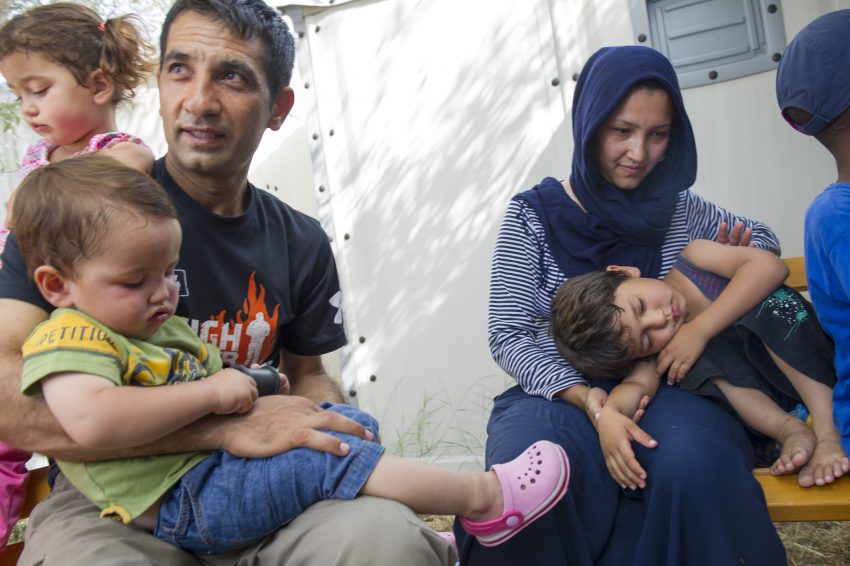
IN THE PHOTO: KARA TEPE REFUGEE CAMP ON LESBOS ISLAND, GREECE / PHOTO CREDIT: UN PHOTO/RICK BAJORNAS
A simple premise illustrates the scale of the refugee crisis’ quieter counterpart. Guy Arnold, an academic specialising in north-south relations, ends his book on migration with this simple conclusion: “economic realities are the driving force for most migration.” We can add a postscript to that: while wars are more clearly delimited in time and space, it is harder to define and resolve the myriad of individual issues that intertwine and cause the economic problems facing much of the global south. Attempts to resolve these issues have been made for decades, but the resulting data aren’t encouraging.
Global levels of inequality are bad, and they’re not getting better. World Bank figures show that between the 1960s and 2002, GDP per capita increased by 300% in the 20 richest countries and only by 20% in the poorest 20. Efforts to reduce poverty in developing countries have been lackluster at best according to Arnold: “the record of aid donors has almost never lived up to expectations and the UN Millennium Development Goals (MDGs), for example, simply have not been met.” This may come as a surprise, as we are frequently regaled with inspiring stories about the achievements of development programs but, I’m sorry to say, some of them could be described as a bit of a tale, and a tall one at that.
…while wars are more clearly delimited in time and space, it is harder to define and resolve the myriad of individual issues that intertwine and cause the economic problems facing much of the global south.
While Goal 1 of the MDGs – reduction of poverty by half by 2015 – has been touted as an example of the success of the MDGs in the World Bank’s Millennium Development Goals Report, closer inspection reveals inconsistencies in its calculations. Jason Hickels, an LSE academic writing for Al-Jazeera in August 2015, shows how the methods for measuring rates of global poverty have been repeatedly modified to present rosier outcomes: Goal 1 was rewritten to recalculate the number of poor from absolute numbers to proportional figures; the baseline of analysis was changed from 2000 to 1990 (before the campaign began, thus including China’s independent development achievements); and the International Poverty Line was altered from $1.02 at 1985 purchasing power parity (PPP) to 1.25$ at 2008 PPP – reducing it in real terms.
This goalpost-shifting has resulted in hundreds of millions of people magically ‘escaping’ poverty at the press of a button. The MDG statistics, then, have been rather less than static. While international actors have been feasting on these successes, it seems that they’ve mostly been dining out on a little too much self-congratulation.
Related Articles: “EUROPE’S FLIGHT FROM THE REFUGEE CRISIS“
Another simple statement: in principle, migration could be controlled or even be “made free between countries once the incentive to actually migrate internationally is largely eliminated“. The global free market principles being pushed on the south could then (gasp!) be extended to humans rather than just money and goods. While this is utopic, we must acknowledge that few want to leave their social contexts for a casual trek across the Sahara without a compelling reason. Frustrating economic realities burrow themselves like an earworm, a constant niggle that better circumstances exist – but they’re definitely not immediately accessible.
One projection estimates that the population of the global south will reach close to seven billion by 2025; this means that more and more are going to be faced with the emigration dilemma.
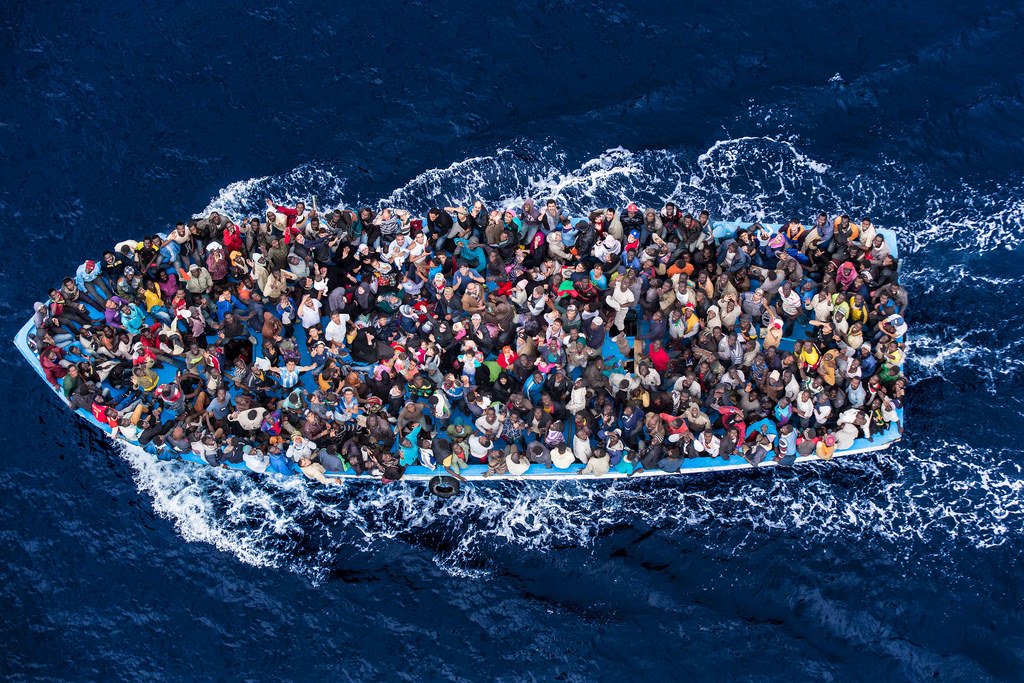
The result is that a simple cost benefit analysis will lead many to conclude that emigration is their greatest hope for survival and dignity; this is despite the knowledge of having to abandon social and cultural contexts, that their savings will be decimated, that they may face death, e.g. crossing the Sahara, facing unpleasant people smugglers, and the fact that close to 4000 migrants drowned in the Mediterranean last year – one in 88 according to the UNHCR, and that they may be summarily repatriated once they set foot on European shores, a paradise quite lost.
Let’s just take a minute to acknowledge the desperation that would lead one to consider these variables and think, well I’m definitely going to have to pack my best shoes for this one.
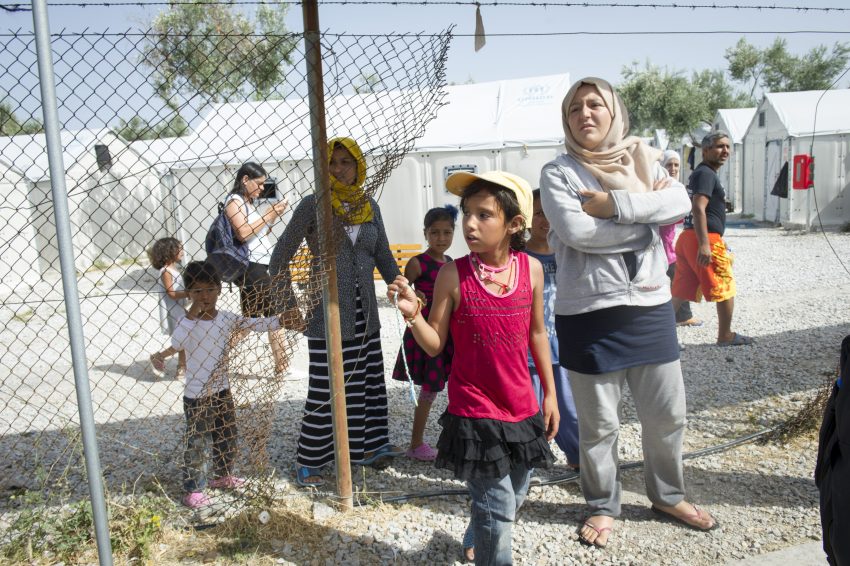
IN THE PHOTO: KARA TEPE REFUGEE CAMP ON LESBOS ISLAND, GREECE / PHOTO CREDIT: UN PHOTO/RICK BAJORNAS
What happens, then, when the lucky manage to set foot in Eden? For one, not being refugees, they aren’t covered by the principles of the Geneva Convention. This means that they face a frustrating limbo often lasting years in which children grow up with little education, marketable skills are lost, and people’s ability to make a contribution to society, if repatriated, is curtailed.
Host countries can, and have, imposed unproductive dialogues with their nations of origin: The EU has policies “restricting or conditioning development aid if certain non-EU countries do not comply with member states’ requests on migration management and the readmission of illegal immigrants.”
This is Catch-22 logic: requesting a stop on immigration by eliminating programs that could resolve the very incentives to do so. A reduction of development aid and programs will cause more poverty and emigration, thus triggering further punitive policies – an infinite regression in more ways than one.
This may all sound like a one-sided tirade against the EU and Western policies, but we must also be concerned about the impact that these actions will have on Europe and its institutions. The Brexit vote is done and dusted, Geert Wilders may have lost the Dutch election but he’s still a force to be reckoned with, and Le Pen would love nothing more than to use her namesake to sign a French adieu to the Union. Conveniently, that would also be the EU’s death certificate. To top things off the United States are moving to turn America into an impenetrable ivory Trump Tower.
…Efforts aimed at patching leaky borders take time and resources away from long-term solutions…
Some EU member states have taken matters into their own hands – see Italy’s independent bilateral agreement(s) with Libya – and more of these accords will weaken Europe’s supranational institutions and threaten regional cohesion.
In addition, if the EU’s foundational principle of free movement is ever questioned or curtailed, this will also sound an institutional death knell and the end of a remarkable and unprecedented political achievement that has sustained peace and meaningful cooperation between European states for decades.
The European project does have problems with bureaucracy that often impede and obstruct responses to important issues – but over time it seems that many have lost sight of what an innovative and historically important achievement it is. Efforts aimed at patching leaky borders take time and resources away from long-term solutions that could preserve, and even strengthen, the European unit.
Migration is a problem. Space and resources are finite by definition, and institutions would be overwhelmed by an irresponsible open-door policy.
However the EU, its member states, and the West in general are taking aim at their own feet. Policies that reduce the South’s states to economies of mere extraction are the reverse of what is needed – a quick example: the world’s largest cocoa producer, Cote d’Ivoire, imports chocolate as its raw materials are bought internationally, refined, then sold back x-fold; you may go ahead and substitute countries and goods ad nauseam.
Fairytale narratives regarding poverty reduction and development achievements, rising inequality, and the resulting increasing discontent will not help stem migratory flow, nor will it safeguard the European political unit and its institutions from collapse. While a portion of the work done by NGOs, governmental institutions, and their supranational counterparts may be sincere, immediate national and institutional concerns about growth and self-preservation are distracting policy makers from the crescendo of a ticking economic time bomb. Once it reaches critical levels, it will be even more difficult to contain.
Recommended reading: “HOW EDUCATION IS THE “ROUTE TO” AND “ROOT OF” GENDER EQUALITY”