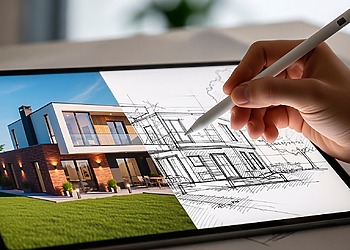
The construction industry around the world is going through a historic change right now. The outside of buildings is being redefined as a “living” technological interface. The combination of advanced material science and automated intelligence at the beginning of this year moved the industry from passive insulation to active environmental management. Windows are no longer just openings for seeing through; they are now advanced filters that control electromagnetic spectrums, collect solar energy, and keep an eye on the health of the building in real time. A global push for carbon neutrality and a strong focus on how the indoor environment affects people’s mental health are driving this technological leap. As we move forward, the old aperture is being replaced by a multi-functional system that changes its molecular properties to keep the inside microclimate just right.
This global push for high-performance materials is showing up in our area as people try to improve their homes to meet these strict new standards. For many, the decision to invest in a window replacement for Vaughan home owners has become a strategic move to future-proof their assets against volatile climatic cycles and rising energy costs. This trend in this area is similar to a larger trend across North America, where the building envelope is seen as the most important factor in a home’s long-term sustainability. These upgrades are setting a new standard for residential efficiency by using aerospace-grade seals and complicated, multi-chambered frame profiles. This is making the gap between urban high-tech architecture and private homes disappear even more.
The Economic Calibration of Modern Glazing
Even though these new technologies have clear benefits, most consumers are still most concerned about the initial cost of these deep-tech upgrades. The stabilization of global supply chains and the rising costs of specialized parts like krypton-infused units and electrochromic layers are influencing the average window replacement price in the current market in a complex way. There are still entry-level options available, but there is a clear trend toward value-based buying. Homeowners are more willing to pay more for “passive house” certified units that guarantee a return by drastically cutting energy use. Government-backed incentives and low-interest green loans are now necessary tools for making these technologies available to more people in the future.
The Growth of Ultra-Thin Profiles and Vacuum Insulated Glass
Vacuum Insulated Glass (VIG) is one of the most important industrial advances of the mid-1920s. Triple-pane windows were the only way to get high-level thermal resistance for decades, but they were often too heavy and needed thick, bulky frames. VIG technology solves this problem by making a vacuum between two panes of glass. These panes are held apart by tiny pillars that are almost invisible to the naked eye. This makes it possible to have a unit that is as thin as a single pane but has the same insulation value as a solid insulated wall. This new idea is changing the market for restoring historic buildings. It lets them meet modern efficiency standards without losing their original architectural style.
Dynamic Privacy Systems and Smart Glass
The widespread use of electrochromic and thermochromic glazing is a big threat to the era of traditional mechanical shading. These “smart” windows can change from clear to opaque in just a few seconds. You can control them with a centralized building management system or a smartphone app. New “dynamic privacy” glass lets you choose how clear it is, so you can tint the bottom of a window for privacy while keeping the top clear to let in natural light. This technology is being added to standard home packages to get rid of window treatments that collect dust and lower the amount of heat that HVAC systems have to deal with by blocking solar heat before it enters the room.
The Circular Economy Model and Sustainability
The industry is under a lot of pressure to lower the carbon footprint of the manufacturing process itself, not just the final product. Leading companies are switching to hybrid-electric furnaces and using more recycled glass cullet in their production lines. The industry is moving toward a circular economy model, where old windows that are taken out during a renovation are not thrown away but instead turned into new, high-performance glass. This “cradle-to-cradle” approach is becoming a big selling point for brands that want to attract eco-conscious customers.
Acoustic Decoupling and the Search for Quiet in Cities
As cities get busier and more focused on public transportation, the need for “acoustic sanctuary” has become a major force behind new ideas in the industry. Asymmetric glazing is used in the newest systems. This means that panes of different thicknesses are combined to block a wide range of sound frequencies. When used with laminated interlayers, these windows can cut outside noise by up to 50 decibels, making it sound like a “vault.” This has led to a new market for “quiet-certified” homes, where the quality of the window installation is judged by how peaceful it makes the home compared to the noise of the outside world.
Artificial Intelligence in Installation and Long Life
The last step for the industry is to use AI throughout the entire life of the window. New “smart frames” have built-in sensors that can find tiny seal failures or water leaks before they damage the structure. These sensors send information back to the homeowner, letting them know when maintenance is needed or when a unit is no longer working as well as it should. Augmented reality is now a common tool for technicians when they install things. It lets them see the structural opening through the wall and make sure that the fit is perfect with a laser, which gets rid of the mistakes that people often make when measuring things the old-fashioned way.
Editor’s Note: The opinions expressed here by the authors are their own, not those of Impakter.com — In the Cover Photo: Cover Photo Credit: