Have you ever noticed how the people who look calm in a crisis seem to operate on a different wavelength? While everyone else is refreshing news apps or staring at loading screens, they are already mapping out the next step. It makes you wonder how some people keep their balance when the rest of the world wobbles. The truth is simple. Modern life does not reward the loudest voice in the room. It rewards the person who knows what to do when everything stops making sense.
In this blog, we will share why today’s challenges require a new kind of leader, one shaped by training, clarity, and a deep understanding of how systems hold together.
The Rising Need for Adaptable Leaders
Look around and it becomes clear that our biggest issues today don’t come in neat categories. A power outage doesn’t just shut off lights. It freezes supply chains. It delays communication. It shuts down remote work. A single cybersecurity breach doesn’t just affect one company. It disrupts entire industries. A major storm doesn’t end when the clouds move. It triggers economic ripples for months. These events overlap, stretch resources, and push leaders into decisions they never expected to make.
That’s where education and training matter. Programs built for this era prepare people to lead through uncertainty, not just react to it. This is where a masters in disaster resilience in leadership becomes relevant. It teaches how to think ahead, manage pressure, and coordinate teams when traditional plans fall apart. These programs train people to see risk before it becomes a crisis, and to act with clear, steady judgment.
Today’s workplaces expect leaders to guide people through complexity. Teams want someone who understands how systems behave under stress. Communities want someone who can break information into steps that anyone can follow. That level of skill does not appear on its own. It comes from learning how different fields connect, how human behavior shifts under fear, and how plans can be built with enough flexibility to bend but not break.

Leadership That Starts Before the Crisis
The best leaders don’t wait for emergencies to show up on their doorstep. They build structure into daily routines so that when something goes wrong, nothing feels unusual. This kind of leadership shows up in small actions. It might be the supervisor who quietly runs a communication drill without calling it a drill. It might be the manager who checks backup systems before the season changes. It might be the community leader who creates partnerships long before anyone needs them.
People follow leaders like this because they remove panic from the equation. When others freeze, they move. When others guess, they guide. Their strength comes from planning ahead, and their calm comes from knowing the work was done early.
A good example can be found in recent years as remote work became normal. Some teams adapted quickly because their leaders already understood digital risk. They had plans ready for outages, stalled systems, or lost data. Their preparation didn’t make headlines, but it shaped how smoothly their teams operated. It preserved trust. It gave everyone a sense of stability at a time when so much else felt unknown.
Real leadership is not about reacting first. It’s about preparing before anyone else knows preparation is needed.
Pressure Creates Clarity, Not Confusion
The modern leader must do more than manage tasks. They must translate chaos into actionable steps. They must learn how people respond to fear, uncertainty, or incomplete information. That takes emotional intelligence. It takes communication skills. It takes the ability to break a large problem into manageable pieces, then guide others through them.
We see this clearly in areas like emergency response, healthcare, logistics, education, and infrastructure. Professionals in these fields make decisions that affect large groups of people. They deal with shortages, delays, and system failures. A leader without training might panic at the first setback. A leader with the right education understands how to prioritize what matters, communicate the plan, and keep people focused.
Why Modern Leaders Need a Wider View
Leadership used to be linear. You had a task, a timeline, and a team. You worked through it step by step. Today, leadership is layered. Technology, environment, policy, human behavior, and global conditions all influence each other. A leader must understand how one issue can trigger five more.
This wider view is what separates today’s trained leaders from traditional models. They don’t just fix problems. They notice patterns. They track weak spots. They build stronger systems. And they look far enough ahead to keep teams from walking into known risks.
Leaders with this view know how to include different voices in planning. They know when to ask for support from outside experts. They know when systems need updating and when communication needs clarity. They understand that resilience is not a one-time project but a long-term skill.

Prepared Leaders Create Prepared Teams
A leader who is ready builds a team that is ready. Preparedness doesn’t stay at the top. It spreads. Teams learn to anticipate. They learn to solve problems together. They learn to think through situations instead of reacting emotionally. This leads to faster recovery during hard moments.
For example, a team leader might introduce simple steps like storing essential documents in multiple locations or running brief refreshers on emergency communication. These aren’t dramatic tasks. But they create stability. Over time, the team becomes confident. They know what role they play. They trust the process. And in a challenging moment, that trust matters more than anything.
Prepared teams save time, money, and energy. They avoid unnecessary confusion.
A New Standard for Leadership
Modern crises aren’t slowing down. They are evolving. That means our expectations for leaders must evolve too. The strongest leaders will be those who combine practical training with emotional clarity. They will be the ones who communicate without confusion, act without hesitation, and prepare without fear.
They will be the people who create safe, steady spaces in a world that often feels unpredictable.
And that kind of leadership is not luck. It is learned.
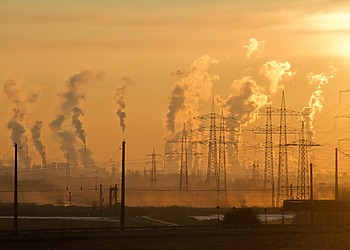
Editor’s Note: The opinions expressed here by Impakter.com columnists are their own, not those of Impakter.com — In the Cover Photo: The Leadership Edge: Why Modern Crises Demand a New Kind of Executive. — Cover Photo Credit: Miguel Á. Padriñán