Over the past six years, Yemen has been experiencing a period of widespread destabilization which intensified in September 2014, resulting in a full-blown civil war and international military intervention in early 2015.
While the violence has been vicious and destructive, by far the most damaging consequences for the wider Yemeni population have involved the conflict undermining the systems by which the country functions — devastating the economy, social integration, the humanitarian situation and developmental progress.
More than half of Yemen’s 27 million people live on incomes below the poverty line, and the mostly rural population continues to grow rapidly. Severe food insecurity and water scarcity, worsening gender inequality, widespread poverty, and a lack of economic growth in Yemen are all compounded by the ongoing armed conflict.

These challenges intersect with and are intensified by climate change impacts. Like other unstable situations in the region, whilst climate change may not be a primary cause, it is an exacerbating factor in the country’s instability, prolonging and worsening its conflict—to what extent is uncertain.
In a landscape of rising population, severe unemployment, political instability, an active and influential terrorist organization, outside interests, and dwindling water and food resources, a changing climate makes matters worse.
The Syrian civil war has been held up as one of the first clear instances of a large-scale armed conflict in which resource scarcity, linked to climate change and natural resource mismanagement, has played a role. Yemen, though less visible in the headlines, faces strikingly similar risks. It is among the most water-stressed countries in the world ㅡ brought on by regional drought, a naturally dry climate, and failed attempts at management. The broader Middle East drought too has had far-reaching effects, and Yemen has been particularly affected, with its agricultural productivity in decline and water scarcity intensified.
These factors, in addition to the ongoing conflict, have contributed to the fragile state of Yemen’s increasingly pressured health sector, with Yemenis suffering from serious vector-borne diseases, including malaria. Climate change may affect the prevalence and morbidity and mortality rates of such diseases.
Furthermore, the declining availability of safe drinking in Yemen has recently resulted in cholera outbreaks. Food insecurity has worsened too, due to the ongoing conflict and frequent droughts in recent decades — leaving 2 million children acutely malnourished.
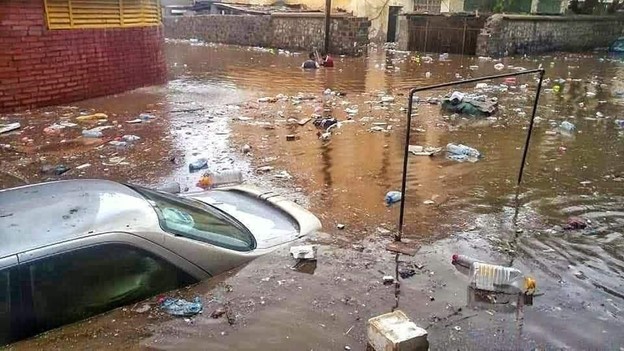
Moreover, increased storm surges and floods could lead to displacement, injuries, and loss of life. Floods resulting from a tropical storm in 2008 killed 180 and displaced 20,000 people, causing losses and damages amounting to US$1.6 billion.
In 2015, the unusually strong Cyclone Chapala, resulting in part from high, record-breaking sea surface temperatures, made landfall in Yemen, causing widespread flooding.
Increased temperatures, extreme weather events, and sea-level rise are likely to worsen food insecurity and water scarcity and adversely affect coastal zones.
Furthermore, a literature review on the Climate Change, Extreme Weather Events, and Migration for Five Arab Countries revealed a link between climate change and migration in the MENA region, largely due to water scarcity. Additional research has focused on the links between climate change, increased rainfall variability, and conflict.
It is noticeable that climate change presents a security challenge and can generate conflicts between agricultural and pastoral communities precipitated by climate-exacerbated droughts and water variability. This has been observed in both Syria and Yemen, and in some cases led to an increase in malnutrition and disease outbreaks, and adversely impacted food security.
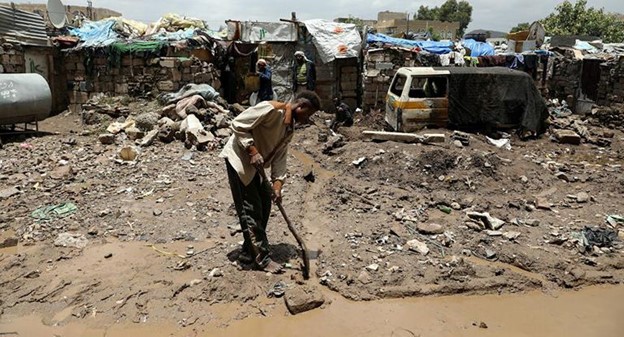
Yemen will be positioned at a great disadvantage in facing future impacts of climate change. Preoccupied with conflict, it has not formed a plan for climate adaptation, nor any programs to limit the effects of climate change. It lacks adequate environmental management policies and climate change adaptation strategies. For example, in 2020, Yemen was highly impacted by heavy rain at unusually high levels. The country’s infrastructure was not ready to face such a situation. The United Nations Office for the Coordination of Humanitarian Affairs (OCHA) said in a statement, “In mid-April 2020, torrential rains and torrents in the northern governorates, including Ma’rib, resulted in casualties and the destruction of property and sites belonging to the displaced.”
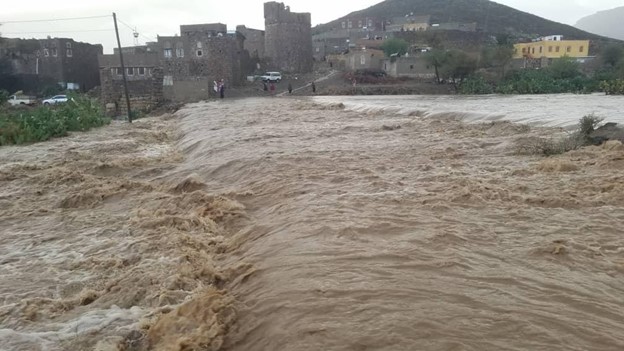
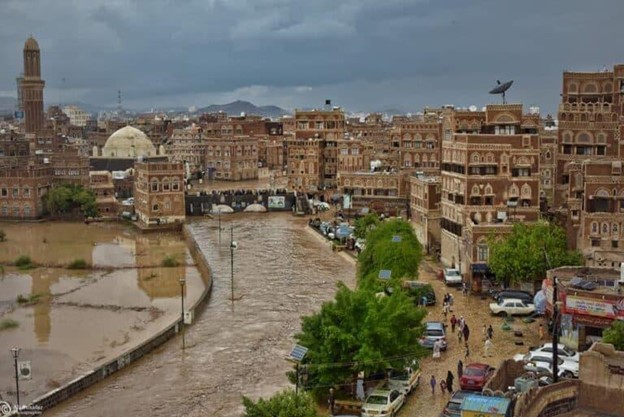
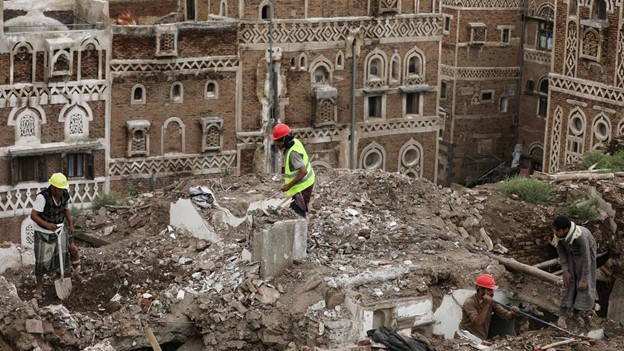
Furthermore, the floods in Sanaa and a number of historical cities caused severe damage to the archaeological sites in the old city of the capital and the mud-clay “skyscrapers” in Shibam Hadramout and other cities classified by the United Nations Organization for Science, Education and Culture (UNESCO) among the most important archaeological sites in the world.
The Ma’rib Dam, east of Sanaa, witnessed its first serious flood since its establishment 34 years ago, threatening the oldest and largest archaeological area in the country. Torrential torrents caused by rainwater hit a number of popular neighbourhoods in the interim Yemeni capital, Aden, causing electricity and water services paralysis, cutting roads, and demolishing a number of homes.
Despite all these challenges, there have been positive developments. One such development has been in response to the frequent and debilitating electricity blackouts. Now, the use of solar energy has become increasingly popular, with people choosing self-reliance over state-run electricity. Solar power is also being used for off-grid communities in the country. As of October 2020, The United Nations Development Programme was running three solar-grid projects, one of which is run entirely by women. This is an additional positive impact, alongside the considerable reduction of the reliance on diesel-fueled generators.
Prior to this, Yemen submitted its INDC in November 2015, despite facing prevailing security challenges, and political turmoil—including ongoing armed conflicts. The document was drafted through “a participatory process which involved consultations of key relevant stakeholders and technical agencies and [was] based on available national climate change assessment and analysis”.
Related Articles: Yemen’s Conflict: The Struggle for a Sustainable Future | COVID-19, Conflict and Ecological Threats in Yemen
In its INDC, Yemen committed to a 14% GHG-emission reduction by 2030 compared to a Business-as-Usual (BAU) scenario, of which 13% is contingent on international support and 1% will be covered by national sources.
Furthermore, Yemen set forth its plan for efficient power generation, transmission and distribution towards a 15% increase in energy efficiency in the power sector by 2025. It further provided information on the launch of energy efficiency programmes through establishing energy efficiency standards, energy use regulations and labelling and public awareness in residential and commercial sectors.
Yemen has not submitted Nationally Appropriate Mitigation Actions (NAMAs), nor does it have any. However, there was a National Adaptation Programme of Action (NAPA), supported by the Global Environment Facility (GEF) and implemented by UNDP and Environment Protection Authority (EPA). The last report was in April 2009.
Editor’s Note: The opinions expressed here by Impakter.com columnists are their own, not those of Impakter.com. — In the Featured Photo: The aftermath of the Sana’a floods. In the Featured Photo Credit: Al-Ain.