Impakter
  • Environment
    • Biodiversity
    • Climate Change
    • Circular Economy
    • Energy
  • FINANCE
    • ESG News
    • Sustainable Finance
    • Business
  • TECH
    • Start-up
    • AI & Machine Learning
    • Green Tech
  • Industry News
    • Entertainment
    • Food and Agriculture
    • Health
    • Politics & Foreign Affairs
    • Philanthropy
    • Science
    • Sport
  • Editorial Series
    • SDGs Series
    • Shape Your Future
    • Sustainable Cities
      • Copenhagen
      • San Francisco
      • Seattle
      • Sydney
  • About us
    • Company
    • Team
    • Partners
    • Write for Impakter
    • Contact Us
    • Privacy Policy
No Result
View All Result
Impakter logo
No Result
View All Result
microchip

Netherlands Joins the Microchip War: Is Cutting China Off a Smart Move?

By placing restrictions on microchip manufacturing equipment exports to China, the Dutch have taken the US’ side in the “chip war,” but in curbing one of the world’s biggest importers of chip technology, will they inadvertently destabilize the entire microchip supply chain in turn?

Alice ChapmanbyAlice Chapman
March 16, 2023
in Politics & Foreign Affairs
0

After consistent pressure from the US, the Dutch government has recently put restrictions on their exports of microchip technology to China. 

The Netherlands, home to ASML, is one of the world’s leading suppliers of semiconductors and is a major player in the global microchip supply chain alongside the US, Taiwan, South Korea, Japan and various European countries. 

A semiconductor is a substance that controls the flow of electricity in electronic devices and one of its most popular uses is within the microchips used in computing components. 

Given the ongoing “chip war” between the US and China, the Netherlands has found itself caught in the middle of mounting political tensions between the two countries. 

And the Dutch government’s decision to ramp up restrictions on the exportation of its industry-leading chip technology to China, is a sure sign the country has chosen to side with the US in cutting Beijing off from the microchip supply chain. 

According to Reuters, China has expressed disappointment that the Netherlands are allowing political relationships to affect basic economic trade. 

The US’ main concern is that if China has access to ASML’s state-of-the-art chip technology, they would be able to start manufacturing the highest quality semiconductors in the world. Semiconductors of this standard would enable the development of highly powerful military and artificial intelligence technology. 

The Netherlands’ Foreign Trade Minister, Liesje Schreinemacher, wrote a letter to Dutch lawmakers on Wednesday last week, explaining what the new export regulations would involve. 

“Given the technological developments and geopolitical context, the government has concluded that it is necessary for the (inter)national security to expand the existing export controls on specific manufacturing equipment for semiconductors,” wrote Schreinemacher.

Schreinemacher also stated that the Dutch government’s new regulations are aimed at “preventing Dutch goods from contributing to undesirable end use, such as military deployment or in weapons of mass destruction; preventing undesirable long-term strategic dependencies; and maintaining Dutch technological leadership.”

This is similar to the reasoning the US gave when it created its own regulations on exporting semiconductors to China in October 2022. 

The new restrictions will affect “very specific technologies in the semiconductor production cycle,” stated Schreinemacher.

One of the main technologies that will be restricted are deep ultraviolet (DUV) machines, which are included in ASML’s advanced chip printing portfolios. 


Related Articles: Taiwan: Could China’s War Games Turn Real? | Can China’s Rise To Power Be Peaceful? Here Is What Political Theories Tell Us | China’s Secret Police Are Illegally Operating in 25 Cities Across the World

ASML has confirmed that from now on it will “need to apply for export licenses for shipment of the most advanced immersion DUV systems,” however it has not yet received disclosure as to what “most advanced” specifically means. 

ASML is not expected to be financially affected by these measures. Their Chief Financial Officer, Roger Dassen, reported to Politico early in 2023 that China makes up 18% of the company’s orders. 

These regulations are not something ASML is inexperienced in handling, however, as the company hasn’t had a license to sell another of its technologies, known as extreme ultraviolet light (EUV) technology, to China since 2019.

ASML added, “based on today’s announcement, our expectation of the Dutch government’s licensing policy, and the current market situation, we do not expect these measures to have a material effect on our financial outlook.”

The Netherlands are currently in coalition with 42 countries as part of the Wassenaar Arrangement. 

This agreement covers export controls for technologies and conventional weapons which can be involved with civil and military activities. 

But there’s a problem. Since Russia is also part of this agreement and could easily block the Netherlands’ new proposal, the Dutch government plans to establish its own export regulations which it will allow other European countries to follow suit.

Destabilization of the global microchip supply chain

China is one of the world’s biggest importers of microchip technologies, with experts suggesting that one of the reasons China is currently behind other countries in terms of domestic semiconductor production is that the country lacks “access to critical intangible expertise.”

However, according to the Wall St Journal, China plans to have 31 new chip factories in place by 2024. 

This could be seen as China seeking more manufacturing independence, eliminating reliance on overseas sources which may become problematic if international political tensions continue to rise. 

Although topics such as microchip manufacturing in China may not seem overly relevant to anyone outside of the competing countries in question, experts warn that the losses associated with curbing exports to China could lead to the destabilization of the entire microchip supply chain.

What’s more, the US and the Netherlands’ moves to cut China off from advanced chip technology may inadvertently encourage the country to produce more microchips domestically or possibly even take control of Taiwan’s world-leading semiconductor industry, which could, in turn, result in China taking over the microchip supply chain in the long run, possibly even causing a global recession. 

_____________________________________________________________________________________________

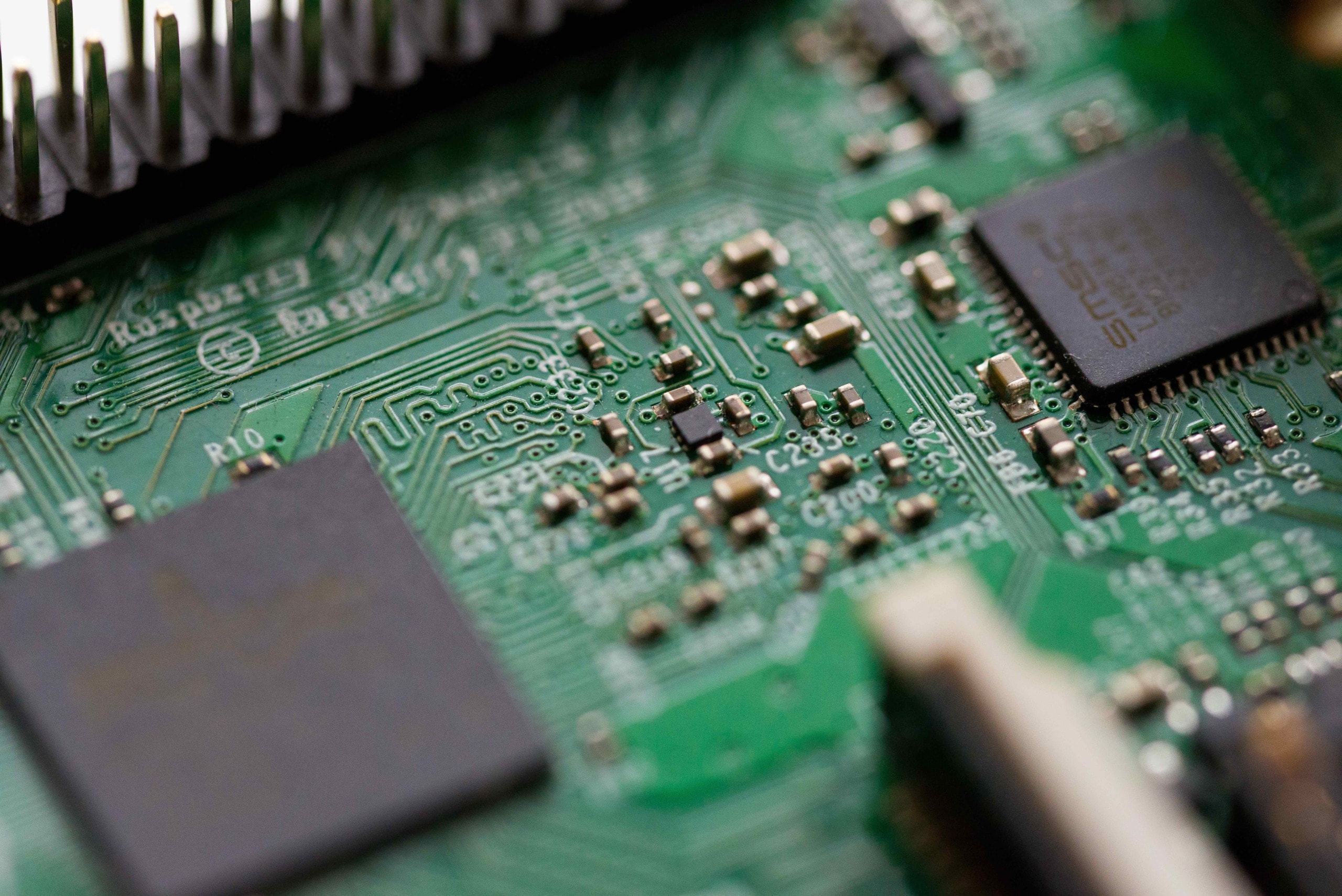
Editor’s Note: The opinions expressed here by the authors are their own, not those of Impakter.com — In the Featured Photo: Computer circuit board. Featured Photo Credit: Chris Ried

Tags: chinachip warexport regulationsexportsInternational Relationsmicrochipssemiconductors
Previous Post

COVID Harms Attitudes to Health by the Public and Lawmakers 

Next Post

How Russia Aims to Stop Moldova’s Pro-Western Path

Related Posts

Germany blocks Amazon price caps in e-commerce
Business

Germany’s Cartel Office Slaps Amazon Over Price Caps

This Week’s Regulatory Updates Germany bans Amazon price caps: The Bundeskartellamt demands Amazon halt anti-competitive pricing and repay millions, signaling...

byJana Deghidy
February 6, 2026
ESG news regarding Merz targeting Middle East deals to reduce Germany’s U.S. energy dependence, oil rising after U.S.-Iran drone incident, Amazon committing to 110 MW of German offshore wind power, and Chinese solar stocks surging after Elon Musk team visits local firms.
Business

Merz Visits Middle East to Curb Germany’s Energy Dependence on the U.S.

Today’s ESG Updates Merz Seeks Middle East Deals to Cut U.S. Energy Dependence: Germany’s LNG imports from the U.S. hit...

byAnastasiia Barmotina
February 4, 2026
ESG news regarding: New Report Urges Urgent Action to Halt PFAS Contamination Across EU, US Proposes New Rule to Force Greater Transparency in Pharmacy Benefit Manager Fees, EU and Brazil Seal Landmark Deal Creating World’s Largest Free Data Flow Zone, Beijing Suspends Import and Use of Sun Pharma Alzheimer’s Treatment
ESG News

Without Regulation, ‘Forever Chemicals’ Will Cost Europe €440 billion by Mid Century

Today’s ESG Updates Europe Faces Trillion-Euro Risk Without Swift PFAS Controls: The European Commission confirmed it will accelerate work on...

byPuja Doshi
January 30, 2026
ESG News on India lithium and nickel processing incentives and EV battery supply chains
Business

India Plans Incentives for Lithium and Nickel Processing

Today’s ESG Updates India Boosts Lithium & Nickel Processing: India plans incentives for lithium and nickel processing plants to strengthen...

byJana Deghidy
January 29, 2026
ESG News regarding a powerful snowstorm leaving more than 400,000 U.S. customers without power, the Doomsday Clock being set to 85 seconds to midnight, Kazakhstan losing more than 40 million barrels of crude exports, and many Europeans brands labelling their plastic as recycled when it comes from fossil fuels.
Business

Massive Snowstorm Leaves Hundreds of Thousands Without Power Across U.S.

Today’s ESG Updates Winter Storm Cuts Power to Over 400,000: A severe storm hit much of the U.S., causing over...

byAnastasiia Barmotina
January 28, 2026
ESG News regarding US withdrawal from the Paris Agreement, China and India emissions decline offset US emissions growth, Michigan suing oil giants, and Nigeria’s new 100mw solar power facility
Business

US Officially Cuts Ties With the Paris Agreement

Today’s ESG Updates U.S. Officially Exits Paris Climate Agreement, Again: The U.S. formally withdrew from the Paris Agreement for a...

bySarah Perras
January 28, 2026
ESG News regarding Brazil’s battery boom, Europe and UK sign clean energy security Hamburg Declaration, California suing Trump administration, and 200MW plant opening in Burkina Faso
Business

Brazil’s Battery Boom

Today’s ESG Updates Brazil’s First Grid-Scale Battery Auction: Brazil will hold its first electricity auction for large-scale batteries in April...

bySarah Perras
January 26, 2026
ESG News regarding China’s wind power strategy, global renewable energy leadership, U.S. criticism at Davos, and the future of low-carbon energy cooperation
Business

China Defends Wind Power Strategy at Davos

Today’s ESG Updates US Calls for Doubling Global Oil Output at Davos: At the World Economic Forum in Davos, the...

byJana Deghidy
January 22, 2026
Next Post
How Russia Aims to Stop Moldova’s Pro-Western Path

How Russia Aims to Stop Moldova’s Pro-Western Path

Recent News

ESG News regarding Nuclear Waste Storage; Canada Replaces EV Mandate; EU and Turkey Resume Trade Modernization Talks; Startup Raises $29M for Desk-Sized Fusion Reactor

Volunteers Needed for Nuclear Waste Storage

February 6, 2026
Rare Earth Metals 101

Rare Earth Metals 101

February 6, 2026
How to Spot Greenwashing in the Publishing Industry

How to Spot Greenwashing in the Publishing Industry

February 6, 2026
  • ESG News
  • Sustainable Finance
  • Business

© 2025 Impakter.com owned by Klimado GmbH

No Result
View All Result
  • Environment
    • Biodiversity
    • Climate Change
    • Circular Economy
    • Energy
  • FINANCE
    • ESG News
    • Sustainable Finance
    • Business
  • TECH
    • Start-up
    • AI & Machine Learning
    • Green Tech
  • Industry News
    • Entertainment
    • Food and Agriculture
    • Health
    • Politics & Foreign Affairs
    • Philanthropy
    • Science
    • Sport
  • Editorial Series
    • SDGs Series
    • Shape Your Future
    • Sustainable Cities
      • Copenhagen
      • San Francisco
      • Seattle
      • Sydney
  • About us
    • Company
    • Team
    • Partners
    • Write for Impakter
    • Contact Us
    • Privacy Policy

© 2025 Impakter.com owned by Klimado GmbH