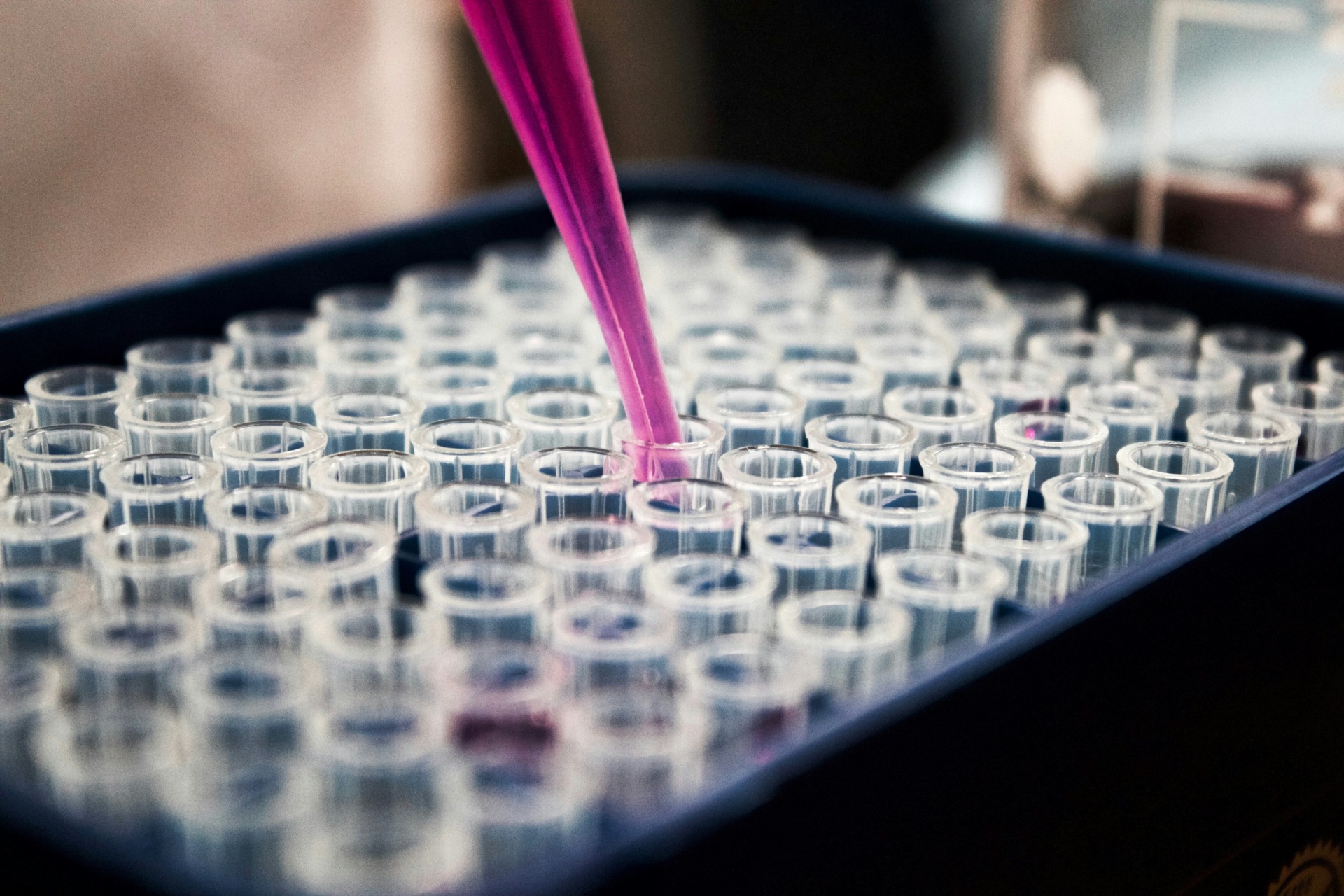
Every day, we are exposed to a chemical “cocktail” we did not choose and cannot see. From the water we drink and the food we eat to the air we breathe, thousands of industrial chemicals mix in our bodies and environments. Regulators, however, continue to assess these substances largely one by one, as if we were exposed to single ingredients in isolation rather than in complex mixtures. This gap between how chemicals are regulated and how people and ecosystems are exposed is no longer a technical detail: it is a governance failure with real consequences.
Scientists call the combined impacts of multiple chemicals the “cocktail effect.” This means we can still see harmful effects even when each chemical substance is present at “safe” levels on its own. Evidence of cocktail effects has been accumulating for years, yet chemical regulations struggle to reflect this reality.
A system built for a simpler world
Global chemical production continues to grow, driven by industrial systems that depend on synthetic compounds for everything from textiles and plastics to pesticides and pharmaceuticals. Regulating and managing these chemicals has become increasingly difficult. Most monitoring systems focus on a narrow set of known substances, simply because reference standards and lab capacities are limited. What remains unmeasured is vast.
If a chemical is deemed harmful, it is restricted and then replaced by another chemical with similar properties, at times posing similar risks. This is like fighting a hydra: addressing one substance only to have more potentially hazardous substances take its place. This practice exhausts both scientists and policymakers in their efforts to avoid harmful chemical exposures.
The story of per- and polyfluoroalkyl substances (PFAS), often called “forever chemicals,” illustrates this problem clearly. While some PFAS are regulated internationally under the Stockholm Convention, hundreds remain in use, regulated differently across regions or not at all. Long-chain PFAS have been replaced by shorter-chain or newer variants, despite mounting evidence that these substitutes are just as persistent and, in some cases, just as toxic. Regulation then gets stuck in a Sisyphean loop — chasing innovation, but never quite able to catch up.
Mixtures matter — even when each chemical looks “safe”
In the real world, we are rarely exposed to single chemicals. Our rivers, soils, oceans, food chains, and even our bodies contain mixtures of chemicals. Research increasingly shows that chemicals below individual toxicity thresholds can still cause harm when combined. Testing every possible mixture is impossible. But pretending mixtures do not exist is indefensible.
Recognizing this, the EU’s Chemicals Strategy for Sustainability proposed a Mixture Allocation Factor (MAF) — a precautionary tool that accounts for mixture effects when data are incomplete. In simple terms, MAF accepts uncertainty and builds in a safety margin for real-world exposure. Despite broad scientific support, progress toward implementing MAF has stalled. Political momentum has shifted toward a narrative where “reducing burdens on industry” has become the primary focus. The debate has become stuck on a familiar demand for irrefutable proof, as if absolute certainty were achievable — or ethically acceptable — in the face of widespread exposure.
How much uncertainty are we willing to accept?
When is the evidence sufficient to act? We will never have complete data on every chemical combination, in every ecosystem, across every region. Waiting for perfect knowledge effectively means accepting ongoing exposure and harm — particularly for vulnerable communities and ecosystems. Environmental regulation has always relied on the principle of acting on the best available evidence, not on the illusion of zero uncertainty.
Mixture allocation factors will not be perfect. There may not be a single “correct” MAF value. Different ecosystems, exposure pathways, and regions may require different regulations. But imperfection is not an argument for inaction. It is an argument for adaptive, precautionary governance.
Related Articles
Here is a list of articles selected by our Editorial Board that have gained significant interest from the public:
A global problem demands a global lens
Much of what we know about chemical mixtures comes from freshwater systems in Europe, North America, and China. Marine environments, the atmosphere, and many regions in the Global South remain understudied, despite being sinks for many forms of global pollution. Chemical cocktails do not respect borders, and neither should the science that informs their regulation.
Nor do chemicals act alone. Climate change and habitat degradation interact with chemical pollution in complex ways, altering toxicity and exposure. A warming ocean, for example, can change how pollutants behave and how species respond to them. Ignoring these interactions risks locking regulation into yesterday’s conditions. This is why mixture regulation must be embedded in a One Health perspective, recognizing that human health, environmental health, and ecosystem integrity are inseparable.
Despite the present efforts to protect human health and the environment, the chemical cocktail and its cumulative effects are largely absent from multilateral and global discussions on chemical regulation. Certain PFAS are regulated under the Stockholm Convention, but this still reflects a governance system trying to “fight the hydra” and neglects the real-world chemical exposure.
The presence of the cocktail effect undermines our efforts to achieve several SDGs. We know that the current pace of assessing and regulating single chemicals is not going to help us reach our public health objectives (SDG 3), protect land and oceans (SGDs 14 and 15), or secure responsible consumption and production (SDG 12) in the long term. Outside of the Mixture Allocation Factor in the EU, the authors know of no other attempts to address this pernicious problem. With mounting scientific evidence on chemical cocktail effects, we urge Member States and stakeholders in the multilateral environmental governance space to help lift this topic in the global discourse.
A choice between precaution and paralysis
Chemical pollution is often described as invisible, but its impacts are not. They show up in degraded ecosystems, contaminated food chains, and rising health concerns. The cocktail effect forces us to confront a simple truth: regulating chemicals one by one in a world of mixtures is no longer fit-for-purpose.
The Mixture Allocation Factor is not a silver bullet, but it is a necessary starting point — a signal that policy is beginning to align with scientific reality. The alternative is regulatory paralysis: endless calls for more data, while exposure continues unchecked.
The question is no longer whether chemical mixtures matter; the science is clear that they do. The real question is whether policymakers are willing to act on the evidence we already have — or whether we will keep drinking and eating this mysterious cocktail and hope for the best.
** **
This article was originally published by the International Institute for Sustainable Development (IISD) and is republished here as part of an editorial collaboration with the IISD. It was authored by Ieva Rucevska, Paige Hellbaum Eikeland, and Sinja Rist, GRID-Arendal/DTU Aqua
Editor’s Note: The opinions expressed here by the authors are their own, not those of Impakter.com — Cover Photo Credit: Louis Reed.