Impakter
  • Environment
    • Biodiversity
    • Climate Change
    • Circular Economy
    • Energy
  • FINANCE
    • ESG News
    • Sustainable Finance
    • Business
  • TECH
    • Start-up
    • AI & Machine Learning
    • Green Tech
  • Industry News
    • Entertainment
    • Food and Agriculture
    • Health
    • Politics & Foreign Affairs
    • Philanthropy
    • Science
    • Sport
  • Editorial Series
    • SDGs Series
    • Shape Your Future
    • Sustainable Cities
      • Copenhagen
      • San Francisco
      • Seattle
      • Sydney
  • About us
    • Company
    • Team
    • Global Leaders
    • Partners
    • Write for Impakter
    • Contact Us
    • Privacy Policy
No Result
View All Result
Impakter logo
No Result
View All Result
Tesla vs. Waymo robotaxi

Tesla vs. Waymo: The Trillion Dollar Robotaxi Battle

Maaz IsmailbyMaaz Ismail
August 20, 2025
in AI & MACHINE LEARNING, Corporations, Society, Tech
0

A rundown of the essential differences between Tesla’s and Waymo’s robotaxi technology and strategy


Since the early 2010s, several companies have jumped into the race to have their own fully autonomous self-driving cars. However, the vast amount of research, technical innovation, interdisciplinary domain expertise, and capital required to achieve this has left only a handful of those challengers in the game. More specifically, very few companies are left now in the robotaxi business.

Back in 2022, Cruise, funded by General Motors, was the first to launch a robotaxi service in a major US city. Two years and an accident later, GM decided that it would no longer fund the robotaxi project. Similarly, Uber was very early to the race, but a series of legal battles and involvement in the first known fatality by an autonomous vehicle eventually led to the company pulling out in 2020.

Among the ones remaining in the fight are Tesla and Waymo.

Tesla has been on a mission to launch fully autonomous self-driving cars for well over a decade now, during which billionaire CEO Elon Musk has constantly made promises that so far are unfulfilled. The company’s robotaxi service launched its first public trials in June, albeit not without problems.

Waymo, originally known as the Google self-driving car project, started in 2009 and was spun out of Google in 2016 to become a subsidiary under Alphabet, Google’s parent company. Up till now, Waymo has focused on just developing robotaxis — unlike Tesla, which has been more focused on the larger concept of self-driving as a whole. The company recently closed a $5.6 billion funding round in October 2024.

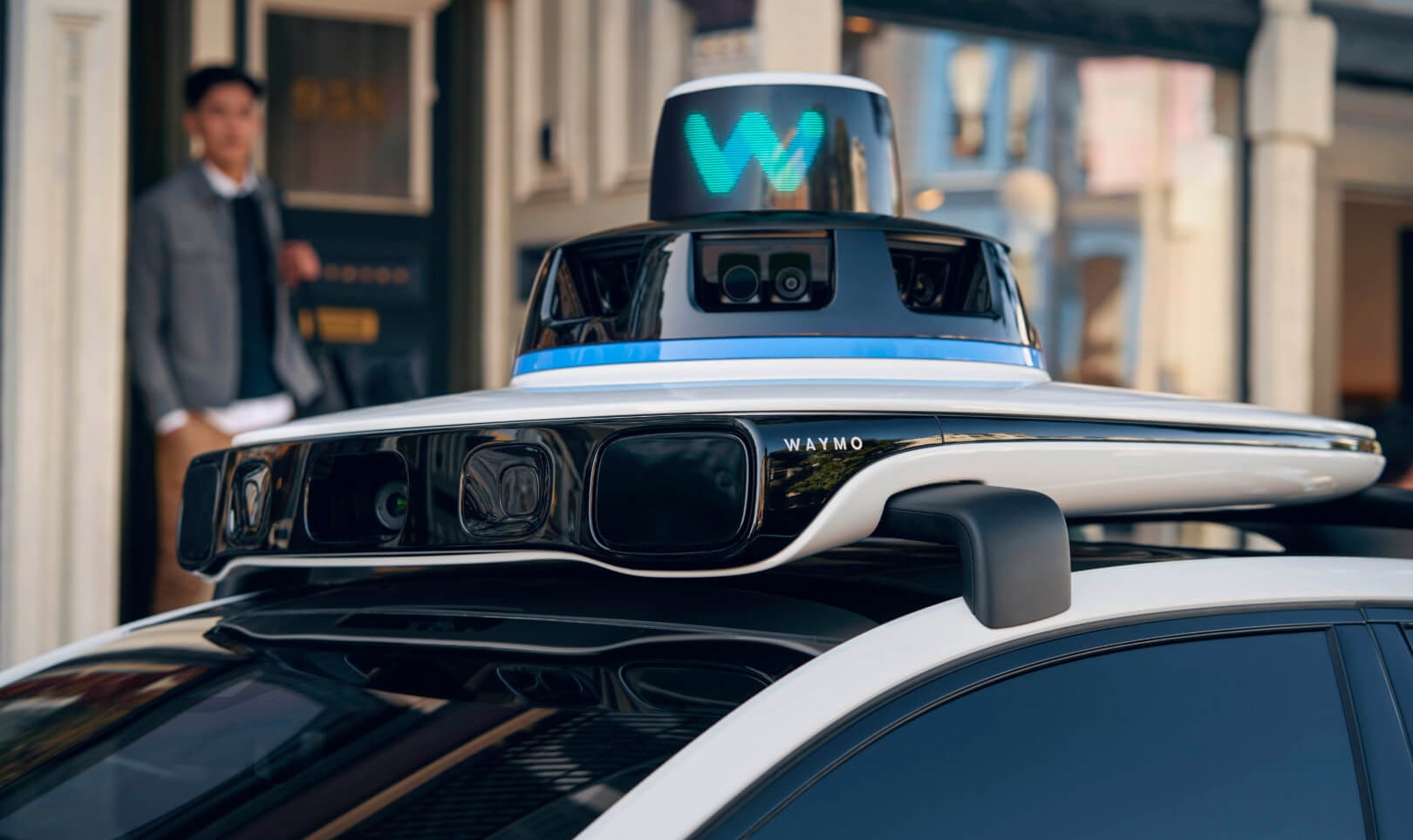
Tesla vs. Waymo robotaxi
A Waymo robotaxi driving down the street, September 15, 2023. Photo Credit: Unsplash.

Current State of Competition: Tesla vs. Waymo

The situation on the ground is that Waymo already has a self-driving system working in multiple cities with 250,000 weekly riders, while Tesla has just started testing in public. The difference is so overwhelming, a few dozen trips versus millions, but Tesla is betting on exponential growth — the idea that once they have the technology figured out, they will be able to expand very quickly.

While Waymo had to partner with manufacturers like Jaguar to produce their cars, Tesla already has millions of cars out on the roads that it hopes it can convert to fully autonomous robotaxis using software updates. The company has a lot of infrastructure already there, including the largest charging network and service centers in many cities.

However, the difference in strategy and technology between the two strongly suggests that Waymo is here for the kill.

Musk joked during Tesla’s earnings call earlier this year that Waymo costs “‘way mo’ money.”


Related Articles: Tesla Robotaxi Rollout: What to Know | Tesla Sales Plummet in Europe: Is it the Anti-Musk Sentiment? | Electric Drive: How China’s BYD Is Racing Ahead in the EV Market

Difference in Self-Driving Technology and Methodology

The most apparent technological difference between the two is in equipment.

Waymo and most of the industry believe the path to reliable self-driving cars is through the use of cameras and other sensors such as LIDAR and radar. These sensors help push Waymo’s cars towards 100% reliability as they measure the distance and speed of everything on the road. Tesla wants to do it with just cameras and machine learning.

Musk has repeatedly argued that true self-driving capability will be achieved through using just cameras, similar to how humans only navigate the road with their eyes.

“Lidar is lame,” Musk said in 2019. “In cars, it’s friggin’ stupid. It’s expensive and unnecessary.”

Currently, Lidar technology used by Waymo and other competitors costs approximately $12,000 per vehicle, while an only-cameras setup costs just $400. This once again plays into Tesla’s long-shot bet of exponential growth. Waymo’s vehicles carry 29 cameras and 11 other sensors compared to Tesla’s 8 cameras.

However, the difference in technology extends to methodology as well.

Waymo has been testing self-driving cars without a safety driver since 2017. Even when Cruise rushed to become the first to launch a robotaxi service in a major city, Waymo was already operating in less risky areas like suburban Phoenix.

Waymo’s approach has been excruciatingly patient and careful. The company initially spent years mapping the cities it was supposed to launch in, which is used to create a “geofence” that the robotaxis stay inside of.


Waymo detection under bad light
Source: Google I/O

Waymo has the advantage of Google’s Maps team, but Tesla does not face a lack of data, considering the number of cars it has on the road. Rather, Tesla chooses not to rely on this method, and their cars create a map on the fly while driving using cameras and machine learning. This puts Tesla’s cars at a huge disadvantage when lighting conditions are not ideal, like in fog.

While Waymo is currently the industry leader, Chinese companies BYD and Baidu are close seconds on the list to have a piece of the trillion-dollar robotaxi industry.


Editor’s Note: The opinions expressed here by the authors are their own, not those of Impakter.com — In the Featured Photo: The 5th-generation Waymo Driver on the all-electric Jaguar I-PACE. Featured Photo Credit: Waymo.
Tags: Elon MuskGoogleGoogle XRoad SafetyRobotaxiSelf-driving carsTeslaTesla robotaxiTesla vs. WaymoTesla vs. Waymo robotaxiwaymo
Previous Post

Oil Prices Surge Following Stalled Ukraine Peace Talks

Next Post

Palantir Stock Plunges 9% as AI Darling Faces Harsh Reality

Related Posts

Ryanair CEO O'Leary and SpaceX CEO Musk are feuding
Business

Ryanair vs Musk: What’s Behind the Feud?

Everyone loves a public feud. From reality TV to fights in a hockey rink, it’s human nature to crave drama,...

bySarah Perras
January 28, 2026
ESG News regarding Equinor wind farm project to resume in US, Blue Earth Capital raises $100 million, Google Signs Major 1.2 GW Carbon-Free Energy Deal, and US to Finalize 2026 Biofuel Quotas by March
Business

U.S. Court Clears Equinor to Resume $5B Wind Project Halted by Trump

Today’s ESG Updates Court Clears Equinor to Resume $5B Wind Project: A federal judge overturned Trump’s suspension order, allowing Equinor...

byEge Can Alparslan
January 16, 2026
Billionaires Became Richer Than Ever in 2025: Who Are They and What Drove Their Wealth Growth
AI & MACHINE LEARNING

Billionaires Became Richer Than Ever in 2025: Who Are They and What Drove Their Wealth Growth

In 2025, the world’s 500 richest people increased their net worth by $2.2 trillion. Of those 500 individuals, eight billionaires...

bySarah Perras
January 14, 2026
Solid-State Batteries: The Bet Promising to Change Electric Vehicles
Energy

Solid-State Batteries: The Bet Promising to Change Electric Vehicles

The way we power cars is changing. Not only because electric vehicles are becoming more common, but because the technologies...

byLuis Guillermo Valdivia Chavez
January 8, 2026
Impakter’s Most-Read Stories of 2025
Society

Impakter’s Most-Read Stories of 2025

In 2025, as in previous years, Impakter readers turned in large numbers to stories examining climate change and pollution, environmental...

byImpakter Editorial Board
December 31, 2025
Trump media merges with fusion power startup
Business

Trump Media Merges With Nuclear Fusion Company

Today’s ESG Updates Trump Media Merges With Fusion Power Company: Trump Media & Technology Group announced an all-stock merger with...

byPuja Doshi
December 19, 2025
ESG News regarding increased grid stress slowing growth, US demanding exemption from EU emissions law, Google invests in solar in Malaysia, China reduces fossil fuel output
Business

Increased Grid Stress Threatens Economic Growth

Today’s ESG Updates Grid Bottlenecks Threaten Growth: Increased electricity demand from AI, EVs, and electrification is straining power grids and...

bySarah Perras
December 15, 2025
Discovery of a carbon sponge under the ocean; HSBC survey shines positive acceptance of climate transition; New catalyst for clean hydrogen production; Google signs deal with Ebb for carbon removal.
Business

Scientists Find CO2 Buildup Under the Sea

Today’s ESG Updates Eroded Lava Under the Ocean Stores CO2: Work led by the University of Southampton demonstrates that these...

byPuja Doshi
December 12, 2025
Next Post
Palantir stock drops 9% in a day and 15% in a week amid AI valuation concerns, Scientists report surprising slowdown in Arctic sea ice melt, but warn it’s temporary, UK inflation rises to 3.8% in July on higher food and travel prices, OpenAI in talks for $6B share sale that could value company at $500B

Palantir Stock Plunges 9% as AI Darling Faces Harsh Reality

Recent News

The Era of ‘Global Water Bankruptcy’ Has Begun

The Era of ‘Global Water Bankruptcy’ Has Begun

January 30, 2026
ESG news regarding: New Report Urges Urgent Action to Halt PFAS Contamination Across EU, US Proposes New Rule to Force Greater Transparency in Pharmacy Benefit Manager Fees, EU and Brazil Seal Landmark Deal Creating World’s Largest Free Data Flow Zone, Beijing Suspends Import and Use of Sun Pharma Alzheimer’s Treatment

Without Regulation, ‘Forever Chemicals’ Will Cost Europe €440 billion by Mid Century

January 30, 2026
Food Waste in India

India’s Food Waste Is Turning Into an Environmental Time Bomb

January 30, 2026
  • ESG News
  • Sustainable Finance
  • Business

© 2025 Impakter.com owned by Klimado GmbH

No Result
View All Result
  • Environment
    • Biodiversity
    • Climate Change
    • Circular Economy
    • Energy
  • FINANCE
    • ESG News
    • Sustainable Finance
    • Business
  • TECH
    • Start-up
    • AI & Machine Learning
    • Green Tech
  • Industry News
    • Entertainment
    • Food and Agriculture
    • Health
    • Politics & Foreign Affairs
    • Philanthropy
    • Science
    • Sport
  • Editorial Series
    • SDGs Series
    • Shape Your Future
    • Sustainable Cities
      • Copenhagen
      • San Francisco
      • Seattle
      • Sydney
  • About us
    • Company
    • Team
    • Global Leaders
    • Partners
    • Write for Impakter
    • Contact Us
    • Privacy Policy

© 2025 Impakter.com owned by Klimado GmbH