Impakter
  • Environment
    • Biodiversity
    • Climate Change
    • Circular Economy
    • Energy
  • FINANCE
    • ESG News
    • Sustainable Finance
    • Business
  • TECH
    • Start-up
    • AI & Machine Learning
    • Green Tech
  • Industry News
    • Entertainment
    • Food and Agriculture
    • Health
    • Politics & Foreign Affairs
    • Philanthropy
    • Science
    • Sport
  • Editorial Series
    • SDGs Series
    • Shape Your Future
    • Sustainable Cities
      • Copenhagen
      • San Francisco
      • Seattle
      • Sydney
  • About us
    • Company
    • Team
    • Global Leaders
    • Partners
    • Write for Impakter
    • Contact Us
    • Privacy Policy
No Result
View All Result
Impakter logo
No Result
View All Result
autonomous cars

Self-Driving Cars Could Pose Huge Environmental Burden

New MIT research reveals that computer systems needed for self-driving cars could produce colossal carbon footprint

Olivia Sophia EgglestonbyOlivia Sophia Eggleston
January 23, 2023
in Environment
0

The study from MIT, published in IEEE Micro’s January journal, places autonomous vehicles (AV’s) under serious scrutiny. A fleet of a billion such cars, each driving for only an hour a day, could generate the same level of emissions as all the data centres in the world combined currently do. 

The model is based on a scenario where 95% of all vehicles are autonomous in 2050. 

Factors incorporated in the calculations include the projected number of vehicles, the power of each vehicle’s computer, the carbon intensity of the electricity powering each computer, and the computing software and hardware used in such vehicles. 

The authors of the study have put into perspective the colossal technological ordeal that would be the mainstreamed use of autonomous cars. The cars rely on cameras placed on all sides, the surrounding environment is mapped and traffic behaviour predicted and reacted to. 

MIT researchers calculated that a vehicle with 10 cameras, which drives an hour a day, would make 21.6 million inferences every day. If a billion cars were in use globally, then a total of 21.6 quadrillion inferences would be made every day (1 quadrillion = 1,000 trillion). For reference, Facebook’s data centres worldwide make a few trillion inferences a day. 

Sertac Karaman, co-author of the MIT study, explains that autonomous vehicles “have a 360-degree view of the world, while we have two eyes, they may have 20 eyes, looking all over the place and trying to understand all the things that are happening at the same time.” 

The study only considers the emissions that would be generated by the use of autonomous vehicles, and does not look at production-related emissions. 

Is This Environmental Toll Avoidable?

In order to prevent pollution of this scale, the scientists are urging for the design of more efficient vehicles. But the pressure is high: in order to keep emissions under the modelled levels, the vehicles’ hardware efficiency needs to double every 1.1 years.

“If we just keep the business-as-usual trends in decarbonisation and the current rate of hardware efficiency improvements, it doesn’t seem like it is going to be enough to constrain the emissions from computing onboard autonomous vehicles,” says Soumya Sudhakar, the study’s lead scientist. “If we get ahead of it, we could design more efficient autonomous vehicles that have a smaller carbon footprint from the start,” he adds.


Related Articles: Helping Make Electric Vehicle Ownership Accessible To All | Robotaxi, The Autonomous & Electric Vehicle By Zoox | Tesla Autopilot Crashes: With at Least a Dozen Dead, ‘Who’s at Fault, Man or Machine?’ | Europe’s Transition to Electric Vehicles: How It’s Going, and What Lies Ahead

Of course, technological advances may mean improvements in the efficiency of AV’s that is as yet unforeseen – in the future, for example, AV’s may need to use fewer inferences in order to operate, thus requiring less data space. The inability to factor such hypothetical advances in means it is impossible to predict with complete accuracy what the emission levels from AV’s will be. 

Sudhakar acknowledged that each of the variables in the model “contains a lot of uncertainty because we are considering an emerging application that is not here yet.”

“Greening” the automotive industry is a crucial component of the transition to sustainable living – transport made up 25% of the EU’s total CO2 emissions in 2019. Electric vehicles are widely perceived to be the solution to road transport pollution – but vigilance is required so as not to simply replace one polluting industry with another.

Currently, there are around 30 million autonomous cars in the world, and the number is likely to grow exponentially as mega-companies like Tesla continue to invest in the development of these cars. MIT’s study is a clear-cut, no-nonsense warning and will hopefully inspire some regulation of the industry, such as, perhaps, placing efficiency requirements on hardware development.

Otherwise, extremely polluting industries will be allowed to thrive under the guise of sustainability.


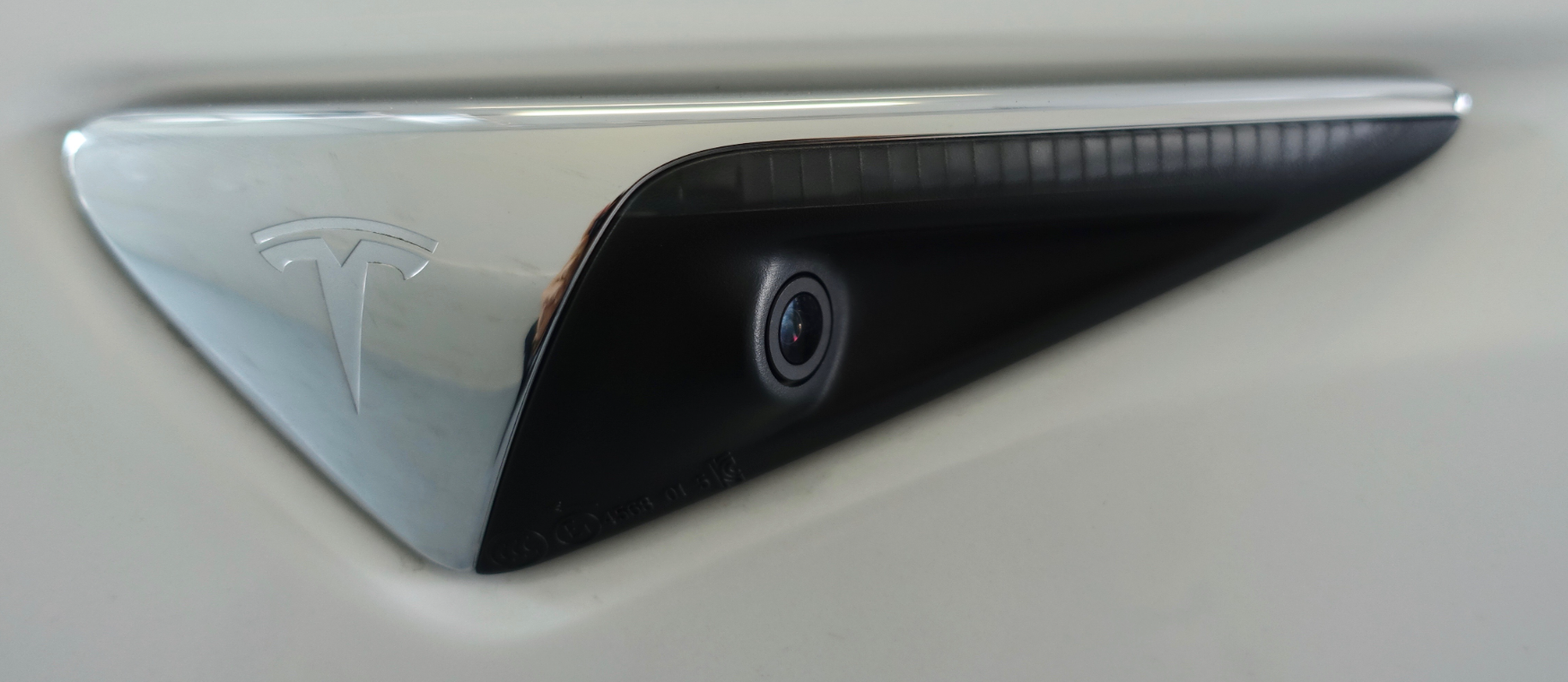
Editor’s Note: The opinions expressed here by the authors are their own, not those of Impakter.com — In the Featured Photo: Camera used on Tesla’s autonomous vehicles. Featured Photo Credit: Steve Jurvetson, Wikimedia Commons Library.

Tags: carbon footprintenvironmental impactMITSelf-driving cars
Previous Post

Davos 2023: Time to Rethink the Role of the World Economic Forum?

Next Post

France to Ban Deep-Sea Mining: What It Implies, and Why It’s Important

Related Posts

The Robotaxi Race: America vs. China
Business

The Robotaxi Race: America vs. China

Electric vehicles (EVs) are not a new concept; their existence goes as far back as the 19th century. But modern...

byMaaz Ismail
December 1, 2025
regenerative chicken
Climate Change

Could the U.S. Switch to Regenerative Chicken? Only if Americans Ate This Much Less

The advice to eat less beef and more chicken has become a common refrain — at least in certain climate...

bySentient
September 4, 2025
Tesla vs. Waymo robotaxi
AI & MACHINE LEARNING

Tesla vs. Waymo: The Trillion Dollar Robotaxi Battle

A rundown of the essential differences between Tesla's and Waymo’s robotaxi technology and strategy Since the early 2010s, several companies...

byMaaz Ismail
August 20, 2025
ESG news on carbon footprint labeling on food products promoting sustainability and eco-conscious consumer choices.
ESG Tool

The Crucial Role of Sustainable Food Labels

The evolution of food labeling has come a long way since its early days, and it’s now entering a new...

byAtharva Durwas
October 25, 2024
Web Hosting Practices and Digital Strategies to Minimize the Environmental Impact of Your Business
Business

Web Hosting Practices and Digital Strategies to Minimize the Environmental Impact of Your Business

There are various forms of sustainable hosting, each aimed at achieving different goals. Businesses are compelled to take measures to...

byMatt Davies
October 10, 2024
fast fashion Environment
Business

How Fast Fashion Is Damaging the Environment

From textile transportation to coal-powered sweatshops to wasted clothes, the impact of fast fashion on the environment cannot be ignored....

byAlessandro Camillo
September 4, 2024
geothermal energy
Start-up

What’s Next in Geothermal Energy?

Unlike other forms of renewable energy, such as solar or wind, geothermal energy is available 24/7, making it a reliable...

byEvi Giourouki
February 10, 2024
Mannequins in front of the letters Balenciaga
Fashion

Is Balenciaga Sustainable?

Balenciaga is one of the biggest luxury fashion brands out there. The French-owned Spanish brand has long been known for...

byDiana Croce
January 29, 2024
Next Post
France to Ban Deep-Sea Mining: What It Implies, and Why It’s Important

France to Ban Deep-Sea Mining: What It Implies, and Why It's Important

Recent News

The Best Virtual Office Address In London For Your Startup

How To Choose The Best Virtual Office Address In London For Your Startup

December 5, 2025
Granddaddy Purple Strain

Where Granddaddy Purple Strain Gets Its Iconic Grape Flavor

December 5, 2025
ESG news regarding Deforestation Mandate Being Pushed; EUs Acceleration on Hydrogen and Net Zero Revolution; AT&T Will End All DEI; UK Watchdog Blocks Nike and Lacoste Ads Over Green Claims.

U-Turn in Europe: Deforestation Mandate Pushed Back Again

December 5, 2025
  • ESG News
  • Sustainable Finance
  • Business

© 2025 Impakter.com owned by Klimado GmbH

No Result
View All Result
  • Environment
    • Biodiversity
    • Climate Change
    • Circular Economy
    • Energy
  • FINANCE
    • ESG News
    • Sustainable Finance
    • Business
  • TECH
    • Start-up
    • AI & Machine Learning
    • Green Tech
  • Industry News
    • Entertainment
    • Food and Agriculture
    • Health
    • Politics & Foreign Affairs
    • Philanthropy
    • Science
    • Sport
  • Editorial Series
    • SDGs Series
    • Shape Your Future
    • Sustainable Cities
      • Copenhagen
      • San Francisco
      • Seattle
      • Sydney
  • About us
    • Company
    • Team
    • Global Leaders
    • Partners
    • Write for Impakter
    • Contact Us
    • Privacy Policy

© 2025 Impakter.com owned by Klimado GmbH