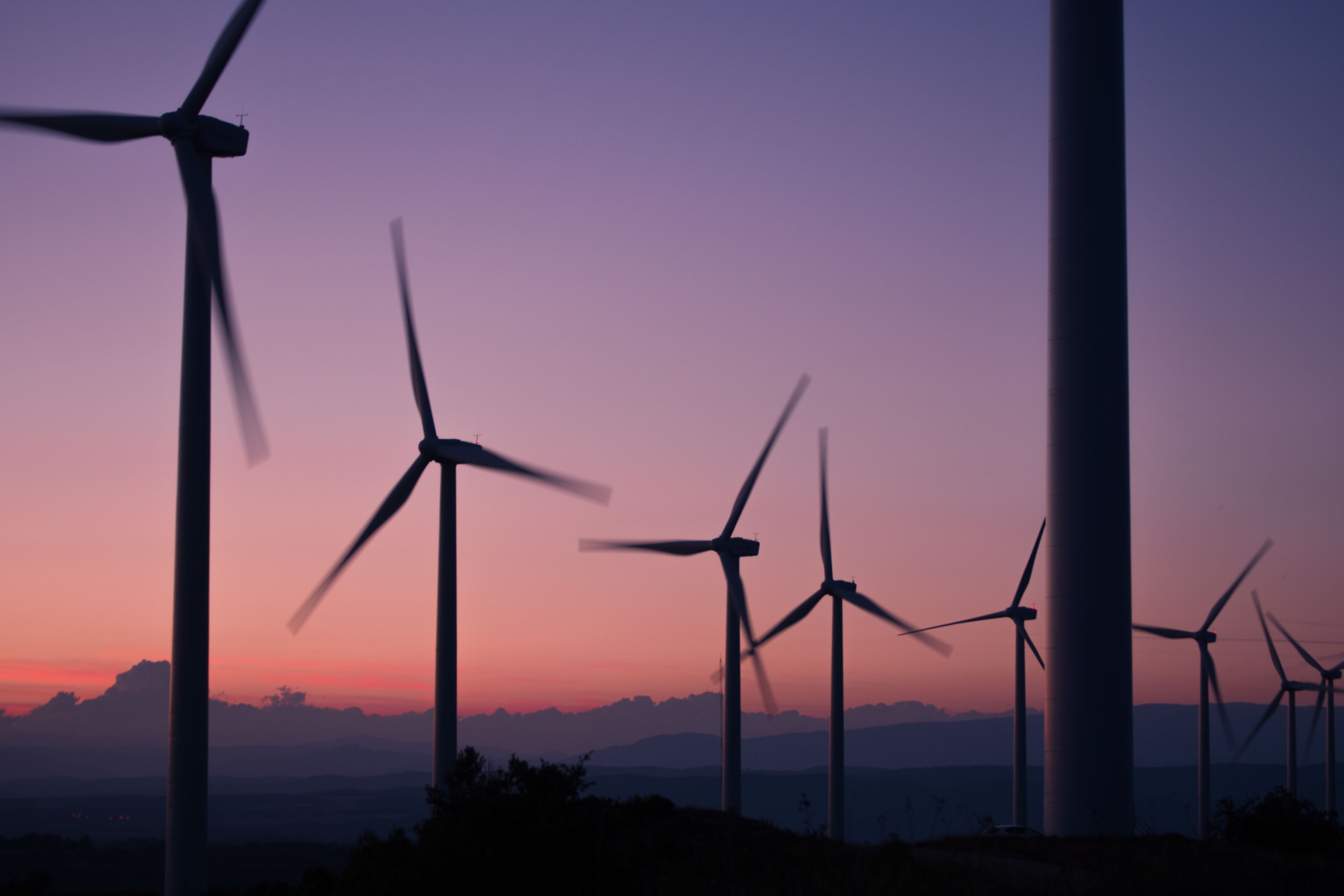
After renewable energy production in Scotland fell in 2021, new power projects and worse weather allowed Scotland’s energy sector to bounce back with record highs in the second quarter of 2022. Scotland currently produces the most renewable energy per capita among the British nations. To many observers, it seems as though Scotland is receiving little support from the Westminster government in its transition to renewables, which leaves the question open: Is the UK government preventing Scotland from reaching its full potential?
Scotland: A Potential Powerhouse for Renewable Energy
From April to June 2022, Scotland produced 7,358 Gigawatt hours of renewable electricity, a 25% increase from any second quarter previously recorded in the country.
Production of renewable electricity actually fell in 2021 due to milder, less windy weather conditions. However, due to higher wind speeds and rainfall in 2022, in addition to new power projects, Scotland produced a record amount of electricity in the second quarter of 2022.
Last year, 63% of Scotland’s renewable electricity output came from onshore wind; 17% came from hydroelectric, 10% from offshore wind, and the final 10% from a combination of solar, wave and tidal, and biomass and waste.
In 2020, Scotland generated renewable electricity equivalent to 96% of its total electricity consumption. However, this does not mean that 96% of Scotland’s electricity in 2020 came from renewable sources. The country exports some of its renewable energy, so the Scottish government estimates that, in fact, only 56% of the electricity consumed in Scotland came from renewable sources, 30% from nuclear and 13% from fossil fuels.
One of the new power projects which contributed to this record increase is the Moray East Project, located in the Moray Firth off the Northeastern coast of Scotland. This project achieved full power output in April of this year.
Projects across the North East and Moray will share over £50m from our flagship £500m Just Transition Fund.
The funding will:
🔵Speed up the transition to net zero
🔵Secure good, green jobs in the region
🔵Empower and support communitiesFind out more: https://t.co/yOOgHZdGBu pic.twitter.com/mSJy6DRSMz
— Scottish Government (@scotgov) October 12, 2022
Scotland has been steadily moving away from fossil fuel generated energy. Its last coal-fired power station, Longannet, closed in 2016, and only one gas-fired power station in Aberdeenshire remains.
Scotland also has some of the most ambitious climate targets in the world. Scotland’s 2019 Climate Change Act sets out a legally binding target for renewable energy to account for 50% of energy demands across electricity, heat, and transport by 2030 and to reach net-zero emissions by 2045.
In 2020, Scotland generated the equivalent of one quarter of its total energy demand across electricity, heat, and transport from renewable sources.
Although wind is the greatest source of renewable energy in Scotland at the moment, there are some exciting new developments taking place in the far north of the country in the tidal power sector.
Orkney, a group of islands in the north of Scotland, is home to the European Marine Energy Centre. The location of these islands at the intersection of the North Sea and the North Atlantic, where tides are very strong, is unique, and this centre is dedicated to learning how to harness wave and tidal power. It is now home to the 74-metre long Orbital O2, the most powerful tidal turbine in the world, which began generating power for the UK grid in July 2021.
A stormy view from the deck of the O2. BTW, still holding rated power. 😲🌊💪 pic.twitter.com/PzdeNBpBM9
— Orbital Marine Power (@Orbitalmarine) October 13, 2022
How is renewable electricity affecting Britain’s political landscape?
In 2020, Boris Johnson called Scotland a possible “Saudi Arabia of wind power”, and Scottish Prime Minister Nicola Sturgeon’s government looks to be on track to make that prediction a reality.
Perhaps more than ever before, the issue of energy cannot be divorced from politics.
Debate over Scotland’s wealth of natural renewable energy resources has become a key talking point for the Scottish National Party, which is campaigning for Scotland’s independence from the UK.
As the campaign begins to kick into high gear, with the referendum (IndyRef2) only a year away, the SNP is heavily promoting Scotland’s renewable energy potential. Among its arguments is data from new research by the economist David Skilling, which argues that Scotland “has the potential to become a green energy powerhouse, creating up to 385,000 jobs, boosting Scotland’s economy by up to £34billion a year by 2050 and lowering energy bills permanently.”
Related Articles: For a Successful Energy Transition: Keeping Cost of Renewables Low Is Not Enough | Offshore Wind’s Turbulent Future
The conversation has shifted since the last independence referendum. During the campaign leading up to the 2014 IndyRef, the SNP promoted Scotland’s oil reserves as a dependable natural resource that could support Scotland’s independent economy outside of the UK.
Now, the SNP is focussing on a different type of natural resource to be the focus of an independent Scottish economy: its winds and waves.
Is Scotland being held back by Westminster?
The SNP also claims that Westminster is holding Scotland back from reaching its full renewable energy potential. A recent SNP brochure states:
“Decision after decision taken by Westminster governments has lost Scotland [sic] progress in our drive towards a green, sustainable future. With the scrapping of promised investment in projects like carbon capture and storage, creating a transmission charges system that negative [sic] affects Scottish energy producers and pursuing a recklessly damaging Brexit, it’s clear Scotland is being held back by Westminster.”
In 2021, the UK government rescinded funding for the Scottish Acorn project, the world’s first gas-fired carbon capture and storage (CCS) facility – originally backed up by a £100 million UK government investment — which would have captured emissions from Grangemouth, St. Fergus, and a new power station at Peterhead.
The pro-independence movement has also pointed to the higher cost of operating renewable energy generators in Scotland, due to fees imposed by Westminster, as one method by which the UK hinders Scotland’s progress towards its sustainable energy goals.
Scottish generators pay the highest rates in Europe to connect to the grid: £7.36 per megawatt-hour (MWh) in the north of Scotland and £4.70 per MWh in the south. In England and Wales, this costs £0.49, and in southern England generators are paid to connect to the grid.
Scottish Renewables notes that the Westminster system alone “makes Scottish offshore wind farms 20% more expensive than those in English waters.”
The methodology behind these different rates was set for England and Wales in 1992, following the privatisation of the National Grid, and extended to Scotland in 2005.
The charges were meant to encourage generators to build close to consumers, because the fees rise in line with the consumer’s distance from the source of generation. This means that energy projects like onshore and offshore wind farms in Scotland, built miles from any residents, pay more to connect their energy to the grid.
The SNP has taken to calling this “the great Scottish renewables robbery.”
Scotland, although less reliant on fossil fuels, bears the cost of living crisis equally to the rest of the UK
As Scotland sees winter approach with record high fuel prices caused by the war in Ukraine, an independent Scotland powered by renewable energy has perhaps become more enticing to residents.
Net Zero and Energy Secretary Michael Mathewson said of Scotland’s situation regarding the cost of living crisis:
“We are in the midst of an energy crisis which has been compounded by the illegal war in Ukraine. It has prompted governments across the world to consider how to avoid this situation happening in the future. Scotland’s energy transition can increase security of supply and help to make us far more resilient to future international energy price fluctuations.“
Scotland is still subject to the same high prices as the rest of the UK, even though they are the least reliant on fossil fuels, because energy operates within a centralised system within the UK.
As Scottish residents begin to hunker down in the face of the blistering winds and rains that mark the turn towards winter, it is a commonplace to curse the ruthless Scottish weather. Perhaps this year, they will begin to view these same weather patterns with more cheer, as a possible source of economic wealth and stability for their country.
The potential for offshore wind in Scotland far exceeds what it consumes. The country hopes that, by becoming a net-exporter, it will be in the driving seat of the second energy revolution.
For now, although Scotland leads the UK in the renewable energy race, its residents have still fallen victim to the same cost of living crisis as neighbouring England, Wales, and Northern Ireland. Nonetheless, as long as Russia continues to use energy as a geopolitical weapon, renewable energy will be Scotland’s, and the world’s, greatest weapon.
Editor’s Note: The opinions expressed here by Impakter.com columnists are their own, not those of Impakter.com — Featured Photo: Silhouette of windmills at sunset Featured Photo Credits: Anna Jimenez Calaf