Russia has voted in its Presidential Election and Vladimir Putin has returned for an unprecedented fifth term.
Putin will now lead Russia until at least 2030.
The election was clearly not a fair contest and fell short of what is required for an election to be considered democratic, but unfortunately this means that it is typical of a large number of contemporary elections around the world.
The major component parts of a full, liberal democracy no longer exist in Russia. Much of the media is now a mere mouthpiece for the Kremlin with the scope for popular discussion much reduced.
Politically, many opposition candidates that oppose the rule of Vladimir Putin end up banned from running in elections like Boris Nadezhdin who was barred from running this time due to “irregularities” in his application forms, or dead in the case of Alexy Navalny in recent months, and before that former opposition leader Boris Nemtsov in 2015.
Russia is an example of “electoral autocracy”. This is a political system characterised by the use of democratic procedures either to produce or to reinforce a non-democratic, authoritarian regime.
Although there are regular elections, the electoral arena is stacked decisively in favour of the ruling party.
This type of regime has been around since the inter-war period in Europe and existed during the Cold War, principally in some of the newly-independent former colonies. During the post-Cold War period it has become the most common form of authoritarian polity on the globe.
Analysts cannot agree on a common classification for regime types. However all of them may be simplified into three general categories:
- Full or liberal democracies where the political system is democratic and rights and freedoms are extensive and widely shared;
- Full or closed autocracies where both political system and rights and freedoms are tightly restricted;
- And the mass in the middle where significant deficiencies exist in the political system and/or the enjoyment of rights and freedoms.
It is in this broad catch-all category that electoral autocracies are to be found. And it is the authoritarianism manifested in this broad category that has been increasing at the expense of liberal democracies.
From 2011-21, the number of liberal democracies declined from 43 to 33 with a corresponding jump in non-democracies. Every year since 2006 has seen more countries experience a decline in observance of political rights and civil liberties than experienced an improvement.
Electoral autocracies tend to come about in two main ways.
First, they are established as the regime type following an extra-constitutional change of regime, usually a coup or revolution. These are much less common than often thought.
Iran following the 1979 revolution is one example, so too are a number of the North African states following the “Arab Spring”.
Second, a leader or party is elected to power in a democratic election and then uses the democratic institutions of state to shift the system in a non-democratic direction.
Recent examples of this are Poland under the Law and Justice Party, Hungary under Viktor Orban, Turkey under Recep Tayyip Erdogan and perhaps India under Narendra Modi.
The reverse movement, from full autocracy to electoral autocracy is also possible but very rare.
The greatest threat to democracy lies in the second path, election under democratic conditions and the subsequent erosion of that democracy.
This usually involves the development of an ideology critical of the status quo and claiming that the current system is not working in the interests of “the people”.
This involves rejection of many of the conventions and assumptions, including tolerance and compromise, essential to the functioning of a democratic system.
In this highly charged environment, a series of measures are usually introduced to stack the electoral system in favour of the new rulers.
Related Articles: A Time to Choose: Utopia vs Dystopia? Democracy is Key | Why Democracy Produces Incompetent Leaders – And How to Fix it | As Democracy Erodes Worldwide, Autocracies Are Getting Stronger, Concludes New Report | De-constructing Modern Democracy
Such measures include use of the legal system and the courts to exclude opposition, domination of the media so the opposition cannot get its message out, harassment of the opposition and its supporters including police action against meetings and demonstrations, and use of the state’s largesse to buy votes. And if all of these fail, ballot boxes can be stuffed and the counting of votes falsified.
Recent American history, with its political intolerance, voter suppression, use of institutions like the Senate as a political weapon, and refusal to accept democratic outcomes shows how this process can begin even in an established and stable democracy.
There are ways to prevent this.
Crucial is the strengthening of the conventions and assumptions at the heart of democratic practice, including rejection of the view that politicians trashing the system for partisan advantage is acceptable.
Greater civic awareness, political organisation, activism and the constant monitoring of our politicians are needed to stop this sort of decay.
A rejection of those politicians who think nothing of lying to the electorate, of opposing simply for opposition’s sake, of those who seek to play the national security card to crack down on dissent, and those who seek to mobilise the sorts of extremist sentiments that are corrosive of democratic culture is needed.
This is not easy, but it can be done, as the rejection of the Law and Justice Party at the polls in October’s Polish election shows.
Where to begin? Increased sustained popular interest and involvement in politics and a rejection of those who, through their actions, have eroded trust in our democratic processes would be a good start.
** **
This article was originally published by 360info™.
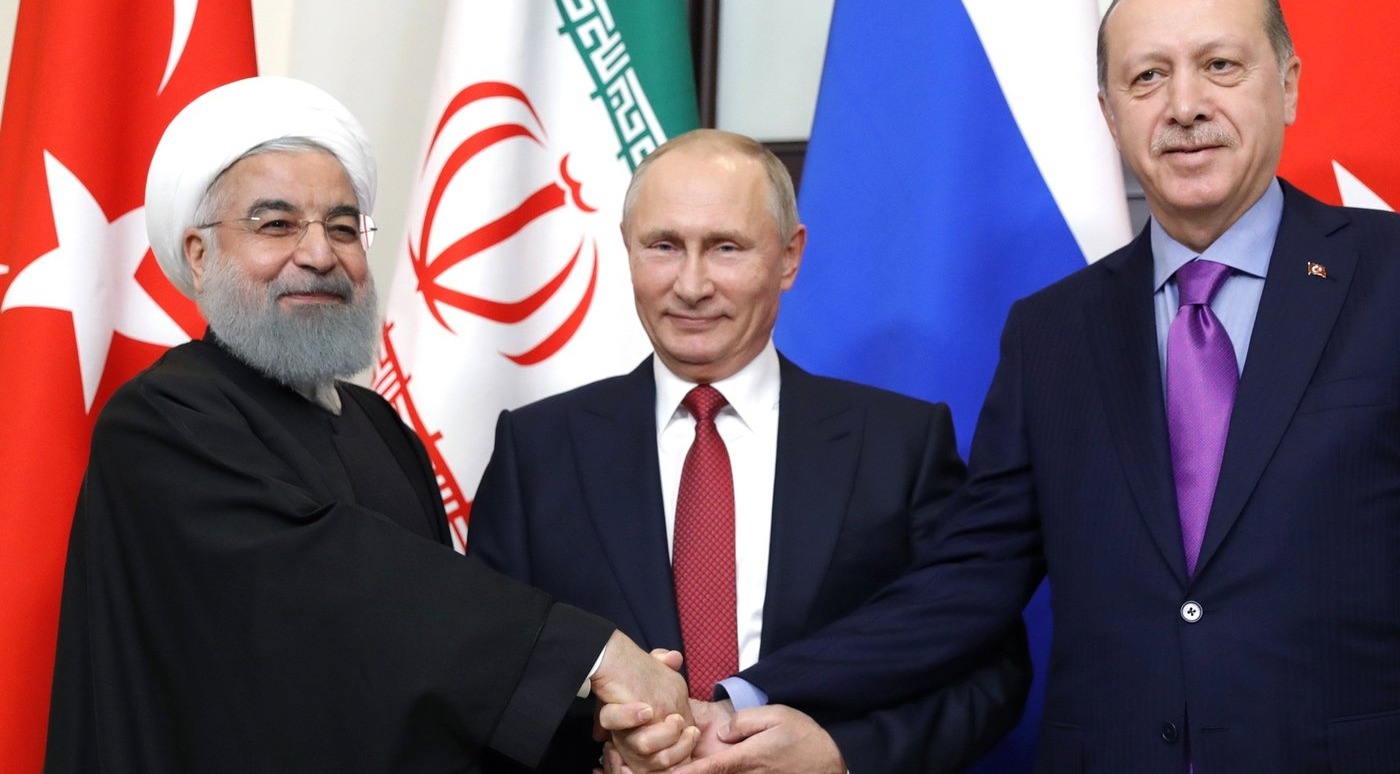
Editor’s Note: The opinions expressed here by the authors are their own, not those of Impakter.com — In the Featured Photo: Hassan Rouhani (Iran), Vladimir Putin (Russia) and Recep Tayyip Erdoğan (Turkey). Featured Photo Credit: Kremlin.