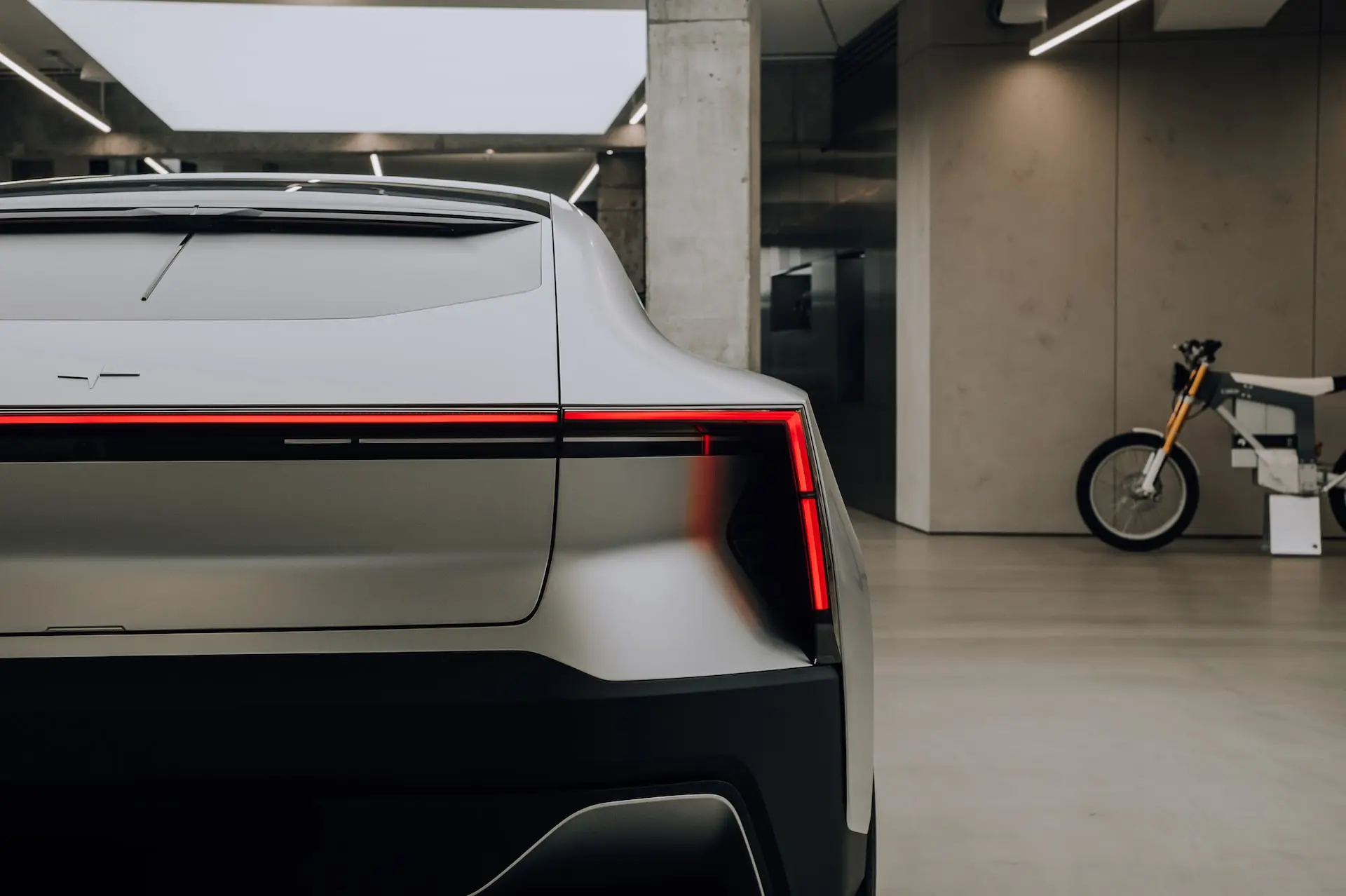
Although Tesla might want you to think otherwise, there are plenty of sustainable car brands producing electric vehicles and doing other innovative things to create more eco-friendly cars.
And although tailpipe emissions account for 75% of all carbon emissions from transport, there are many factors to consider when thinking about the sustainability of a typical passenger vehicle besides whether or not it’s electric.
Whilst some sustainable car brands are focusing on increasing their fleets of electric cars, many are also looking at better ways to recycle batteries and finding more reputable sources for their raw materials, in order to decrease the likelihood of exploitative labour being utilised in their supply chains.
Others are trying to find ways to increase fuel efficiency as a method of reducing tailpipe emissions, or looking for alternative fuels altogether. Hydrogen fuel cells could be the future of zero emission vehicles, since they provide a way to produce power without generating greenhouse gases.
Whether you’re in the market for a new car, looking to switch to an electric car, or you’re simply wondering “are electric cars carbon neutral?”, here are some quick facts and figures about some of the most sustainable car brands.
Ford – B Rating from Impakter Index
Ford aims to achieve carbon neutrality no later than 2050, and it has one of the best systems for detailed and comprehensive reporting of any car company in the world.
They utilise a thorough reporting system that provides details about their Scope 1, Scope 2, and Scope 3 emissions.
So far, Ford has achieved a 35% reduction in its absolute manufacturing greenhouse gas footprint since 2017. In 2021, 32.4% of the electricity used for its manufacturing came from renewable resources.
Ford is also aiming to reach 100% zero-emission cars and vans globally by 2040, and 2035 in leading markets.
Currently, it sells three electric cars: F-150 Lightning Pickup, Mustang Mach-E SUV, and E-Transit Commercial Van. So far, the company has reduced operational greenhouse gas emissions per vehicle produced by 30%.
Ford also has ambitious goals for the reuse and recycling of its materials, in addition aiming at some point in the future to require zero water withdrawals for its manufacturing processes, and it has reduced its annual fresh water consumption by 78% since 2000.
Understand why Ford got a B rating.
Mercedes-Benz AG – B Rating from Impakter Index
Is Mercedes the most eco friendly car maker around? Let’s find out.
Mercedes-Benz is a signatory member of The Climate Pledge, which is committed to meeting the goals of the Paris Agreement on climate change, and it is also a founding member of the international climate protection initiative Transform to Net Zero.
Mercedes aims to become carbon neutral by 2040 and to make its fleet of cars CO₂-neutral by 2039. According to its sustainability report, these projects are going according to plan.
During the UN Climate Change Conference in Glasgow in 2021, Mercedes-Benz signed the COP26 Declaration on accelerating the transition to 100% zero-emission cars and vans, although the company has received criticism that the deadline of 2039 is not soon enough.
Currently, 78% of the total electricity consumed by the production of Mercedes-Benz Cars comes from renewable energy sources and the company has made 89% of all suppliers carbon neutral – almost 90% of the group’s suppliers have signed the ambition letter and committed to supplying only carbon-neutral products by 2039.
The company has also reduced 85% of the Scope 1 and Scope 2 emissions at its plants, although Scope 3 emissions typically count for the vast majority of a company’s total carbon footprint.
Mercedes-Benz is also focusing on the ethics of its supply chain and, where appropriate, works together with various associations, organisations and competitors for the responsible procurement of raw materials.
Want lo learn more? Take a deep dive into the full Mercedes sustainability report.
Related Articles: Why a Different Approach to EVs is Needed to Make Mobility Fully Sustainable | Europe’s Transition to Electric Vehicles: How It’s Going, and What Lies Ahead | Electrifying the Roads: Overview of the Electric Vehicle Industry
Audi – C Rating from Impakter Index
Audi is aiming for carbon neutral production at all its sites by 2025, and it has almost halved its Scope 1 & 2 carbon emissions from 2019 to 2021.
It also hopes to reduce its carbon footprint by 30% by 2025, compared to 2019, and has reported that its total emissions in 2021 were 48% lower than in 2019.
As for its CO2 emissions from cars, all new Audi models on the global market are expected to be fully electric by 2026, and by 2033, Audi will shut down the production of any older models with internal combustion engines.
Currently, fully electric and plug-in hybrids make up 10.7% of the total production of the Audi brand, and 2021 saw a 5% decrease from 2020 in Audi’s production of vehicles with ICEs (learn more on our Audi sustainability report)
The company also has a holistic focus on sustainability, with attention paid to the entire product life cycle. Audi is an active member of the Global Battery Alliance, which is working to establish a sustainable value chain for batteries, from resource mining to sustainable recycling (to recycle electric motors).
It has also successfully pursued a strategic research partnership for battery recycling with the result that over 90% of the cobalt and nickel from the high-voltage batteries of the Audi e-tron can be recovered.
General Motors – C Rating from Impakter Index
GM wants to transition to 100% zero tailpipe emissions for new light-duty vehicles by 2035 and to become carbon neutral in its global operations and products by 2040.
So far, the company has seen a 40% decrease in its absolute Scope 1 and 2 emissions since 2018, but there was no progress reported for Scope 3 emissions.
In pursuit of reducing tailpipe emissions, GM released the 2022 GMC HUMMER EV Pickup, which was the world’s first zero-tailpipe-emissions, all-electric supertruck.
They also opened Factory ZERO, the company’s first plant fully dedicated to the assembly of electric vehicles to speed up things on sustainable vehicles manufacturing.
Right now only 25% of GM’s global energy usage comes from renewable sources, but it plans to source 100% renewable electricity globally by 2035.
Check our General Motors sustainability report!
Toyota – C Rating from Impakter Index
Surprised by Toyota not being the most sustainable car brand?
You thought they could have had a better score right?
To be fair, Toyota has managed to reduce its carbon emissions by 8.9% compared to 2019 levels.
It has also reduced its global average CO2 emissions from new vehicles by 23% compared to 2010 levels by improving environmental performance and expanding vehicle lineups.
Toyota is also focusing on its water consumption, and has introduced reduction technologies and daily water-saving efforts, such as water recycling and reducing the amount of steam used in painting processes to get closer to zero emissions cars manufacturing.
Discover more on our Toyota sustainability report.
So, how close are we to seeing 100% sustainable vehicles on the road?
Transport still accounts for about a quarter of the total carbon footprint of the world, so there is plenty left to do to reduce transport emissions. By producing greater numbers of electric vehicles, innovating low emission power sources, and providing consistent reporting, these sustainable car brands have been deemed the greenest car companies.
Hopefully consumers will recognise the way in which sustainability adds to the value of a company’s product and service, and other car manufacturers will be welcomed in the most sustainable car brands gotha.
Editor’s Note: The opinions expressed here by the authors are their own, not those of Impakter.com — In the Featured Photo: A green automobile from one of the industry’s most sustainable car brands. Featured Photo Credit: Martin Katler.