Impakter
  • Environment
    • Biodiversity
    • Climate Change
    • Circular Economy
    • Energy
  • FINANCE
    • ESG News
    • Sustainable Finance
    • Business
  • TECH
    • Start-up
    • AI & Machine Learning
    • Green Tech
  • Industry News
    • Entertainment
    • Food and Agriculture
    • Health
    • Politics & Foreign Affairs
    • Philanthropy
    • Science
    • Sport
  • Editorial Series
    • SDGs Series
    • Shape Your Future
    • Sustainable Cities
      • Copenhagen
      • San Francisco
      • Seattle
      • Sydney
  • About us
    • Company
    • Team
    • Global Leaders
    • Partners
    • Write for Impakter
    • Contact Us
    • Privacy Policy
No Result
View All Result
Impakter logo
No Result
View All Result
SDGs Asia-Pacific

Progress Report Projects 32-year Delay in Achieving SDGs in Asia-Pacific

‘Asia and the Pacific SDG Progress Report 2024’ discusses success stories and trends, shining the spotlight on the unique challenges faced in different parts of the region and on how sex, urbanization, education level, age, and income contribute to and exacerbate existing disparities

International Institute for Sustainable Development (IISD)byInternational Institute for Sustainable Development (IISD)
February 23, 2024
in SDG Series
0

The UN Economic and Social Commission for Asia and the Pacific (ESCAP) has launched its annual SDG progress report, which provides an overview of progress on the global Goals in the Asia-Pacific region. The report warns that given the “uneven and inadequate,” the region will not achieve the 17 SDGs before 2062. It identifies gender and location as key factors in determining levels of poverty and inequality that continue to pose persisting challenges.

‘Asia and the Pacific SDG Progress Report 2024’ discusses success stories and trends, shining the spotlight on the unique challenges faced in different parts of the region and on how sex, urbanization, education level, age, and income contribute to and exacerbate existing disparities.

“While additional efforts are required across the board, granular data emphasizes the urgency of addressing inequalities that impact marginalized groups, including women, girls, rural populations and the urban poor, who continue to find themselves locked out of education and employment opportunities,” UN Under-Secretary-General and ESCAP Executive Secretary Armida Salsiah Alisjahbana underscored in a foreword.

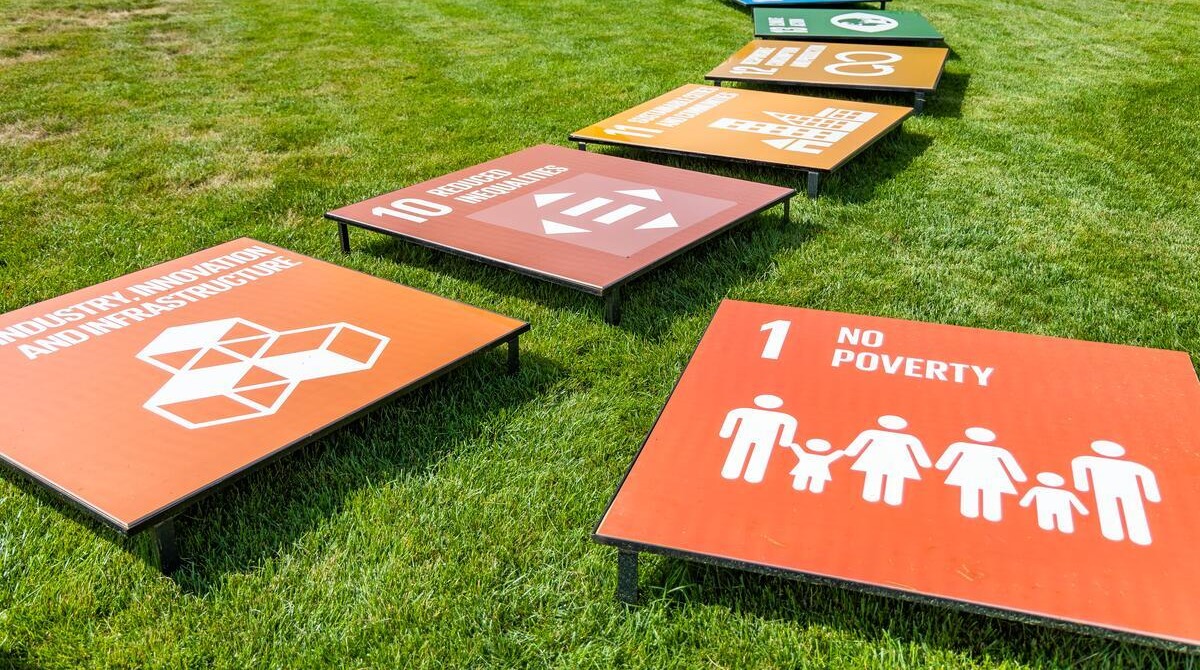
The report finds that the areas showing the most substantial progress in the region are poverty eradication (SDG 1) and sustainable industry, innovation, and infrastructure (SDG 9), albeit the pace is insufficient to meet the 2030 deadline. Efforts towards eliminating hunger (SDG 2), improving health and well-being (SDG 3), ensuring the availability of clean water and sanitation (SDG 6), expanding affordable and clean energy (SDG 7), and building sustainable cities and communities (SDG 11) require “heightened attention for substantial improvement.”

The assessment emphasizes climate action (SDG 13) as an immediate priority and identifies small island developing States (SIDS) as the group of countries needing support the most due to their geographical isolation, limited resources, and climate change vulnerabilities.

Noting that, on average, half of the SDG indicators do not have sufficient data, the report emphasizes the need for enhanced coordination and effective SDG data sharing and use within countries and with international partners to fill the remaining data gaps.


Related Articles: A Short History Of The SDGs | Achieving the SDGs, it is Everyone’s Business | The SDG Story: An Insider Account of How it all Came About

Success stories in individual countries described in the report “illustrate strategies to strengthen both data systems and policies to improve biodiversity and nature conservation, public digital infrastructure, social protection and access to education.” For example, digital training programmes in Viet Nam have underscored the enabling role of public-private partnerships (PPPs) in accelerating digital transformation and bridging the skills and employment gap among youth and migrant workers. National statistical systems in Kazakhstan, Kyrgyzstan, Turkmenistan, and Uzbekistan have been upgraded to better support stateless populations.

The report was launched on 15 February 2024, ahead of the Asia-Pacific Forum on Sustainable Development, taking place from 20-23 February.

On the opening day of the Forum, the Asia-Pacific SDG Partnership, comprised of ESCAP, the Asian Development Bank (ADB), and the UN Development Programme (UNDP), issued another publication titled, ‘Addressing the Interlinked Challenges of Climate Change, Poverty and Hunger in Asia and the Pacific.’ The report offers examples of innovative solutions and policy responses from across the region to combat climate change, poverty, and hunger.

Outcomes of the five Regional Forums on Sustainable Development (RFSDs) contribute to the discussions during the July session of the UN High-level Political Forum on Sustainable Development (HLPF).

** **

This article was originally published by the International Institute for Sustainable Development (IISD) and is republished here as part of an editorial collaboration with the IISD.


Editor’s Note: The opinions expressed here by the authors are their own, not those of Impakter.com — Featured Photo Credit: UN Photo.

Tags: Asia-PacificIISDInternational Institute for Sustainable DevelopmentSDGs
Previous Post

How Russia’s Ukraine Strategy Affects the Middle East

Next Post

China Unveils New ESG Rules

Related Posts

5 Trends That Have Shaped Global Subsidies Over Decades
Business

5 Trends That Have Shaped Global Subsidies Over Decades

Subsidies have long been debated: criticized for distorting markets and harming the environment, yet embraced to build green industries, protect...

byInternational Institute for Sustainable Development (IISD)
December 29, 2025
What’s Next for Sustainable Development in 2026
Climate Change

What’s Next for Sustainable Development in 2026

As governments confront rising misinformation, constrained budgets, and intensifying climate risks, the need for evidence-based policy has never been greater....

byInternational Institute for Sustainable Development (IISD)
December 23, 2025
The Amazon rainforest is often called “the lungs of the world.” It produces oxygen and stores billions of tons of carbon every year. The Amazon rainforest covers more than 60% of the landmass of Peru. Photo Credit: USDA Forest Service / Diego Perez.
Biodiversity

Inside COP30

The 30th United Nations Climate Change Conference (COP30) is taking place in Belém, Brazil, from November 10 to 21, 2025....

byInternational Institute for Sustainable Development (IISD)
November 10, 2025
World Trade Organization Reform
Business

What We Should Be Talking About When We Talk About World Trade Organization Reform

Institutional reform is the headline item at the WTO’s 14th Ministerial Conference (MC14) in March 2026. Most people outside Geneva do not...

byInternational Institute for Sustainable Development (IISD)
October 31, 2025
COP30
Climate Change

What to Expect at COP30

Climate change negotiators will soon head to the 30th UN Climate Change Conference (COP30) in Belém, Brazil, after a year...

byInternational Institute for Sustainable Development (IISD)
October 22, 2025
harmful subsidies
Politics & Foreign Affairs

Harmful Subsidies Explained

This year marks 20 years since the International Institute for Sustainable Development (IISD) launched the Global Subsidies Initiative (GSI), which...

byInternational Institute for Sustainable Development (IISD)
October 14, 2025
EU Public Procurement Directive
Society

Public Money, Public Value: The EU’s Public Procurement Directive Review Explained

When governments buy buses, school meals, or hospital equipment, they shape entire markets. Across the European Union (EU), those purchases...

byInternational Institute for Sustainable Development (IISD)
September 22, 2025
Energy transition
Energy

Decarbonising the Energy Sector

This deep dive summarizes the discussion that took place in the context of the event “Decarbonising the energy sector: From...

byInternational Institute for Sustainable Development (IISD)
August 26, 2025
Next Post
China ESG

China Unveils New ESG Rules

Recent News

ESG News regarding China restricting industrial renewable exports, UN warning that US climate treaty exit harms economy, UK firms lowering wage forecasts despite inflation, Meta partnering with TerraPower for new nuclear reactors.

To Save the Grid, China Forces Industries to Go Off-Network

January 9, 2026
Cleaner Air in Hospitals

How Cleaner Air in Hospitals Can Cut Infections and Climate Impact at the Same Time

January 9, 2026
Search cleanup, key activity to protect your data and tech devices.

A Simple “Search Cleanup” Plan for Busy People

January 9, 2026
  • ESG News
  • Sustainable Finance
  • Business

© 2025 Impakter.com owned by Klimado GmbH

No Result
View All Result
  • Environment
    • Biodiversity
    • Climate Change
    • Circular Economy
    • Energy
  • FINANCE
    • ESG News
    • Sustainable Finance
    • Business
  • TECH
    • Start-up
    • AI & Machine Learning
    • Green Tech
  • Industry News
    • Entertainment
    • Food and Agriculture
    • Health
    • Politics & Foreign Affairs
    • Philanthropy
    • Science
    • Sport
  • Editorial Series
    • SDGs Series
    • Shape Your Future
    • Sustainable Cities
      • Copenhagen
      • San Francisco
      • Seattle
      • Sydney
  • About us
    • Company
    • Team
    • Global Leaders
    • Partners
    • Write for Impakter
    • Contact Us
    • Privacy Policy

© 2025 Impakter.com owned by Klimado GmbH