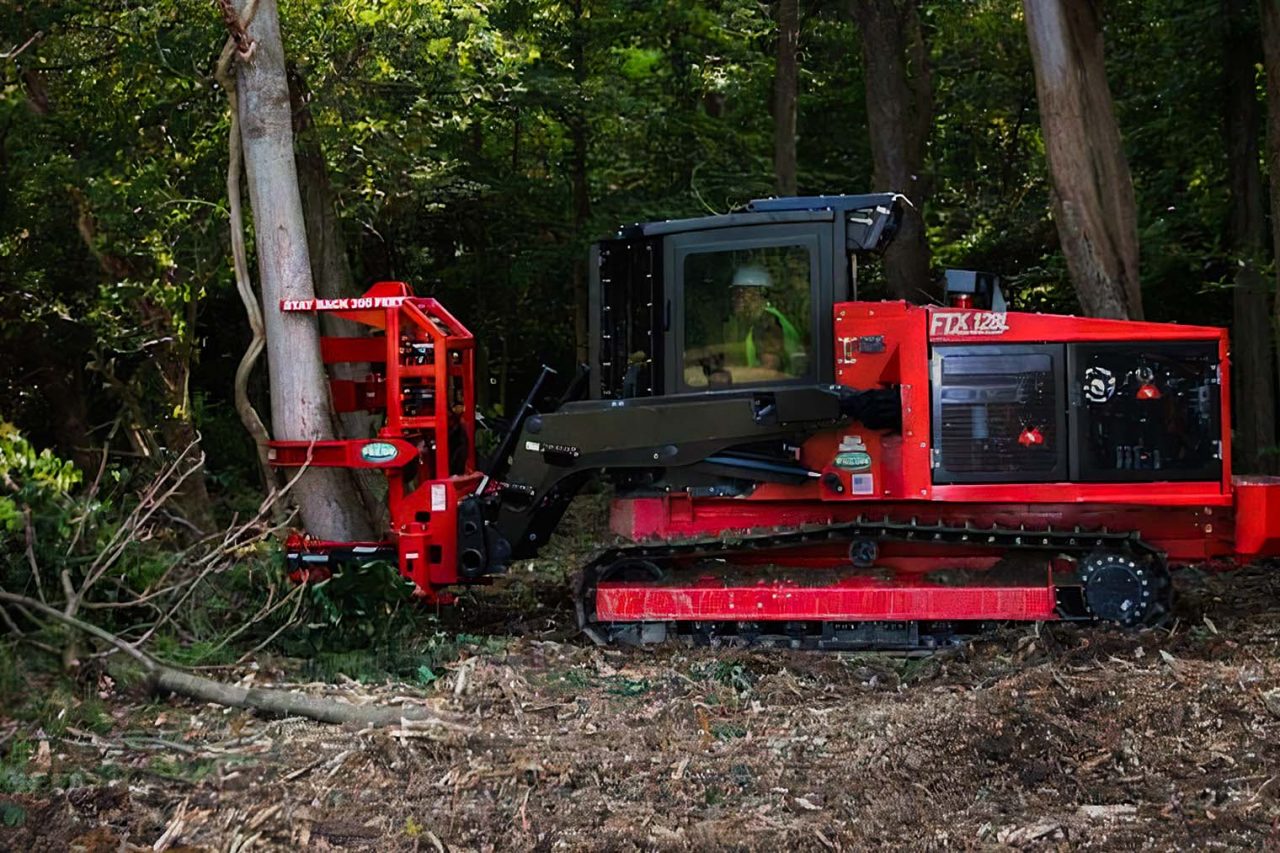
Globally, increased development of land, growth of infrastructure, and potential fires have brought more focus to land clearance and land management practices. Traditional land clearance, which is based largely on efficiency, has caused excessive clearing, soil disturbance, and habitat destruction.
Such negative results of land management have recently begun receiving more attention due to environmental concerns becoming a priority factor for decision-making.
As a result, the focus has been shifting towards precision-based land management aimed at achieving greater efficiency with less impact on the environment. The use of machinery like a skid steer with a tree shear is also included in this transformation to make vegetation removal more selective. This paper will examine the use of smart machinery that helps achieve sustainable goals.
The Hidden Impact of Traditional Land Clearing on Environment
Land clearing using traditional techniques usually involves fast processes such as bulldozing, wholesale clearing, and sometimes even burning extensive vegetation. Although fast and effective for preparing the land, these techniques result in severe environmental effects that may not be easily corrected.
The effects include:
- Erosion of soil as vegetation cover is lost and topsoil is exposed.
- Releasing carbon because biomass is burned or quickly broken down.
- Reduction in diversity as habitats become extinct due to wholesale clearing.
Since the discussion of climate change in relation to the earth has started emphasizing land management techniques, there is an increased awareness concerning the negative impact of land clearing techniques. Therefore, industries need to review the way they treat their lands for maximum operational efficiency.
A Shift in Land Management Thinking
The traditional strategy of maximizing productivity in clearing the land has relied heavily on the concept that all vegetation must be removed as quickly as possible from an area in preparation for other work. The drawback of this method, however, is the disregard for the high cost of over-clearing the land, which negatively impacts the environment in the long run.
Advantages of the Selective Approach
A different and more sophisticated approach has gained traction in recent years, where the emphasis has shifted from removing everything on the ground for:
- Preserving valuable vegetation.
- Reducing unnecessary disturbances to the soil.
- Maintaining the natural balance of drainage and ecosystems.
New Approach in the Industry
It appears that contractors, developers, and other professionals involved in land clearing have adjusted their strategies accordingly. As environmental consciousness increases across the board, so do the requirements from the regulations, and machinery is expected to help with that.
At this stage, equipment must provide precision and facilitate better decision-making rather than just clearing space faster.
How Modern Attachments Enable Targeted Vegetation Control
Attachments have greatly increased the functionality of compact machines when it comes to working at job sites. Rather than using many machines to cut and remove vegetation and handle the resulting materials, people now use one machine for many purposes that were previously achieved using different pieces of equipment.
Making Land Management Selective and Controlled
The tree shear attachment on a skid steer loader is an excellent example of this trend. This kind of machinery makes it possible to:
- Cut down vegetation selectively.
- Hold and remove trees.
- Position and handle materials after cutting without using other machinery.
In essence, this makes it simpler to carry out work in specific areas of land while minimizing impact on the rest of it.
Combining Control with Efficiency
On top of increased effectiveness, there is the added benefit of enhanced control through modern attachments. With attachments, workers can:
- Make cuts precisely.
- Limit ground disturbances.
- Move around freely.
This means that machinery attachment innovations can help balance efficiency and responsibility in terms of land management practices.
Reducing Waste and Improving Resource Efficiency
One such problem currently facing land management is figuring out how to minimize wastage of land clearance without affecting productivity. The traditional method often uses wasteful techniques, which lead to more vegetation being cleared than necessary, thus leaving the operator to transport the unnecessary biomass that has been produced.
The selective method solves this problem because it does not clear more vegetation than necessary; thus, it is an inherently efficient method. Such a technique minimizes wastage of materials as well as fuel since fewer trips are needed.
Perhaps most importantly, however, the selective method signifies a paradigm change in what constitutes efficiency in land management. Efficiency no longer means doing things quickly or economically; rather, it implies doing things more responsibly and sustainably.
Supporting Safer and More Controlled Operations
There are several reasons why safety is an important issue during land clearing operations, especially in cases where conventional techniques are used. The danger associated with conventional techniques, including falling trees and heavy manual labor, increases the possibility of injuries on-site.
In addition, it makes it difficult for operators to achieve consistent control during the process. The use of modern equipment provides safer operation as workers do not need to leave the safety of their machines to carry out various operations. It allows for a higher level of precision during the cutting and handling process.
From a wider perspective, the safety benefits provided by modern equipment can be considered indicative of improved professional standards.
Conclusion
Land clearing is not only an introductory stage anymore; rather, it has gradually been developing into a much more considerate method of managing land. With the changes in attitudes and perspectives, there is an increasing emphasis on efficiency, sustainability, effectiveness, and safety of the processes involved in the project implementation.
Here, the equipment serves as a secondary factor, yet it still remains significant. Equipment like a skid steer with a tree shear allows performing selective and controlled activities that contribute to the achievement of the above-stated goals. In the future, effective land use practices will be possible if and only if the mentioned balance can be maintained.
Editor’s Note: The opinions expressed here by the authors are their own, not those of impakter.com. In the Cover Photo: Prinoth carbide has the ability to extend equipment lifespan. Cover Photo Credit: fecon