
Increasingly the distance between those who are poor, with limited education, and those who are otherwise fortunate, has widened nearly everywhere and has become a chasm. While this is no doubt a truism to some degree for all societies, there are fault lines and reasons to suggest that there are “differences”, and distortions caused by who does research, where it is done, who are the subjects, and the context.
Indeed, much of human psychology and experiments have been biased by samples from Western society participants. This is at the core of Canadian cultural anthropologist Joseph Henrich’s argument in his best-selling book entitled, “The WEIRDest People in the World”: A play on W.E.I.R.D: Western, Educated, Industrialized, Rich, and Democratic. The subtitle is telling: “How the West Became Psychologically Peculiar and Particularly Prosperous”.
In Henrich’s thinking, these are people that have been functioning in an environment that shapes their attitudes and behavior, but not all individuals are the same way.
Many genuinely express concern about those who are not so privileged and make charitable contributions and donations, volunteering to work for noble causes such as food banks, assisting schools, hospitals, refugees, non-profits, and so forth.
The examples are many and well known, from Bill and Melissa Gates with their foundation focused mainly on health issues to many billionaires on an unprecedented “giving spree” as so ably documented by David Callahan in his best-selling book The Givers: Wealth, Power, and Philanthropy in a New Gilded Age (2017, Knopf) And, as he grimly notes, “we are flying blind into the biggest giving spree in history […] It doesn’t help matters that we also can’t answer basic questions about the efficiency of the charitable sector.”
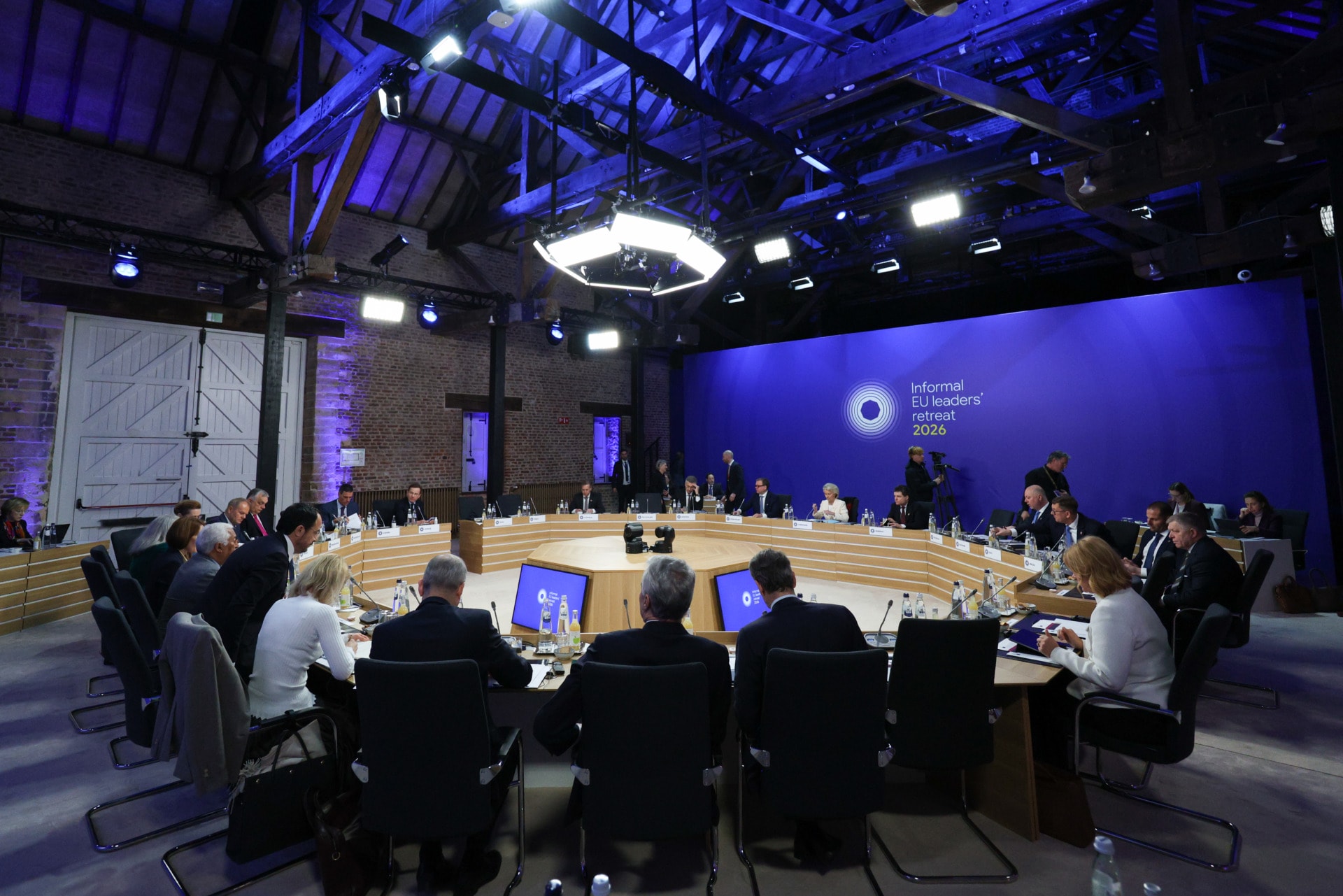
There are worthy examples of wealthy politicians too, notably John F. Kennedy who, among many noteworthy actions, proposed a Keynes-inspired tax cut bill that was passed into law as the Revenue Act of 1964 and established the Peace Corps. And then there is the European Union Commission President, Ursula von der Leyen, the leader behind the European Green New Deal.
That said, it is also a fact that while there are exceptions as mentioned above, there are also many more leaders with wealth plus power who lack the appearance or actual compassion for others, in both developing and developed countries. As to the former, this would include countries and their leaders especially where those in power have held on for a significant time such as Syria, Venezuela, the Democratic Republic of the Congo, and others.
Developed countries also have wealthy leaders without being or seemingly sensitive to those less advantaged. Consider French President Emmanuel Macron, a former investment banker, now labeled by some as the “President of the rich”. He often projects himself as the smartest man in the room and does not seem to fully feel the depths of French worker anger in his raising the retirement age. (Note: the French are the most productive workers in Europe)
Or look at the United Kingdom, where Prime Minister Rishi Sunak is a billionaire and his recent actions on worker rights have been considered contrary to past Tory pledges.
But there are others in Europe with long tenures and only estimates of their net worth such as Turkey’s Recep Tayyip Erdogan or Hungary’s Viktor Orban.
And of course, the elephant in the room is Russia’s Vladimir Putin. As Fortune asked in 2022, is Putin really “the richest man in the world”? Officially, Putin earns an annual salary of $140,000, and his publicly disclosed assets include a modest 800-square-foot apartment, a trailer, and just three cars, but according to some estimates, he could be the wealthiest man in the world with assets totaling up to $200 billion.
As to Putin’s distinct lack of regard for the life of the common man, whether civilians in Ukraine or even the average Russian citizen, there is no need to provide additional evidence beyond what we see every day in the news.
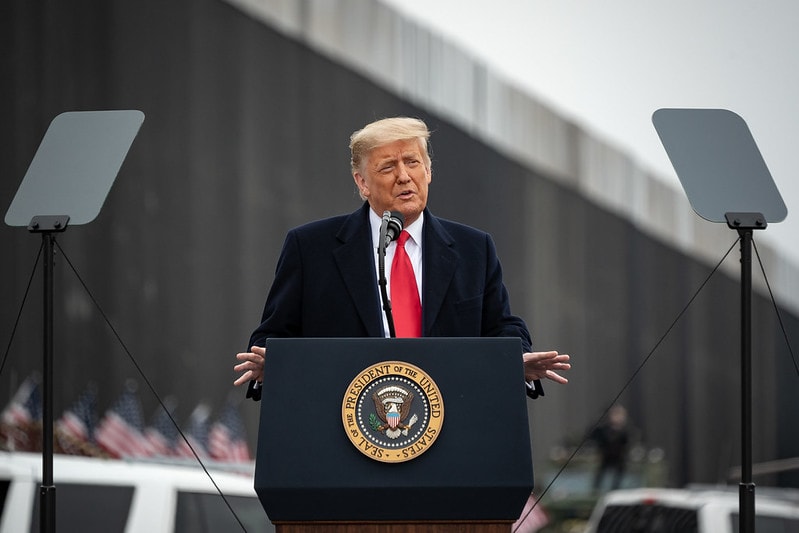
And looking at North America, the United States is at the beginning of its 2024 Presidential primary election season, with the leading candidate for the Republican Party- at least according to the polls – Donald J. Trump seeking a second term as President.
Forbes estimates Trump’s 2023 personal wealth at $2.5 billion (Trump estimates much higher); and he attended the prestigious Wharton School of the University of Pennsylvania (graduating with a degree in economics). In short, he checks all the boxes for Heinrich’s definition of “WEIRD”.
To gauge his level of compassion for others less advantaged, one needs to consider his actions rather than his words.
The Trump Presidency approved lowering taxes for the better off and reducing welfare programs. As a businessman, Trump adopted extensive litigation as his preferred modus operandi rather than paying contractors for work done, many of whom lacked the economic wherewithal to sue him and gain redressal; with respect to minorities, “instances of bigotry involving Donald Trump span more than four decades” have been extensively detailed in many articles, notably in The Atlantic and the New York Times.
Putting the spotlight on such leaders, those with enormous power and wealth is not intended to suggest that in some way they are different from all other WEIRD people or imply they are different from ourselves. Rather, such advantages commonly affect everyone’s behavior and are studied by experts in human psychology and social behavior, telling us much about us all.
A focus on the “Wealthy” and how it can affect the extent of caring for others: What the research tells us
Being relatively well off, either explicitly or implicitly, can affect our willingness to be considerate and concerned about others. Studies from various disciplines offer some insight:
Luxury Car Drivers with Attitudes: Berkeley psychologists Paul Piff and Dacher Keltner ran several studies looking at whether social class (as measured by wealth, occupational prestige, and education) influences how much we care about the feelings of others.
In one study, Piff and his colleagues discreetly observed the behavior of drivers at a busy four-way intersection. They found that luxury car drivers were more likely to cut off other motorists instead of waiting for their turn at the intersection. This was true for both men and women upper-class drivers, regardless of the time of day or the amount of traffic at the intersection.
In a different study, they found that luxury car drivers were also more likely to speed past a pedestrian trying to use a crosswalk, even after making eye contact with the pedestrian.
Personal Perceptions: Researchers asked participants to spend a few minutes comparing themselves either to people better off or worse off than themselves financially. Afterward, participants were shown a jar of candy and told that they could take home as much as they wanted. They were also told that the leftover candy would be given to children in a nearby laboratory.
Those participants who had spent time thinking about how much better off they were compared to others ended up taking significantly more candy for themselves–leaving less behind for the children.
Differences in Social Class Attitudes: The converse is apparently also possible, e.g. less affluent individuals could be more likely to report feeling compassion toward others on a regular basis, and more likely to agree with statements such as, “I often notice people who need help,” and “It’s important to take care of people who are vulnerable.”
This was true in a study even after controlling for other factors that we know affect compassionate feelings, such as gender, ethnicity, and spiritual beliefs. And, there are other findings that suggest upper-class individuals are less apt to recognize the emotions of others and less likely to pay attention to people they are interacting with.
A behavioral economist at Boston University, Raymond Fisman, found that the elite—regardless of political affiliation—tend to be “efficiency-minded” as opposed to “equality-minded.”
Several psychological experiments underpin this finding. For example, a group of high-status liberals (Yale Law students) who identified as Democrats by a margin of more than 10 to one were asked to play a version of the so-called dictator game. Participants were given tokens redeemable for cash and were told they could give as many tokens as they liked (or none at all) to a fellow participant.
The results were instructive. An efficiency-minded person behaves more generously when helping someone else doesn’t cost her much—for example, when she’s told she needs to give up only 10 tokens for the other participant to get 20. But an equality-minded person is just as willing to share even if it costs her more.
Sometimes the most compassionate choice isn’t necessarily the best one such that wealthy individuals tend to “make dispassionate choices to serve the greater good that others might find quite difficult.”
During the pandemic, for example, health authorities may weigh the likelihood that a given vaccine could severely harm a small number of recipients against the prospect that it could save millions of lives.
In sum, existing social science research, whether from human psychology, economics or political science, supports notions that people of higher socioeconomic status have greater senses of entitlement than those lower down the ladder.
Why These Differences?
There is no consensus yet on why this is the case. Some researchers think it has something to do with how wealth and abundance give us a sense of freedom and independence from others. The less we rely on others, the less we may care about their feelings, e.g., being more self-focused.
Another reason is our attitudes toward greed. Like Gordon Gekko, upper-class people may be more likely to endorse the idea that “greed is good” and wealthier people are more likely to agree with statements that greed is justified, beneficial, and morally defensible.
And the implications?
Understanding the relationship between wealth and compassion is unquestionably important. And in most countries, those who hold most of the power, political and otherwise, tend to come from privileged backgrounds.
If existing and future research finds evidence that social class influences how much we care about others, then the wealthiest and most powerful among us are not necessarily the best positioned to make decisions that help others, especially those who are disadvantaged.
While there are no easy solutions, at the very least we and our leaders must be mindful of such predispositions and correct for bias.
Editor’s Note: The opinions expressed here by the authors are their own, not those of Impakter.com — In the Featured Photo: Illustration of a person begging next to a man in a suit and tie. Feature Photo Credit: Gerd Altmann.