Plastic recycling rates are declining as plastic production rises according to the latest report by Greenpeace USA, provocatively titled: Circular Claims Fall Flat Again.
The report exposes recycling not as a circular economy solution, but a process that has allowed companies to continue to fuel the production of plastic products without seeking real solutions.
“Industry groups and big corporations have been pushing for recycling as a solution,” Greenpeace USA campaigner Lisa Ramsden said. “By doing that, they have shirked all responsibility” in ensuring that recycling actually works.
The report’s findings
Plastic recycling is nothing new: It’s a solution for plastic waste that has been promoted by the plastics and products industries since the early 1990s. But, as the report starkly notes:
“Some 30 years later, the vast majority of U.S. plastic waste is still not recyclable. The U.S. plastic recycling rate was estimated to have declined to about 5–6% in 2021, down from a high of 9.5% in 2014 and 8.7% in 2018, when the U.S. exported millions of tons of plastic waste to China and counted it as recycled even though much of it was burned or dumped.”
US households generated 51 million tons of plastic waste in 2021, yet only 2.4 tons (5%) were recycled, the report shows.
Why is so little recycled since 2018? Two reasons:
First, in 2018, China stopped accepting the West’s plastic waste — 70% of the world’s plastic, about 7 million tons, previously went to China.
Second, with the rise in plastic production worldwide, the cost of resin has dropped, making production of new plastic a better business proposition than recycling old plastics. As Greenpeace had predicted in its 2020 report: “the economic driver for collecting, sorting and reprocessing post-consumer plastic products is likely to worsen as expansion of plastic production lowers the cost of new resin.”
And that is precisely what has happened.
So where is this 70% of plastic going now?
According to the report, only two types of plastic are commonly recycled in the US, at the nation’s 375 material recovery facilities (MRFs) — the rest ending up in landfills, the ocean and other inappropriate places.
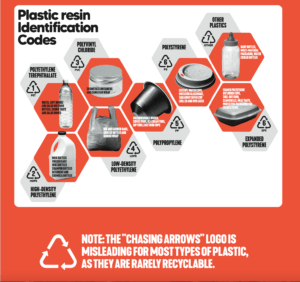
The two most commonly recycled plastics in the US include polyethylene terephthalate (PET), used in water and soda bottles, and high-density polyethylene (HDPE) that can be found in milk jugs, shampoo bottles and cleaning product containers. According to the standardized number system that identifies recyclables, these plastics are labeled numbers “1” and “2.”
However, these products are still not recycled at the rate they should be, with PET having a reprocessing rate of 20.9% and HDPE products having a recycling rate of 10.3%.
Other plastics labeled 3-7 — which are used in anything from children’s toys, plastic bags and produce wrappings to yogurt and butter containers, coffee cups and to-go container — were recycled at an even lower rate of less than 5%.
There are five basic reasons why, according to the report, that mechanical and chemical recycling is failing. It has “largely failed” so far and will “always fail”, it says, because plastic waste is:
(1) extremely difficult to collect,
(2) virtually impossible to sort for recycling,
(3) environmentally harmful to reprocess,
(4) often made of and contaminated by toxic materials, and
(5) not economical to recycle.
As a result, far more plastic in the US is incinerated than recycled, which means considerable CO2 emissions are produced.

First, plastic is extremely difficult to collect
This is shown through continuous volunteer clean-up stunts by organizations like Keep America Beautiful that prove to be ineffective in solving the problem despite happening time and time again.
As anyone can see, tons of used plastic bottles, bags and other objects continue to invade beaches and other public areas. In Tennessee’s Chattanooga River, plastic pollution continues to be rampant despite continual cleanups.
Second, mixed plastic waste cannot be recycled together
Unfortunately, mixed plastic waste requires differentiated treatment for recycling. This is because, as noted in the report, different plastics have different melting points, dyes and chemical activities. Each requires a different breakdown process — which in essence means sorting.
The problem, as the report notes, is present in Europe too. Plastics Recyclers Europe, an organization representing plastics recyclers, is mentioned, observing in June 2022 that “a lack of sorted plastics is undermining the businesses of European recyclate producers and the shortage is negatively impacting the operations of plastics recyclers across Europe” (bolding added)
In the US, The Recycling Partnership admits that “in today’s system, upwards of 15% of all the PET bottles that enter a MRF never come out the other side” meaning the majority are not properly sorted and therefore wasted.
The problem is handled differently (and more radically) in other countries. Since 1992, all beverage companies in Japan have been using PET #1 products and in 2020, South Korea enacted a ban on all colored PET #1 products.
Three: Plastic recycling is wasteful, polluting and a fire hazard
At this level, problems are not limited to any particular country or to consumers as a group but also concern the whole environment, including workers and local authorities.
Researchers at Leeds University in the United Kingdom conducted a review of over 4,000 sources of information to determine the risks of toxins in recycled plastics and the risks communities and workers could experience because of these toxins. The review found that workers were in fact exposed to toxins in mechanical plastic recycling operations.
Another Leeds U. and Brunel U. study published in 2020 concluded that plastic packaging waste recycling efforts in England were “stifled by regulatory and technological ‘lock-in’”: It found that the current system disadvantages “local authorities and discourages efforts to invest in green infrastructure to exploit technological change”.
So what are the problems?
Plastic is also highly flammable. In August 2022, 39 neighbors of a plastic recycling facility in Dallas, Texas, filed a lawsuit against Poly America for the toxic health impacts caused by a fire burning plastics for 23 hrs in August 2020.
Four: Plastic recycling poses huge toxicity risks
Billions of plastic per year used for food service can’t be recycled back into food service products because they are too toxic.
Unlike glass or metal, plastic is not inert, therefore can contain toxic additives or absorb chemicals. Additionally, plastics are collected in curbside bins, which can be filled with toxic materials like plastic containers used to store pesticides or motor oil — making it almost impossible to rid plastics of toxic chemicals entirely.
This leaves only two options for plastic that is too toxic to recycle:
(1) downcycling the plastic into lower-value products or
(2) disposing it in landfills or incineration: which adds to pollution and CO2 emissions
Five: Plastic recycling is not a good economic proposition
The final reason plastic has failed is because it isn’t economical.
The report states, “New plastic directly competes with recycled plastic, and it’s far cheaper to produce and of higher quality.” This is the crux of the problem.
The report argues that the “basic economic premise of the ‘circular economy of plastics’ is false”. The Ellen McArthur Foundation claimed in 2016 that “After a short first-use cycle, 95% of plastic packaging material value, or USD 80–120 billion annually, is lost to the economy.” Unfortunately, a profit-and-loss calculus shows as the cost of inputs into plastic production spirals down, more new plastic is produced.
As noted in the report:
“Since new plastic is cheaper and higher quality than recycled plastic, product companies will continue to buy new plastic instead. At the fifth session of the UN Environment Assembly in early 2022, Unilever (a British multinational consumer goods company) admitted that it wouldn’t increase its use of recycled plastic if the price was much higher than that of new plastic.”
Are countries seeking other solutions?
As recycling’s flaws become increasingly more apparent, there are several countries that have already taken steps to reduce the root source of the problem: plastic itself.
In 2021, the Canadian government drafted Single-Use Plastics Prohibition Regulations, aiming to prohibit the manufacture, import and sale of six categories of single-use plastics.
China has banned single-use plastic bags, utensils and straws in cities since 2021.
Other countries such as Chile, Egypt, Fiji, Ghana and India have taken steps to eliminate single-use plastic.
Countries like Indonesia, Japan, Kenya, Mexico, Namibia, the Netherlands, Norway, Palau, Portugal, Russia, Seychelles and Spain have taken initiatives to either eliminate plastic or mitigate plastic waste.
The United States has also taken steps to reduce plastic waste.
In individual states like California, D.C. and Florida several forms of single-use plastic such as plastic bags and straws have been banned. Although these bans on single-use plastic have only occurred at the state level so far — the federal government has yet to take initiatives against eliminating single-use plastic.
In 2021, the U.S. Environmental Protection Agency also shared a National Recycling Strategy aimed to increase recycling by 50% by 2030. However, these attempts are meager at best in fixing the problem, as the latest Greenpeace report proved plastic recycling ultimately doesn’t work and only fuels plastic waste; in short, it is extremely ineffective.
Instead of continuing to fuel the production of plastic products by relying on recycling, the best solution is to stop plastic pollution at the source — which many countries have already taken step to do.
Plastic recycling – unlike the recycling of other materials, like glass or cloth – has never been a solution. Plastic recycling is only an easy fix for corporations that are too lazy to invest in sustainable solutions.
It is time for countries to stop feeding into the myth of recycling plastics and look into funding sustainable solutions that could replace single-use plastic – and indeed all types of plastics – for a healthier future.
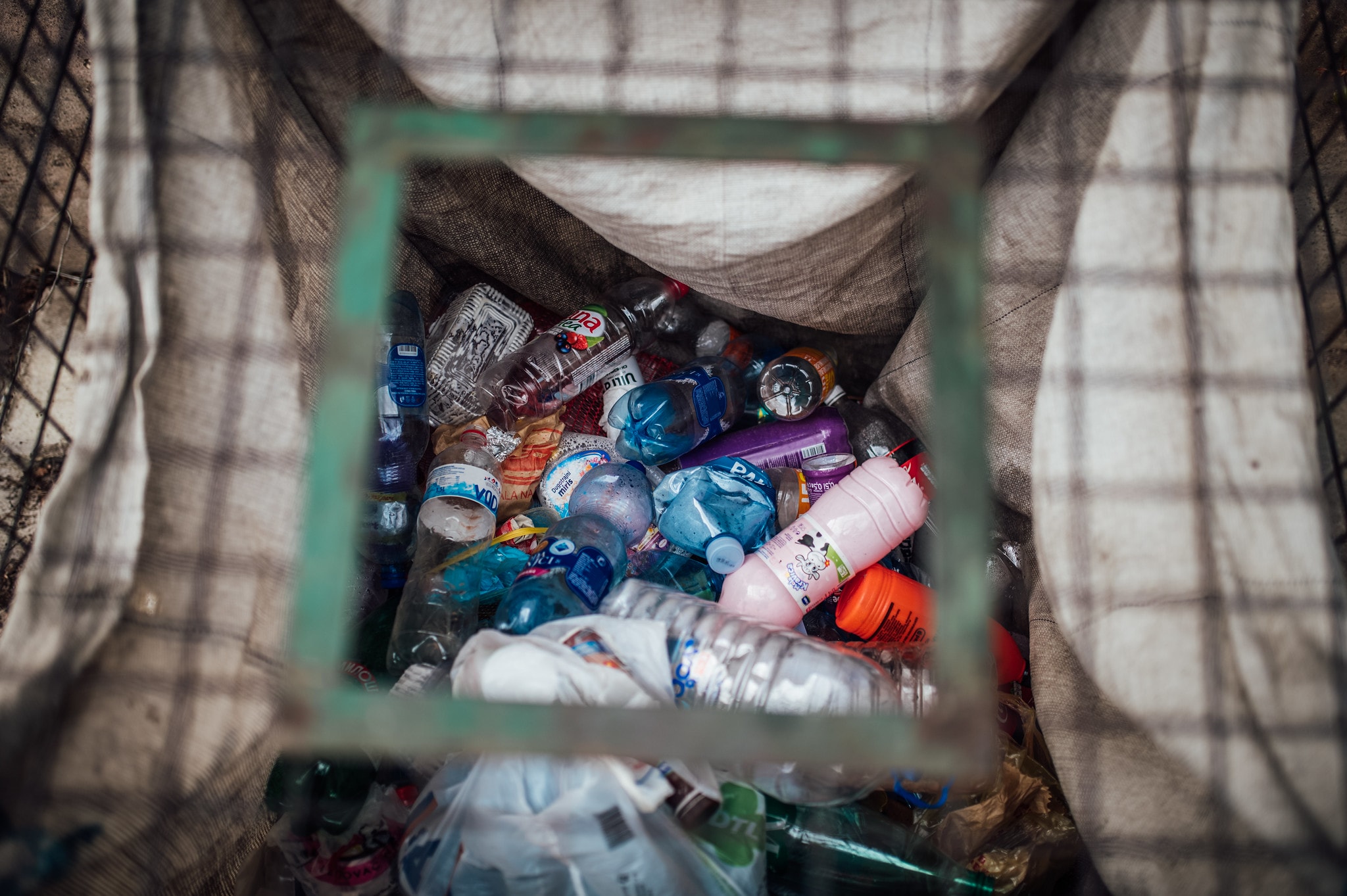
Editor’s Note: The opinions expressed here by the authors are their own, not those of Impakter.com — In the Featured Photo: Plastic bottles in plastic-only recycling bin on April 16, 2021. Source: Ivan Radic, Flickr.