Impakter
  • Environment
    • Biodiversity
    • Climate Change
    • Circular Economy
    • Energy
  • FINANCE
    • ESG News
    • Sustainable Finance
    • Business
  • TECH
    • Start-up
    • AI & Machine Learning
    • Green Tech
  • Industry News
    • Entertainment
    • Food and Agriculture
    • Health
    • Politics & Foreign Affairs
    • Philanthropy
    • Science
    • Sport
  • Editorial Series
    • SDGs Series
    • Shape Your Future
    • Sustainable Cities
      • Copenhagen
      • San Francisco
      • Seattle
      • Sydney
  • About us
    • Company
    • Team
    • Global Leaders
    • Partners
    • Write for Impakter
    • Contact Us
    • Privacy Policy
No Result
View All Result
Impakter logo
No Result
View All Result
How COVID-19 Threatens People Living in Poverty in India

How COVID-19 Threatens People Living in Poverty in India

Manoj Gulati – Managing Director – India, Water.orgbyManoj Gulati – Managing Director – India, Water.org
August 11, 2020
in Editors' Picks, Global Leaders, SDG Series
0

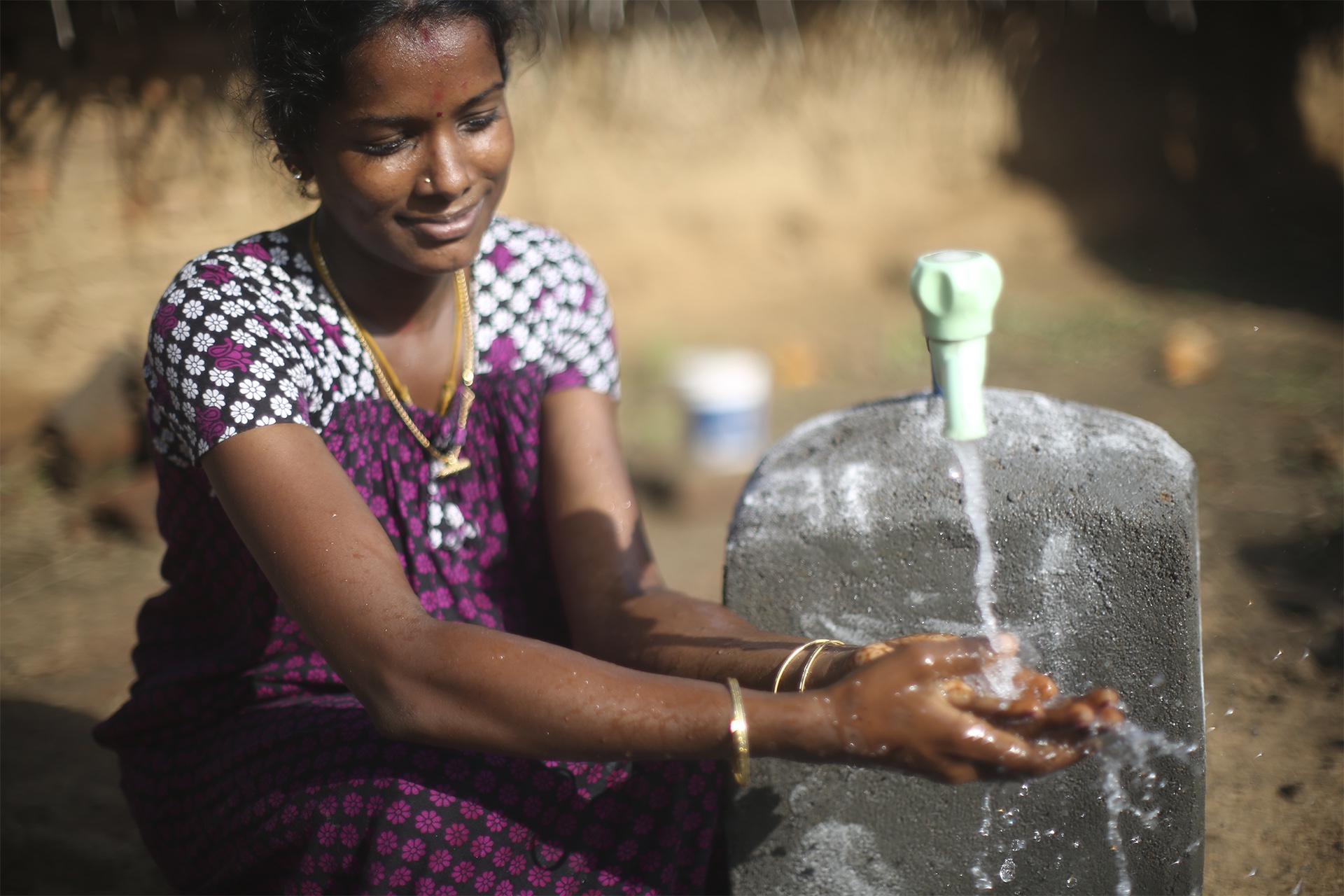
Water touches everything and this pandemic is no exception. Safe water and improved sanitation at home are more than a convenience. They can save lives. There are significant ramifications on the health and survival of households particularly in impoverished communities where access to safe water and sanitation is limited or non-existent. The virality of this pandemic highlights the critical need for increased investment to accelerate access to safe water and sanitation for all. If we are to reduce the impact of this and future pandemics, we must ensure these two vital needs are met in countries around the world.

Water.org Banner

Since 2005, Water.org has played a significant role in India’s progress toward improved water, sanitation, and hygiene. By partnering with different organizations, including microfinance institutions, self-help group federations, housing finance corporations, commercial banks, payment banks, social enterprises and the Government of India, we have empowered more than 13 million people across twelve states with access to safe water or sanitation.

With Swachh Bharat leading the way, we have contributed to policy changes which incentivize lending for water and sanitation, partnered with government agencies at the national and state levels and advocated to various financial institutions to create water and sanitation products. Overall, this partnership has helped make record progress in building the solutions to achieve sanitation for all.”

— Gary White and Matt Damon, Co-founders, Water.org The Swachh Bharat Revolution

Our impact in India supports Prime Minister Modi’s initiatives to prioritize water and toilets for every home in the country. In 2014, he launched the Swachh Bharat Mission to accelerate efforts to achieve universal sanitation coverage. Then in August 2019, Prime Minister Modi announced the allocation of $50 billion to the Jal Jeevan Mission — this is a program designed to provide piped water to all homes in India by 2024. While these efforts remain in place, millions in India were not and are not prepared to safeguard their families from the COVID-19 pandemic.

Without access to safe water or toilets at home, families across India were already at risk of contracting infectious diseases. And now they are vulnerable to contracting or spreading another life-threatening disease, COVID-19. The perpetuation of these diseases is due partly to the lack of adequate handwashing. Like cholera, typhoid and dysentery, the novel coronavirus can spread easily when safe water and toilets are not available for washing hands and containing waste.

Here, Jeyalakshmi shares how thankful she is to have a toilet at her home during this pandemic, thanks to those who support the work of Water.org.

In the Video: Jeyalakshmi shares how thankful she is to have access to a toilet at home, especially during this pandemic.

According to the CDC, novel coronavirus spreads in many ways. Because millions of Indians have no choice but to relieve themselves in the open, according to the World Health Organization untreated waste is an even greater health risk. And, the World Bank estimates that 21 percent of communicable diseases in India are linked to unsafe water, the lack of hygiene practices like washing hands, and the lack of improved sanitation.

So, what do you do when you have no water or toilet at home? You leave home. Like many countries, in India women and children are usually responsible for the task of collecting water. Vessels in tow, they may walk a mile or more to a community well or common water stand. In doing this, they often have no choice but to wait in long lines hoping there is enough water left for them.

In the Video: Women in Balarampur village stand six feet apart waiting to fill their vessels with water. A lack of access to safe water at home is why they are here and, during this pandemic, leaving home to get water risks their health. Soon, two of these women will have water connections at home thanks to one of Water.org’s partners in India.

Women in this village wait in pre-marked circles, six feet apart, to fill their vessels with water. For each of these women, a lack of access to safe water at home is not just an inconvenience, it is life-threatening. From the time they leave their homes these wives, daughters, and mothers are exposed to the coronavirus. And though they may wear face masks, they walk potentially miles, making several trips to get the water their families need to survive. Upon return the reality is this water may not be prioritized for handwashing. After the labor required to achieve it, the priority will be that their children remain hydrated and that their food be prepared to prevent starvation.

COVID-19 is not the first and will not be the last health crisis the world will face. Resilience to future crises depends on actions taken now, as well as on policies, institutions and capacity put in place during normal times. Together we can achieve our vision of universal access to water, sanitation, and hygiene. Join us at Water.org.


Editor’s Note: The opinions expressed here by Impakter.com columnists are their own, not those of Impakter.com — Featured Photo Credit: Water.org

Tags: Clean Water and SanitationCoronavirusCOVID-19Indiapandemicsafe waterSDGsSwachh BharatToiletswaterWater.orgWHO
Previous Post

Leveraging Networks to Accelerate Progress on the SDGs

Next Post

Environmental Racism: Why Does It Still Exist?

Related Posts

ESG News regarding climate-driven agricultural disruption, extreme weather impacts on commodities, and supply chain risks. Visuals include flooded rubber plantations, farmers navigating waterlogged fields, and maps highlighting affected southern Thailand regions.
Energy

Severe Floods Threaten $140M of Thailand’s Rubber Production

Today’s ESG Updates Serentica Plans $8B Clean Energy Expansion in India: KKR-backed Serentica aims to more than double its renewable...

byJana Deghidy
November 27, 2025
One Health: Silo Barriers to Implementation and How to Overcome Them
Biodiversity

One Health: Silo Barriers to Implementation and How to Overcome Them

The One Health concept/approach must be central for governments to adopt collaborative, cross-sector policies in order to safeguard public health,...

byOne Health Initiative
November 26, 2025
ESG News regarding Cop30’s disappointing end, the G20 summit without the US, China’s Unipec fuel deal with Lufthansa, and Singapore’s Sembcorp IPO in India
Business

‘COP of Truth’ Highlights Glaring Differences in Global Climate Perspective

Today’s ESG Updates COP30 Delivers Weak Climate Deal: Global talks in Brazil ended without a plan to phase out fossil...

bySarah Perras
November 24, 2025
China Launches First Coal-to-Chemicals Plant Powered by Green Hydrogen
Business

China Launches First Coal-to-Chemicals Plant Powered by Green Hydrogen

Today’s ESG Updates China Green Hydrogen: Analysts warn overcapacity and tech shifts may force consolidation in India’s solar module industry....

byJana Deghidy
November 20, 2025
One Health
Biodiversity

Why and How to Apply the One Health Concept

One Health can be a complex and sometimes jargon-filled concept. Put simply: "One Health is the collaborative efforts of multiple...

byOne Health Initiative
November 6, 2025
financial bubble
ESG FINANCE

Waiting for a Bubble to Burst: Decoding the Next American Financial Crisis

For much of the last century, financial logic was governed by a simple, foundational rule: equities for growth, representing a...

byDeepanshu Mohan - Professor of Economics and Dean, IDEAS, Jindal School of Liberal Arts and Humanities, O.P. Jindal Global Universityand1 others
November 5, 2025
Global Action Plan on Biodiversity and Health
Biodiversity

Global Action Plan on Biodiversity and Health: Why Implementation Can’t Wait

Last October, after six years of deliberation, the world adopted the Global Action Plan on Biodiversity and Health. The Plan...

byJessica Bridgers - Deputy CEO, World Federation for Animals
October 31, 2025
ESG news regarding US $80 billion nuclear investment, European Ombudsman probing European Commission over transparency, India expanding solar manufacturing, and Jordan receiving $295 million from Green Climate fund for water project
Business

U.S. to Invest $80 Billion in Nuclear

Today’s ESG Updates New Nuclear Plants to be Constructed in U.S.: The Trump Administration and Westinghouse Electric Company announced an...

bySarah Perras
October 30, 2025
Next Post
Environmental Racism: Why Does It Still Exist?

Environmental Racism: Why Does It Still Exist?

Recent News

SaaS customer acquisition platform

Why Customer Acquisition Matters for SaaS

December 8, 2025
Plastic Can Now Help Spread Diseases

Plastic Can Now Help Spread Diseases

December 8, 2025
ESG news covering EFRAG's new ESRS Knowledge Hub, Bank of England's private equity climate stress test, Singapore's green-power data centre rules, and Amazon's climate dispute with rivals.

Europe Boosts ESG Transparency With New ESRS Knowledge Hub

December 8, 2025
  • ESG News
  • Sustainable Finance
  • Business

© 2025 Impakter.com owned by Klimado GmbH

No Result
View All Result
  • Environment
    • Biodiversity
    • Climate Change
    • Circular Economy
    • Energy
  • FINANCE
    • ESG News
    • Sustainable Finance
    • Business
  • TECH
    • Start-up
    • AI & Machine Learning
    • Green Tech
  • Industry News
    • Entertainment
    • Food and Agriculture
    • Health
    • Politics & Foreign Affairs
    • Philanthropy
    • Science
    • Sport
  • Editorial Series
    • SDGs Series
    • Shape Your Future
    • Sustainable Cities
      • Copenhagen
      • San Francisco
      • Seattle
      • Sydney
  • About us
    • Company
    • Team
    • Global Leaders
    • Partners
    • Write for Impakter
    • Contact Us
    • Privacy Policy

© 2025 Impakter.com owned by Klimado GmbH