
As of Jan. 1, 2023, France will ban single-use plates, cups, and cutlery for meals consumed on-site in restaurants with 20 seats or more, in a bid to cut down on packaging waste. This comes amid a tightening of the AGEC law, France’s anti-waste law for a circular economy. Although this applies to any kind of restaurant, including school and work-place canteens, the biggest impact will be seen in the fast-food industry. The automatic printing of paper receipts will also be banned, though they will still be available to customers upon request.
Fast-food generates 180,000 tons of packaging waste in France each year. Furthermore, 40% of plastics and 50% of paper used in the European Union (EU) is destined for packaging, making packaging one of the main users of virgin materials. With this in mind, the government hopes that this new directive will significantly reduce cardboard and plastic consumption and waste in France. However, this law only applies to meals consumed on-site, and takeaway meals will continue to be sold in disposable packaging.
In France, a lot of familiar brands will be affected by the packaging ban, including McDonald’s, Burger King, Subway, and Starbucks. Many of these companies have been trialling reusable on-site tableware for months in order to meet the deadline of the new year.
absolutely *loving* the design of this reusable packaging that's being introduced at mcdonalds france pic.twitter.com/kDSsNS5Xnz
— juan (@juanbuis) November 19, 2022
Activists from various environmental groups in France, however, including Surfrider, Zero Waste France and No Plastic in My Sea, have voiced concerns in their open letter that the packaging ban will be inadequately enforced, and that fast-food companies may ignore it entirely, citing the energy crisis as an excuse.
This restriction is no mean adjustment for many fast-food restaurants. Re-usable tableware means companies will have to hire more staff, both to wash the dishes and to explain to customers that cups, dishes, and cutlery now need to be separated from the rubbish. Some have had to remodel kitchens in order to make space for the extra dish-stacking, storage, and washing that will need to happen. Business models that previously relied on disposable packaging are now having to re-evaluate.
Related Articles: Seven Out of 10 People Want Binding Global Rules to End Plastic Pollution, Survey Finds | 4 Ways to Reduce Plastic Pollution | Ending Plastic Pollution: Talks on the First Global Treaty Begin | Interview with SUSSO: Sustainable Solutions to Single-Use Plastic
This development is just one step in France’s AGEC plan to ban all single-use plastic waste by 2040. In 2021, France banned free plastic bottles, plastic confetti, and single-use plastic bags. In 2022, they cut back on plastic packaging for fruits and vegetables, as well as the distribution of free plastic toys for children as part of a menu.
More and more countries across the world are looking to tackle the plastic pollution problem, as can be seen by UN member states adopting a resolution at the UN Environment Assembly (UNEA) in Nairobi, Kenya, to negotiate a Global Treaty on Plastic Pollution earlier this year. In Europe, France is often seen as leading the charge on the EU’s 2019 Single-Use Plastics Directive.
The EU’s directive was imagined to ban the ten items most commonly found on beaches, alongside fishing gear, that represent 70% of all marine litter in the EU. This included plastic cotton buds, cutlery and plates, straws, balloon sticks, disposable cups, polystyrene food and drink containers, cigarette butts, plastic (including oxo-degradable plastic) bags, and wet wipes and sanitary items. All EU member states were expected to have effectively banned these objects by July 2021. The majority of states, however, had not.
Currently, the EU is looking to expand this list, to include bags and nets used to wrap food in supermarkets, and small shampoo bottles and other beauty products distributed in hotels. They also want all member states to set up deposit return systems for plastic cans and bottles.
🙅 Waste no more.
A packaging waste solution is here – with our new proposals to:
🔹 prevent the generation of new waste,
🔹 boosting reuse and refill of packaging,
🔹 make all packaging recyclable by 2030.Our #EUDataCrunch reflects this shift to #CircularEconomy
— European Commission (@EU_Commission) November 30, 2022
However, implementation of existing measures has already been slow. In September 2022, Seas at Risk, an association of European environmental organisations, cooperated with the Rethink Plastic Alliance and the Break Free From Plastic movement to assess EU countries’ progress in adopting national measures to phase out single-use plastics in line with the Single-Use-Plastics Directive.
They found progress for a number of countries, with Luxembourg, Cyprus, Slovenia, Latvia, Denmark, and Portugal joining Greece, France, and Sweden as top performers. The press release dubbed Finland and Poland as “laggards,” and found that Croatia, Slovakia, Bulgaria, Romania, and the Czech Republic had not shown “sufficient ambition,” while Netherlands, Germany, Austria, Estonia, Romania, Hungary, and Belgium were included among those who had “overlooked key measures.” Italy was singled out for defying the Directive by exempting biodegradable plastics from some of its measures.

Although the efforts of EU countries to ban plastic waste advanced significantly since 2021, Seas at Risk found that most EU governments had left it to plastic and packaging manufacturers to fulfil the awareness raising part of the Directive. This is insufficient, due to “intrinsic conflict of interest.”
At the same time, even when bans had come into effect, they often were not adequately enforced. Gaëlle Haut, Surfrider Europe Foundation’s EU affairs coordinator, remarked that a number of ostensibly “banned” items were still to be found commonly on supermarket shelves in EU countries.
In response to insufficient implementation of the Directive, the European Commission issued letters of formal notice to Denmark and France, and reasoned opinions to Belgium, Croatia, Estonia, Ireland, Latvia, Poland, Portugal, Slovenia, and Finland.
Even if progress is slow, France isn’t the only EU country bringing in anti-plastic legislation in 2023 with its packaging ban. As of the new year, Spain has approved a tax on the manufacture and importation of non-reusable plastic packaging at €450 per tonne. Italy is introducing a similar tax on virgin plastic used in the manufacturing or importation of single-use products, although it is suspended for 2023 until further notice.
Finally, Poland, Germany, and Sweden have all announced that they will be implementing new plastic-based legislation soon.
While it would have been even more welcome news if other EU member states were following suit, and especially if they had met their 2021 deadlines, France’s disposable packaging ban for food consumed in restaurants with 20 seats or more is still a sustainability win for Europe. It’s a much-needed step in the right direction, and hopefully one of many that 2023 will bring. Our eyes are now on all the other member states to take significant steps to check unnecessary waste in the coming year.
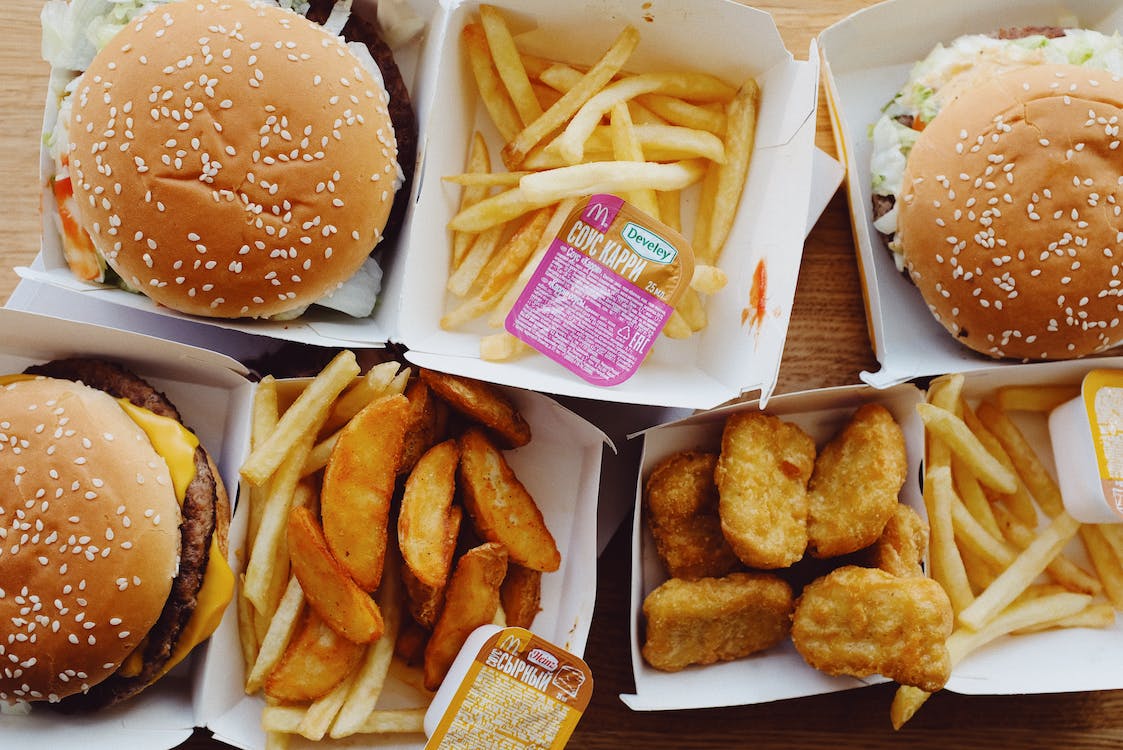
Editor’s Note: The opinions expressed here by the authors are their own, not those of Impakter.com — In the Featured Photo: Fast food on a wooden table. Featured Photo Credit: ready made/Pexels.