Donald J. Trump has been elected the next President of the United States, and the Senate and the House of Representatives will be under Republican control starting in 2025. The extent, where, and how current policies and practices will change are yet to be determined, but there are reasons to make some assumptions about the likely impact on the Federal Government, including possible elimination or reduction of regulations and conceivably all or parts of existing agencies and Departments.
The Department of Health and Human Services (HHS) touches virtually all Americans and has an enormous effect on the world at large. The current nominee for the Secretary of HHS, Robert F. Kennedy Jr., has made it clear in several interviews and articles that he intends to make major changes in the vast domain covered by HHS, undoubtedly including the Food and Drug Administration (FDA), the National Institutes of Health (NIH), the Centers for Disease Control and Prevention (CDC), and others.
How the FDA, in particular, and others under the HHS authority will deal with a potential risk to health in the form of macro, micro and nano plastics and support much-needed in-depth research in this field is an important subject going forward. Without a doubt, this time next year, things will be different.
A Brief Overview of Micro and Nano Plastics (MNPs)
Microplastics are small plastic particles less than 5mm in size, while nanoplastics are even smaller, measuring less than 100 nanometers. Both types of plastic can originate from larger plastic debris breaking down, such as bottles, synthetic fibers from clothing, and microbeads found in personal care products.
Over the last several decades, there has been an explosion in the use of plastics. The existence of MNPs has been detected in oceans, lakes, rivers, in the air, and in human food and beverages, legitimately raising concerns about their potential health risks.
Public health auhorities have moved to regulate MNPs, and here is a brief overview of how it is done in America and in Europe and other developed countries.
How MNPs are dealt with in the US: The role of the Food and Drug Administration (FDA)
The FDA is and will be critical in dealing with MNPs. Its formal position regarding micro and nano plastics (as of July 2024) is basically that, because there are no standardized methods for detecting, quantifying, or characterizing MNPs and a “lack of standardized definitions, reference materials, sample collection and preparation procedures and appropriate quality controls,” the scientific evidence is insufficient to demonstrate that such MNPs pose a risk to human health.
The FDA states, “[i]f FDA determines that levels of microplastics or nanoplastics cause food to be unsafe, the agency will take regulatory action.”
Notwithstanding, FDA regulations restrict microplastics or nanoplastics as ingredients added to foods. For plastics used in food contact applications, including packaging, processing equipment, food preparation surfaces, or cookware, all materials used in products that come into contact with food must be authorized by the FDA. In this regard, the FDA analyzes testing data to determine whether any migration of a food contact substance to food is safe.
Also the plastic recycling process for food packaging is regulated.
It should be noted that many activists believe this FDA position is likely to affect litigation challenges that allege that the presence of low levels of microplastics in food is inherently unsafe.
More Specifics on FDA Food Safety: The FDA has a primary responsibility to ensure the safety of food products and the safety and efficacy of drugs and medical devices. In addressing MNP, its role includes:
- Food contact substances, responding to food safety issues: Two acts govern the FDA role in this regard.
(1) Through the Federal Food, Drug, and Cosmetic Act (FDCA), 21 U.S.C. ch. 9, the FDA regulates materials intended for use in contact with food.
This role includes evaluating the safety of plastic materials; and, inasmuch as micro or nano plastics are found in food products and have health implications, the FDA has the authority to prohibit their presence in food.
(2) Food Safety Modernization Act (FSMA), Pub. L. No. 111-353 (2011): The FSMA focuses both on responding to food safety issues and now also on preventing them.
- Under this act, the FDA has expanded regulatory authority to address contaminants, including microplastics, that could pose risks during food production. It can utilize its inspection and monitoring capabilities to ensure compliance with safety standards.
- Investigations and Scientific Research: The FDA can research the presence of MNP in the food supply, and collaborate with other agencies, universities, and non-profit organizations to assess the extent of MNP contamination and its potential health effects.
- Drug and Medical Device Regulation: The FDA regulates pharmaceuticals and medical devices to ensure their safety and effectiveness. This responsibility extends to possible MNP contamination during manufacturing and usage. (Emerging evidence suggests that MNP may be present in some of these products.)
What happens in Europe and other developed countries:
With respect to MNPs, other developed countries, such as members of the European Union (EU), have taken positions somewhat similar to that of the FDA, albeit more proactive:
In September 2023, the European Commission adopted a restriction on microplastics regulation which will prohibit the sale of non-degradable and non-soluble synthetic polymer microparticles and of products that contain them.
Furthermore, in its Zero Pollution Action Plan, the European Commission set a target to “reduce the volume of microplastics released into the environment by 30% by 2030, compared to 2016 levels”.
In 2024, the European Commission’s Research Cluster to Understand the Health Impacts of Micro- and Nanoplastics (CUSP) put forward key messages to policymakers:
- Nanoplastics effects have been observed to be more pronounced than those of microplastics.
- Most studies conducted are short-term studies. There is a significant gap in understanding the long-term effects of MNPs on human health. More effort is needed to better establish dose-responses and modes of action.
- Future studies should be on representative MNPs of different chemical compositions, and with physico-chemical characteristics better resembling those MNPs found in the environment.
Related Articles: Plastics and Health: How We Are All Affected | UN Treaty On Plastic Pollution: A Global Action Plan| Massive Pacific Ocean Garbage Patch: Can It Be Contained? | 4 Ways to Reduce Plastic Pollution | Plastic Waste Is Creating New Communities on the Ocean’s Surface | Turning Ocean Garbage Into Green Fuel | Scientists Find Microbes That Can Break Down Plastic in the Cold | Plasticosis: A Synthetic Health Crisis Waiting in the Wings? | New UN Treaty Focused on Plastic Pollution
The role of other related HHS Departments in addressing public health issues in America
HHS plays a broad and pivotal role in addressing health threats from environmental contaminants, including MNPs.
Public Health Surveillance and Research
The CDC surveillance systems monitor health effects associated with environmental exposures, including plastics. The CDC provides data and insights that inform policy decisions by other government agencies.
The NIH supports research related to, inter alia, the health impacts of MNPs designed to understand their potential toxicity, bioaccumulation, and long-term effects on human health.
The Agency for Toxic Substances and Disease Registry (ATSDR) assesses the health risks posed by contaminants, including through studies designed to guide public health recommendations and interventions.
Challenges Facing U.S. Regulation of MNPs
Beyond HHS, multiple U.S. government entities bear on the MNP challenge, including the Environmental Protection Agency (EPA), the Department of Agriculture (USDA), and the Department of Interior’s National Oceanic and Atmospheric Administration (NOAA). These agencies are supposed to coordinate government research, analysis, and appropriate actions.
However, the regulatory landscape for MNPs presents challenges, including:
- Scientific Uncertainty: While research is ongoing, more comprehensive data on the health effects of exposure to MNPs is needed. This uncertainty has resulted in cautious pronouncements to date.
- Differing Standards: Various agencies may have different standards and criteria for assessing risks, leading to inconsistencies in regulation and enforcement.
- Emerging Technologies: As new materials and technologies emerge, the regulatory framework must adapt to address the potential risks of existing and novel plastic formulations.
What Should Be Done
Substantial authority exists in the U.S. to address known or potential risks of MNPs to health through scientific research, public health messaging initiatives, regulatory actions, and interagency collaboration.
As of today, while broadly speaking, plastic pollution has garnered increased public attention, MNPs are not yet a high priority.
The reasons are varied, whether because other topics are seen as more urgent, budgetary resources are limited, or even vociferous private sector resistance by industries with significant stakes in the continued use of plastics.
Future decisions will be in the hands of the new Administration, and in particular, the nominee for Secretary of HHS, Robert F. Kennedy Jr., if appointed and confirmed. He has highlighted his intentions to focus on unanswered health concerns, including huge, expanded numbers of autism cases in children.
Intensive financing of research into the health effects of MNPs is a significant opportunity for him and the public policy agenda to determine the causes of heightened autism. We should note that autism cases grew explosively among U.S. residents by a whopping 175% from 2011 to 2022. We do not know the reasons, but it is conceivable that MNPS could be a part. Research in this area could benefit not only knowledge of autism, but other health risks.
This month, from 25 November to 1 December, a final meeting on a Global Plastics Treaty will be held in Busan, South Korea, to address plastic pollution issue, the results of which will be available in 2025. Its outcome may offer a pathway for cooperative international health-specific MNP research. If so, it could be one that the new HHS Secretary and the health community could embrace.
** **
Richard Cooper contributed to this article.
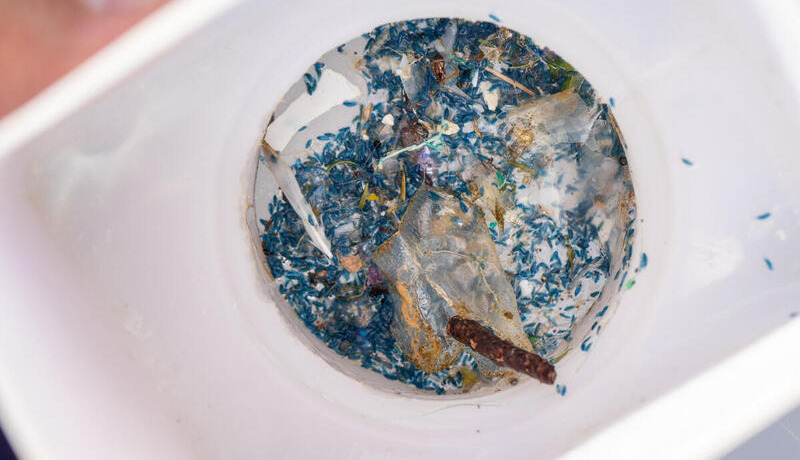
Editor’s Note: The opinions expressed here by the authors are their own, not those of Impakter.com — In the Cover Photo Credit: Greenpeace Italy returns to the Tyrrhenian Sea, in the area of the Pelagos Sanctuary, with a tour of research and documentation, exposing threats to biodiversity and to all of us in an area that should be “protected”. Onboard the ship Bamboo, owned by the Exodus association and together with the CNR (National Research Council) of Genoa, Greenpeace is exposing the impacts of the plastic and microplastic pollution. Cover Photo Credit: Greenpeace.