

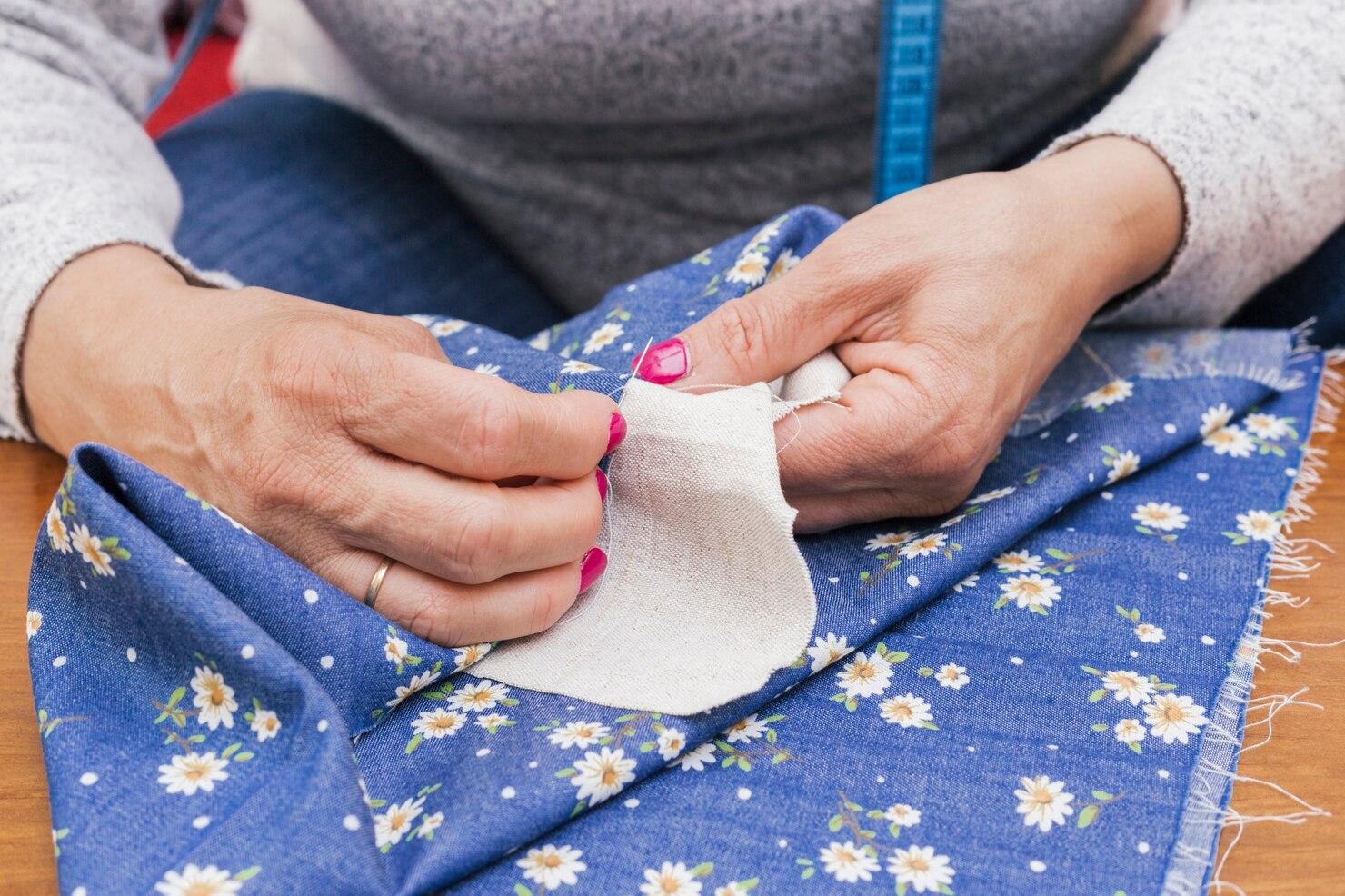
The most useful image in a mending-workshop invitation might be a worn elbow, not a pile of discarded clothes. A small patch of thinning fabric gives viewers something specific to recognise: a garment they still want to wear, with one place that needs attention. For a proposed community workshop film, my central object would be a plain wool jumper laid flat beside a contrasting fabric patch. The invitation would show a possible creative activity without claiming that one afternoon solves the wider problems of clothing waste.
The reference pack would contain approved photographs of the jumper before and after an actual repair, a close view of the thread and a picture of the workshop table. Those materials should come from the organisers or another source cleared for this use. I would keep the same garment throughout the sequence. Swapping a visibly worn jumper for a pristine one at the end could make the result look more impressive while making the repair story less truthful.
My shot plan starts with the worn area, moves to the materials and ends with the repaired elbow. It does not need a dramatic transformation in the middle. A short genuine recording of the repair, if available with permission, could supply the practical detail. Otherwise, a clear cut between documented states would be more responsible than an invented needle movement that viewers might mistake for instruction.
Within that limited brief, Seedance 3.0 could give the still references a little movement and help shape the invitation’s atmosphere. Its website presents image and text video routes alongside a multi-reference workflow. I would use those options to explore a close, patient view of the materials, while keeping the actual repair evidence separate from any generated connecting images. The point is to invite attention to a modest activity.
Make wear visible without making it look hopeless
The first frame would show the jumper diagonally across a neutral work surface, with the elbow near the centre. Soft side light should reveal the fibres without making every crease look like damage. I would avoid a dark, desaturated “before” image followed by an artificially radiant “after.” The garment is worth keeping in both states. A consistent colour treatment lets the viewer notice the repair rather than a change in the lighting.
A first Seedance 3.0 instruction could ask for a gentle approach towards the worn elbow using the supplied garment reference, with the jumper stationary and the table unchanged. Before trying it, I would check the selected model and its available controls. The output would need comparison with the photograph: the worn area must not grow, the knit should remain recognisable and the sleeve must not change shape during the move.
If the fibres drift or the fabric starts to ripple, my revision would reduce camera movement and shorten the shot. A still reference with an editorial crop may be the stronger choice for this detail. The film should not imply that a damaged area is larger than it really is simply to make the eventual repair more dramatic. That restraint is part of the story, not a technical compromise to hide.
Let the patch introduce a creative choice
The second composition would place two possible patches beside the sleeve, one close in colour and one deliberately contrasting. I would choose the contrasting patch for the proposed film because it makes the repair visible on a phone screen. A caption can explain that the workshop explores different approaches, provided that matches the organisers’ real plan. It should not suggest that every fabric or garment can be treated in the same way.
Seedance 3.0 could help test a quiet movement across the materials, but the patch design and final stitching pattern would come from the documented repair. I would keep scissors and needles still in any generated scene. If a practical demonstration is needed, a real close-up reviewed by the person teaching the class is preferable. The invitation can be visually engaging without doubling as an unverified tutorial.
Give the repaired garment the same dignity
The final garment view would match the first shot’s angle and light. The patch remains obvious, and the rest of the jumper still shows ordinary signs of use. I would leave enough time for a viewer to recognise the same sleeve and see what changed. A quick flash of the finished object would waste the strongest part of the film: a familiar item has acquired a new detail rather than been replaced by something unrelated.
In the edit, a brief text card could identify the sequence as an example repair. There would be no invented carbon-saving figure, landfill counter or claim that the video itself is environmentally neutral. Those assertions would require evidence beyond these images. The Seedance 3.0 material would support the visual invitation; it would not provide proof of an environmental outcome or substitute for the organisers’ factual information.
Spend production effort on clarity
My initial budget would cover only the opening garment scene and a materials shot, with the finished repair shown through the approved photograph if necessary. Reviewing Seedance 3.0 Pricing would help align the current plan terms with that scope. I would not keep generating near-identical alternatives once the sleeve is readable and the transition makes sense. More imagery is not automatically a better explanation.
The soundtrack could use quiet room ambience and a small amount of cleared music. A recorded sewing sound should correspond to what is actually shown, rather than make a stationary patch sound like a machine demonstration. Captions would carry the essentials for people watching without audio. Workshop dates, venue details and booking instructions belong in editable graphics added afterwards, so a correction does not require remaking the garment scenes.
The proposed deliverable is a short invitation, a captioned version and an editable closing card. Seedance 3.0 can help explore the rhythm between the approved references, while the final film keeps one ordinary jumper at its centre. I would want a viewer to come away imagining a garment they might bring along, with a clear understanding of the activity and no exaggerated promise about what a single repair can accomplish.
Editor’s Note: The opinions expressed here by the authors are their own, not those of impakter.com