Impakter
  • PARTNERS
  • ABOUT US
    • Our Story
    • Team
    • Write for Impakter
    • Contact Us
    • Privacy Policy
No Result
View All Result
  • Climate
  • Business
  • Energy
  • Tech
  • Politics
  • Health
  • Food & Agriculture
  • Society
  • Climate
  • Business
  • Energy
  • Tech
  • Politics
  • Health
  • Food & Agriculture
  • Society
No Result
View All Result
Impakter
No Result
View All Result
Air pollution in India.

Air pollution in India, Oct. 26, 2022. Photo Credit: Saakshi Yadav.

Linking Health and Climate Action: 5 Recommendations for COP31

byInternational Institute for Sustainable Development (IISD)
June 29, 2026
in Climate Change, Energy, Health

Health will be on the agenda this November when climate negotiators arrive in Antalya, Türkiye for the 31st United Nations Climate Change Conference (COP31). Specifically, the COP31 Presidency has added “Dynamic and Resilient Health Systems” as a priority theme for their Action Agenda, noting that “health systems must undergo a structural transformation that enables them to anticipate, absorb, adapt to, and recover rapidly from climate-related shocks.”


The elevation of health to a headline item for the Antalya COP builds on the first Health Day marked by a climate COP at last year’s conference in Belém. It also strongly links to outcomes at the historic First Conference on Transitioning Away from Fossil Fuels, where a coalition of progressive countries met in Colombia to consult on practical tactics to speed a just energy transition.

In Santa Marta, national representatives, health advocates, and civil society leaders met in a breakout session co-hosted by the Global Climate and Health Alliance, the Lancet Countdown, the Colombian Ministry of Health, and the Friends of Climate and Health. Participants were invited to shape clear, actionable messages on the links between the health sector and the energy transition, which were then forwarded to governments attending the conference. From their expert input, five pillars emerged that countries and COP31 should build on to link their health and climate agendas.

1. Move From an “Energy Transition” to a “Systemic Transformation”

Climate action must go beyond the simple substitution of energy sources and advance toward a structural transformation of economic systems that depend on fossil fuels. This requires rethinking current models of production and consumption, while promoting more efficient and sustainable uses of energy both as a resource and as a raw material.

Such an approach should place health, well-being, and equity at the center of the transition, while also acknowledging the pervasive role of fossil fuel–based products across nearly all sectors of modern life and daily consumption.

2. Place Health at the Heart of the Climate and Just Transition Agenda

Health should not be understood only as a co-benefit, but as a central result of the transition. Integrating health metrics and indicators into just transition frameworks strengthens equity, improves the effectiveness of public policies, complements economic analyses, and increases social support for decarbonization measures.

In this sense, the transition must be built from a fair, territorialized approach and centred on a concept of well-being for people, communities, and the environment.

3. When Evaluating Health Impacts, Examine the Entire Fossil Fuel Value Chain

National policies should address not only the impacts associated with emissions related to energy use, but also the climate-related health impacts of fossil fuel derivatives, including petrochemicals, plastics, and fertilizers. Their impacts are currently underestimated despite their significant risks.

tractor spraying fertilizer on plants in an agricultural field
A tractor spraying fertilizer on plants in an agricultural field. Photo Credit: James Baltz.

4. Align Finance, Fiscal Policy, and Evidence With Real Health Costs and Benefits

Decision making must reflect the true socio-environmental and health costs of inaction, as well as the economic and health benefits of action. This involves reforming subsidies, evolving tax systems beyond carbon-only approaches, and integrating health data into investment frameworks. These elements should also be incorporated into subsidy analysis and models used to design roadmaps and prioritize the necessary national transformations.

Related Articles

Here is a list of articles selected by our Editorial Board that have gained significant interest from the public:

  • Turning the Corner on Deforestation?
  • How the EU’s Deforestation Regulation Could Affect the Coffee Industry
  • FAO Report: Global Deforestation Slows, but Forests Remain Under Pressure

5. Close Evidence, Communication, and Capacity Gaps to Better Highlight Health

Bridging the gap between technical knowledge and decision making requires greater investment in research, transparent health data systems, decarbonization and climate, and accessible communication. Investing in and strengthening diverse spokespersons — including health professionals and communities — is key to countering climate misinformation and accelerating climate action.

** **

This article was originally published by the International Institute for Sustainable Development (IISD) and is republished here as part of an editorial collaboration with the IISD. It was authored by Margarita Guiterez and Lynn Wagner.


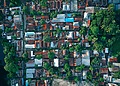
Editor’s Note: The opinions expressed here by the authors are their own, not those of Impakter.com — In the Cover Photo: Air pollution in India, Oct. 26, 2022. Cover Photo Credit: Saakshi Yadav.

Share
WhatsApp LinkedIn X Facebook
Tags: 31st United Nations Climate Change ConferenceClimateClimate ActionClimate ChangeCOP31energy transitionFirst Conference on Transitioning Away from Fossil FuelshealthIISDJust Transition
Previous Post

Capturing Fog to Make Water

Next Post

EU Adopts New Wildfire Preparedness Strategy

International Institute for Sustainable Development (IISD)

International Institute for Sustainable Development (IISD)

The International Institute for Sustainable Development (IISD) is an award-winning, independent think tank championing research-driven solutions to the world's greatest challenges. Our vision is a balanced world where both people and the planet thrive; our mission is to accelerate the global transition to clean water, fair economies and a stable climate. With offices in Winnipeg, Geneva, Ottawa and Toronto, our work impacts lives in nearly 100 countries.

Next Post
ESG news regarding EU wildfire preparedness, Britain's new water-saving campaign, Deep Sky's first direct air capture carbon credits, and the UK's tougher approach to Russia sanctions enforcement.

EU Adopts New Wildfire Preparedness Strategy

Related News

ESG news regarding Greek agricultural aid, honeybee climate resilience, Germany's chemical industry, and Google's U.S. solar project.

Commission Approves €41 Million Aid for Greek Farmers

July 16, 2026

Are We There Yet? A Review of ‘Nature’s Echo’ and ‘Here Comes the Sun’

July 16, 2026

Impakter informs you through the ESG news site and empowers your business CSRD compliance and ESG compliance with its Klimado SaaS ESG assessment tool marketplace that can be found on: www.klimado.com

Registered Office Address

Klimado GmbH
Niddastrasse 63,

60329, Frankfurt am Main, Germany


IMPAKTER is a Klimado GmbH website

Impakter is a publication that is identified by the following International Standard Serial Number (ISSN) is the following 2515-9569 (Printed) and 2515-9577 (online – Website).


Office Hours - Monday to Friday

9.30am - 5.00pm CEST


Email

stories [at] impakter.com

By Audience

  • TECH
    • Start-up
    • AI & MACHINE LEARNING
    • Green Tech
  • ENVIRONMENT
    • Biodiversity
    • Energy
    • Circular Economy
    • Climate Change
  • INDUSTRY NEWS
    • Entertainment
    • Food and Agriculture
    • Health
    • Politics & Foreign Affairs
    • Philanthropy
    • Science
    • Sport
    • Editorial Series

ESG/Finance Daily

  • ESG News
  • Business

About Us

  • Team
  • Partners
  • Write for Impakter
  • Contact Us
  • Privacy Policy

© 2026 IMPAKTER. All rights reserved.

No Result
View All Result
  • Climate
  • Business
  • Energy
  • Tech
  • Politics
  • Health
  • Food & Agriculture
  • Society

© 2026 IMPAKTER. All rights reserved.