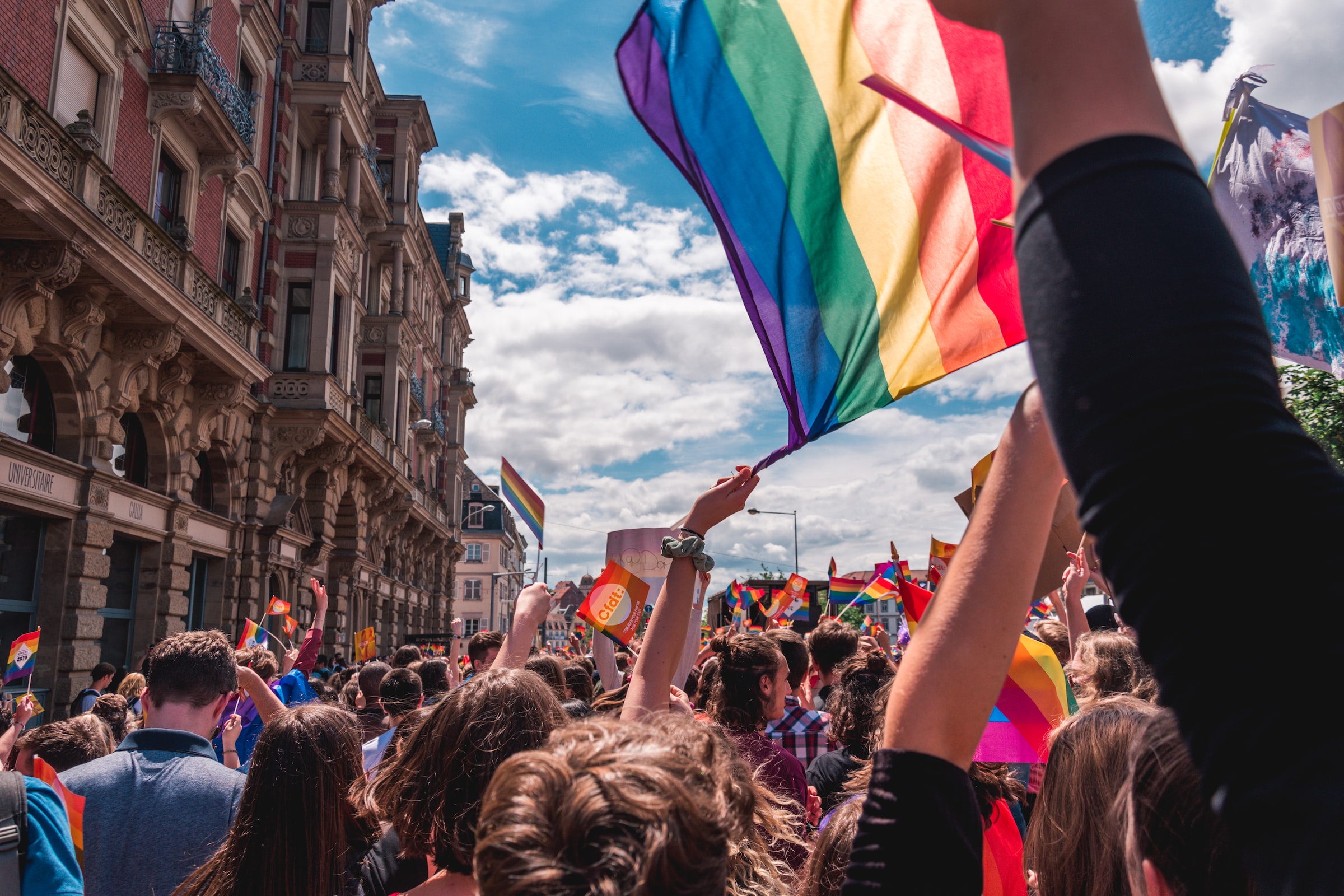
Throughout the year in which conversations surrounding LGBTQ+ rights were to a veritable extent reinvigorated by Qatar’s controversial hosting of the FIFA World Cup, the European Union (EU) witnessed a range of changes that in some cases brought a more equitable and inclusive society closer to reality, and in others fuelled the prejudice LGBTQ people continue to face across the globe.
With regards to which countries are leading the way, the 2022 “Rainbow Europe” chart, an annual report compiled by ILGA-Europe, awarded Malta the title of the best country in Europe for LGBTQ rights for the sixth consecutive year.
Denmark was positioned as second on the chart, having risen seven places this year, and at the bottom of the table, cited as being the worst EU member states for LGBTQ rights, were Poland, Bulgaria, and Romania.
This chart was constructed through the analysis of the many LGBTQ-related policies, laws, and practices established by each of the 49 European countries in 2022.
And indeed, across the EU the markers of progression, stagnation, and regression in terms of LGBTQ rights have been prolific, with the following being but a few of those that marked the bloc this year.
This Bill represents an important moment for trans people in Scotland — where LGBT people can feel safe, respected & included.
I ended my speech with personal testimony, urging members to vote for the reforms. We improve things for everyone when we act as allies, not opponents🏳️⚧️ pic.twitter.com/0bgFqXyOVA
— Shona Robison MSP (Dundee City East Constituency) (@ShonaRobisonMSP) December 22, 2022
Spain & Scotland
Just this month lawmakers in Spain and Scotland passed gender self-determination bills that will allow citizens over 16 to change their legally registered gender without the medical diagnosis of gender dysphoria.
In Spain, the lower house of Parliament concluded that whilst minors between the ages of 12 and 13 will need a judge’s authorisation to legally change their gender, and those from 14 to 16 will have to be accompanied by their parents or guardians, those 16 or older will be able to make the legal change independently and with ease.
This new ruling, if passed by the Senate, will also discard the requirement that those wanting to change their legal gender would need to supply proof that they had been living as the gender they identified with for at least two years.
In Scotland, the bill that was passed 86 to 39 will lower the minimum eligibility age for a Gender Recognition Certificate from 18 to 16, whilst also enabling young people to transition by self-declaration and without a medical diagnosis
Under the new bill, the Gender Recognition Certificate will be accessible to those who have lived in the declared identity for only three months, or six months if the person is aged between 16 and 17.
Scotland’s legislation could still be blocked by Royal Assent should the UK government deem that the law conflicts with UK-wide equalities legislation.
This is a power that has never been used before, but with a significant number of MPs and British Prime Minister Rishi Sunak expressing concerns regarding what the consequences of the bill could be “for women and children’s safety in the rest of the UK,” this obstruction may be inbound.
Should the bills go undisputed however, they could become law within weeks.
With this the two nations would join over a dozen countries that have adopted similar legislation to facilitate easier gender transitions, particularly with regards to young people.
Spain 🇪🇸 just passed a landmark law that expands protections for LGBT people.
Given the politicization of transgender rights in Europe, it is significant that it allows for legal gender recognition for trans people based on self-determination.💯 pic.twitter.com/L4b5bYjKWw
— Cristian González Cabrera (@cristianfergo) December 22, 2022
Italy
Italy regularly ranks amongst the worst in western Europe for LGBTQ rights, and it seems that under Giorgia Meloni’s newly appointed far-right government, very little change is to be expected.
Meloni’s attitude of ambivalence regarding LGBTQ+ rights was clarified to the public as, during her election rally, 24-year-old Marco Marras walked on stage holding a rainbow flag, asserting that he wanted to be able to get married and raise a family in Italy.
Related Articles: ‘Sin, Sodomy, and Darkness’: The Enlarged Scope of Russia’s New Anti-LGBTQ Law | Extreme Right Wins in Italy: Meloni First Woman to Become Prime Minister
Marras received the response of “You want a lot of things […] you already have civil unions” from Meloni, in a belittling negation of the just desires of queer people in Italy to have access to the same rights as those in heterosexual relationships.
Whilst the new Prime Minister has repeated that she is not homophobic and will not attempt to repeal the civil unions law, there are concerns that her leadership and refusal to advocate for LGBTQ rights will trigger a rise in homophobic attacks.
Bulgaria
In May 2022 a Bulgarian court ordered authorities in the capital city of Sofia to issue a birth certificate to “baby Sara,” whose parents, a lesbian couple from Gibraltar and Bulgaria, took the matter to the Court of Justice of the European Union (CJEU) after they were denied legal documents recognising both women as the child’s mothers.
Prior to this case, in which “baby Sara” was left “stateless” after being born in Spain and denied a Bulgarian passport or other legal document required to travel home, birth certificates in Bulgaria were limited to a mother and a father.
Same-sex marriages remain illegal in Bulgaria, but in this critical legal battle the CJEU ruled in favour of freedom of movement for LGBTQ families in the EU.
This was followed by the Bulgarian court’s decision to grant Sara an identity card or passport that allows the family to leave Spain and return home.
Denitsa Lyubenova, the couple’s legal representative, referred to the case’s conclusion as a landmark step for the LGBTQ+ community.
“After years of tireless work we have won a step in the fight for equality,” Lyubenova said.
Our office and LGBTI community center in #Sofia – Rainbow Hub, was attacked tonight during a #trans community gathering. The leader of the attack Boyan Rasate is well known for his LGBTI-phobic actions and statements, and is currently running for President in #Bulgaria (read ⬇️) pic.twitter.com/StwibomFGL
— Bilitis Foundation 🏳️🌈 (@BilitisLGBTI) October 30, 2021
Hungary
The European Union have made repeated attempts in recent years to rein in Hungary’s Prime Minister, Viktor Orbán, and his government, as Budapest continues to take deliberate steps away from the cornerstones of Western democracy.
The standoff intensified this year as Hungary was referred by the European Commission to the Court of Justice of the EU in July over an oppressive law that puts both LGBTQ rights and media freedoms in danger.
This law banned the depiction of homosexuality or sex reassignment in media targeting children and forbade the teaching of information regarding homosexuality in school sex education.
Such retrenchment of media freedoms has long been criticised by the European Commission, who stated that “the law violates the internal market rules, the fundamental rights of individuals (LGBTIQ people) as well as – with regard to those fundamental rights – the EU values.”
This referral forms part of the larger EU argument that Hungary has not progressed enough following the infringement procedure launched by the Commission against the country in July 2021.
The contention currently stands with the EU having frozen nearly €22 billion of cohesion funds earmarked for Hungary until the country resolves concerns surrounding the protection of human rights and the rule of law.
Some Republicans and right-wing voices are praising Prime Minister of Hungary Viktor Orban and his far-right ideologies. Orban is known for pushing the Great Replacement Theory and has restricted LGBTQ rights in his country. CNN’s @SunlenSerfaty reports. pic.twitter.com/G7Oh88toav
— CNN (@CNN) July 13, 2022
It is clear in reviewing these events, which are historic not only to the nations in which they took place but to the entirety of the EU, that the battle for LGBTQ+ rights is one that requires tireless effort, as backsliding nations persistently threaten these freedoms.
However, the role that the European Commission and Courts have played in protecting such freedoms and restricting leaders like Orbán is certainly commendable.
What is perhaps equally as important to the actions of the EU’s governing bodies though, is that of the public, whose collective action demonstrated both in person and online continues to drive positive change across the bloc.
Just one example of such influential public opinion can be seen in the referendum that took place in Switzerland which, due to the 64% vote in favour, resulted in the legalisation of same-sex marriage in July of this year.
It is this combination of public and institutional advocacy for equal rights that will have the power to make 2023 a year of further successes, rebuilding EU member states with the goal of ensuring safety and equality for those marginalised for simply being themselves.
Editor’s Note: The opinions expressed here by Impakter.com columnists are their own, not those of Impakter.com. — In the Featured Photo: Strasbourg, France. Photo Credits: Margaux Bellott.