Editor’s Note: This is part I of 7 in a series dedicated to the history, culture, society, tourism, and dining in Kyrgyzstan.
From the very heart of Central Asia, a country that used to be a part of the Great Silk Road, a country with modern development and traditions of its ancient nomadic roots, Kyrgyzstan is a place that will conquer your heart and soul. One of the former USSR Republics, Kyrgyzstan is bordering with Kazakhstan, Uzbekistan, Tajikistan and China.
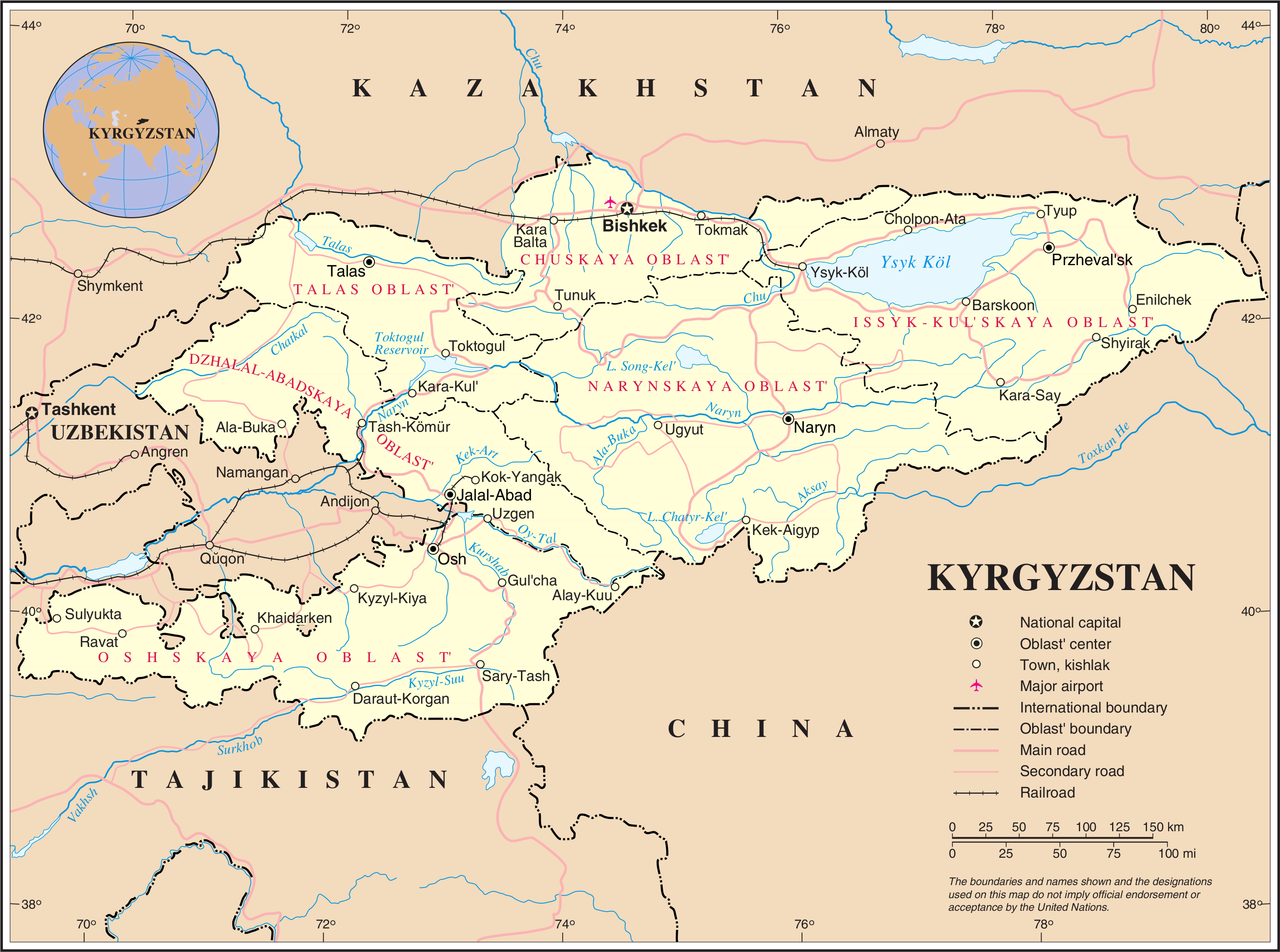
In the Photo: Kyrgyzstan on the World Map. Photo Credit: Wikipedia
The History
To learn more about Kyrgyzstan, we should start with a short history introduction.
The ethnonym “Kyrgyz” was first mentioned in Chinese chronicles in 201 B.C., when Modu Chanyu established his Xiongnu Empire, which stretched all the way to the Pamir Mountains thus subordinating the Kyrgyz domain in the Eastern Tien Shan. The biggest expansion of the Kyrgyz State happened in 841 A.D. when after a 20-years long war, the Kyrgyz defeated the Uyghurs (Uyghur Khanate) and for the next 200 years dominated over the territory. In the 13th century, the Mongol Empire began its rise and with Genghis Khan’s campaign the Kyrgyz became part of the Mongol Empire and later part of the Chengiz Khan’s second son’s Chagatai Khanate. In the 15th-16th centuries, the Kyrgyz finally gained their current ethnic character and were living in the territory of the mountains Tien Shan and Pamir-Alai.
Since the middle of 17th century to the middle of 18th century Kyrgyz people defended their independence due to the invasion of Dzungar Khanate. In the middle of the 18th century southern Kyrgyz tribes, and northern Kyrgyzin the behinning of the 19th century tribes fell under the influence of the Kokand Khanate (Uzbekistan). Nevertheless, in the end of 18th and early 19th centuries, northern Kyrgyz tribes independently began establishing contacts with Russia. In 1855 northern Kyrgyz tribe “Bugu” took Russian citizenship, which meant the beginning of Kyrgyzstan’s accession process. In 1868, the northern territory of Kyrgyzstan finally joined Russia, while the southern half was conquered after the suppression of the uprising against Kokand Khanate in 1876.
The October Revolution of 1917, the establishment of the socialist system, the right of peoples to self-determination and the formation of the USSR, became a historical turning point in the history of modern Kyrgyzstan. The era of socialism transformed Kyrgyzstan into an industrial-agrarian. Diversified industries, construction, transport and communications, technical equipment of agriculture, trade and other services became an organic component part of a single economic complex of the Kyrgyz Soviet Socialist Republic. In general, problems of employment and living standards were successfully solved. One of the main directions of cultural development was the eradication of illiteracy, the creation of a new education system resulted in successfully operating universities and specialized educational institutions where skilled personnel were trained. It should be noted that people of Kyrgyzstan made a worthy contribution to the Second World War victory. More than 360 thousand people of Kyrgyzstan were fighting bravely on all fronts, many received the title of the Hero of the Soviet Union. Along with the undoubtedly positive things, the Soviet period was also marked by a totalitarian regime, which led to the tragedies of many families during Stalin’s repressions.
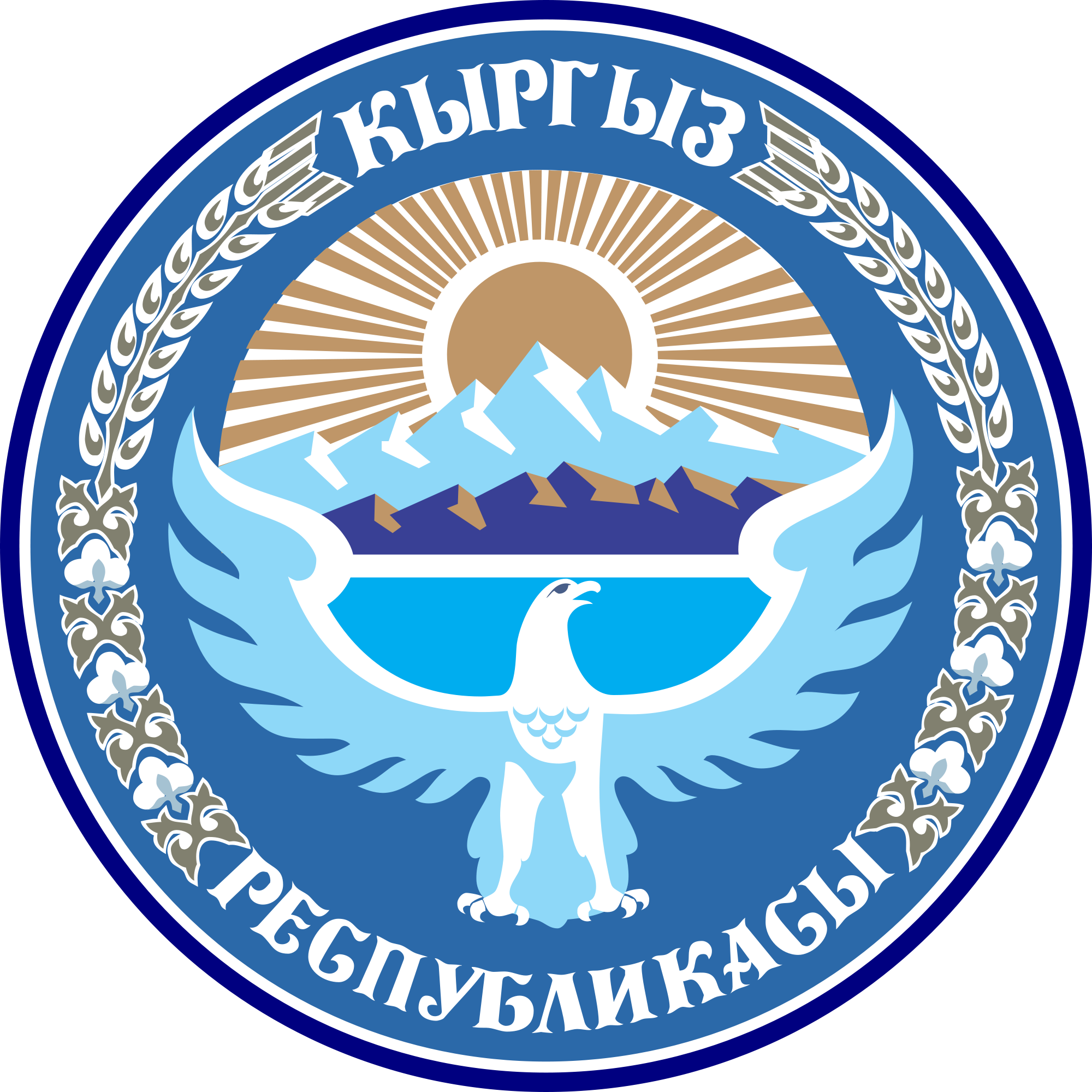
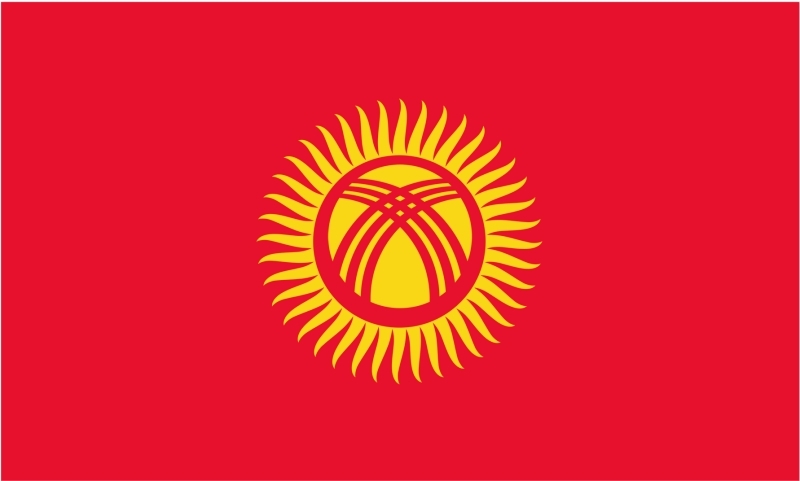
In the Photo: The National Emblem of Independent Kyrgyzstan
Since 1991, after the collapse of the Soviet Union, a new page opened in the long history of the Kyrgyz people. On August 31st 1991, Kyrgyzstan declared itself a sovereign state and entered a phase of reform. The principles of democratic governance were implemented, a planned economy was replaced by the market economy, previously socially homogeneous society sharply differentiated, communist ideology changed to the bourgeois-liberal, collectivist consciousness was supplanted by the individualistic. In the socio-political sense, the Kyrgyz Republic acquired all the attributes of statehood, thus becoming an equal member of the world community. However, the gap of economic ties with the former Soviet Union had a negative impact on the socio-economic situation in the republic.
Imperfections of market reforms have led to a high deficit of the state budget. The high degree of corruption, a sharp differentiation of the society, criminalization, authoritarianism, all these have twice led Kyrgyzstan to overthrow regimes: the first on March 24th, 2005, and second on April 7th, 2010. In 2010 after the second revolution, a Transitional Interim Government has been set up which led Kyrgyzstan to the establishment of the Parliamentary Republic. The current President of the Kyrgyz Republic is Almazbek Atambayev, Kyrgyz state and political figure and a member of the Social Democratic Party. Currently, Kyrgyzstan is part of many International Organizations, such as the United Nations, CIS, SCO, OSCE, Turkic Council and the recently established Eurasian Economic Union.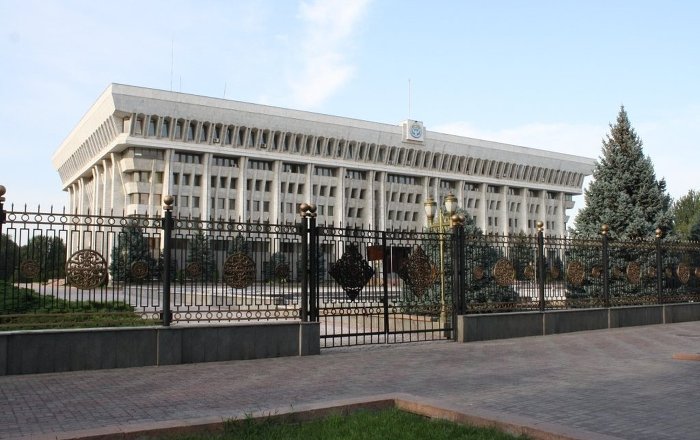
In the Photo: White House Presidential Building, Bishkek, Kyrgyzstan. Photo Credit: Embassy of the Kyrgyz Republic in India
Country Profile
Kyrgyzstan divides into 7 regions; 2 of the biggest cities (Bishkek and Osh) maintain the status of a region. The current population is a little over 6 million people with the majority living in the capital. Kyrgyzstan has two official languages: Kyrgyz and Russian, thus making the majority of the population bilingual. The Kyrgyz language belongs to the Turkic language group, which used to be written in Arabic until Kyrgyzstan’s accession to the Russian Empire and later Soviet Union when it switched to Cyrillic.
The main driver of the Kyrgyz economy is agriculture, divided into 3 sectors: animal husbandry, farming and water resources. These sectors not only fully support the country with many types of grains, cotton, veggies, sugar, meat, and dairy products and clean drinking water, but also export these products into neighboring countries. The economy also utilizes energy, mining and the processing industry. Rich in mineral resources; Kyrgyzstan has many valuable metals, such as gold, coal and uranium.
Despite the developing economic sectors, Kyrgyzstan is one the main countries with a high rate of residents migrating to the neighboring Kazakhstan and Russia for labor work. Migrant’s remittances play an important role for the State’s budget, increase of GDP and quality of life, but labor migration is also threatening Kyrgyzstan with loosing majority of its working-age population.
Nevertheless, the country is set for further development. 2011 became a turning point for independent Kyrgyzstan. After two revolutions (2005 and 2010), the people of Kyrgyzstan finally saw a peaceful change of power, which resulted in a positive trend in the county’s development with people hoping to see subsequent developments of the economy and improvement of living standards.
_ _
Special thanks to the Embassy of the Kyrgyz Republic in India for partially providing info and pictures in this article.