Impakter
  • Environment
    • Biodiversity
    • Climate Change
    • Circular Economy
    • Energy
  • FINANCE
    • ESG News
    • Sustainable Finance
    • Business
  • TECH
    • Start-up
    • AI & Machine Learning
    • Green Tech
  • Industry News
    • Entertainment
    • Food and Agriculture
    • Health
    • Politics & Foreign Affairs
    • Philanthropy
    • Science
    • Sport
  • Editorial Series
    • SDGs Series
    • Shape Your Future
    • Sustainable Cities
      • Copenhagen
      • San Francisco
      • Seattle
      • Sydney
  • About us
    • Company
    • Team
    • Global Leaders
    • Partners
    • Write for Impakter
    • Contact Us
    • Privacy Policy
No Result
View All Result
Impakter logo
No Result
View All Result
KTO: Transparency through the supply chain

KTO: Transparency through the supply chain

Pierre Le LaybyPierre Le Lay
June 13, 2018
in Business, Design, Fashion
0

Know The Origin (KTO) is one of a growing number of companies driving much needed change in the clothing industry. Offering a range of high quality, Fair-trade organic tees, hoodies and sweatshirts, KTO has a completely transparent supply chain, which has helped in reconnecting a producer consumer trust in shared values.

I spoke to Charlotte Intone, Founder and CEO, to find out more on Know The Origin.

Q. What is the story behind Know the Origin?

CI: I was studying at London College of Fashion, learning all about how to make clothes from design, through to shop floor and I knew it was what I wanted to pursue as a career.

Then 2013 came and a factory in Bangladesh called Rana Plaza collapsed, killing over 1100 workers, and out flowed all this information about the fashion industry’s profit-over-people mentality. I could no longer ignore it. I knew I was passionate about producing clothing, but I refused to be a part of the current system.

It compelled me to look at fashion in a new way and I decided to channel my passion into something radically transformative. So the idea of a transparent, fair-trade and organic brand emerged and now we have Know The Origin.
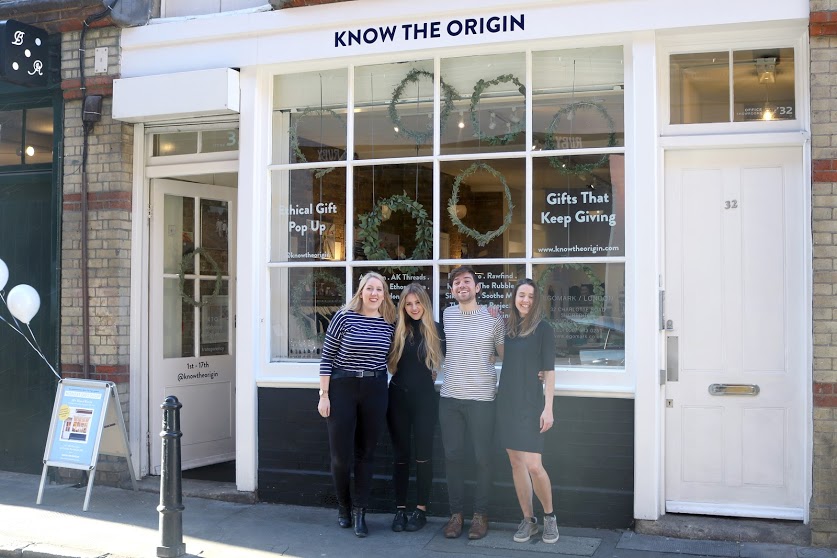
In the photo: The KTO office front in London, (Charlotte far left) Credit: KTO

Q. How do you make sure that the origin of all items is known and that sustainability is implemented?

CI: The first stage of ensuring transparency and sustainability meant a lot of research!

We traveled around India meeting different producers and co-operatives, from seed to garment, until we built a supply chain of producers who are equally as passionate about values of transparency and ethical practices.

All of them are certified fairtrade and organic, as a minimum, and on top of that, they constantly strive to support their employees and communities in new ways from pensions to medical care to training programmes. It’s these relationships and their commitment to transparency that means we can be confident in the origin of our garments and their ethical standards.
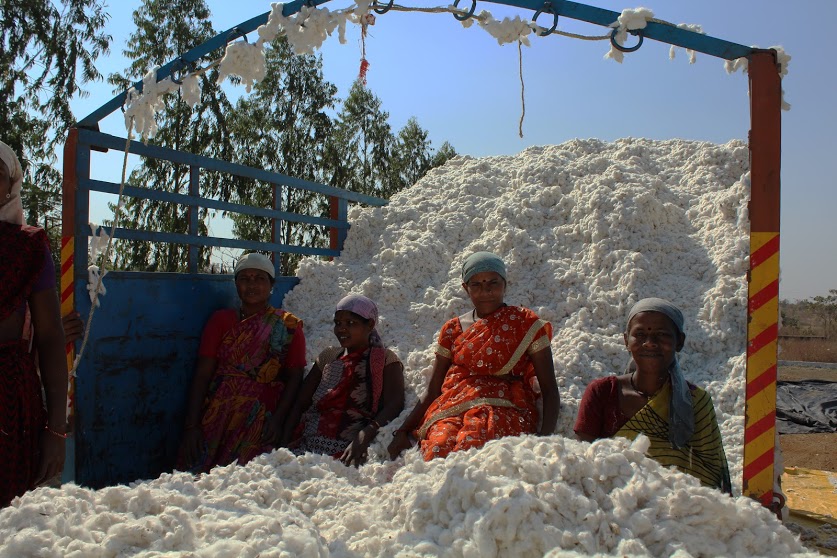
In the photo: Women cotton-pickers in India Credit: KTO

Q. What are the major challenges regarding sustainability in the consumer goods industry? How do you overcome these challenges?

CI: Unfortunately, I think it is the lack of transparency. The secrecy of the consumer goods industry means that there is a disconnect between customers and the processes of production which allows for human rights and environmental violations to go unchecked.

There is research showing that customers trust brands less and less whilst increasingly demanding more from their products in terms of ethics. Customers want sustainability as a part of their purchase. Without transparency and companies held responsible for their practices, customers won’t be able to ensure that their money is supporting their values and businesses will continue to cut corners.

At Know The Origin we are encouraging transparency by not only showing our entire supply chain on our website, but also working with other brands to do the same.
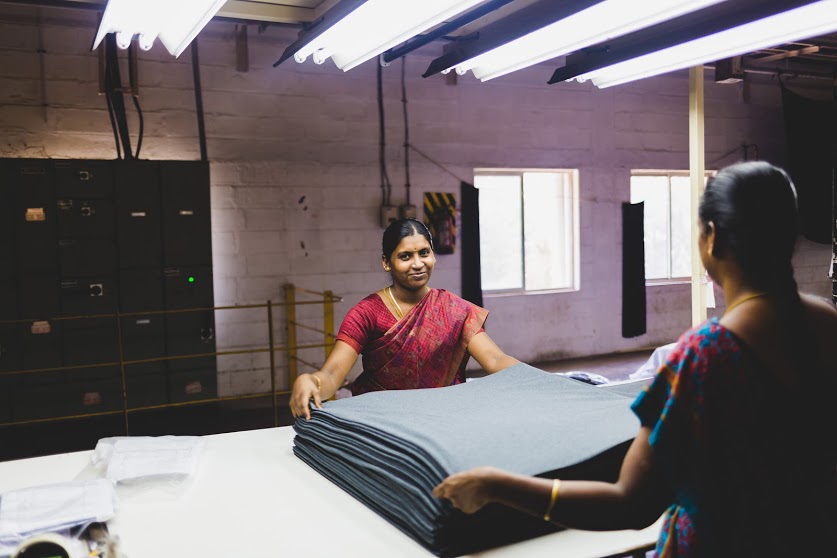
In the photo: Indian women, part of KTO’s supply chain, folding material Credit: KTO

Q. What is the situation looking like on the suppliers’ side and how is their cooperation going?

CI: It’s fantastic! The people who run our supplier companies are people who have been raised in the countries that are most affected by unsustainable business practices. All our producers are in India, the country with some of the highest pollution rates from the fashion industry, suffering horrifically high suicide rates due to farmers debt in GMO cotton production and a hub for trafficking in to sweatshops.

The solutions to these issues in production practices are being born out of the communities most affected, now the next stage is getting big companies to cooperate!

In the photo: Couples’ garments by KTO Credit: KTO

Q. How does the future of Know The Origin look like?

CI: It looks pretty exciting. KTO’s future is constantly shifting as we learn how we can improve our sustainability and what our customers value. We have found it so exciting meeting other people and brands who are passionate about changing their industry so we have decided to start a platform to celebrate that.

In April we are launching our platform filled with fully transparent brands who support the people and environment in their supply chains in new and exciting ways. Watch this space to discover new pioneering transparent brands.



​Editors Note: The opinions expressed here by Impakter.com columnists are their own, not those of Impakter.com
Tags: Charlotte InstoneDesignFairTradefashionIndiaKnow The OriginorganicTransparent supply chain
Previous Post

Fighting Modern Slavery. Interview with Elise Groulx

Next Post

Breaking Assumptions in STEM: An Interview with Women in Cleantech & Sustainability

Related Posts

When Food Waste Becomes Fashion: Emerging Innovations
Business

When Food Waste Becomes Fashion: Emerging Innovations

Imagine tossing an orange peel into the trash and later seeing it walk down a runway as part of a...

byKristen Bestmann-Danagogo
January 14, 2026
View of a kitchen in a new home with a functional design
Architecture

Designing a Functional Layout When Moving Into a New Home

Moving into a new home is exciting, but it can also feel overwhelming once the boxes arrive. Many people rush...

byHannah Fischer-Lauder
January 12, 2026
ESG News regarding Trump backing sanctions on Russian oil buyers, Norway’s oil and gas output declining, dog food linked to UK emissions, Trump climate treaty exit facing legal scrutiny
Business

U.S. Targets Russian Oil Buyers with New Sanctions Bill

Today’s ESG Updates Trump Backs Sanctions on Russian Oil Buyers: A bipartisan U.S. bill would impose tariffs of up to...

byAnastasiia Barmotina
January 9, 2026
India’s Youth Boom: Promise or Pressure Point?
Editors' Picks

India’s Youth Boom: Promise or Pressure Point?

India surpassed China as the world’s most populous country in 2023, a demographic milestone that is both cause for optimism and concern....

byAneesh MR - Assistant Professor at Christ University, Bengaluru
December 26, 2025
women and extreme heat
Climate Change

Women and Extreme Heat: Simple Adaptations Make a Big Difference

One of the more damaging impacts of climate change is extreme heat. From Spain to Bolivia to Burkina Faso, unusual...

byKate Schecter - CEO of World Neighbors
December 23, 2025
ESG news regarding UK households navigating lower savings amid tax pressures, EU dairy products facing Chinese provisional duties, new trade deal to boost India-New Zealand commerce, Glencore acquiring majority stake in FincoEnergies
Business

Disposable Income Falls as UK Interest Rates Drop

Today’s ESG Updates UK Disposable Income Falls: Higher taxes reduce incomes as the saving ratio falls to 9.5% and real...

byAnastasiia Barmotina
December 23, 2025
AM Green and Mitsui explore investment and offtake opportunities for renewable-powered aluminium production in India
Business

India and Japan Consider Joint Move Into Green Aluminium

Today’s ESG Updates India and Japan Explore Green Aluminium Collaboration: AM Green and Mitsui are assessing investment and offtake opportunities...

byJana Deghidy
December 18, 2025
ESG News regarding climate-driven agricultural disruption, extreme weather impacts on commodities, and supply chain risks. Visuals include flooded rubber plantations, farmers navigating waterlogged fields, and maps highlighting affected southern Thailand regions.
Energy

Severe Floods Threaten $140M of Thailand’s Rubber Production

Today’s ESG Updates Serentica Plans $8B Clean Energy Expansion in India: KKR-backed Serentica aims to more than double its renewable...

byJana Deghidy
November 27, 2025
Next Post
Breaking Assumptions in STEM: An Interview with Women in Cleantech & Sustainability

Breaking Assumptions in STEM: An Interview with Women in Cleantech & Sustainability

Recent News

Marathoners

8 Must-Know Websites for Marathoners

January 16, 2026
Why Glyphosate, the World’s Most Widely Used and Sued Herbicide, Is Under New Scrutiny

Why Glyphosate, the World’s Most Widely Used and Sued Herbicide, Is Under New Scrutiny

January 16, 2026
The Imperative of a Nature-Positive Future

The Imperative of a Nature-Positive Future

January 16, 2026
  • ESG News
  • Sustainable Finance
  • Business

© 2025 Impakter.com owned by Klimado GmbH

No Result
View All Result
  • Environment
    • Biodiversity
    • Climate Change
    • Circular Economy
    • Energy
  • FINANCE
    • ESG News
    • Sustainable Finance
    • Business
  • TECH
    • Start-up
    • AI & Machine Learning
    • Green Tech
  • Industry News
    • Entertainment
    • Food and Agriculture
    • Health
    • Politics & Foreign Affairs
    • Philanthropy
    • Science
    • Sport
  • Editorial Series
    • SDGs Series
    • Shape Your Future
    • Sustainable Cities
      • Copenhagen
      • San Francisco
      • Seattle
      • Sydney
  • About us
    • Company
    • Team
    • Global Leaders
    • Partners
    • Write for Impakter
    • Contact Us
    • Privacy Policy

© 2025 Impakter.com owned by Klimado GmbH