
Today’s ESG Updates:
- JP Morgan Remains Bullish on Rio Tinto’s Failed Merger: JP Morgan thinks Rio Tinto can create more value on its own than through the mega‑merger attempt with Glencore.
- British Farm Product Sales to the EU Fall by 37% Post-Brexit: Sales of poultry, beef, lamb, and dairy are all down, showing the downsides of Brexit.
- Brazil’s Inpasa Ramps up Exports of Dried Distillers Grains to China: Inpasa plans a ramp-up in DDGS (distillers’ grains with solubles) exports to China in 2026.
- Agrotools Builds the World’s Biggest Environmental Services Payment Platform: The company is developing a government-backed platform to pay Brazilian farmers for conserving native vegetation instead of expanding agriculture.
JP Morgan remains bullish on Rio Tinto’s failed merger
JPMorgan still likes Rio Tinto even after its talks with Glencore failed, keeping an overweight rating and a £75 price target because it thinks Rio can create more value on its own than in a messy mega‑merger. The bank is upbeat on Rio’s copper plans, with production expected to rise from about 850,000 tonnes in 2026 to 1,000,000 tonnes in 2028 and 1,600,000 tonnes by 2035, helping improve valuation multiples and support a strong free cash flow yield near 10% and a solid 4%+ dividend.
Glencore stays at Neutral with a £4.90 target, as JPMorgan prefers Rio’s clear copper‑growth story to Glencore’s deal‑making approach. Also worth noting is that big investors are wary of large mining takeovers and are placing greater weight on critical minerals, national security, and ESG, with Rio flagged as a potential near‑term winner ahead of its December Capital Markets Day.
***
Further reading: JPMorgan Maintains Optimism Despite Mining Merger Collapse
Klimado – Navigating climate complexity just got easier. Klimado offers a user-friendly platform for tracking local and global environmental shifts, making it an essential tool for climate-aware individuals and organisations.
British farm product sales to the EU fall by 37% Post-Brexit

Sales of British farm products to the EU have dropped 37.4% since 2019, with poultry down 37.7%, beef down 23.6%, lamb down 14%, and dairy down 15.6%, showing how Brexit has made trading harder.
National Farmers’ Union (NFU) president Tom Bradshaw says Brexit is not the only reason, but it “shows the scale of damage,” and warns that “just reducing friction” will not bring back lost EU customers because “there aren’t empty spaces on the shelves… waiting for British products,” so rebuilding demand will be slow and difficult.
As UK and EU politicians set up regular talks to improve relations, the NFU is asking for long transition periods, special exemptions, and carve-outs to protect UK progress on gene editing, TB and bird flu vaccines, and some crop protection chemicals.
***
Further reading: Post-Brexit sales of British farm products to EU fall by 37%
Brazil’s Inpasa ramps up exports of dried distillers’ grains to China
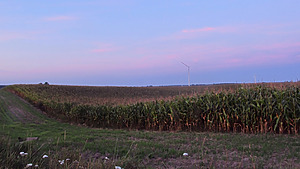
Brazilian corn ethanol producer Inpasa plans a rapid ramp-up in DDGS (distillers’ grains with solubles) exports to China in 2026, on top of its annual output of 3.3 million tonnes.
It has already locked in contracts for another 250,000 tonnes this year and says shipments to China could reach 1.5 million tonnes, potentially accounting for 40–50% of its DDGS exports. “Without a doubt, China should be the main player in a very short time,” said trading VP Gustavo Mariano Oliveira.
The push rides booming Brazilian corn ethanol, strong demand from global meat industries, and trade tensions that opened space versus U.S. suppliers. China recently cleared more Brazilian grains, such as sorghum, which Inpasa sees as part of the same “great opportunity” it expects to remain open for years.
Beyond China, Inpasa reports rising DDGS demand from Europe, with Spain its biggest buyer and growing interest from Italy and other countries.
***
Further reading: Brazil’s Inpasa ramps up exports of dried distillers grains to China

Agrotools builds the world’s biggest environmental services payment platform
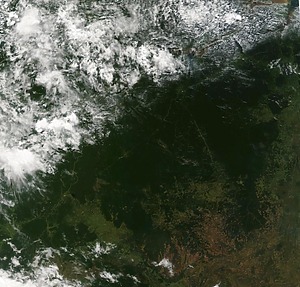
Brazil-based company Agrotools is building what it calls the world’s largest environmental services payment platform, funded in part by a subsidized Brazilian government loan, to pay farmers market-rate for keeping native vegetation intact rather than clearing land.
The tool targets roughly 30 million hectares of high‑aptitude farmland on private land within Brazil’s 280 million hectares of native vegetation, aiming to preserve areas in sensitive biomes like the Amazon and Cerrado.
Companies and governments seeking to neutralize their carbon footprint will pay farmers, with Agrotools estimating about $15 Billion in investments over five years, based on an annual rate of around $100 per hectare.
The launch comes as low commodity prices, high costs, and pressure to expand agriculture follow major grain traders’ exit from an Amazon conservation pact. “It is what farmers always wanted,” said government relations manager Bernardo Pires, “to get paid for environmental services.”
***
Further readings: Brazil’s Agrotools building world’s biggest environmental services payment platform
Editor’s Note: The opinions expressed here by the authors are their own, not those of impakter.com — In the Cover Photo: JP Morgan office in Canary Wharf, London; Cover Photo Credit: Wikimedia Commons