Today’s ESG Updates
- Global Markets Slide as Energy War Risks Intensify: European and Asian allies are stepping in to stabilise markets and secure vital shipping routes.
- Standard Chartered Expands Sustainable Finance with COFCO Deal: The loan links financing terms to climate adaptation and social safeguards in agricultural supply chains.
- Policy Reforms to Accelerate Germany’s AI Infrastructure Boom: The push reflects Europe’s growing focus on digital sovereignty and competitiveness.
- Tech Meets Waste: Google Invests in Biochar Carbon Credits: Google is funding a project that converts landfill waste into carbon-storing biochar.
Europe, Japan signal intervention to secure key oil chokepoint
European powers and Japan have pledged to help stabilise global energy markets after escalating strikes between Iran and Israel severely disrupted Gulf energy infrastructure. Iran’s missile attack on Qatar’s Ras Laffan industrial hub caused “extensive damage,” knocking out roughly one-sixth of the country’s LNG export capacity, while oil prices briefly surged by 10%.
In a notable policy shift, major U.S. allies expressed “readiness to contribute to appropriate efforts to ensure safe passage through the Strait,” a critical chokepoint for global energy flows. The disruption has heightened fears of a wider “oil shock,” with European gas prices rising over 60% since the conflict began.
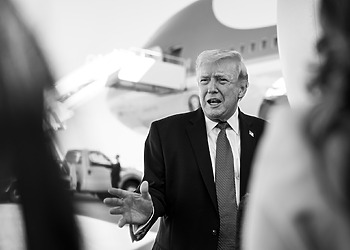
The situation also exposed fractures in the U.S. – Israel coordination, as President Donald Trump said Washington had not been informed in advance of Israel’s strike on Iran’s South Pars gas field. Meanwhile, Iran warned that further attacks would lead to continued retaliation, declaring that strikes on its energy infrastructure marked “a new stage in the war.”
***
Further reading: Europe and Japan ready to help steady energy prices and secure chokepoint
Klimado – Navigating climate complexity just got easier. Klimado offers a user-friendly platform for tracking local and global environmental shifts, making it an essential tool for climate-aware individuals and organizations.
Standard Chartered and COFCO launch $435M sustainability-linked loan
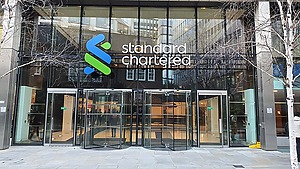
Standard Chartered has finalised a $435 million sustainability-linked loan with COFCO International, with borrowing costs tied to how well the company meets climate and social targets across its agricultural supply chains. The deal, described as the bank’s first “social resilience themed” facility, focuses on practical measures such as increasing the share of certified grains and strengthening labour and due diligence standards in Brazil.
For Standard Chartered, the transaction reflects an effort to “deliver real impact for communities and support a just transition,” while COFCO said it “represents a deep integration of our sustainability goals with corporate financial management.” What makes the deal notable is its broader scope: instead of focusing mainly on emissions, it targets “social and resilience risks” within supply chains, highlighting how sustainability-linked finance is evolving to address more complex, real-world challenges.
***
Further reading: Standard Chartered, COFCO Sign $435 Million Loan with Terms Tied to Supply Chain Sustainability Targets
Related Articles
Here is a list of articles selected by our Editorial Board that have gained significant interest from the public:
Germany plans major AI and Data centre expansion by 2030

Germany is gearing up to significantly expand its digital infrastructure, with plans to double data centre capacity and boost AI processing power fourfold by 2030. The government is trying to make it easier and faster to build new facilities by cutting red tape, setting aside land, and tweaking tax rules to attract more private investment. At the same time, officials are conscious of how dependent the country currently is on foreign providers. While Berlin says, “We welcome investment from third countries,” the wider aim is to build stronger domestic and European capabilities.
The plan shows how much thinking has shifted in recent years. Data centres and AI are no longer just seen as business infrastructure, but as part of “critical digital infrastructure” tied to economic strength and security. With global competition intensifying, Germany is moving quickly to avoid falling further behind.
***
Further reading: Germany Moves To Double Data Centres, Quadruple AI Capacity By 2030

Google backs Biochar Project to remove 200,000 tons of CO2

Google has agreed to purchase 200,000 tonnes of carbon removal credits from AMP Robotics through a project that converts organic landfill waste into biochar. The initiative targets methane emissions, one of the most potent greenhouse gases, by preventing waste from decomposing in landfills. AMP’s AI-powered sorting technology will recover organic materials and process them into biochar, creating what it describes as “a durable, carbon-storing asset.” The project is expected to scale significantly, with the potential to convert millions of tons of waste over the next two decades.
Google said the partnership addresses both short- and long-term climate challenges, calling it “an approach to waste management that takes on the twin challenges of climate change.” Beyond carbon removal, the collaboration also aims to develop frameworks to measure methane reduction and expand adoption across the waste sector.
***
Further reading: Google Signs Deal to Remove 200,000 Tons of CO2 by Turning Landfill Waste into Biochar
Editor’s Note: The opinions expressed here by the authors are their own, not those of impakter.com — In the Cover Photo: US Navy ship goes through the Strait of Hormuz. Cover Photo Credit: Wikimedia Commons