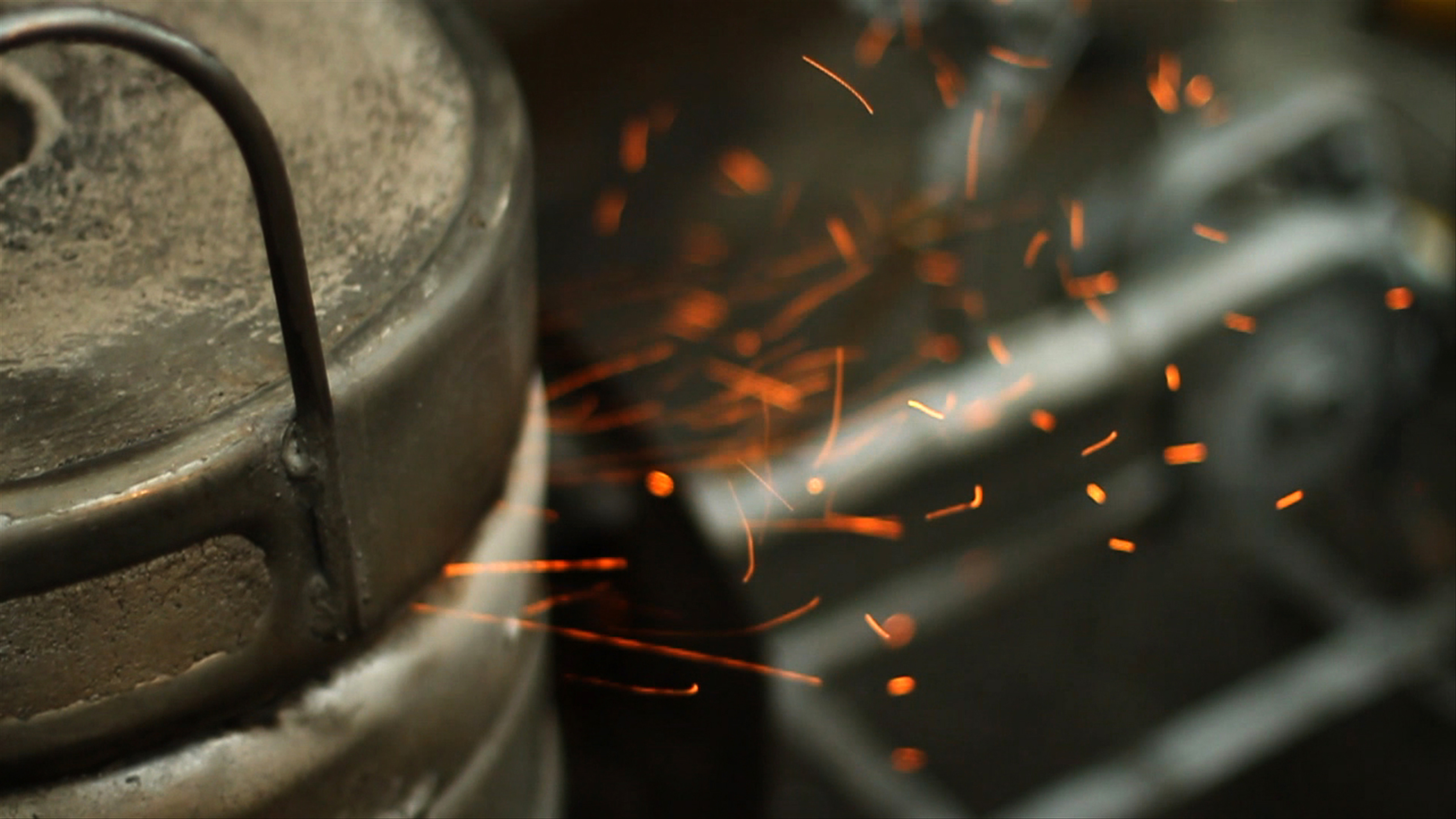
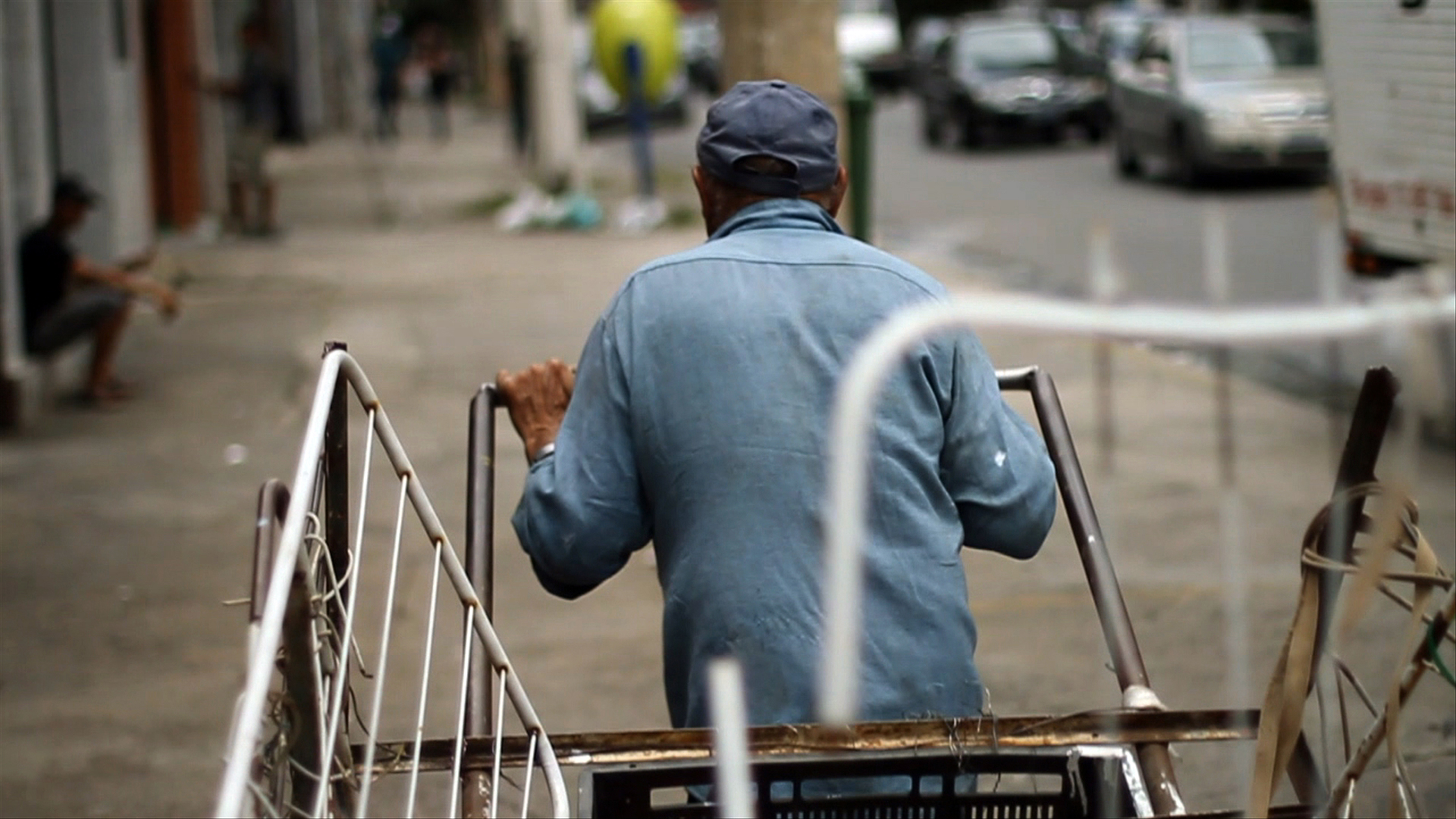
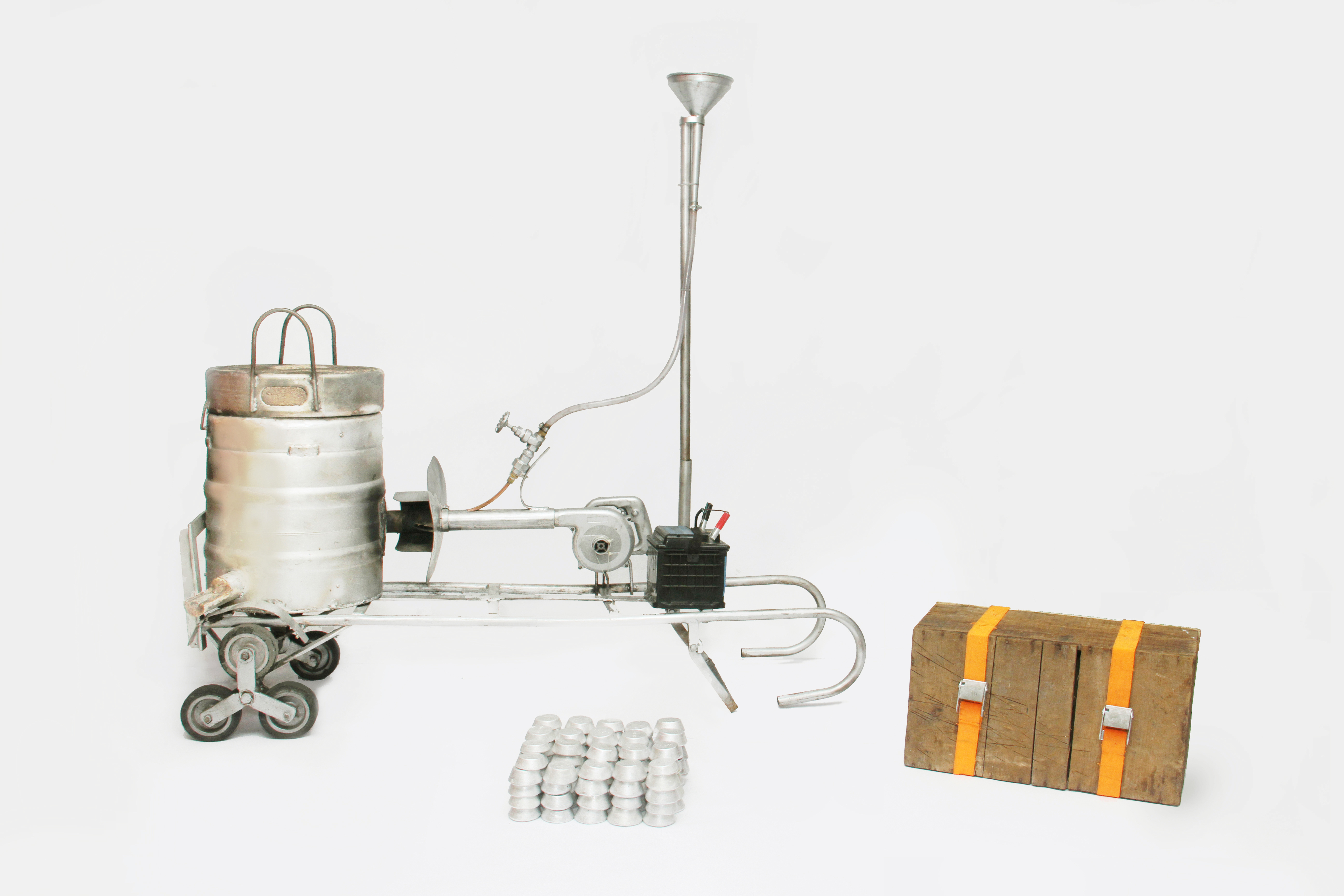
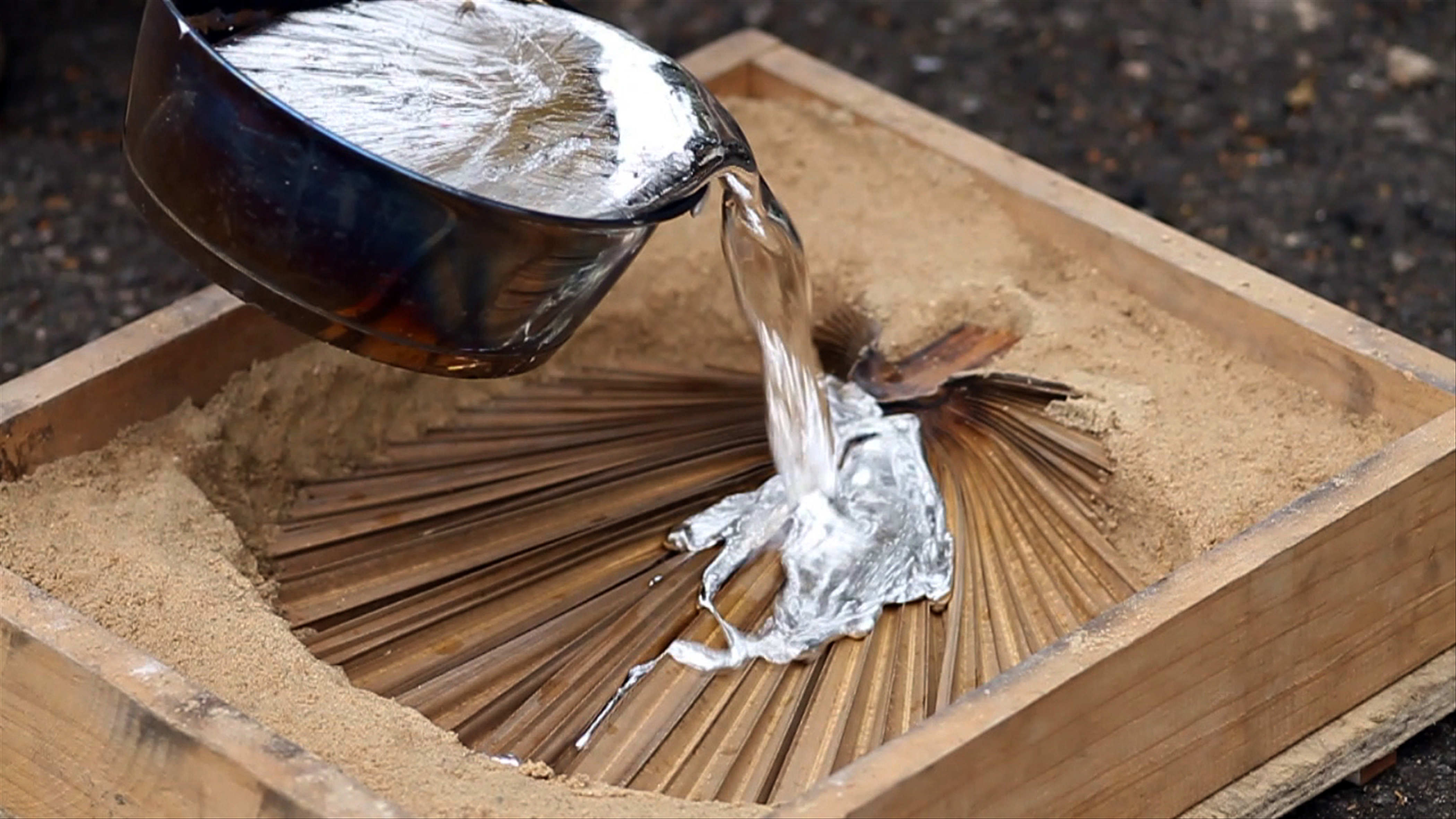
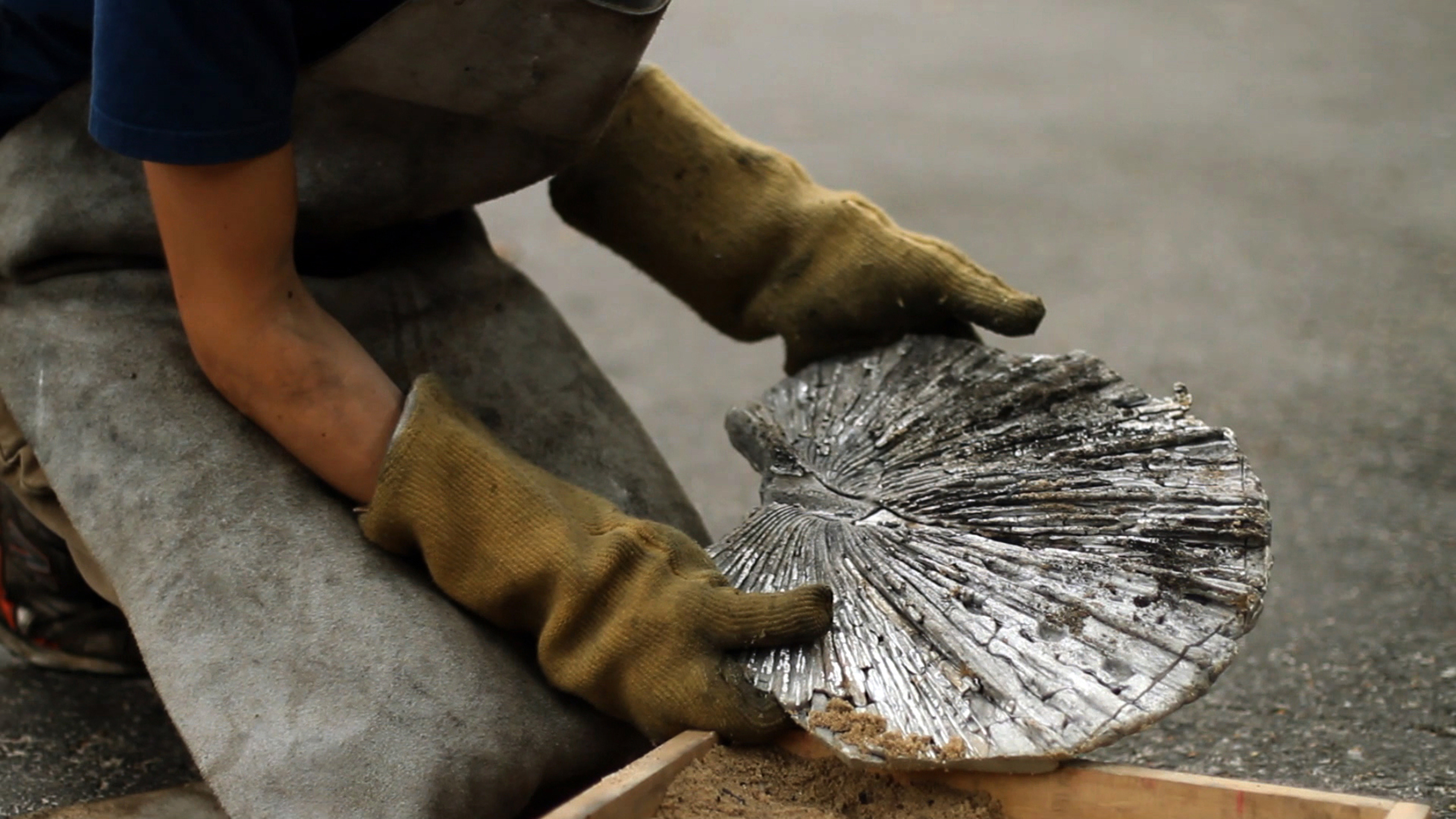
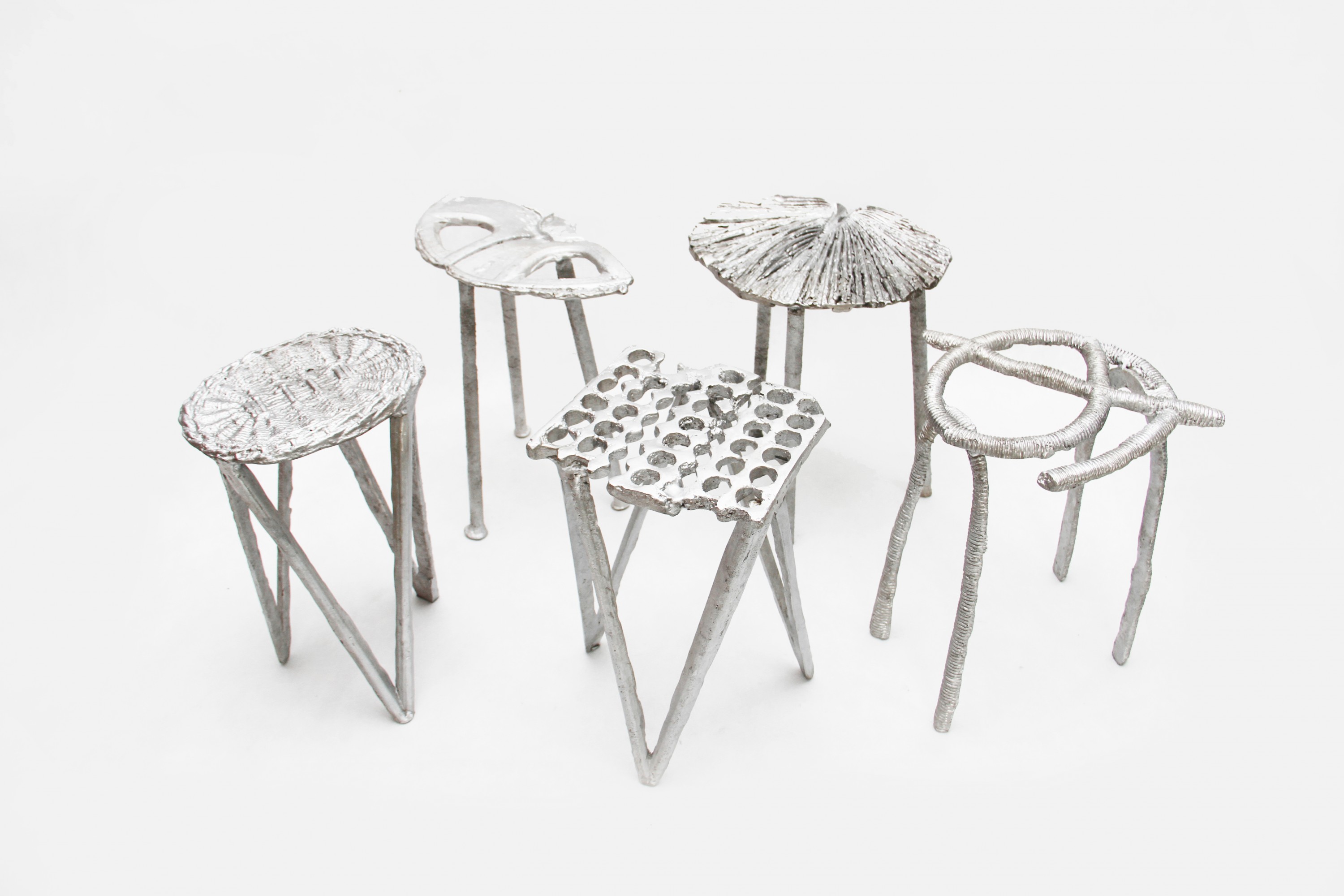
Conceived by Studio Swine designers, Alexander Groves and Asuza Murakami, Can City is Social design project at its best. The heart of this projects lies on the designers desire to celebrate Catadores- aluminum can collectors- in Brazil and to uplift their communities. Sao Paolo, where the project was conceived, is the aluminum capital of the world and Catadores do 90% of the aluminum recycling in the city. With their curiosity for vernacular design and their desire to uplift a community, Studio Swine created a mobile furnace fueled by recycled oil which melts aluminum cans that is poured into sand casting molds to create beautiful high-design stools. Can City is a zero impact project that uses design as a tool to understand our world and to create systems which can empower communities.
Q: What Inspired You to Do This Project?
AG: We were interested in exploring Aluminum as a material and as well as the issue of rubbish collection in a metropolis such as Sao Paulo. SaoPaulo recycles more aluminum cans than anywhere in the world. They go from can to can in less than 30 days. Catadores are central in the recycling of this material. We wanted to do something with them and to create a product that doesn’t go back to industry to create more cans. We wanted to help the Catadores earn a better income since they earn very low wages. They are struggling to not be removed from the streets by the city government and we wanted to do something that celebrated them.
Q: Why Brazil?
AG: Because Brazil is an exciting place and we love it because they’ve got really amazing improvised design. If you think about favelas for example they are vernacular improvised architecture. They have a real culture that “no one is going to help them out” and that they have to fix their own problems. This is an amazing quality that comes through in Brazilian design. We also love tropical modernism- Brazilian’s take on modernism. Both of these things inspired our series.

Q: How was the journey to Brazil?
AG: When we went to Brazil we didn’t know what we were going to do there. We thought: “it’s cheaper to live in Brazil that than to live in London,” so we decided to go explore. We literally had nowhere to go or people or institutions to go visit. We just wondered the streets taking it all in for 3 months. Then we decided that we really wanted to work with Catadores and we formulated Can City. We kept a daily blog called post culture Brazil which documents our research of vernacular design. After coming up with the concept for Can City, we thought the best place to exhibit it, given the fact that we didn’t have a gallery, was actually on the street.
Brazil has amazing street art so we said why not make a street design. The concept of street design pushed us think about how to create something for free. This particular way of thinking was instrumental in the creation of Can City. The idea of the Can City project was to create a tool that allowes people to cast on demand right there on the street with free materials.
Q: Why Aluminum?
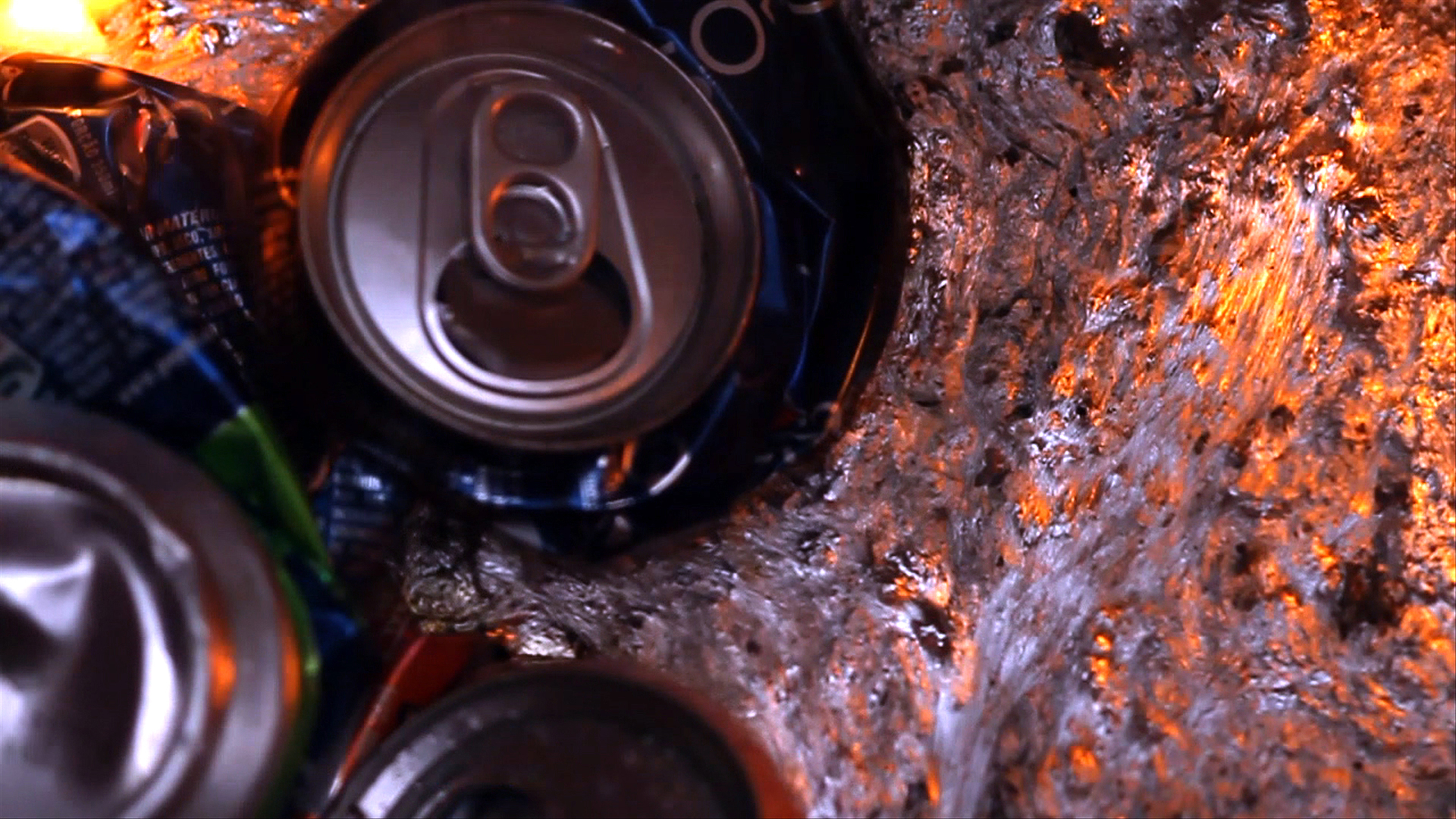
AG: There is so much aluminum out there and it is so easy to recycle it that people are talking about an end of mining and refining for this material. If our waste stream is good enough to keep recycling it, we can keep up the supply and demand of it only from recycling it. It can be an amazing material that we don’t have to mine anymore. It takes 95% less energy to recycle aluminum than to extract it from the raw materials. It is a highly industrial product but it looks natural. We chose to do a project on aluminum because it was so plentiful on the street. There are so many cans in Sao Paulo. If you go to a football game in Brazil, there are thousands of fans at the stadium all drinking cans of beer. Then you get the Catadores crushing all of these cans and carrying them across the city in their hand-made carts. It really excited us that you could make something so industrial in the streets and we could help the Catadores increase their income revenue.
Q: What’s the process behind it?
AG: Studio Swine is Azuza and myself. Azuza did architecture and I did fine arts and then we both came into design. We both got into design from different angles. We are very interested in design that is completely the product of a place and a situation. For Can City we spent a long time researching first. After seeing the catadores and all the materials right there on the street in Brazil we created the stools. All of the stools are materials f the palm tress, the ventilations bricks are all found on the streets and we wanted to cast these materials into aluminum. We are interested to see how in this globalized world we can design or retain a strong sense of local identity. Aluminum is used in a very industrialized way.We wanted to get a sense of hand craft and regional local identity and this is exactly what these pieces are. They are more raw, more tactile and it is a super local product as well. What we are really interested in is in seeing and showing how design connects to places.
Q: Can design change the world?
AG: I’m not overly optimistic about design changing the world. Big problems require cross-discipline collaboration in order to find solutions. Design is only one aspect. It takes social programs, politics, a change in the culture of the industry in order to bring forth real change.
We believe in design as a tool to understand our world, not only a as a functional tool, but as a tool for contemplation like art is.
Q: How do you fund your projects?
AG: People always ask us how do we find funding? And that is not the interesting question. The interesting question is: “what are you going to do in life?”… And my answer is: “just make it happen.”
You should never let funding get in the way of a project. If you are determined and you keep working on it and persevere you will make it happen. We went to Brazil then we found a gallery while we were there and we asked them if they were interested on working on this project. They got involved and helped us connect with Heineken, who paid for the film so we could publicize the project. But it would have not been the way that it was should we had had sponsorship from the beginning. It would not have driven us to think the way we did.
Q: What impact are you looking to achieve?
AG: We are really interested in designing systems. If you design the system, the framework, such as the furnace to melt the Aluminum, you empower the community to do it themselves. That is our dream with Can City. The most useful design is one created by the community themselves. We created these stools to show the potential of this system and to show that these items can be sold for high revenue. However, what we are excited about is to see how the Catadores’ community is going to use the system. Are they going to use it for architectural elements or to create objects? We have left the furnace in Sao Paulo and trained a couple of Catadores there to use the furnace and to make more furnaces and stools. Catadores get very little money for selling the recycled cans but they can make a lot of money by creating objects that they can sell to tourists and to galleries such as Galeria Amor de Madre. This gallery is trying to sell these items to a luxury market that can provide added income for the Catadores. This is a long term project for us to keep going back and trying to create this culture in Brazil.
Q: What’s next?
AG: We will be in London for the next year doing a public Design project and in the near future we will be working on Sea Chair. We are traveling to the North Atlantic Isle with scientist from the Azores to Canary Islands. This project consists of a parabolic mirror that concentrates sun heat and melts sea plastic like a 3D printer. The end product is still unknown.