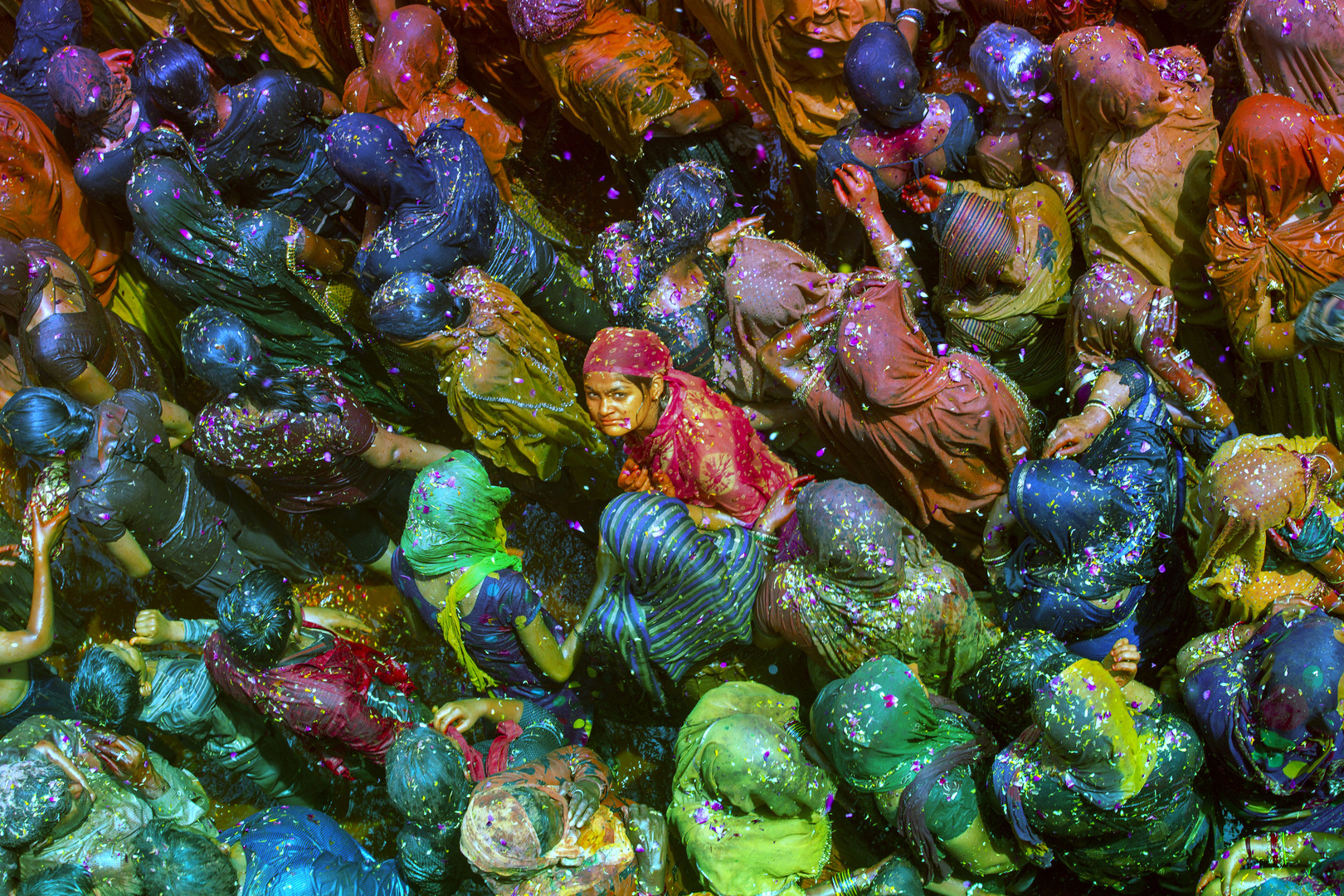
The muted voice of India with regard to the Iran War, in contrast to its recent celebration of Holi, encapsulates the multi-colored nature of this most populous country in the world.
India has maintained good relations with Russia and relies heavily on its oil, while also navigating a path to engage with the United States. It has also shown support for Israel, reflected in the recent visit of Prime Minister Narendra Modi to Jerusalem. Historically, India maintained close ties with Iran, driven by energy needs, regional stability, and shared interests in Afghanistan. Today, however, India’s strategic partnerships with the United States, Israel, and Gulf monarchies complicate its calculus.
Past History
It is important to recognize that India’s democratic credentials have a long history. Since 1950, the country has held regular elections, transferred power peacefully, and maintained a constitutional framework that protects fundamental rights. For decades, India was held up as proof that democracy could thrive in a poor, diverse, post-colonial society.
For decades, India was one of the moral voices of the developing world. As a founding member of the Non-Aligned Movement and later a leader of the G-77, India championed anti-colonialism, economic justice, and the rights of smaller nations. Its diplomats were known for speaking boldly on global issues, from apartheid to nuclear disarmament.
India’s constitution enshrines secularism — not in the Western sense of strict separation of religion and state, but as equal respect for all faiths. For decades, this principle helped manage India’s extraordinary religious diversity.
The Present
Prime Minister Narendra Modi and the Bharatiya Janata Party (BJP) enjoy broad electoral support. Modi won a third term in 2024, with his supporters effectively arguing that strong leadership is necessary to modernize India, confront China, and accelerate economic growth. Yet the same electoral strength raised concerns about majoritarianism. Critics argue that the government’s popularity has emboldened it to blur the line between party and state, Hindu identity and national identity, dissent and disloyalty.
Modi and other BJP leaders frequently describe India as a Hindu country — culturally, historically, and spiritually. This framing resonates with many Hindus who feel that centuries of foreign rule and decades of secular politics marginalized their identity. But India is home to nearly 200 million Muslims — the world’s third-largest Muslim population — as well as Christians, Sikhs, Buddhists, Jains, and others. For these communities, the Hindu-first narrative feels exclusionary.
No contradiction is more deeply embedded in Indian society than caste. The constitution outlaws caste discrimination, yet caste remains a powerful force in politics, economics, socio-cultural relationships and daily life. The UN Human Rights Committee’s 2024 review expressed “serious concerns” about ongoing caste-based violence, lynching, and forced displacement of Dalits and Adivasis (“scheduled castes” and “scheduled tribes”). These communities continue to face barriers in education, employment, and access to justice. Indeed, caste is not merely a social identity — it is a structure of power.
Further, Human Rights Watch’s 2025 report paints a stark picture: discrimination against minority communities, politically motivated prosecutions of critics, and the use of counterterrorism laws against activists and journalists. Amnesty International similarly documents the weaponization of financial and investigative agencies against civil society, as well as unlawful demolitions targeting religious minorities.
Related Articles
Here is a list of articles selected by our Editorial Board that have gained significant interest from the public:
In addition, the country remains a global outlier when it comes to the position of women. A U.S. National Institute of Health report ranks the country at 140 out of 156 countries reviewed when it comes to equivalence of male and female adults, driven by patriarchal control, the Hindu and Muslim purdah system, severely skewed labor force participation with low- or no-remuneration patterns for work in rural areas, across the board discrimination of lower-caste women, and female voting according to male household members’ preferences, to name a few.
The underlying economic change is driven by an incredible augmentation of domestic infrastructure development, the emergence of a critical mass of engineering and science expertise, and significantly and broadly reduced poverty. These changes reasonably justify India’s global ambitions, even as its internal debates grow more polarized. Leaders speak the language of ancient civilizational pride while critics warn of democratic backsliding. Meanwhile, India’s silence on global human rights issues contrasts sharply with its own internal struggles.
One may even question the above-mentioned reality of democracy, when a large part of the voting population, that is, women, in line with the qualifications highlighted above, remain questionable in terms of the independence of their vote or their vote in the first place.
The Iran Question
India’s muted response to the killing of Iran’s Supreme Leader Ayatollah Ali Khamenei in U.S.–Israeli strikes — a watershed moment in Middle Eastern geopolitics — bears on India in multiple dimensions, including direct and indirect impact on its global trade, with enormous shadow over its future growth. According to the World Bank, over 45% of India’s GDP is linked to trade.
Further, there are roughly over nine million Indians living in the Gulf region who may be at risk, many of whom send substantial remittances.
India’s defenders argue that its sitting on the sidelines of the Iran war is both realistic and sensible. Great-power competition is back. The Middle East is volatile. China is assertive. In this environment, India must prioritize security and economic interests over moral posturing. But India’s silence on Iran — and on other global human rights crises — undermines its claim to global leadership. A nation that once spoke for the oppressed now often chooses neutrality, ambiguity, or silence.
Klimado – Navigating climate complexity just got easier. Klimado offers a user-friendly platform for tracking local and global environmental shifts, making it an essential tool for climate-aware individuals and organizations.
The Contradictions and Limits of Power: Rising India, Divided India
India’s rise is one of the defining stories of the 21st century. It is now the world’s most populous country, a major economic power, a technological hub, and a key player in global geopolitics. India’s economy is booming, but inequality is widening. Caste, religion, and region still shape access to opportunity. India’s young population — more than half under 30 — is both a challenge and an opportunity.
And then there is India’s pollution, which still may limit its future prospects severely and/or cost it dearly. Its capital is arguably the most polluted capital of the world — it didn’t register a single day of not-toxic air last year — and the pollution is only getting worse and spreading across the country year-by-year.
Almost two million people die every year in India from air pollution, according to a 2022 Lancet study — just imagine: in the US every year three million people pass away in total, from all causes. The Economist agrees with Gita Gopinath of Harvard “that the economic impact of pollution in India is ‘far more consequential’ than that of American tariffs. She is right. In 2019 a report by Dalberg, a consultancy, estimated the annual economic loss attributable to air pollution at 3% of GDP. Donald Trump’s tariffs of 50%, briefly imposed but now relaxed, in contrast lowered India’s GDP by 0.6%”.
Urban India is racing ahead while rural India struggles. India wants to lead the Global South, counter China, and shape global norms. But domestic polarization — religious, political, and social — risks weakening its democratic foundations. Indeed, the government’s emphasis on Hindu civilizational identity energizes its base but challenges the secular, pluralistic ethos of the constitution.
A Nation at a Crossroads
India today is a nation of extraordinary promise and profound contradictions. It is a democracy where dissent is increasingly risky and gender inequivalence undermines the concept; a secular republic where religious majoritarianism is rising; a society that abolished caste discrimination yet remains shaped by caste; a fast growing economy, potentially to be curbed by its own pollution; a global power that hesitates to speak on global crises; a champion of sovereignty that faces human rights scrutiny at home.
These contradictions define India, and its future. They reflect the complexity of a vast, diverse, rapidly changing nation. India stands at a crossroads. Its choices — and its contradictions — will echo far beyond its borders.
Editor’s Note: The opinions expressed here by the authors are their own, not those of impakter.com — In the Cover Photo: Holi celebration in Mathura, India, March 25, 2016. Cover Photo Credit: Jitenderasingh.