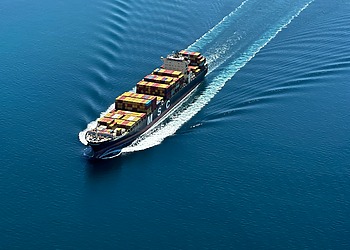
The recent conclusion of negotiations for a Free Trade Agreement between India and the European Union, after nearly two decades of talks, has been welcomed warmly in both New Delhi and Brussels. European leaders have highlighted new access to India’s vast consumer market, while Indian officials have emphasised export growth, job creation and the restoration of preferential access to the EU market that India lost in 2023.
Much of the public commentary has focused on scale: two billion people covered, nearly a third of global trade, and billions of euros in tariff savings. But this celebratory framing obscures a harder question about the nature of the growth being encouraged — and where its environmental costs will fall.
Export growth and environmental externalities
India’s largest export gains to the EU are concentrated in textiles and garments, leather and leather products, chemicals, rubber and plastics, base metals, and gems and jewellery. Under the agreement, tariffs on most of these goods will be eliminated entirely over the next five to seven years.
These sectors are labour-intensive, which explains the optimism around employment. They are also among the most environmentally intensive manufacturing activities in the country. Textile dyeing and finishing consume large volumes of water and chemicals. Leather tanning produces chromium-rich effluents that can contaminate soil and groundwater for decades. Chemical and plastics manufacturing generates hazardous waste that is difficult to track and treat.
The trade deal does not create these problems. But by sharply increasing export incentives, it risks scaling them up faster than India’s regulatory capacity can manage.
Rivers bearing the cost of growth
Near the Yamuna’s entry point into Delhi, the river’s condition has become a stark illustration of India’s environmental governance challenge. Long stretches of the river now routinely experience severe frothing, toxic contamination and near-zero dissolved oxygen levels, particularly during the winter months when flows are lowest and pollution is most concentrated. Despite repeated clean-up efforts and official claims of improvement, the river remains ecologically stressed and unsafe for most uses.
Monitoring data support this assessment. According to the Delhi Pollution Control Committee, biochemical oxygen demand levels across key stretches of the Yamuna in Delhi remain far above permissible limits, indicating severe organic pollution. The National Green Tribunal has repeatedly identified untreated sewage and industrial effluents as major contributors, noting that pollution loads from upstream urban and industrial centres continue to overwhelm treatment capacity.
Much of the industrial pollution enters the Yamuna from upstream towns in Haryana and the National Capital Region (NCR), home to dense clusters producing textiles, chemicals and manufactured goods. Regulatory assessments link industrial discharge in the upper Yamuna basin to repeated breaches of water quality standards, particularly during periods of low river flow.
The Yamuna is not an isolated case. Similar patterns of industrial pollution and regulatory failure are evident along the Ganga around Kanpur, the Jojari near Jodhpur, the Noyyal and Palar rivers in Tamil Nadu, and the Tapi near Surat — each associated with clusters producing leather, textiles, chemicals or dyes.
These industries are not marginal. They sit at the heart of India’s export economy — and many are set to gain from the newly concluded India–EU free trade agreement.
Carbon borders and regulatory blind spots
Supporters of the trade deal note that it does not weaken Europe’s climate ambitions. Indian exports of steel, aluminium, cement and fertilisers will remain subject to the EU’s Carbon Border Adjustment Mechanism (CBAM), which prices the carbon emissions embedded in these products.
But there is an important asymmetry. The sectors that gain most from tariff elimination — textiles, garments, leather and chemicals — fall outside the scope of carbon border measures, even though their environmental damage is severe and highly localised. Meanwhile, water pollution and toxic waste remain outside the remit of CBAM and largely unpriced under the agreement.
Related Articles
Here is a list of articles selected by our Editorial Board that have gained significant interest from the public:
Growth, governance and a cautious conclusion
India’s environmental challenges are well documented, with international assessments consistently ranking the country among the poorest performers on air and water quality. Yet these challenges are not due to a lack of laws. Over time, the country has built an extensive regulatory framework covering air, water and hazardous waste.
The persistent problem lies in implementation.
Government audits as well as independent international bodies have repeatedly documented gaps in monitoring capacity, enforcement and hazardous waste management across states, particularly in industrial clusters that drive export growth.
None of this negates the long-term economic and strategic gains from deeper EU–India integration. Rather, it is an argument against judging the agreement solely by macroeconomic headlines. India’s most successful integration into global markets so far has occurred through services — software, business processing and digital exports — which delivered growth with relatively modest environmental costs. Manufacturing-led export growth is different: it is more resource-intensive, more pollution-heavy, and far less forgiving of weak governance.
This is precisely where the nature of the European market matters. Deeper integration with the EU may act as a complementary disciplining force — but it cannot substitute for domestic environmental governance. European consumers are increasingly sensitive to the environmental footprint of imported goods, and this sensitivity is steadily being translated into regulation — first through mechanisms such as the Carbon Border Adjustment Mechanism, and potentially in the future through broader product-level environmental standards. Even in the absence of formal legislation, European retailers and importers face reputational, legal and commercial incentives to scrutinise supply chains.
For India, this creates a strategic case for moving early: strengthening enforcement at home and investing in cleaner production is not merely about regulatory compliance, but about securing durable access to a high-value market. In this sense, participation in the EU market can reinforce domestic policy choices, accelerating the adoption of cleaner technologies across export-oriented industries rather than allowing environmental costs to be deferred or externalised.
If India is to pursue this path, pollution control cannot be an afterthought. Stronger monitoring, credible enforcement and sustained investment in treatment infrastructure must move in step with export promotion. Trade can raise welfare, but only if competitiveness does not quietly rest on unpriced environmental damage at home.
** **
This article was originally published under Creative Commons by 360info™.
Editor’s Note: The opinions expressed here by the authors are their own, not those of impakter.com — In the Cover Photo: President of the European Council António Luís Santos da Costa (left), India’s Prime Minister Narendra Modi (center) and the President of the European Commission, Ursula von der Leyen (right) following the signing of MoUs between India and the EU, New Delhi, Jan. 27, 2026. Cover Photo Credit: Frédéric Sierakowski / European Commission.