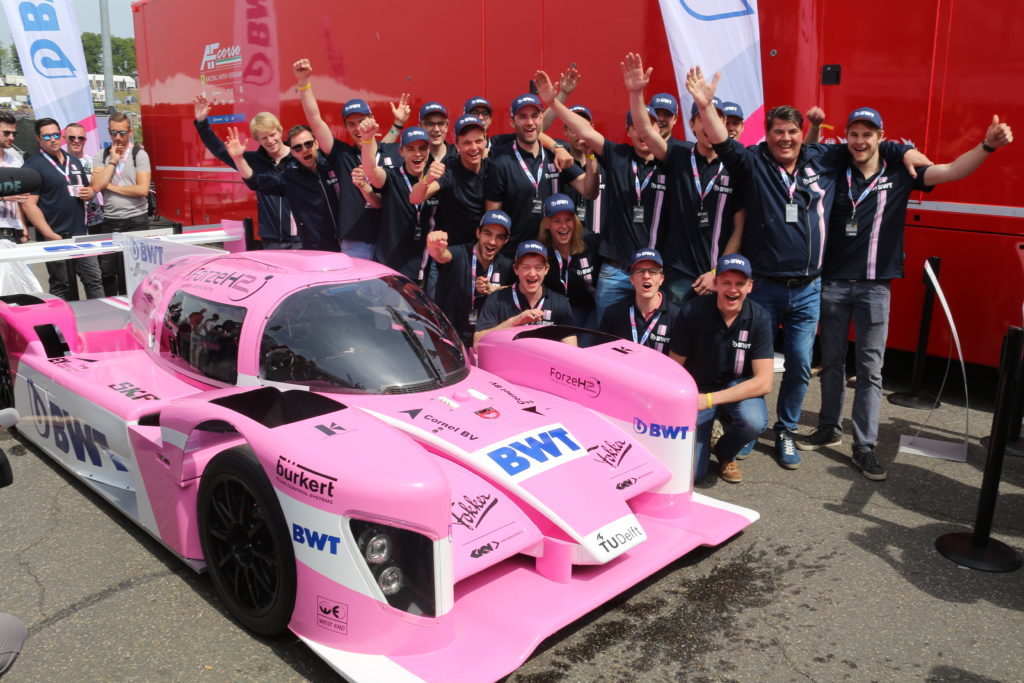
Editor’s Note: This article was written by Willem van Der Vliet, member of the FORZE Team of the Univeristy of Delft in cooperation with Segher Brons, the Marketing Manager of the Team.
Battery-powered Electric Vehicles (EVs) are generally considered to be the future, but this could be changing: the advent of hydrogen fuel cell technology, and its subsequent application in vehicles has provided the transportation industry with another possible substitute for fossil fuels.
With the advancements in battery technology, EVs are catching up with internal combustion engines. They are beginning to have similar and sometimes even better travel ranges and performance and, most importantly, they do not produce harmful byproducts.
These factors have led to the Automobile industry to focus mostly on battery-powered electric cars as the best alternative to internal combustion vehicles. It should be said that some manufacturers have made ventures into other types of fuel, but the vast majority of vehicles manufactured nowadays that is not an internal combustion vehicle, is an electric powered vehicle with batteries. Some argue that this occurred because there was no better alternative to fossil fuels.
This is no longer the case with the advent of hydrogen fuel cells.
A fuel cell is a device that converts the energy stored in hydrogen’s molecular bonds into electrical energy and is made of three main parts: the anode, cathode, and proton exchange membrane (PEM).
At the anode, hydrogen is introduced and split from its electrons with the help of a platinum catalyst. The remaining positively charged hydrogen ions (or protons) then pass through the PEM, which does not allow electrons to pass through. The electrons are forced to go through another path, which in this case means they can travel through devices such as electric motors, powering them on their way back to the cathode.
At the cathode, oxygen is taken from the environment, and mixed with the hydrogen protons. The electrons return from their external circuit and recombine with the hydrogen and oxygen to form dihydrogen monoxide– more commonly known as water.
This means that in using hydrogen and oxygen, the only exhaust products of a hydrogen fuel cell are water, electricity and a small amount of wasted heat. Fuel cells can therefore be considered electric generators, allowing for their application to many uses, one of which is automotive.
Leading car manufacturers like Toyota, Hyundai and Mercedes-Benz are developing fuel cell vehicles (FCVs) and started selling them around 2015. Many manufacturers are investigating fuel cell technology and are expected to bring FCVs to the market soon.
Automobile manufacturers are starting to see the potential in Hydrogen. The technology is still nascent, however. Despite these car companies’ efforts, FCVs still haven’t caught on with the consumer, and governments still have not invested in widespread hydrogen tanking infrastructure.
This means that there is still much research that needs to be carried out before it is considered a viable contender in the future. And efforts will also need to be deployed with the public to make it clear why hydrogen is indeed a sustainable newcomer for the transportation industry.
The FORZE Team, of the Technical University of Delft DELFT
The FORZE (Formula Zero) Hydrogen Electric racing team of the Technical University of Delft, in the Netherlands, is doing such research. The goal is to promote the use of hydrogen fuel cells and educate the world about the technology’s potential by building and operating a functional racecar powered solely by hydrogen.
The FORZE team is operating under the principle that if a technology is good enough to be used in a racecar, consumers will begin to believe that it is good enough to be applied to a standard family car too. The team also believes that hydrogen fuel cells’ can be applied to other energy generation requirements, once the technology has been sufficiently developed.
Founded in 2007, the team has, up to now, built 8 hydrogen powered vehicles. It began with the the team designing and building go-karts – small and basic racecars – with a hydrogen-electric drivetrain. With these vehicles they participated in the Formula Zero competition, hence the name ForZe.
Even at an early stage, the team had successes with their vehicles, the Forze I – V. The early vehicles were featured both in the Netherlands and internationally, participating in events ranging from Berlin to Aruba. The early cars were shown in the city centers of The Hague and Rotterdam in the Netherlands, in an attempt to promote the viability of fuel cell technology.
As innovative as this was, the vehicles were still go-kart sized. A true technology demonstrator would need to be full sized, in order to realistically display the potential of hydrogen as an energy source.
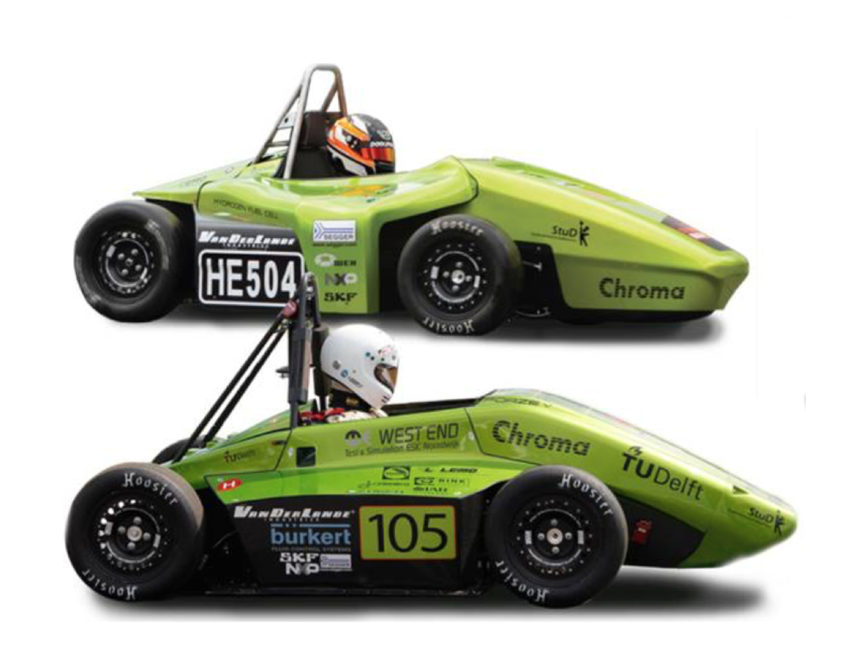
In the Photo: The First hydrogen-powered cars by the FORZE Team. Photo Credit: FORZE Team
The transition to full scale came six years into the team existence with the introduction of the Forze VI in 2013.
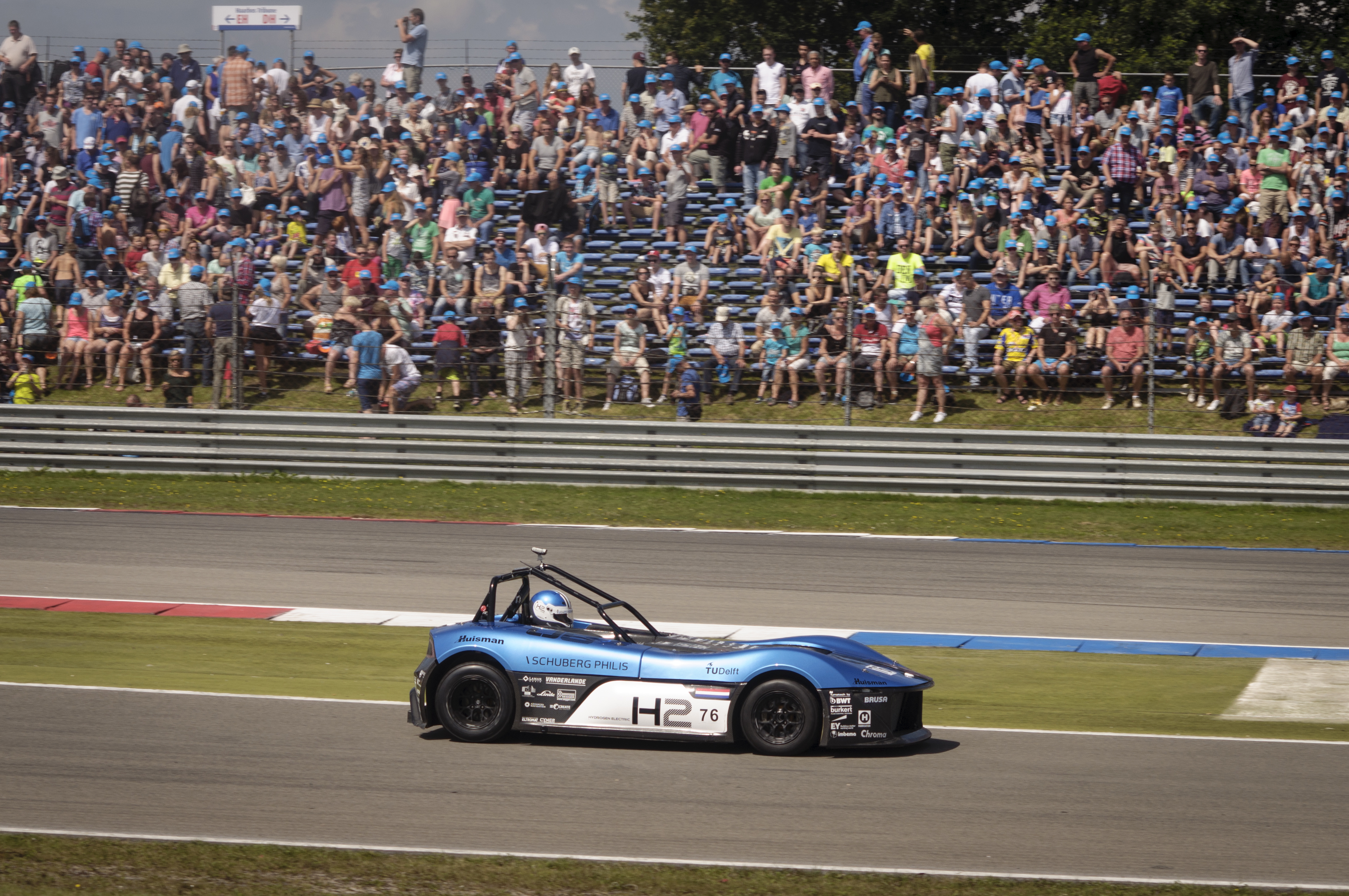
In the Photo: The Forze VI racing car. Photo Credit: FORZE TEAM
The new Forze flagship was immediately a game changer for the team, as it was six times more powerful than its predecessors and was specially designed to compete against gasoline powered cars. It was also one of the first sports cars worldwide to feature a fuel cell system. It was wider, and it featured lightweight bodywork and a diffuser to improve aerodynamics.
The vehicle performed well enough to set a lap record at the famous Nürburgring Nordschleife in Germany in the summer of 2015. With this achievement, the tone was set and realistic goals for the upcoming years were planned.
The Hydrogen Car of the Future
In August 2017 the Forze VII made its world debut by competing in the Supercar Challenge at the Gamma Racing Day in Assen, the Netherlands. Never before had an hydrogen electric – powered car competed in an official FIA sanctioned event.
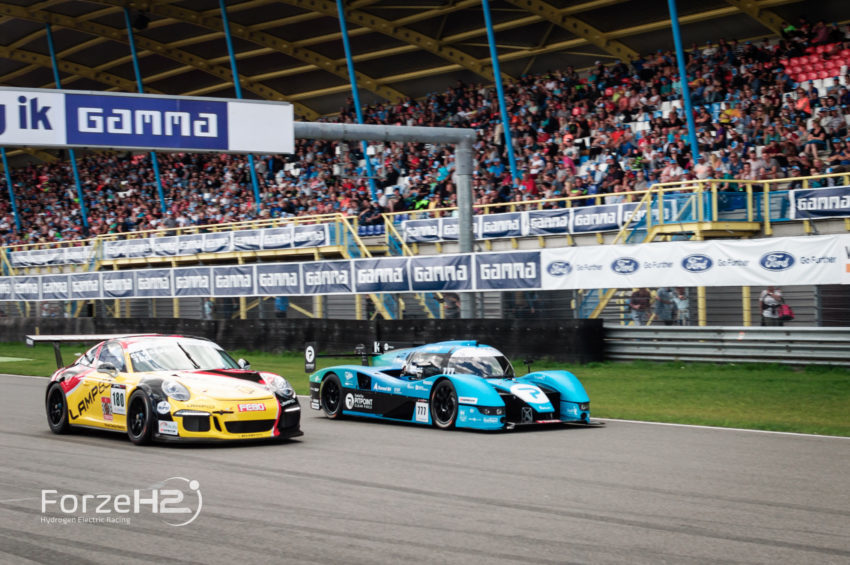
In the Photo: The Forze VII car racing in an actual race. Photo Credit: FORZE Team
The Forze VII is the most advanced operational vehicle built by the team, and was designed as a direct competitor against internal combustion driven race cars. Built around a Le Mans Prototype 3 (LMP-3) monocoque, the car is designed with growth in mind, leaving room for future upgrades and improvements. By competing with gasoline powered cars Forze VII proved that this technology is both feasible and reliable.
More recently, the team introduced the Forze VIII, its latest contribution to the advancement of hydrogen fuel cell powered vehicles. Based on the chassis of the previous car, the wheelbase was extended, aerodynamics improved, and several key components were upgraded.
The team’s goal this year was to improve on last year performance, as well as to introduce additional capabilities such as in-race refueling. It has yet to be tested, but the VIII is set to be the fastest, and most advanced car produced by the FORZE team yet.
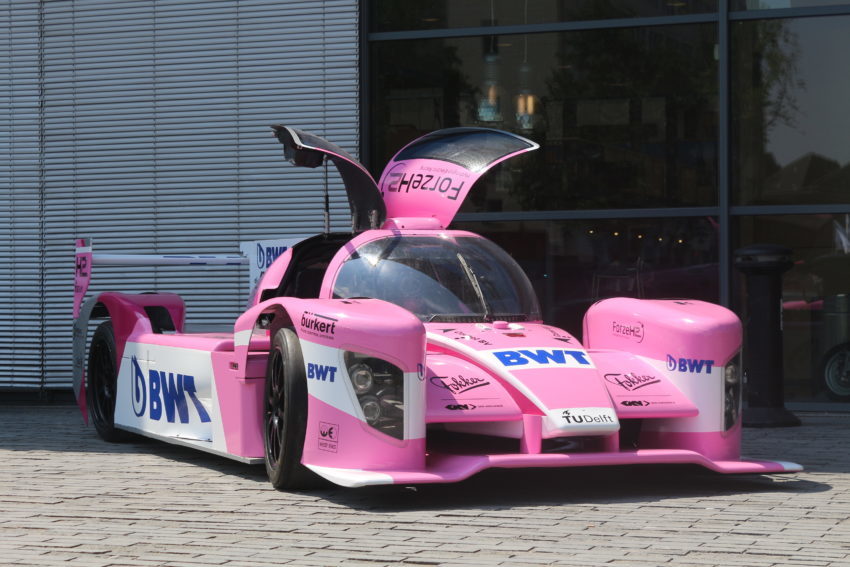
In the Photo: The Forze VIII, the fastest hydrogen – powered racing car. Photo Credit: FORZE Team
All members of the team are TU Delft students, from first years up to final year students and come from a wide range of faculties, including aerospace engineering, industrial design engineering, mechanical engineering and electrical engineering.
The size of the team has grown over the years and has varied from forty to sixty students in the last few years. By working on the team, these students build up knowledge and experience with hydrogen technology, and its application in motorsport. When the team members graduate and move on into the workforce, they carry this knowledge with them, seeding the growth of sustainable fuel cell technology wherever they go.
The advancements made by the Forze team should not be ignored, because battery power is already a high performing alternative to fossil fuels.
Why hydrogen? From an automotive standpoint, hydrogen presents several key advantages. Primarily, the time required to refill a hydrogen tank is about the same as filling a petrol tank, and much less than the time it takes to recharge a battery. Additionally, hydrogen is a very effective way to store energy. For the same weight as a battery pack, a hydrogen fuel cell system can propel a vehicle farther.
For these reasons it is believed that hydrogen fuel cells can prevail in other industries such as aviation. Fuel Cells Electric Vehicles can also make use of technological advancements made by battery electric vehicles because fuel cells would essentially take over the functionality of batteries in a vehicle. Whereas batteries store and provide energy, a fuel cell would simply produce it. The drivetrain is therefore very similar for both types of EVs.
FORZE is aiming to prove to the world that hydrogen fuel cell technology is worth the time, effort, and investment needed to make it another viable alternative to internal combustion engine vehicles. Some manufacturers have tried their hand in it, but most of the industry still needs to be convinced.
With the high performance and visibility of a racecar, the Team hopes to bring wider awareness to the technology, both in the consumer and in manufacturers, and push it into a mainstream technology. FORZE is not aiming to replace batteries, but to bring a valid alternative to internal combustion engine vehicles.
Considering the environmental impact of traditional combustion engines, the sooner society switches to clean fuel sources, the better. Hydrogen power simply gives us another sustainable option.