Impakter
  • Environment
    • Biodiversity
    • Climate Change
    • Circular Economy
    • Energy
  • FINANCE
    • ESG News
    • Sustainable Finance
    • Business
  • TECH
    • Start-up
    • AI & Machine Learning
    • Green Tech
  • Industry News
    • Entertainment
    • Food and Agriculture
    • Health
    • Politics & Foreign Affairs
    • Philanthropy
    • Science
    • Sport
  • Editorial Series
    • SDGs Series
    • Shape Your Future
    • Sustainable Cities
      • Copenhagen
      • San Francisco
      • Seattle
      • Sydney
  • About us
    • Company
    • Team
    • Global Leaders
    • Partners
    • Write for Impakter
    • Contact Us
    • Privacy Policy
No Result
View All Result
Impakter logo
No Result
View All Result
Hundreds of Millions Exit Multidimensional Poverty, but More Data Needed

Hundreds of Millions Exit Multidimensional Poverty, but More Data Needed

New report assesses progress in reducing poverty beyond monetary deprivations

International Institute for Sustainable Development (IISD)byInternational Institute for Sustainable Development (IISD)
August 1, 2023
in Society
0

The UN Development Programme (UNDP) and the Oxford Poverty and Human Development Initiative (OPHI) at the University of Oxford published a report measuring multidimensional poverty. According to the publication, 25 countries halved their Multidimensional Poverty Index (MPI) in four- to twelve-year periods, which demonstrates that halving poverty according to national definitions within 15 years (SDG target 1.2) is possible.

Titled, “Global Multidimensional Poverty Index 2023: Unstacking Global Poverty: Data for High-impact Action,” the report assesses progress in reducing poverty, going beyond monetary deprivations, for 110 countries.

It is possible to #EndPoverty.

25 countries halved their multidimensional poverty in just 15 years, demonstrating that rapid progress is within reach. Yet, around 1.1 billion people in 111 countries remain poor.

Latest data from @UNDP: https://t.co/QVwTCX8VAG pic.twitter.com/P4kkqMB6VB

— United Nations (@UN) July 11, 2023

Based on the analysis of trends from 2000 to 2022 in 81 countries with comparable data over time, the report finds that 25 countries halved their global MPI values within 15 years. In India alone, 415 million people exited poverty between 2005/2006 and 2019/2021. In China, 69 million left poverty in just four years (2010-2014). Indonesia saw 8 million people rise out of poverty over the course of three years (2012-2017). Other countries that were able to halve their multidimensional poverty rates include Cambodia, Congo, Honduras, Morocco, Serbia, and Viet Nam.

While the lack of post-COVID-19-pandemic data for most of the 110 countries covered in the report makes it difficult to assess immediate prospects, the few countries with data for 2021 or 2022 demonstrate that poverty reduction momentum “may have persisted during the pandemic,” according to a UNDP press release. For example, MPI values for Nigeria, Peru, and Cambodia show significant reductions. In the latter, the incidence of poverty declined from 36.7% to 16.6%, with one in five Cambodians moving out of poverty in just 7.5 years (2014-2021/2022). Among children, progress was even faster, with the incidence of poverty falling from 42.7% in 2014 to 20.5% in 2021/2022.

Despite these achievements, 1.1 billion out of 6.1 billion people across 110 countries (just over 18%) still live in acute multidimensional poverty, according to the report. Approximately five out of six poor people live in Sub-Saharan Africa (534 million) and South Asia (389 million). Almost two-thirds of all poor people (730 million) reside in middle-income countries (MICs). And although low-income countries (LICs) make up only 10% of the population covered by the MPI, they are home to 35% of all poor people.

The report shows that half of all MPI-poor people (566 million) are children under 18 years old. The poverty rate among children is more than double that among adults (27.7% compared to 13.4%). Also, rural areas are poorer than urban areas in all regions, with 84% of all poor people living in rural areas.


Related Articles: Do We Need to Sacrifice Our 1.5 °C Goal to End Poverty? | Poverty in the EU: 20% of Youth at Risk | All SDGs ‘Seriously Off Track,’ UN Report Finds

Highlighting significant and long-lasting consequences of the pandemic for education, Pedro Conceição, Director of the Human Development Report Office, said it is “imperative that we intensify efforts to comprehend the dimensions most negatively affected, necessitating strengthened data collection and policy efforts to get poverty reduction back on track.”

Sabina Alkire, Director of OPHI at the University of Oxford, “call[ed] on funders and data scientists to make a breakthrough on poverty data, so the interconnected deprivations that strike poor people in real time can be tracked – and intercepted.”

The global MPI measures interconnected deprivations across indicators related to SDGs 1 (no poverty), 2 (zero hunger), 3 (good health and well-being), 4 (quality education), 6 (clean water and sanitation), 7 (affordable and clean energy), and 11 (sustainable cities and communities).

The 2023 edition of the Global Multidimensional Poverty Index was launched in the margins of the UN High-level Political Forum on Sustainable Development (HLPF) on 11 July.

— —

This article was originally published by the International Institute for Sustainable Development (IISD) and is republished here as part of an editorial collaboration with IISD.


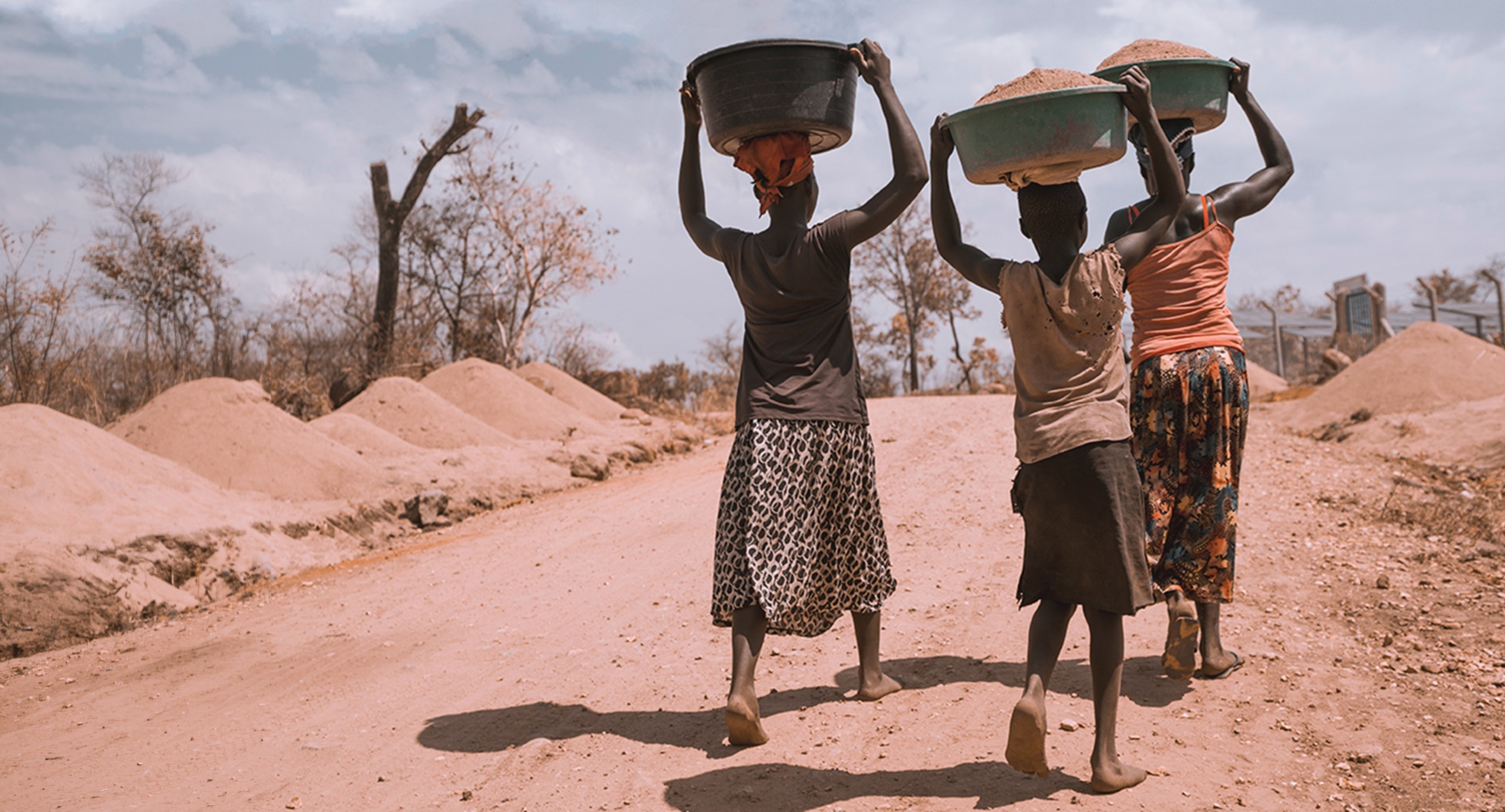
Editor’s Note: The opinions expressed here by the authors are their own, not those of Impakter.com — In the Featured Photo: Three women carrying basins while walking barefoot, Rhino refugee camp, Arua, Uganda, March 28, 2019. Featured Photo Credit: Ninno JackJr.
Tags: COVID-19HLPFMPIMultidimensional Poverty IndexOPHIOxford Poverty and Human Development InitiativepovertyUN High-level Political Forum on Sustainable DevelopmentUNDPUnited Nations Development ProgrammeUniversity of Oxford
Previous Post

Tom Daley’s Comeback: Diving Champion Sets His Sights on Paris Olympics

Next Post

Scientists Create the World’s First Soap Made From Plastic

Related Posts

COP30: Countries’ Climate Agrifood Ambitions Undermined by Funding Gaps, Report Finds
Biodiversity

COP30: Countries’ Climate Agrifood Ambitions Undermined by Funding Gaps, Report Finds

Developing countries recognize the urgent need to adapt agrifood systems to climate change, but most National Adaptation Plans (NAPs) are...

byThe Food and Agriculture Organization of the United Nations (FAO)
November 19, 2025
One Health
Biodiversity

Why and How to Apply the One Health Concept

One Health can be a complex and sometimes jargon-filled concept. Put simply: "One Health is the collaborative efforts of multiple...

byOne Health Initiative
November 6, 2025
How Prepared Are We for the Next Pandemic?
Health

How Prepared Are We for the Next Pandemic?

While there appears to be no single study that definitively predicts a surge in pandemics, the scientific consensus is clear:...

byAndrej Pavicevic - Managing Editor
October 24, 2024
climate disasters
Climate Change

An Inclusive Path to Dealing With Climate Disaster

“Despite my lack of functional arms, during the Seroja storm I was still able to use my legs to run....

byEka Permanasari - Associate Professor at Monash University Indonesiaand3 others
July 15, 2024
Small Island Nations
Climate Change

Empowering Small Island Nations: The Path to Resilient Prosperity

From the Pacific to the Caribbean, there is a palpable shift in the air as both regions forge new sustainable...

byJames Ellsmoor - CEO of Island Innovation
June 14, 2024
Avian Flu
Health

On the Verge of a Possible Avian Flu Pandemic

After several years of effort, Pandemic Agreement negotiators deliberating in Geneva at the World Health Organization (WHO) headquarters, were still...

byRichard Seifman - Former World Bank Senior Health Advisor and U.S. Senior Foreign Service Officer
April 5, 2024
Surprising Vietnam: Promise and Paradox
Society

Surprising Vietnam: Promise and Paradox

As an American of a certain age I went to Vietnam to have an opportunity to form my own perspective...

byRichard Seifman - Former World Bank Senior Health Advisor and U.S. Senior Foreign Service Officer
March 18, 2024
Dengue fever
Editors' Picks

Dengue Fever: Not Getting Many Headlines, But It Should

For many of the last few years, our infectious disease attention has been on COVID-19 and its huge human, social,...

byRichard Seifman - Former World Bank Senior Health Advisor and U.S. Senior Foreign Service Officer
March 7, 2024
Next Post
Scientists Create the World’s First Soap Made From Plastic

Scientists Create the World’s First Soap Made From Plastic

Recent News

ESG News covering Great British Energy’s 2030 clean-power strategy, UK government investment, nationwide renewable expansion, community energy projects, offshore wind development, and job creation in the energy transition.

Great British Energy Unveils 2030 Clean Power Strategy

December 4, 2025
Crypto Portfolio Margin Access defined

What Is Crypto Portfolio Margin Access?

December 4, 2025
Governments Are Hiding Data, Threatening Democracy. Here’s How It Affects You

Governments Are Hiding Data, Threatening Democracy. Here’s How It Affects You

December 4, 2025
  • ESG News
  • Sustainable Finance
  • Business

© 2025 Impakter.com owned by Klimado GmbH

No Result
View All Result
  • Environment
    • Biodiversity
    • Climate Change
    • Circular Economy
    • Energy
  • FINANCE
    • ESG News
    • Sustainable Finance
    • Business
  • TECH
    • Start-up
    • AI & Machine Learning
    • Green Tech
  • Industry News
    • Entertainment
    • Food and Agriculture
    • Health
    • Politics & Foreign Affairs
    • Philanthropy
    • Science
    • Sport
  • Editorial Series
    • SDGs Series
    • Shape Your Future
    • Sustainable Cities
      • Copenhagen
      • San Francisco
      • Seattle
      • Sydney
  • About us
    • Company
    • Team
    • Global Leaders
    • Partners
    • Write for Impakter
    • Contact Us
    • Privacy Policy

© 2025 Impakter.com owned by Klimado GmbH