The escalating conflict between the United States, Israel, and Iran is sending shockwaves through global energy markets. Oil and gas prices have surged, driven by supply disruptions and heightened market uncertainty, with vast ripple effects on other commodities, particularly fertilizers.
Products such as urea, used by corn, wheat and rice farmers, have seen price increases linked to disruptions in production infrastructure. As energy shocks work their way through the economy, they feed into broader inflationary pressures across countries. No nation is immune, but developing countries are most immediately and acutely hit.
This is a classic supply-side shock: one that pushes prices up while slowing economic activity. It is also the third major disruption to global value chains in less than a decade, following the COVID-19 pandemic and the Russian invasion of Ukraine, with each episode leaving deeper and more persistent scars in developing economies.
This is the third major disruption to global value chains in less than a decade. Each episode has left deeper, more persistent scars in developing economies.
A Dilemma for Central Banks
Such shocks are particularly difficult for central banks to manage. Inflation is rising, which would normally call for tighter monetary policy; yet growth is weakening, which would call for easing. Central banks often attempt to “look through” temporary shocks — but when disruptions are repeated and persistent, this strategy is harder to sustain.
After years of liquidity expansion following the global financial crisis and the COVID-19 pandemic, concerns about inflation persistence and policy credibility have intensified. The risk that inflation expectations drift away from the central bank’s target means monetary policy may remain tighter for longer, even as economic activity slows.
Structural Risks and Uneven Exposure
If the conflict persists, the risks could become structural across the most vulnerable countries. Net importers of oil and gas will see their energy bills rise and trade balance worsen.
Governments may attempt to shield households through subsidies, but at the cost of larger fiscal deficits. At the same time, higher food and energy prices increase pressure on already fragile social protection systems, further constraining governments that already face tighter fiscal limits than their advanced economy peers.
The exposure is particularly acute for low-income countries because food and other tradable goods account for a larger share of household consumption, making these economies more vulnerable to global price shocks, particularly in regions such as Sub-Saharan Africa. As a result, global price increases translate more quickly and more intensely into domestic inflation, leading to more acute social pressures and higher fiscal demands.
Related Articles
Here is a list of articles selected by our Editorial Board that have gained significant interest from the public:
At the same time, financial conditions are likely to tighten. If central banks in major economies keep interest rates elevated — or delay easing — the cost of borrowing stays high for everyone. For countries that depend on external financing, this creates additional strain. Rolling over existing debt becomes more expensive, and access to new financing becomes more limited.
This challenge goes beyond fiscal balances. Many lower-income countries carry significant exposure to private external flows and a highly indebted private sector. This means that if private borrowers default, governments are often left to pick up the bill, compounding the strain that already stretches public finances.
No feasible degree of austerity measures will enable countries to meet their external debt obligations. On the contrary, cutting spending too sharply can be counterproductive, triggering recessions that ultimately undermine, rather than strengthen, debt repayment capacity. The need for coordinated international action thus becomes more critical.
No feasible degree of austerity measures will enable countries to meet their external obligations. Treating debt challenges as temporary liquidity issues risks underestimating their structural and destabilizing effects.
Building Long-Term Resilience to External Shocks
Taken together, these dynamics highlight a broader shift in the global economy. External shocks are becoming more frequent, more persistent, and more interconnected. These pressures are not distributed evenly: low- and middle-income countries are disproportionately affected, reflecting greater exposure to external financing conditions, narrower fiscal space, and more limited economic diversification.
Treating debt challenges as temporary liquidity issues risks underestimating their structural and destabilizing effects. In a more volatile environment, sustained pressures on fiscal and external accounts — combined with limited buffers — can more easily translate into crises.
As Kristalina Georgieva, Managing Director of the IMF, has noted, “think of the unthinkable and prepare for it.” Strengthening fiscal frameworks, improving debt management, and building more resilient energy and food systems will be key. The challenge is not only to respond to the current shock, but to adapt to a world where such disruptions are likely to recur — and where their implications for debt sustainability are increasingly difficult to ignore. This calls for a more integrated approach to financing and resilience.
** **
This article was originally published by the International Institute for Sustainable Development (IISD) and is republished here as part of an editorial collaboration with the IISD. It was authored by Fernando Morra and Anahí Wiedenbrüg.
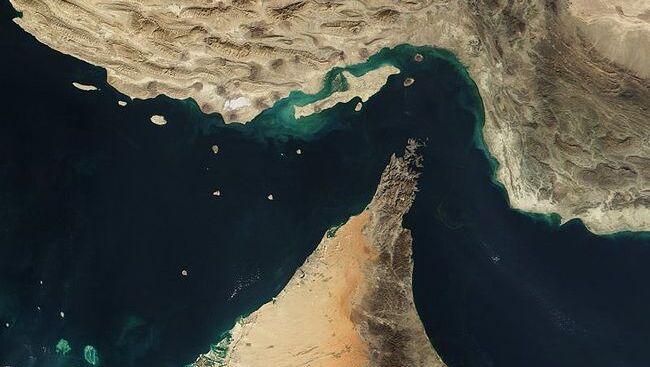
Editor’s Note: The opinions expressed here by the authors are their own, not those of Impakter.com — In the Cover Photo: Strait of Hormuz. Cover Photo Credit: eutrophication&hypoxia.