Impakter
  • Environment
    • Biodiversity
    • Climate Change
    • Circular Economy
    • Energy
  • FINANCE
    • ESG News
    • Sustainable Finance
    • Business
  • TECH
    • Start-up
    • AI & Machine Learning
    • Green Tech
  • Industry News
    • Entertainment
    • Food and Agriculture
    • Health
    • Politics & Foreign Affairs
    • Philanthropy
    • Science
    • Sport
  • Editorial Series
    • SDGs Series
    • Shape Your Future
    • Sustainable Cities
      • Copenhagen
      • San Francisco
      • Seattle
      • Sydney
  • About us
    • Our Story
    • Team
    • Partners
    • Write for Impakter
    • Contact Us
    • Privacy Policy
No Result
View All Result
  • Environment
    • Biodiversity
    • Climate Change
    • Circular Economy
    • Energy
  • FINANCE
    • ESG News
    • Sustainable Finance
    • Business
  • TECH
    • Start-up
    • AI & Machine Learning
    • Green Tech
  • Industry News
    • Entertainment
    • Food and Agriculture
    • Health
    • Politics & Foreign Affairs
    • Philanthropy
    • Science
    • Sport
  • Editorial Series
    • SDGs Series
    • Shape Your Future
    • Sustainable Cities
      • Copenhagen
      • San Francisco
      • Seattle
      • Sydney
  • About us
    • Our Story
    • Team
    • Partners
    • Write for Impakter
    • Contact Us
    • Privacy Policy
No Result
View All Result
Impakter
No Result
View All Result
Google's new Green Light project can reduce traffic emissions

How Google Is Helping Cities Reduce Traffic Emissions

The tech giant's new project uses AI and Google Maps trends to optimize traffic flow

byMatt Davies
October 13, 2023
in Tech

In a bid to combat escalating greenhouse gas emissions caused by road transportation, Google has unveiled its innovative new project Green Light, a brainchild of Google Research, aimed at optimizing traffic flow at intersections and curbing stop-and-go emissions.

Traffic congestion at intersections is a major contributor to global and urban greenhouse gas emissions: Pollution levels at these locations can spike to 29 times higher than on open roads.

According to Google’s analysis of Google Maps driving trends, constant stopping and starting of traffic accounts for around half of emissions at intersections.

“[W]e found that by leveraging AI we can reduce these emissions by optimizing traffic lights,” writes Yossi Matias, Google’s Vice-President of Engineering and Research.

How does it work?

As Matias explains, project Green Light “uses AI and Google Maps driving trends to model traffic patterns and make recommendations for optimizing the existing traffic light plans.”

In “as little as five minutes,” city engineers can implement Google’s recommendations without changing current infrastructure and traffic systems.

They can also optimize more than one intersection — the tool can analyze thousands of intersections at once —to create waves of green lights, further reducing stop-and-go emissions and improving traffic flow.


Related articles: Self-Driving Cars Could Pose Huge Environmental Burden | Second-Hand Cars – Out of Sight, Out of Mind | EcoLogistics Principles: A Pathway to Sustainable Urban Freight

“We build an AI-based model of each intersection, including its structure, traffic patterns (such as patterns of starting and stopping), light scheduling, and how traffic and the light schedules interact, and then we also build a model of the interaction between traffic lights,” Google’s Yossi Matias explains, giving the following example:

“[W]e might identify an opportunity to coordinate between intersections that are not yet synced and provide a recommendation around the timing of the traffic lights so that traffic flows more effectively along a stretch of road.”

The results?

Twelve cities around the world are already using Google Green Light, at 70 intersections in total (see map below).
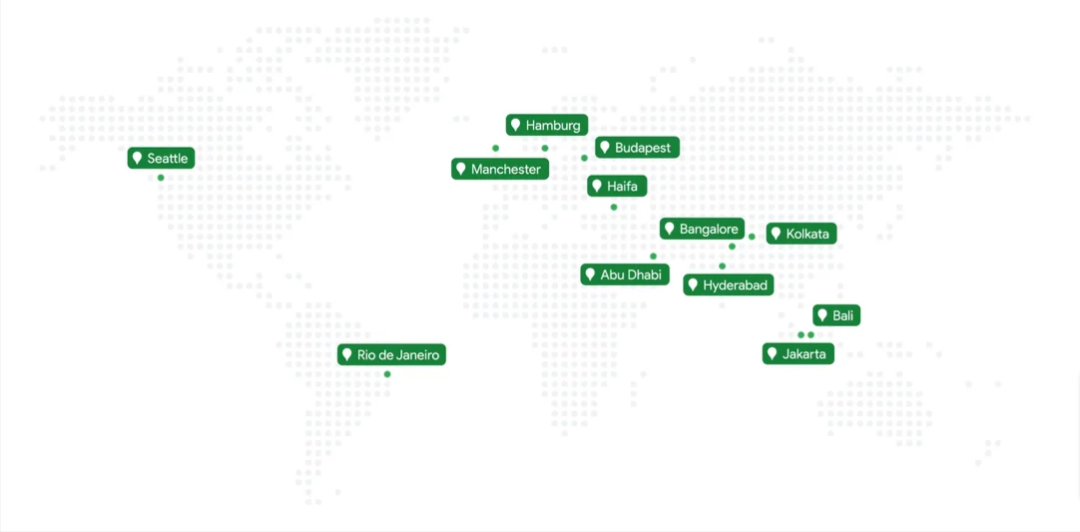
Green Light is already live and helping to reduce emissions at intersections in 12 cities: Abu Dhabi, Bali, Bangalore, Budapest, Haifa, Hamburg, Hyderabad, Jakarta, Kolkata, Manchester, Rio de Janeiro and Seattle. Source: Google.

The results, Google says, indicate an impressive potential for up to a 30% reduction in stops and a 10% reduction in emissions at intersections.

The tool can also “save fuel and lower emissions for up to 30M car rides monthly,” just at those 70 intersections where it currently operates.

What’s next for the project Green Light?

“We are working closely with our partner cities to scale to more intersections within each city, and we aim to expand to more locations next year, so that across the world, people can experience cleaner, greener cities,” Google writes, inviting city officials to sign up for the waiting list.


Editor’s Note: The opinions expressed here by the authors are their own, not those of Impakter.com — In the Featured Photo: Traffic emissions. Featured Photo Credit: The European Space Agency. 

Tags: AICitiesGoogleGoogle ResearchGreen LightRoad emissionsTraffic emissionsUrban emissions
Previous Post

Halloween 2023: No Tricks, Just Treats and Green Tips

Next Post

Qatar World Cup Workers Sue US Construction Company for Labor Trafficking

Related Posts

Men and woman working on their accounting Infrastructure
Business

Why ESG Reporting Is Failing Without Proper Accounting Infrastructure

April 14, 2026
Startup team working on their pitch deck design.
Business

The Small Business Pitch Deck Checklist: 12 Slides Investors Actually Want to See

April 13, 2026
Money, a lille green plant and solar panel in the background. Portfolio diversification with sustainable investments.
Business

Practical Steps for Diversifying Your Portfolio With High-Growth Sustainable Technologies

March 20, 2026
Next Post
Qatar workers

Qatar World Cup Workers Sue US Construction Company for Labor Trafficking

Related News

ESG news regarding European Commission proposing new financial support to combat energy price surges, UK new plan to manage renewable power surpluses, Western Australia launching strategic diesel reserve to bolster fuel security, and Asian stocks jumping as hopes for US-Iran ceasefire rise.

EU Proposes State Aid to Offset Rising Energy Costs

April 14, 2026
Men and woman working on their accounting Infrastructure

Why ESG Reporting Is Failing Without Proper Accounting Infrastructure

April 14, 2026

Impakter informs you through the ESG news site and empowers your business CSRD compliance and ESG compliance with its Klimado SaaS ESG assessment tool marketplace that can be found on: www.klimado.com

Registered Office Address

Klimado GmbH
Niddastrasse 63,

60329, Frankfurt am Main, Germany


IMPAKTER is a Klimado GmbH website

Impakter is a publication that is identified by the following International Standard Serial Number (ISSN) is the following 2515-9569 (Printed) and 2515-9577 (online – Website).


Office Hours - Monday to Friday

9.30am - 5.00pm CEST


Email

stories [at] impakter.com

By Audience

  • TECH
    • Start-up
    • AI & MACHINE LEARNING
    • Green Tech
  • ENVIRONMENT
    • Biodiversity
    • Energy
    • Circular Economy
    • Climate Change
  • INDUSTRY NEWS
    • Entertainment
    • Food and Agriculture
    • Health
    • Politics & Foreign Affairs
    • Philanthropy
    • Science
    • Sport
    • Editorial Series

ESG/Finance Daily

  • ESG News
  • Sustainable Finance
  • Business

About Us

  • Team
  • Partners
  • Write for Impakter
  • Contact Us
  • Privacy Policy

© 2026 IMPAKTER. All rights reserved.

No Result
View All Result
  • Environment
    • Biodiversity
    • Climate Change
    • Circular Economy
    • Energy
  • FINANCE
    • ESG News
    • Sustainable Finance
    • Business
  • TECH
    • Start-up
    • AI & Machine Learning
    • Green Tech
  • Industry News
    • Entertainment
    • Food and Agriculture
    • Health
    • Politics & Foreign Affairs
    • Philanthropy
    • Science
    • Sport
  • Editorial Series
    • SDGs Series
    • Shape Your Future
    • Sustainable Cities
      • Copenhagen
      • San Francisco
      • Seattle
      • Sydney
  • About us
    • Our Story
    • Team
    • Partners
    • Write for Impakter
    • Contact Us
    • Privacy Policy

© 2026 IMPAKTER. All rights reserved.