Impakter
  • Environment
    • Biodiversity
    • Climate Change
    • Circular Economy
    • Energy
  • FINANCE
    • ESG News
    • Sustainable Finance
    • Business
  • TECH
    • Start-up
    • AI & Machine Learning
    • Green Tech
  • Industry News
    • Entertainment
    • Food and Agriculture
    • Health
    • Politics & Foreign Affairs
    • Philanthropy
    • Science
    • Sport
  • Editorial Series
    • SDGs Series
    • Shape Your Future
    • Sustainable Cities
      • Copenhagen
      • San Francisco
      • Seattle
      • Sydney
  • About us
    • Company
    • Team
    • Global Leaders
    • Partners
    • Write for Impakter
    • Contact Us
    • Privacy Policy
No Result
View All Result
Impakter logo
No Result
View All Result
How Glacial Melting Threatens Alpine Ecosystems

How Glacial Melting Threatens Alpine Ecosystems

New study assessing the impact of glacier retreat on Alpine river habitats finds some species will completely disappear as a result of habitat loss while others will have to migrate to colder waters in higher areas

Jessica MasonbyJessica Mason
May 22, 2023
in Climate Change, Environment, Science
0

The world’s glaciers are rapidly melting due to the planet’s increasing warming caused by greenhouse gas emissions, with the mean global glacial mass loss estimated at 2% between 2010 and 2020.

Glaciers in the Alps, meanwhile, recorded a 1.2% mass loss between 2000 and 2014.

A new study, published in Nature Ecology and Evolution on May 4, 2023, assessed the damaging impact of glacier retreat on Alpine river habitats.

As the researchers explain, they “projected glacial losses between 2020 and 2100 to assess what impact the changing input of meltwater into alpine rivers would have on the distribution of 15 species of invertebrate, such as stoneflies, non-biting midges, flatworms and mayflies.”

The study focused on invertebrates because of their vital roles in nutrient cycling; they are prey for other species such as fish, amphibians, birds and mammals, which means that through them, organic matter is transferred through the food chain. Therefore, they are “crucial for wider Alpine ecosystems,” as the study explains.

The study discovered that Alpine rivers “will experience major change by the end of the century.” After 2040, the rivers will flow slower and become more prone to erosion, and will also become drier and warmer. It is possible that some streams could endure periods where water does not flow at all.

As a result, some species that are adapted to these rivers will be completely eradicated by these changes and will disappear from the Alps while several other species will be forced to migrate to higher parts of the Alps where glacial melting is less extreme. Although most species are predicted to suffer decreases in suitable habitat area across the European Alps by 2100, glacial melting will have a particularly extreme impact on invertebrates.


Related Articles: Could the Rate at Which Glaciers Are Melting Cause the Next Pandemic? | 50,000 Years Later: Ancient ‘Zombie Viruses’ Resurface in Melting Arctic

For example, some non-biting midges such as the species Diamesa steinboecki will be forced to relocate to avoid extinction, due to the very rare conditions of the current meltwater rivers that these midges thrive in. 

However, the study emphasised that there are both “winners” and “losers” when it comes to this changing habitat. The flatworm Crenobia alpina, for example, may benefit from the changes, because it thrives in warmer water and more stable flow levels. 

The map below shows the predicted change in habitat areas for some invertebrate species within river sub-catchments of the European Alps between 2020 and 2100, illustrating how each species will be impacted differently by the changes.
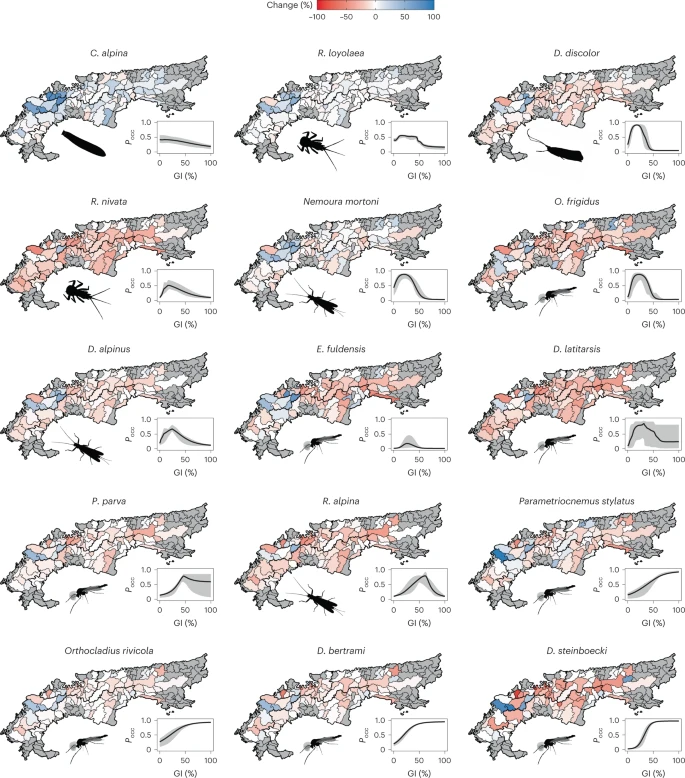
As the map shows, forced relocation will impact many invertebrate species in the next century, as they fight to find cold-water rivers in which they can thrive.

However, despite higher and colder parts of the Alps potentially being suitable to refuge migrating species, winter tourism and activities such as skiing are also likely to increase in these areas. In addition, the decline of glacial rivers may be an opportunity for an increase in hydropower stations in these higher areas. Consequently, human interference in the Alps may also endanger these migrating species. 

The high Alpine areas, which are crucial for the survival of migrating species that have been displaced due to the changing meltwater rivers, are currently not protected and are not included within national park boundaries, according to some of the study’s authors. This must change if these Alpine invertebrate species are to live on — and they must live on if we want to avoid damage to the entire food chain and ecosystem. 

It is therefore essential that conservation strategies are put in place to protect the threatened Alpine biodiversity from even more damage caused by human activities.


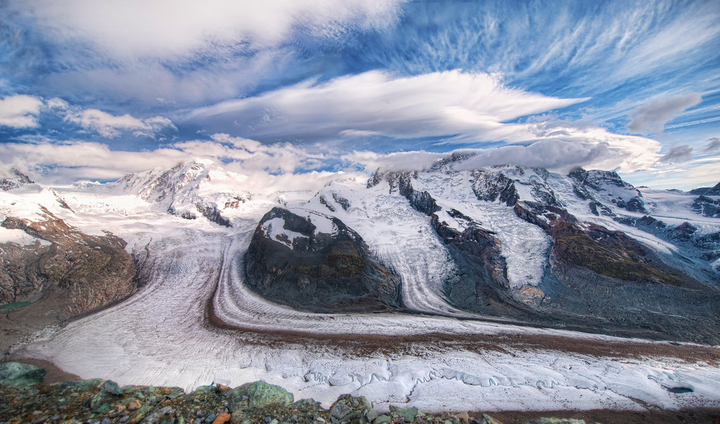
Editor’s Note: The opinions expressed here by the authors are their own, not those of Impakter.com — In the Featured Photo: Glaciers of the Alps. Featured Photo Credit: Trey Ratcliff.

Tags: Climate ChangeecosystemsGlacier RetreatsglaciersGlobal warming
Previous Post

Disney vs. DeSantis: What to Know

Next Post

Heat Levels Expected to Reach Record Highs in the Next 5 Years: Are We Prepared?

Related Posts

The Era of ‘Global Water Bankruptcy’ Has Begun
Climate Change

The Era of ‘Global Water Bankruptcy’ Has Begun

Humanity’s long-term water usage and damage have exceeded nature's renewal and safe limits, a situation scientists and the media have...

byNmesoma Ezetu
January 30, 2026
Food Waste in India
Climate Change

India’s Food Waste Is Turning Into an Environmental Time Bomb

India, a key player in this fight, is currently battling a confluence of climate-driven disasters. Last year’s punishing extreme heatwave,...

byPranjali Chowdhary - Research and Policy Associate at the Institute for Governance and Sustainable Development, Indiaand1 others
January 30, 2026
One Health Education Is Essential for Pandemic Preparedness and Global Security
Education

One Health Education Is Essential for Pandemic Preparedness and Global Security

The One Health concept/approach offers a powerful tool for public health and biomedical research globally. The combined integration of human medicine,...

byDr. Bruce Kaplan - Epidemiologist formerly at the CDC/EIS and USDA-FSIS Office of Public Health and Science & Co-Founder of the One Health Initiativeand2 others
January 29, 2026
Three sponsors for the 2026 Winter Olympics in Italy could generate 1.3 million tons of CO2
Climate Change

Winter Olympics Sponsorship Emissions: Who Are the Main Offenders?

The 2026 Winter Olympic Games are set to begin in Italy next month. Scattered across towns in northern Italy, from...

bySarah Perras
January 28, 2026
WEF Report Ranks Environmental Challenges as Greatest Long-Term Threat to Global Stability
Business

WEF Report Ranks Environmental Challenges as Greatest Long-Term Threat to Global Stability

The World Economic Forum’s Global Risks Report 2025 found that environmental risks are deteriorating faster than other threats and challenges.  ...

byBenjamin Clabault
January 28, 2026
ESG News regarding Clean energy is Europe's only path to prosperity; 2150 raises €210 million to back sustainable cities; EcoCeres’ new Malaysian plant is operating at 95% capacity; New study suggests the world is not ready for rise in extreme heat.
Business

Clean Energy Is Europe’s Only Route to Prosperity

Today’s ESG Updates: Clean Energy is Vital for Europe's Autonomy: UK Energy Secretary Ed Miliband and EU Energy Commissioner Dan...

byFedor Sukhoi
January 27, 2026
ESG news regarding: a push for wind power in Europe, possible massive metal fraud, wind power in Western Australia, and Citi layoffs.
Business

Europe’s Answer to Trump: More Wind Power

Today’s ESG Updates New Draft Reveals Europe’s Massive Wind Power Push: Nine European nations are defying U.S. criticism by signing...

byEge Can Alparslan
January 23, 2026
Climate Change Charities
Business

Beyond Carbon Offsets: 7 Climate Change Charities Tackling Root Causes in 2026

Philanthropy is surging again. U.S. charitable giving reached a record $592.50 billion in 2024, and, for the first time since...

byHannah Fischer-Lauder
January 23, 2026
Next Post
heat

Heat Levels Expected to Reach Record Highs in the Next 5 Years: Are We Prepared?

Recent News

The Era of ‘Global Water Bankruptcy’ Has Begun

The Era of ‘Global Water Bankruptcy’ Has Begun

January 30, 2026
ESG news regarding: New Report Urges Urgent Action to Halt PFAS Contamination Across EU, US Proposes New Rule to Force Greater Transparency in Pharmacy Benefit Manager Fees, EU and Brazil Seal Landmark Deal Creating World’s Largest Free Data Flow Zone, Beijing Suspends Import and Use of Sun Pharma Alzheimer’s Treatment

Without Regulation, ‘Forever Chemicals’ Will Cost Europe €440 billion by Mid Century

January 30, 2026
Food Waste in India

India’s Food Waste Is Turning Into an Environmental Time Bomb

January 30, 2026
  • ESG News
  • Sustainable Finance
  • Business

© 2025 Impakter.com owned by Klimado GmbH

No Result
View All Result
  • Environment
    • Biodiversity
    • Climate Change
    • Circular Economy
    • Energy
  • FINANCE
    • ESG News
    • Sustainable Finance
    • Business
  • TECH
    • Start-up
    • AI & Machine Learning
    • Green Tech
  • Industry News
    • Entertainment
    • Food and Agriculture
    • Health
    • Politics & Foreign Affairs
    • Philanthropy
    • Science
    • Sport
  • Editorial Series
    • SDGs Series
    • Shape Your Future
    • Sustainable Cities
      • Copenhagen
      • San Francisco
      • Seattle
      • Sydney
  • About us
    • Company
    • Team
    • Global Leaders
    • Partners
    • Write for Impakter
    • Contact Us
    • Privacy Policy

© 2025 Impakter.com owned by Klimado GmbH